

Page 1
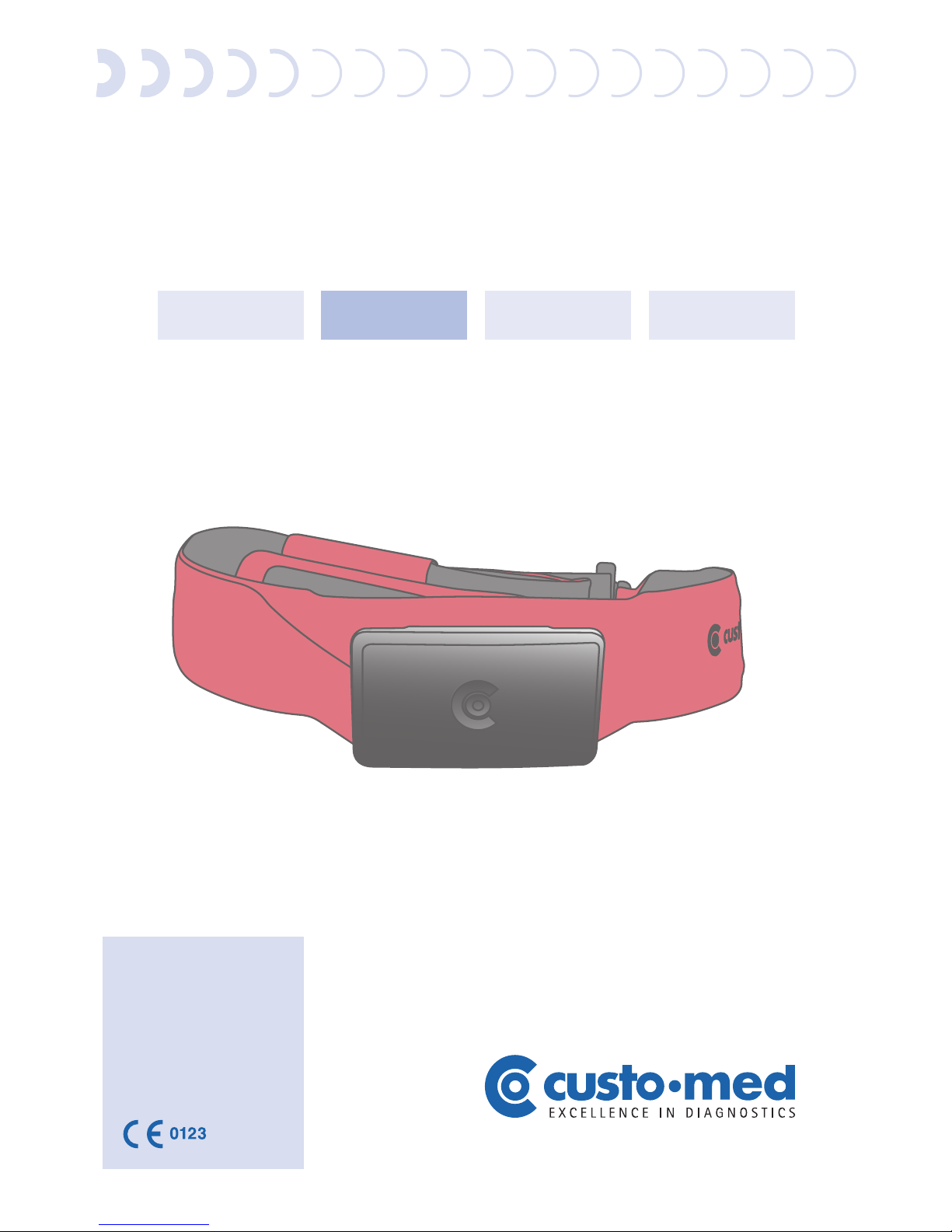
Operating Manual
Cardiac Rehabilitation
Part 2: Hardware, description of device for custo guard (custo cardio concept)
1 2 3 4
Safety Hardware Software Hygiene
Operating characteristics:
1, 3-channel ECG,
Cardiac rehabilitation
MHW 0010 – DK 1696
Version 001 – 21/09/2017
Page 2

[2] Cardiac Rehabilitation hardware, custo guard (custo cardio concept) | page 2
©
2017 custo med GmbH
This Operating Manual may not be copied in its entirety or in part, duplicated in any
form or by any means or translated into another language without the prior written
consent of custo med GmbH.
The manufacturer reserves the right to change the information in this Operating
Manual without prior notice. The current version can be downloaded from our web-
site: www.customed.de.
CAUTION:
This Operating Manual is part of a modular system consisting of four parts. All
four parts must be downloaded from the Internet or from a CD to ensure the
Operating Manual is complete.
MHW 0010 – DK 1696 | Version 001 – 21/09/2017 | custo med GmbH [2] Cardiac Rehabilitation hardware, custo guard (custo cardio concept) | page 2
Page 3
MHW 0010 – DK 1696 | Version 001 – 21/09/2017 | custo med GmbH [2] Cardiac Rehabilitation hardware, custo guard (custo cardio concept) | page 3
Table of contents
2.1 Symbols on the devices ........................................................................4
2.2 Intended use ......................................................................................5
2.3 Part names, components for the recording .............................................6
2.4 Charging the custo guard ECG transmitter .............................................9
2.5 Preparing the patient ........................................................................10
2.5.1 Fitting the custo guard ECG transmitter with
an electrode belt ...................................................................10
2.5.2 Sitting position on the ergometer ............................................11
2.5.3 Blood pressure cuff ................................................................11
2.5.4 Adjusting the length of the custo belt 3
(for 3-channel ECG) ...............................................................12
2.5.5 Attaching custo guard 1 without an electrode belt
to the patient ........................................................................14
2.5.6 Attaching custo guard with custo ECG cable guard 3 .................15
2.6 Technical data and system requirements ..............................................16
2.7 Manufacturer's declaration regarding EMC. . . . . . . . . . . . . . . . . . . . . . . . . . . . . . . . . . . . . . . . . . .18
2.8 EC Declaration of Conformity .............................................................21
2.9 List of product components and accessories .........................................23
Operating Manual
Cardiac Rehabilitation
Part 2: Hardware, description of device for custo guard (custo cardio concept)
1 2 3 4
Safety Hardware Software Hygiene
Page 4
MHW 0010 – DK 1696 | Version 001 – 21/09/2017 | custo med GmbH
2
[2] Cardiac Rehabilitation hardware, custo guard (custo cardio concept) | page 4
Cardiac Rehabilitation
Hardware, description of device for custo guard (custo cardio concept)
IP65
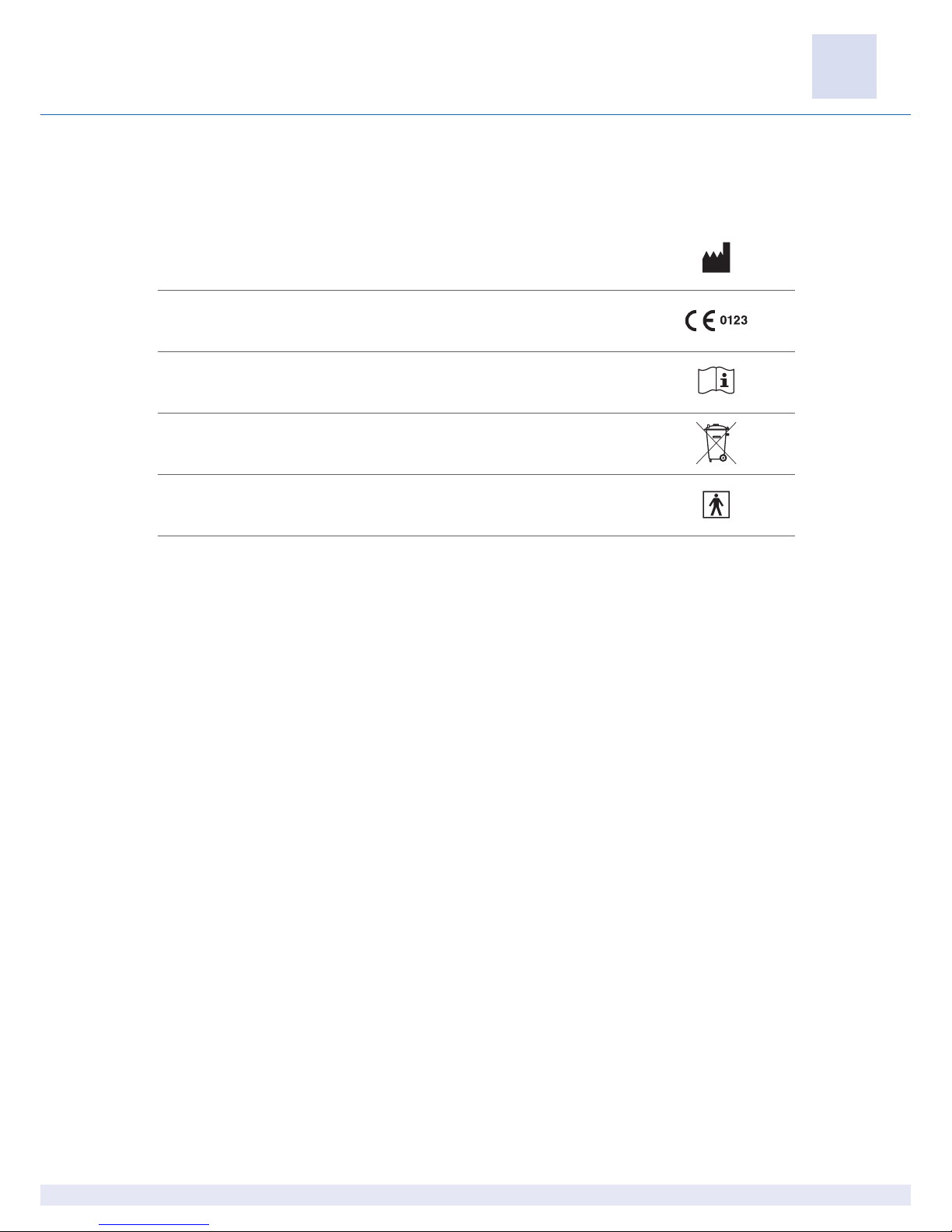
Manufacturer:
custo med GmbH, Maria-Merian-Str. 6, 85521 Ottobrunn, Germany
CE mark
Observe the Operating Manual
Separate collection of electrical and electronic equipment,
do not dispose with domestic waste
Medical electrical equipment classification
according to DIN EN 60601-1 (Type BF)
Safety class of electrical equipment
(protection against the ingress of foreign matter and spray water)
2.1 Symbols on the device
Page 5

MHW 0010 – DK 1696 | Version 001 – 21/09/2017 | custo med GmbH
2
[2] Cardiac Rehabilitation hardware, custo guard (custo cardio concept) | page 5
Cardiac Rehabilitation
Hardware, description of device for custo guard (custo cardio concept)
2.2 Intended use
The custo guard ECG transmitter (always includes the custo belt electrode belt) is
used for receiving a 1 or 3-channel ECG signal in accordance with Holter standards.
The ECG is then processed by custo diagnostic. custo guard is an ECG transmitter
with an internal power supply that transmits the data by radio waves.
custo guard is used in cardiac rehabilitation for wireless patient monitoring. The ra-
dio transmission allows continuous monitoring of patients independent of exercise
station. Via the real-time transmission of the ECG signal in custo diagnostic, the
therapist is aided in the visual monitoring of patients.
custo guard can safely be used on patients with pacemakers. Caution! The ECG
recording may be affected by pacemaker pulses.
The system is intended for use by trained specialist staff or physicians in clinics and
rehab centres.
The system is not suitable for electrocardiographic monitoring of patients in accord-
ance with DIN EN 60601-2-27, e.g. use in intensive care.
Page 6
MHW 0010 – DK 1696 | Version 001 – 21/09/2017 | custo med GmbH
2
[2] Cardiac Rehabilitation hardware, custo guard (custo cardio concept) | page 6
Cardiac Rehabilitation
Hardware, description of device for custo guard (custo cardio concept)
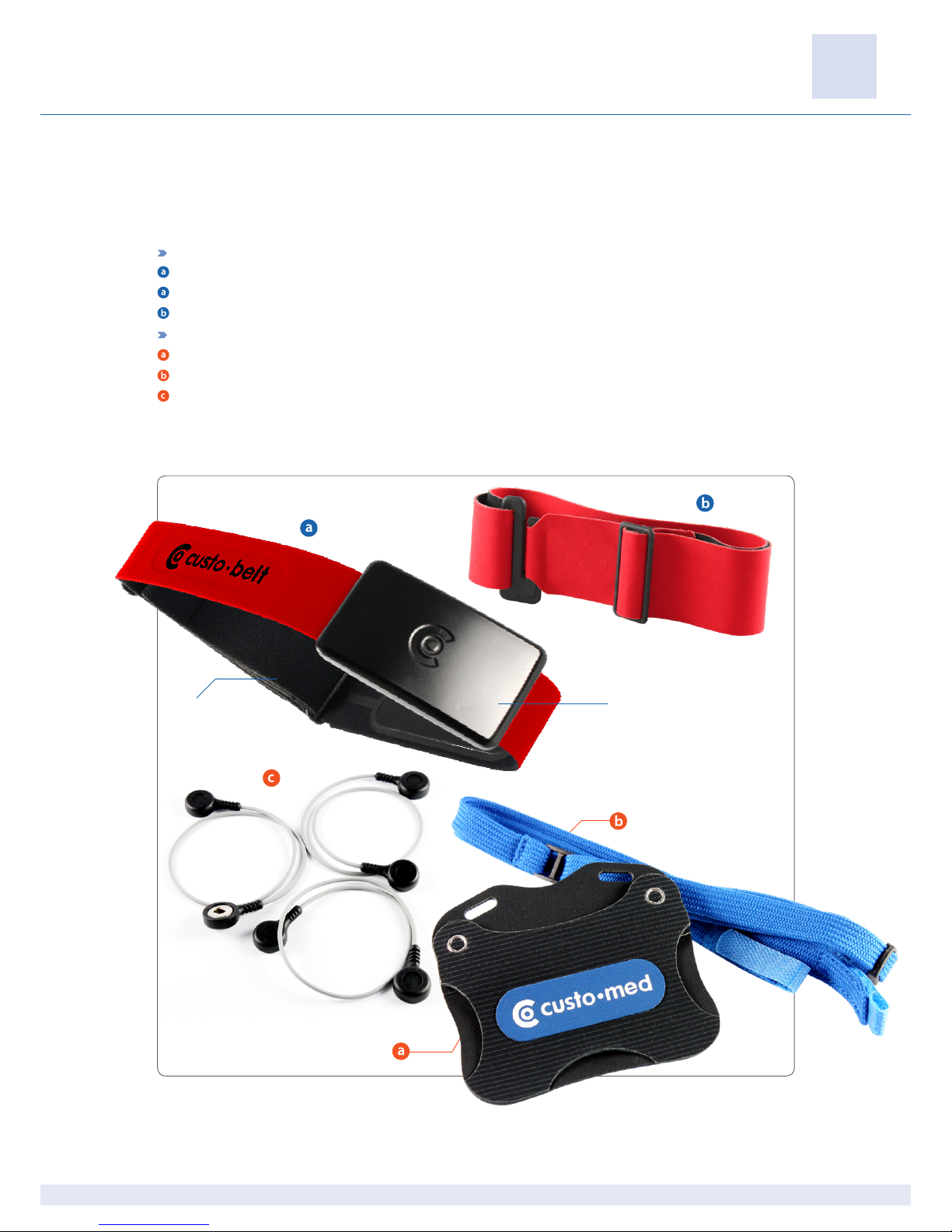
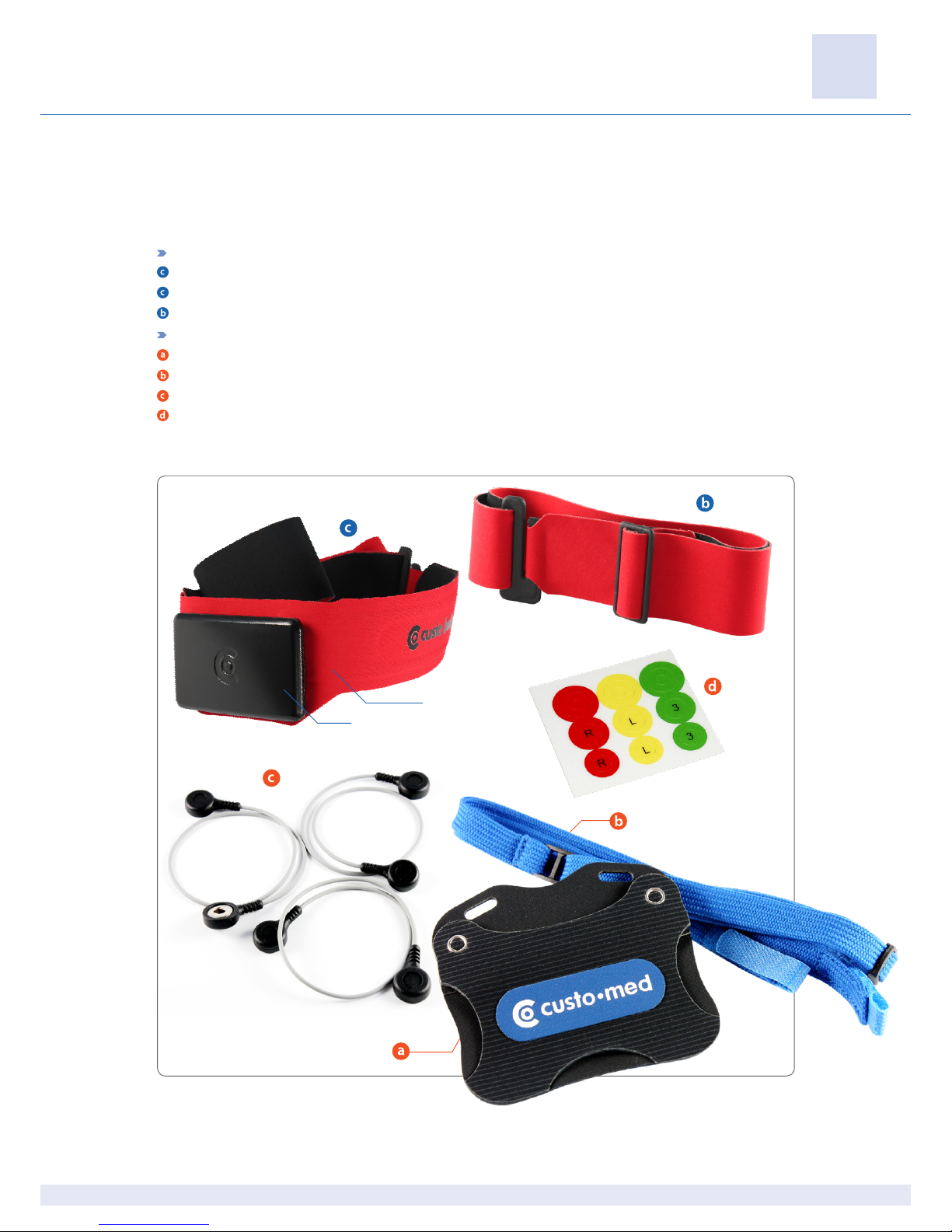
custo guard 1 sets – parts list
custo guard 1 set:
custo guard 1, 1-channel ECG transmitter
custo belt 1 red, 1-channel electrode belt
custo belt 1/3 extender, extension piece for the electrode belt
Adapter set for custo guard 1, for fitting without the electrode belt:
Carrying case for custo guard
Neck strap for case
Cable adapter for adhesive electrodes (1 piece)
2.3 Part names, components for ECG transmission
ECG transmitter
Electrode belt
Page 7
MHW 0010 – DK 1696 | Version 001 – 21/09/2017 | custo med GmbH
2
[2] Cardiac Rehabilitation hardware, custo guard (custo cardio concept) | page 7
Cardiac Rehabilitation
Hardware, description of device for custo guard (custo cardio concept)
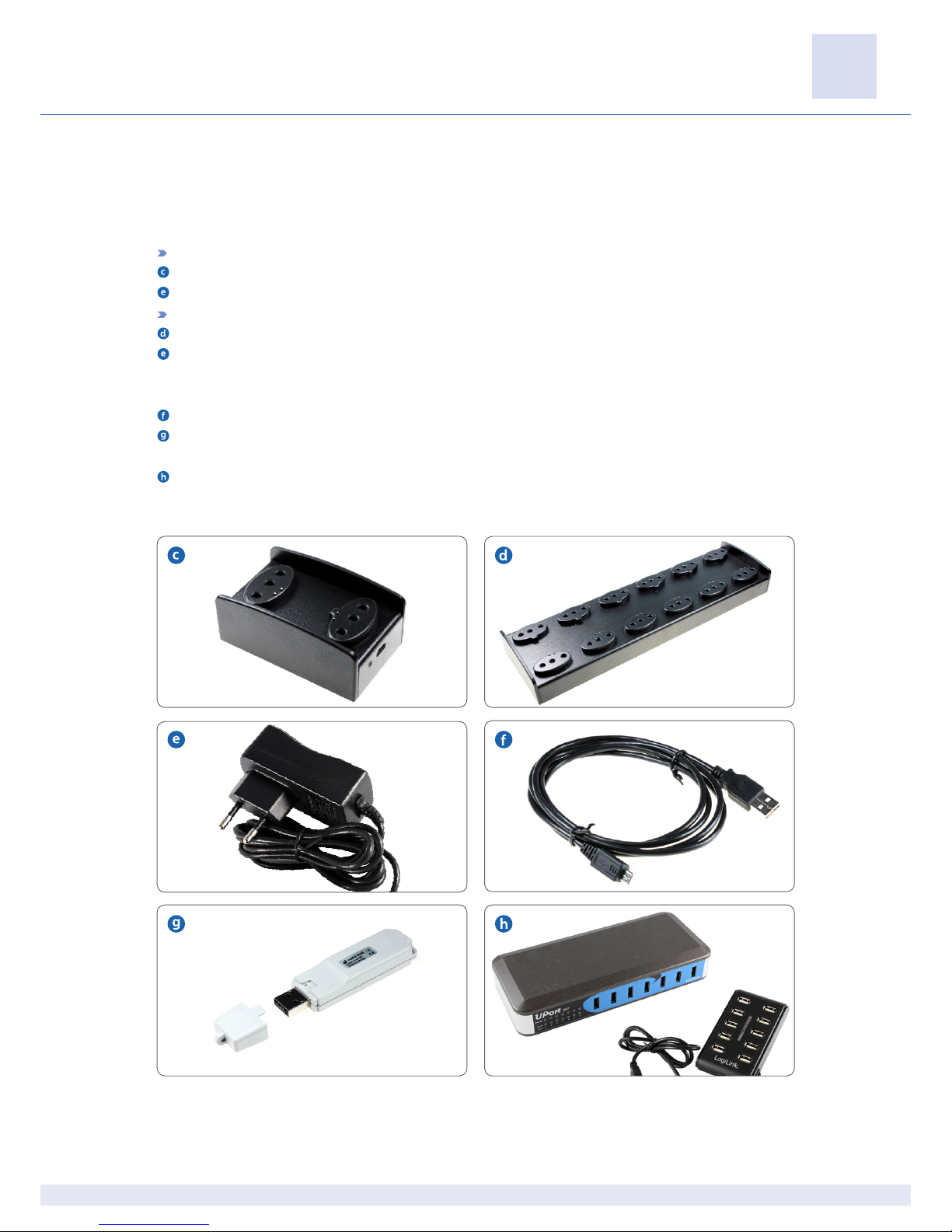
custo guard 3 set – parts list
custo guard 3 set:
custo guard 3, 3-channel ECG transmitter
custo belt 3 red, 3-channel electrode belt
custo belt 1/3 extender, extension piece for the electrode belt
Adapter set for custo guard 3, for fitting without the electrode belt:
Carrying case for custo guard
Neck strap for case
Cable adapter for adhesive electrodes (3 piece)
Coding rings for cable adapter and ECG transmitter
Electrode belt
ECG transmitter
Page 8
MHW 0010 – DK 1696 | Version 001 – 21/09/2017 | custo med GmbH
2
[2] Cardiac Rehabilitation hardware, custo guard (custo cardio concept) | page 8
Cardiac Rehabilitation
Hardware, description of device for custo guard (custo cardio concept)
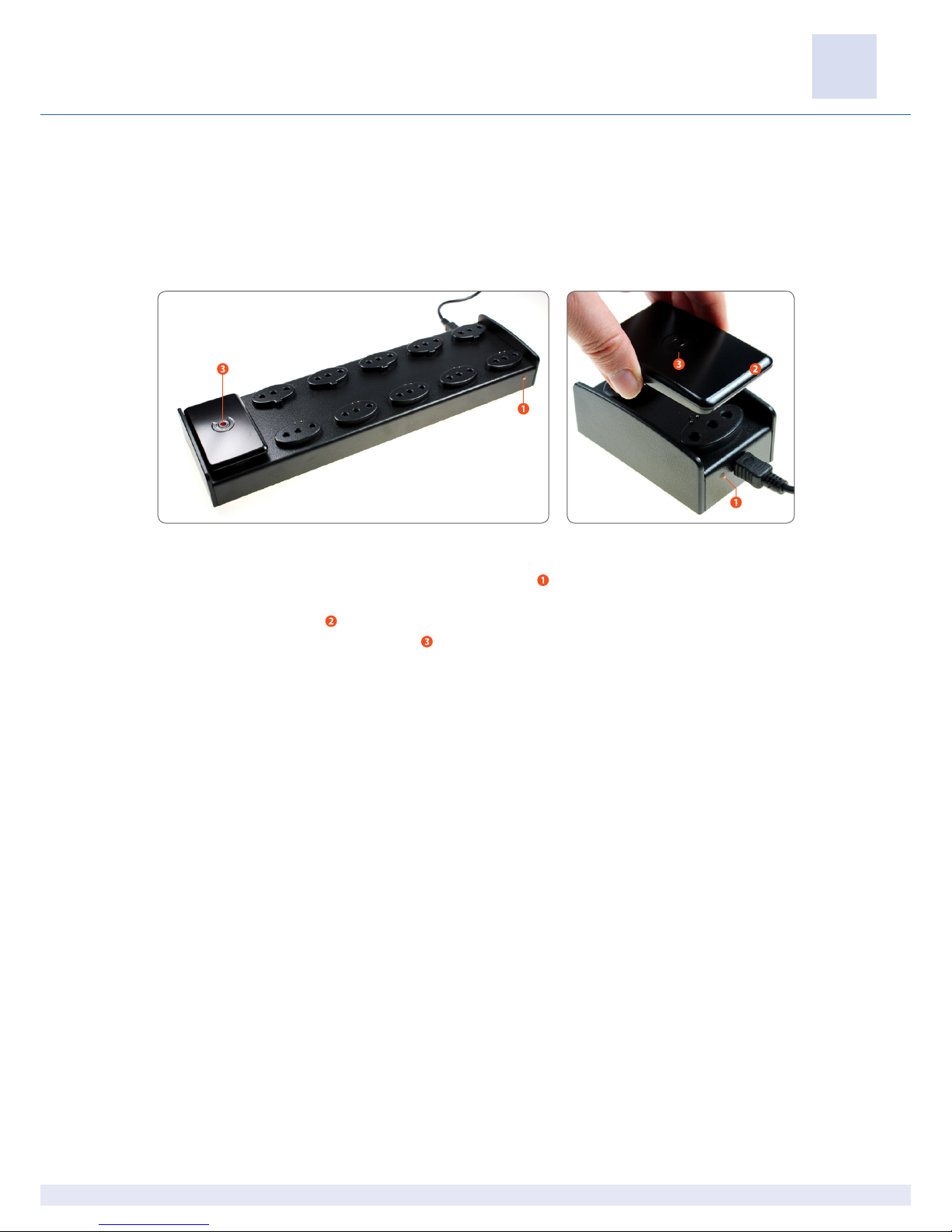
Accessory sets – parts list
custo charger single set:
custo charger single (charger and programming unit for an ECG transmitter)
Power supply unit for custo charger single and custo charger multi
custo charger multi set:
custo charger multi (charger for six ECG transmitters)
Power supply unit for custo charger single and custo charger multi
Accessories – parts list
Micro USB cable to connect the custo charger single to the PC
custo com RF (radio receiver unit for ECG transmitter)
Requirement: one custo com RF for each custo guard, plus an additional custo com RF (n+1)
USB hub to connect several custo com RF (e.g. from LogiLink or MOXA)
Page 9
MHW 0010 – DK 1696 | Version 001 – 21/09/2017 | custo med GmbH
2
[2] Cardiac Rehabilitation hardware, custo guard (custo cardio concept) | page 9
Cardiac Rehabilitation
Hardware, description of device for custo guard (custo cardio concept)
2.4 Charging the custo guard ECG transmitter
IMPORTANT: Charge the custo guard ECG transmitters
before first use!
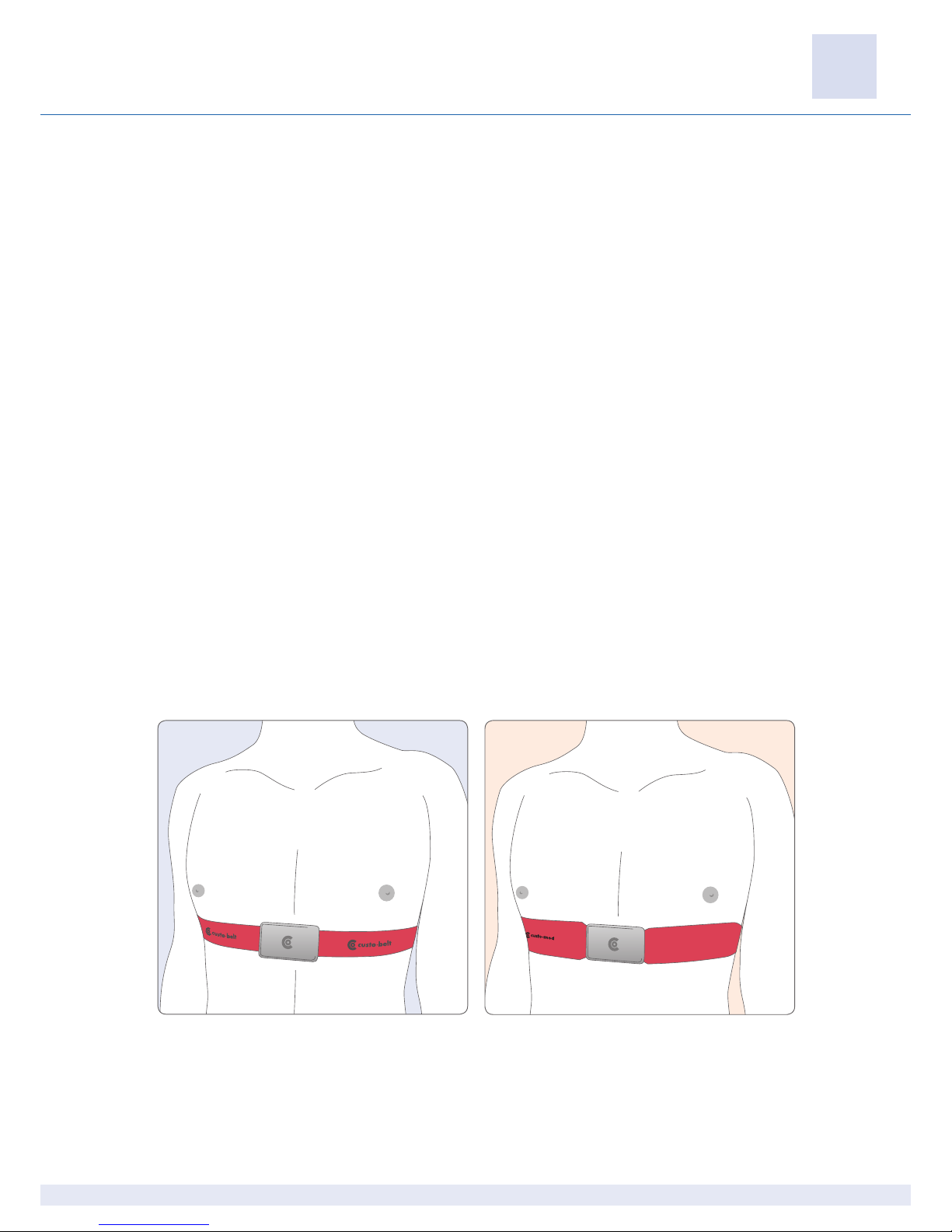
Connect the charger to the mains with the plug-in power supply unit. The charger is
ready for operation when the LED on the charger lights up orange .
Use only the supplied power supply unit for the charger! Place the custo guard ECG
transmitter onto the charger . The direction of insertion is based on the shape of
the housing. The LED in the ECG transmitter indicates the charging status. Re-
move the ECG transmitter from the charger when it is fully charged.
RED: .........................................ECG transmitter is charging
GREEN: .............................................. Charging complete
For technical reasons, it can occur that an ECG transmitter that is indicated to be
"completely charged" (green LED) shows the status "Charging" (red LED) again if it
is removed and then reinserted into the charger.
Rechargeable battery charging and runtime
The maximum charging time is 2 hours. When recording one channel the maximum
runtime is approx. 3 days (custo guard 1), when recording 3 channels approx. 2
days (custo guard 3). The rechargeable battery capacity or the maximum runtime
decreases over time (80 % of the initial capacity after 300 charging cycles).
Proper handling of ECG transmitters and chargers
During the rehab session, place any ECG transmitters that are not being used on a
dry surface or towels – not in the charger. The rechargeable battery capacity of the
ECG transmitters is sufficient for at least one day. We recommend to charge the ECG
transmitters once a day (for example, at night). Carefully dry the ECG transmitters
before inserting them into the charger.
CAUTION: Charging damp ECG transmitters (perspiration, disinfectants) will lead to
the oxidation of the electric contacts in the charger.
Page 10
MHW 0010 – DK 1696 | Version 001 – 21/09/2017 | custo med GmbH
2
[2] Cardiac Rehabilitation hardware, custo guard (custo cardio concept) | page 10
Cardiac Rehabilitation
Hardware, description of device for custo guard (custo cardio concept)
2.5 Preparing the patient
2.5.1 Fitting the custo guard ECG transmitter with an electrode belt
The exercise devices and exercise stations should be configured in custo diagnostic
before the rehab session is started (see part 3 (chapter Software) in this modular
Operating Manual).
Then attach the custo guard ECG transmitters to the patients. The ECG transmitter
is attached to the upper part of the body with the custo belt electrode belt. The skin
must be free from grease and personal care products.
The electrode belt must be set up so that it fits tightly and the contact surfaces
make good contact, but that the patient is not impaired or hindered in breathing.
The contact surfaces on the inside of the electrode belt must not be soiled. Soiling
will affect the ECG quality.
If you cannot obtain a good ECG signal with the belt position shown, change the
position of the ECG transmitter. Move the ECG transmitter slightly to the left or
right and watch the ECG signal.
CAUTION:
The electrode contact surfaces must always be in contact with the skin. Ensure that
there are no textiles between the electrode and the skin (e.g. electrode belt’s excess
length, retaining strap or T-shirt).
custo guard 3 with custo belt 3
(3-channel ECG)
custo guard 1 with custo belt 1
(1-channel ECG)
Page 11

MHW 0010 – DK 1696 | Version 001 – 21/09/2017 | custo med GmbH
2
[2] Cardiac Rehabilitation hardware, custo guard (custo cardio concept) | page 11
Cardiac Rehabilitation
Hardware, description of device for custo guard (custo cardio concept)
TIPS how to improve the ECG quality:
Moisten the contact surfaces on the inside of the electrode belt with water,
saline solution or contact spray.
Make sure there are no obstructions between the ECG transmitter and the custo
com RF radio receiver unit (i.e. patients must not exercise with their arms crossed
over their chest, for example).
Before starting the exercise, always check the ECG in the exercise station over-
view in custo diagnostic and perform measures to improve the ECG if necessary.
2.5.2 Sitting position on the ergometer
Make sure that the patient is in an optimal sitting position. The extended leg is
slightly bent when the pedal is at the bottom. The upper body is straight when
pedalling or slightly bent forward. If the patient is wearing a custo guard, he should
not sit with his arms crossed on the ergometer as this will interfere with the radio
waves.
2.5.3 Blood pressure cuff
Fit the blood pressure cuff carefully. The mark or the microphone must rest directly
on the brachial artery.
Page 12
MHW 0010 – DK 1696 | Version 001 – 21/09/2017 | custo med GmbH
2
[2] Cardiac Rehabilitation hardware, custo guard (custo cardio concept) | page 12
Cardiac Rehabilitation
Hardware, description of device for custo guard (custo cardio concept)
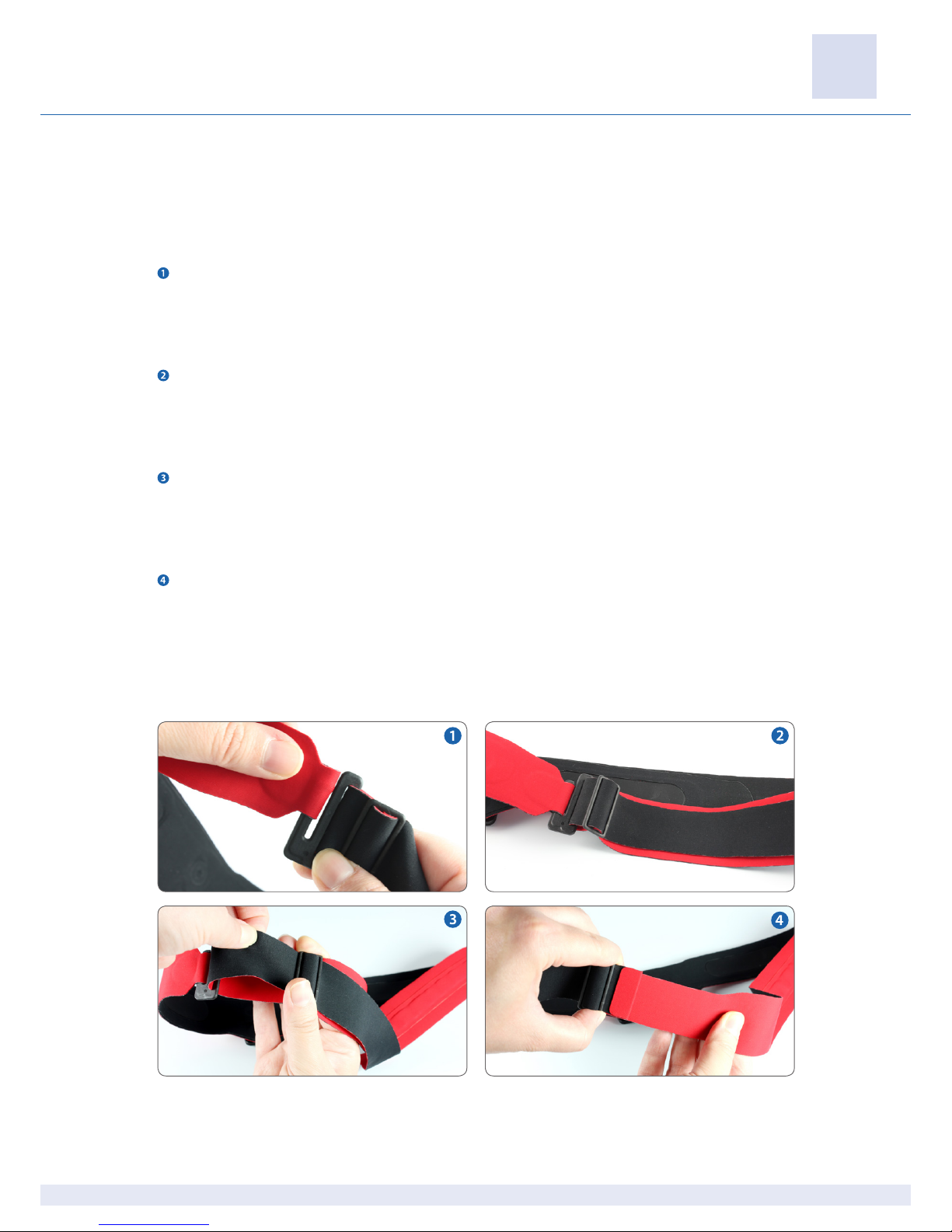
2.5.4 Adjusting the length of the custo belt
Opening and closing the custo belt
To open the custo belt, pull the material loop off the black plastic hook. To close the
custo belt, pull the material loop back over the black plastic hook. Then adjust the
belt length with the length adjustment to the circumference of the patient's chest..
Initial minimum length position
The length adjustment slider is located directly next to the point where the material
becomes wider on the custo belt. The elastic excess length is completely pulled
through the slider so that the slider is directly next to the black plastic hook.
Adjustment from minimum length to medium length
Hold the slider with your right hand. The upper layer of material, next to the slider on
the left, is pulled through the slider until there is no more elastic excess length. The
black plastic hook is then pulled to the left.
Adjustment from medium length to maximum length
Hold the slider or the upper layer of material next to the slider on the left with your
left hand and pull the material next to the slider on the right to the right until the
slider is situated next to the black plastic hook.
Page 13
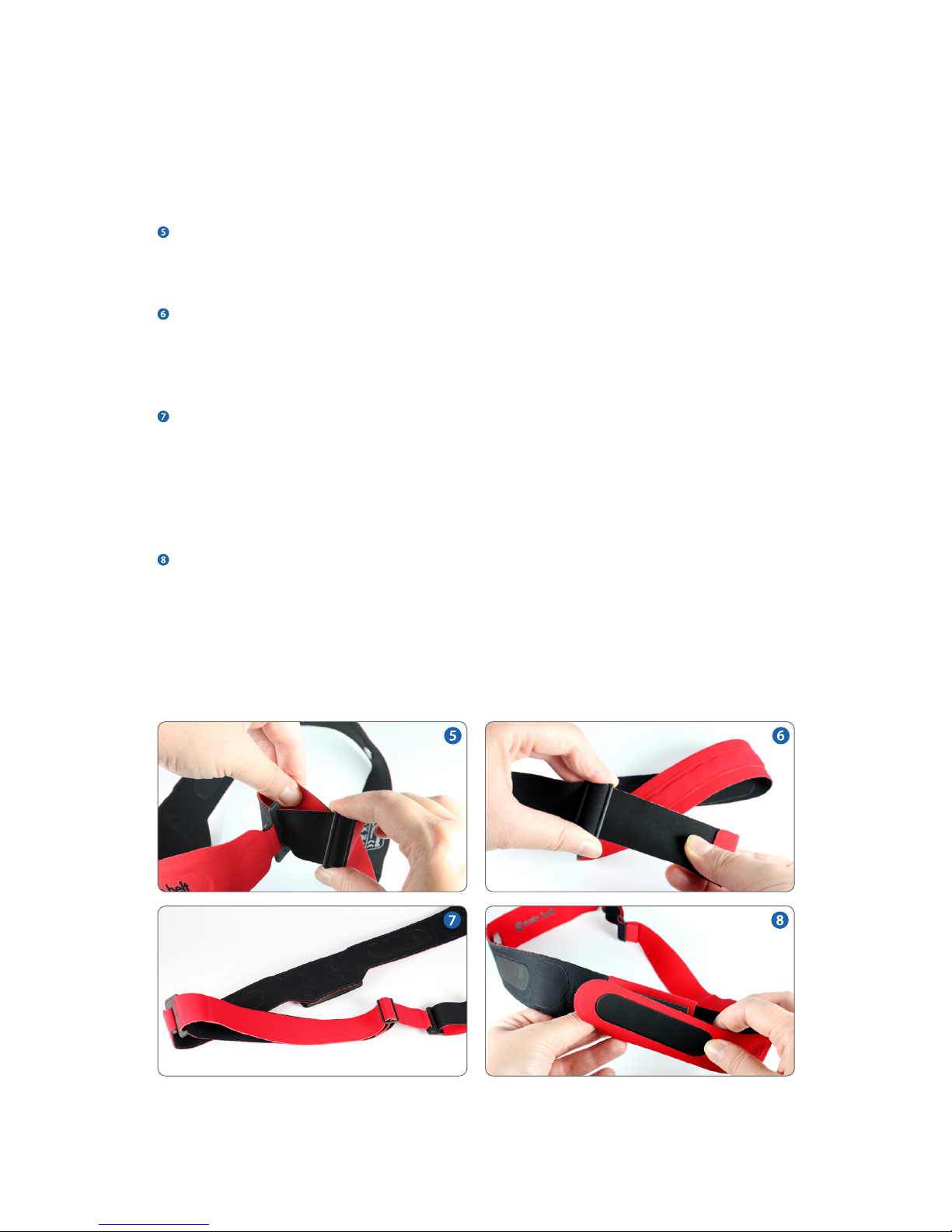
Adjustment from maximum length to medium length
Hold the slider with your right hand, grasp the lower layer of material to the left of
the slider and pull it through the slider up to the wide point.
Adjustment from medium length to minimum length
Hold the slider with your left hand and pull the elastic excess length completely to
the right through the slider until the slider is back between the black plastic hook
and the wide material point.
Extension with the custo belt extender
If the maximum length is not sufficient, use a custo belt extender (extension piece).
The custo belt extender is adjusted to the minimum length when the slider is locat-
ed next to the material loop. The maximum length is reached when the slider is next
to the black plastic hook. There is no limit on the number of custo belt extenders
that can be used.
Movable back electrode
For petite patients the back electrode is fitted towards the front electrode (see Fig-
ure) so that the back electrode does not rest on the spine. Open the Velcro fastener
and turn the electrode module to the desired position. Close the Velcro fastener
again. The electrodes must always be in full contact with the patient's skin.
Page 14
MHW 0010 – DK 1696 | Version 001 – 21/09/2017 | custo med GmbH
2
[2] Cardiac Rehabilitation hardware, custo guard (custo cardio concept) | page 14
Cardiac Rehabilitation
Hardware, description of device for custo guard (custo cardio concept)
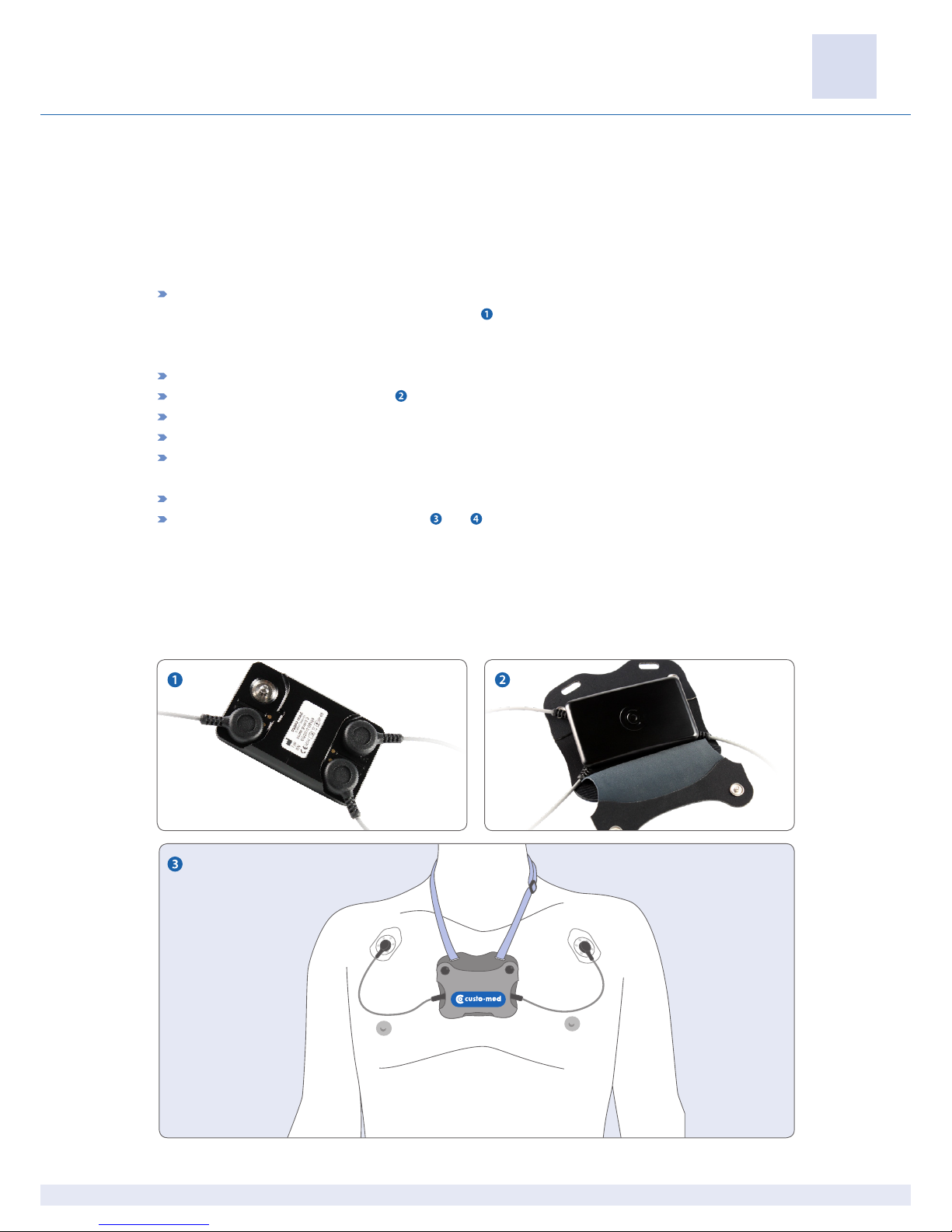
2.5.5 Attaching custo guard 1 without an electrode belt to the patient
If it is not possible to use the electrode belt, the custo guard 1 ECG transmitter can
be carried in a case around the patient‘s neck:
Attach the cable adapters to the ECG transmitter.
For custo guard 3, three cable adapters are attached
(to the snap fastener contacts with the designations R, L and 3)
1)
.
For custo guard 1, two cable adapters are attached
1)
.
Attach the electrodes (e.g. custo sensive) to the cable adapters.
Place the ECG transmitter in the case and close the case.
Attach the neck strap to the case.
Adjust the neck strap to the desired length.
Clean the electrode application points,
the skin must be free from grease and personal care products.
Remove the protective films from the electrodes.
Affix the electrodes to the chest, see Figure and .
To prepare the electrode application points we recommend the use of custo prep
ECG preparation cream. Rub the skin areas to which the electrodes will be attached
lightly with custo prep. We also recommend the use of custo sensive ECG electrodes
(latex-free, PVC-free, skin-friendly, permeable to air and moisture).
L
L
3 3
R R
1) The two snap fastener contacts
of a cable adapter have dierent
diameters. Only one end of the
cable adapter will fit onto the ECG
transmitter contacts. For fitting, try
both ends, if required. Do not press
with force.
Page 15
MHW 0010 – DK 1696 | Version 001 – 21/09/2017 | custo med GmbH
2
[2] Cardiac Rehabilitation hardware, custo guard (custo cardio concept) | page 15
Cardiac Rehabilitation
Hardware, description of device for custo guard (custo cardio concept)
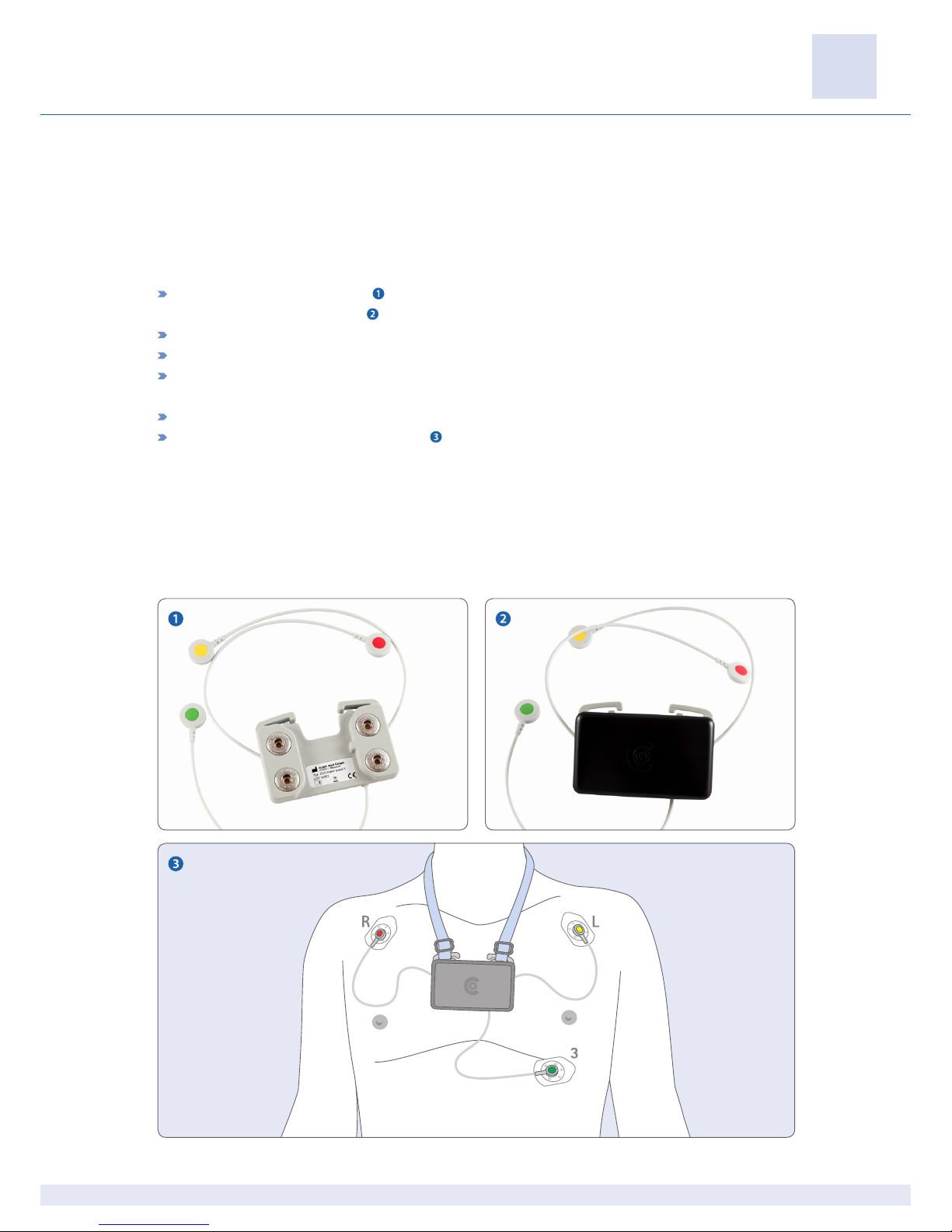
2.5.6 Attaching custo guard 3 with custo ECG cable guard 3
If it is not possible to use the electrode belt, the custo guard 3 ECG transmitter can
be fitted with the custo ECG cable guard 3:
Take the custo guard 3 ECG cable and firmly click the custo guard ECG trans-
mitter onto the 4 contact points .
Attach the neck strap to the hooks on the custo ECG cable guard 3.
Adjust the neck strap to the desired length.
Clean the electrode application points,
the skin must be free from grease and personal care products.
Remove the protective films from the electrodes.
Affix the electrodes to the chest, see Figure .
To prepare the electrode application points we recommend the use of custo prep
ECG preparation cream. Rub the skin areas to which the electrodes will be attached
lightly with custo prep. We also recommend the use of custo sensive ECG electrodes
(latex-free, PVC-free, skin-friendly, permeable to air and moisture).
L
3
R
Page 16
MHW 0010 – DK 1696 | Version 001 – 21/09/2017 | custo med GmbH
2
[2] Cardiac Rehabilitation hardware, custo guard (custo cardio concept) | page 16
Cardiac Rehabilitation
Hardware, description of device for custo guard (custo cardio concept)
2.6 Technical data and system requirements
custo guard
Number of ECG channels 1 or 3
Adjustable sampling rates 125 Hz, 250 Hz, 500 Hz, 1 kHz
Resolution 10 bit
3 dB band width ECG amplifier 0.5 Hz – 150 Hz
Measuring range ECG 10 mV
Minimum perception level 10 μV
Radio frequency band ISM 2.4 Ghz
Radio transmission power 1 mW maximum
Radio modulation GFSK
Radio transmission rate 2 Mbps / 1 Mbps / 250 kbps
Radio performance Stationary frequency
Connection to the PC Via custo com RF (radio receiver unit)
Power supply Rechargeable lithium-polymer battery with 190 mAh
Battery runtime 1-channel ECG: approx. 5 days, 3-channel ECG: approx. 3 days
approx. 100 days on standby (73 µA standby current)
Charging time of battery approx. 3 hours (when fully discharged)
Charging current max. 80 mA
Display and control elements LED display for the charging status
Dimensions approx. 70 * 42 * 12 mm (L * W * H)
Weight 30 g
Ingress protection rating IP65
Operating conditions Temperature +10°C ... 45°C
Air humidity 10 ... 95 % rH
Air pressure 700 ... 1060 hPa
Transport and storage Temperature -20°C ... +40°C
conditions Air humidity 10 ... 95 % rH
Air pressure 700 ... 1060 hPa
Classification Device with internal power supply
Class IIa,
Type BF
DIN EN 60601-1, DIN EN 60601-2-47
(Holter standard – as far as applicable)
custo belt electrode belt 1-channel version 3-channel version
Length (without stretching) 570 mm to 840 mm 680 mm – 1400 mm
Width 30 mm min. 30 mm, max. 50 mm
Composition PA, biocompatible in accordance with EN ISO 10993-1,
Oeko-Tex® Standard100
Alternative to custo belt ECG cable adapter, length approx. 300 mm
1) The rechargeable battery
runtime is dependent, among other
things, on the distance and obstacles
between the receiver and transmitter (condition of the transmission
path) and the age and condition of
the rechargeable battery. After 300
or more charging cycles, the battery
has a capacity of 80 % of the
initial capacity.
Definition of charge cycle:
During a charge cycle the entire
battery power is used, however,
this does not have to occur in a
single charging operation. For
example, you can use a device for
several hours on a particular day,
use approximately half the capacity,
and then fully charge it again. If
the same procedure is repeated on
the following day, this is equal to
just one charging cycle and not two
charging cycles. It can therefore take
a few days for a charge cycle to be
fully completed.
2) If the custo watch is to be
stored for a longer period of time,
it should be recharged regularly
(our recommendation: every 3
months to approx. 60 %)
Page 17
MHW 0010 – DK 1696 | Version 001 – 21/09/2017 | custo med GmbH
2
[2] Cardiac Rehabilitation hardware, custo guard (custo cardio concept) | page 17
Cardiac Rehabilitation
Hardware, description of device for custo guard (custo cardio concept)
Recommended system requirements
Computer Intel Core i3-CPU with HD graphics 4400; 4 GB RAM
256 GB SSD or SSHD (for single-position systems 2TB HDD)
1 GBit network connection (not for single-position systems)
Fanless Dual-DVI (or DP) graphics card (for CPET)
Windows 8.1 x64 (PRO version for joining a domain)
Ports One USB 2.0 port per USB device (preferably not USB 3.0)
One COM port each for ergometer and treadmills (serial)
At least Version 4.0 if Bluetooth is installed
otherwise can be deactivated in the BIOS
Monitor 20“ TFT with DVI or DP port
Full HD resolution
Dual-TFT for spiroergometry
Printer 600 dpi
MonocRFome (colour recommended for spiroergometry)
USB 2.0 port or network connection
PCL-enabled (increases printing speed with the suitable driver)
General system requirements
Operating system Windows 7 SP1 – with current updates
(32 bit and 64 bit operating system)
Windows 8 (32 bit and 64 bit operating system)
Windows 8.1 (32 bit and 64 bit operating system)
Windows 10 (32 bit and 64 bit operating system)
Windows Server 2003 (32 bit and 64 bit operating system)
Windows Server 2008 (32 bit and 64 bit operating system)
Windows Server 2008 R2
Windows Server 2012
Windows Server 2012 R
older versions are not supported
PC The PC hardware should meet the minimum requirements of the
operating system used. Provide additional RAM (1 GB) for
custo diagnostic. Please ensure that there is sufficient free space
on the hard disk for the custo diagnostic evaluations.
The PC must meet the requirements of the safety standard
DIN EN 60950 for information technology equipment.
File sizes of the evaluations Holter: approx. 15 MB (max. 60 MB)
ABPM: approx. 128 KB (max. 512 KB)
Holter-ABPM: approx. 20 MB (max. 25 MB)
Resting ECG:
approx. 200 KB (for an ECG of approx. 10 seconds)
Stress ECG: approx. 6 MB (for an ECG of approx. 20 minutes)
CPET: refer to stress ECG
Spirometry: approx. 50 KB (max. 256 KB)
Rehab: approx. 6 MB (for approx. 45 minutes of exercise)
MCT: approx. 10 – 15 MB for 24-hour ECG
Hardware & ports DVD or CD-ROM drive,
USB port
Page 18
MHW 0010 – DK 1696 | Version 001 – 21/09/2017 | custo med GmbH
2
[2] Cardiac Rehabilitation hardware, custo guard (custo cardio concept) | page 18
Cardiac Rehabilitation
Hardware, description of device for custo guard (custo cardio concept)
Manufacturer's declaration – electromagnetic emissions
Patient cables (ECG cable adapter): 240 mm
Manufacturer's declaration – electromagnetic emissions
The custo guard ECG transmitter is designed for use in the electromagnetic environment stated below. The customer or user of custo guard should make sure that it is used in such an environment.
Manufacturer’s declaration – electromagnetic immunity
The custo guard ECG transmitter is designed for use in the electromagnetic environment stated below. The customer or user of custo guard should make sure that it is used in such an environment.
COMMENT: UT is the alternating supply voltage prior to application of test levels
2.7 Manufacturer's declaration regarding EMC (electromagnetic compatibility)
according to DIN EN 60601-1-2:2007
Emission measurements
RF emissions according to CISPR11
RF emissions according to CISPR11
Harmonics
according to IEC61000-3-2
Voltage fluctuations/
flickers according to IEC61000-3-3
Compliance
Group 1
Class B
Not applicable
Not applicable
Electromagnetic environment - guidelines
custo guard must emit electromagnetic energy in order
to perform its intended function. Other electronic devices
in the vicinity may be affected.
custo guard is suitable for use in all establishments, including domestic establishments and those directly connected to the public low voltage power supply network
that also supplies buildings used for domestic purposes.
Immunity tests
Electrostatic
discharge (ESD)
according to IEC 61000-4-2
Fast transient electric inter-
ference factors/bursts
according to IEC 61000-4-4
Surges
according to IEC 61000-4-5
Voltage drops,
short-time interruptions
and fluctuations
in the supply voltage
according to IEC 61000-4-11
Magnetic field with
supply frequency
(50/60 Hz)
according to IEC 61000-4-8
IEC 60601 test level
± 6 kV contact discharge
± 8 kV air discharge
± 2 kV for net wires
± 1 kV for input and
output wires
± 1 kV push-pull voltage
± 2 kV push-push voltage
< 5 % UT for 0.5 periods
(> 95 % drop)
40 % UT for 5 periods
(60 % drop)
70 % UT for 25 periods
(30 % drop)
< 5 % U
T
(> 95 % drop for 5 s)
3 A/m
Compliance level
± 6 kV contact discharge
± 8 kV air discharge
Not applicable
Not applicable
Not applicable
3 A/m
Electromagnetic environment - guidelines
Floors should be made of wood or concrete or be equipped
with ceramic tiles. If the floor is provided with synthetic
material, the relative air humidity must be at least 30 %.
The quality of the supply voltage should correspond to
that of a typical business or clinical environment.
The quality of the supply voltage should correspond to
that of a typical business or clinical environment.
The quality of the supply voltage should correspond to
that of a typical business or clinical environment.
If the user of custo guard requires continued function,
even if interruptions occur in the power supply, it is
recommended to supply custo guard from an interruption-free power supply.
Magnetic fields with net frequency should correspond to
the typical values, as they can be found in the business
and clinical environment.
Page 19
MHW 0010 – DK 1696 | Version 001 – 21/09/2017 | custo med GmbH
2
[2] Cardiac Rehabilitation hardware, custo guard (custo cardio concept) | page 19
Cardiac Rehabilitation
Hardware, description of device for custo guard (custo cardio concept)
Manufacturer’s declaration – electromagnetic immunity
The custo guard ECG transmitter is designed for use in the electromagnetic environment stated below. The customer or user of custo guard should make sure that it is used in such an environment.
COMMENT 1:
With 80 MHz and 800 MHz the higher frequency range is valid.
COMMENT 2:
These guidelines may not apply in every case. The propagation of electromagnetic variables is influenced by absorptions and reflections of buildings, objects and people.
a) The field strength of stationary transmitters, such as e.g. base stations of mobile phones and land mobile radi-
os, amateur radio stations, AM and FM broadcasting as well as television networks cannot be exactly predeter-
mined theoretically. In order to determine the electromagnetic environment regarding the stationary transmitters, a study of the location should be considered. If the measured field strength exceeds the above-mentioned
compliance levels at the location where custo guard is used, the device should be watched in order to prove the
intended functions. If unusual performance features are observed, it may be necessary to take additional meas-
ures, for example reorienting or relocating custo guard.
b) Within the frequency range of 150 kHz to 80 MHz, the field strength should be less than 10 V/m.
Immunity tests
Conducted HR disturbances
according to IEC 61000-4-6
Radiated HR disturbances
according to IEC 61000-4-3
IEC 60601 test level
3 V
effective value
150 KHz to 80 Mhz
3 V/m
80 MHz to 2.5 GHz
Compliance level
[U1]V
Not applicable
E1 = 10 V/m
Electromagnetic environment - guidelines
Portable and mobile radio sets should not be used at a
closer distance to custo guard including the leads than
the recommended protective distance which is determined according to the equation applicable to the frequency of the transmitter.
Recommended protective distance:
d = [3.5/U1)] √P
d = [3.5/E1] √P for 80 MHz to 800 MHz
d = [7/E1] √P for 800 MHz to 2.5 GHz
with P as the nominal power of the transmitter in watt
(W) according to the indications of the transmitter manufacturer and d as the recommended protective distance
in meters (m).
According to an examination on-site a) the field strength
of stationary radio transmitters should be inferior to the
compliance level b) with regard to all frequencies.
In the vicinity of devices carrying the following symbol,
interference is possible:
Page 20
MHW 0010 – DK 1696 | Version 001 – 21/09/2017 | custo med GmbH
2
[2] Cardiac Rehabilitation hardware, custo guard (custo cardio concept) | page 20
Cardiac Rehabilitation
Hardware, description of device for custo guard (custo cardio concept)
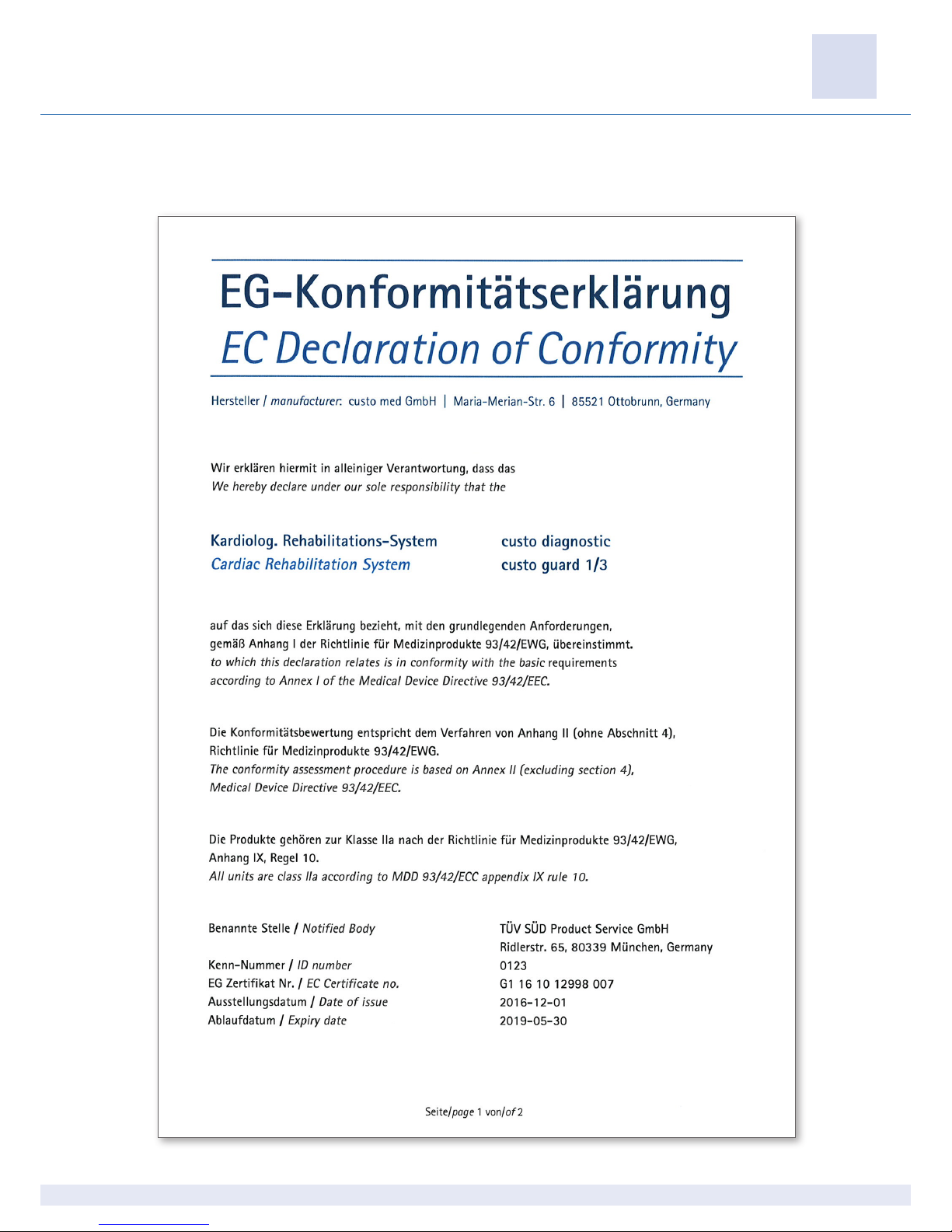
Recommended protective distances between portable
and mobile RF telecommunication devices and custo guard
The custo guard ECG transmitter is designed for operation in an electromagnetic environment in which the RF
transients are controlled. The user of custo guard can help avoid electromagnetic disturbances by maintaining
the minimum distance between portable and mobile RF telecommunication devices (transmitters) and the device
– depending on the initial performance of the communication device, as indicated below.
For transmitters whose maximum nominal power is not indicated in the above table, the recommended protective distance d can be determined in meters (m), using the equation affiliated with the corresponding column.
P is the maximum nominal power of the transmitter in watt (W) according to the indications of the manufacturer
of the transmitter.
COMMENT 1:
With 80 MHz and 800 MHz the higher frequency range is valid.
COMMENT 2:
These guidelines may not apply in every case. The propagation of electromagnetic variables is influenced by absorptions and reflections of buildings, objects and people.
Protective distance depending on the transmitting frequency in m
Nominal power of the transmitter
W
0.01
0.1
1
10
100
150 kHz to 80 MHz
d= [3.5/U1] √P
Not applicable
Not applicable
Not applicable
Not applicable
Not applicable
80 MHz to 800 MHz
d= [3.5/E1] √P
0.04
0.11
0.35
1.11
3.50
800 MHz to 2.5 GHz
d= [7/E1] √P
0.08
0.22
0.70
2.22
7.00
Page 21
MHW 0010 – DK 1696 | Version 001 – 21/09/2017 | custo med GmbH
2
[2] Cardiac Rehabilitation hardware, custo guard (custo cardio concept) | page 21
Cardiac Rehabilitation
Hardware, description of device for custo guard (custo cardio concept)
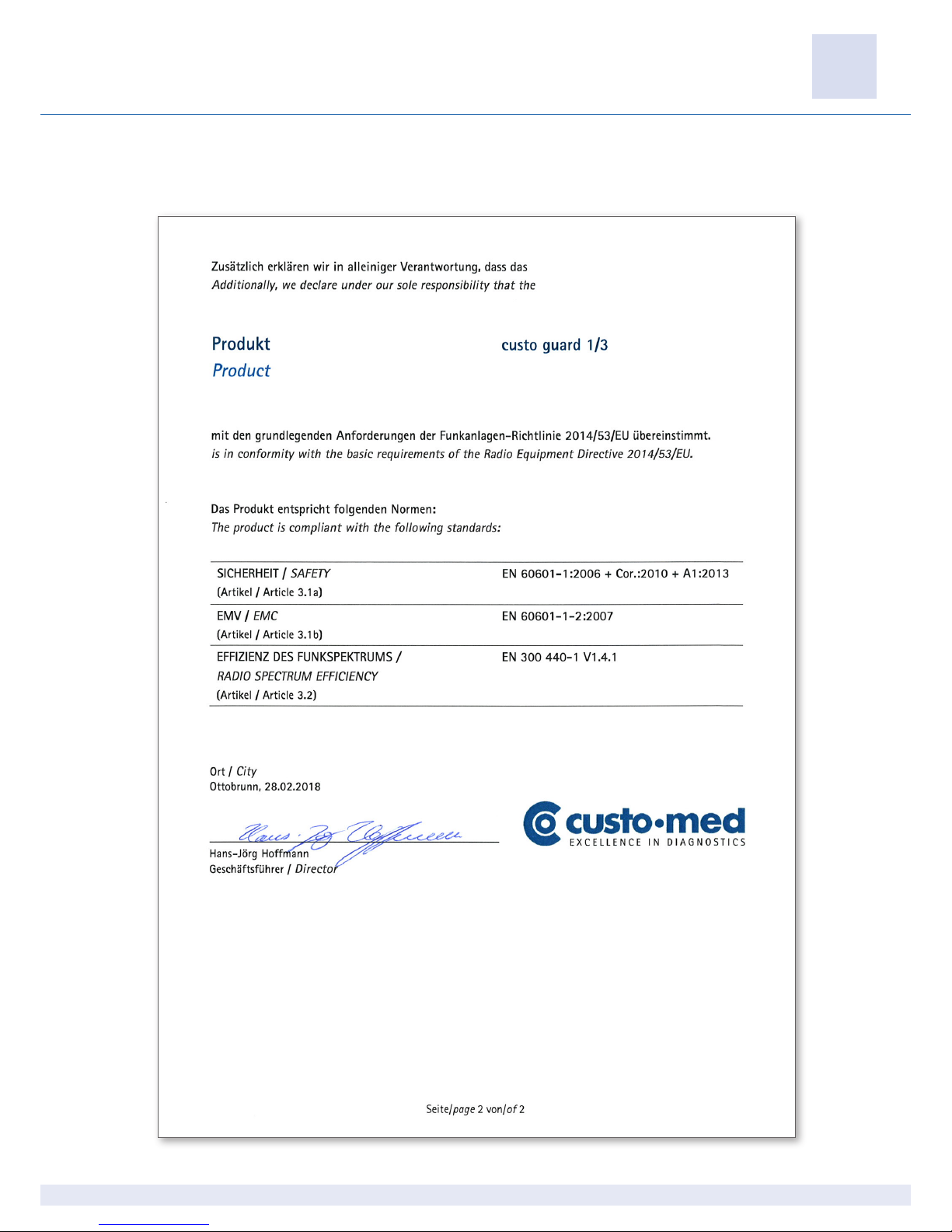
2.8 EC Declaration of Conformity
Page 22
MHW 0010 – DK 1696 | Version 001 – 21/09/2017 | custo med GmbH
2
[2] Cardiac Rehabilitation hardware, custo guard (custo cardio concept) | page 22
Cardiac Rehabilitation
Hardware, description of device for custo guard (custo cardio concept)
Page 23

MHW 0010 – DK 1696 | Version 001 – 21/09/2017 | custo med GmbH
2
[2] Cardiac Rehabilitation hardware, custo guard (custo cardio concept) | page 23
Cardiac Rehabilitation
Hardware, description of device for custo guard (custo cardio concept)
Set no. Set name Part no. Qty. Set/product designation
10100 custo guard 1
10102 1 custo guard 1
10101/R 1 custo belt 1 red for custo guard 1
10118 1 custo belt 1/3 extender for custo guard 1/3
10300 custo guard 3
10302 1 custo guard 3
10301/R 1 custo belt 3 red for custo guard 3
10118 1 custo belt 1/3 extender for custo guard 1/3
Accessories Part no. Set/product designation
10118 custo belt 1/3 extender for custo guard 1/3
10121 ECG cable guard 3
10311 Adapter set for guard 3
10312 Cable adapter set for adhesive electrodes for guard 3
23064 custo guard carry case when using a cable adapter
23065 Neck strap for custo guard case
10116 custo charger single set (including power supply unit)
10117 custo charger multi set (including power supply unit)
10104 custo com RF
2.9 List of product components and accessories
Page 24
Manufacturer's contact details:
custo med GmbH
Maria-Merian-Straße 6
85521 Ottobrunn
Germany
Phone: +49 (0) 89 710 98 - 00
Fax: +49 (0) 89 710 98 - 10
E-mail: [email protected]
Internet: www.customed.de
 Loading...