

Contech VortSentry HS Series, VortSentry HS36, VortSentry HS72, VortSentry HS60, VortSentry HS48 Maintenance Manual
...Page 1
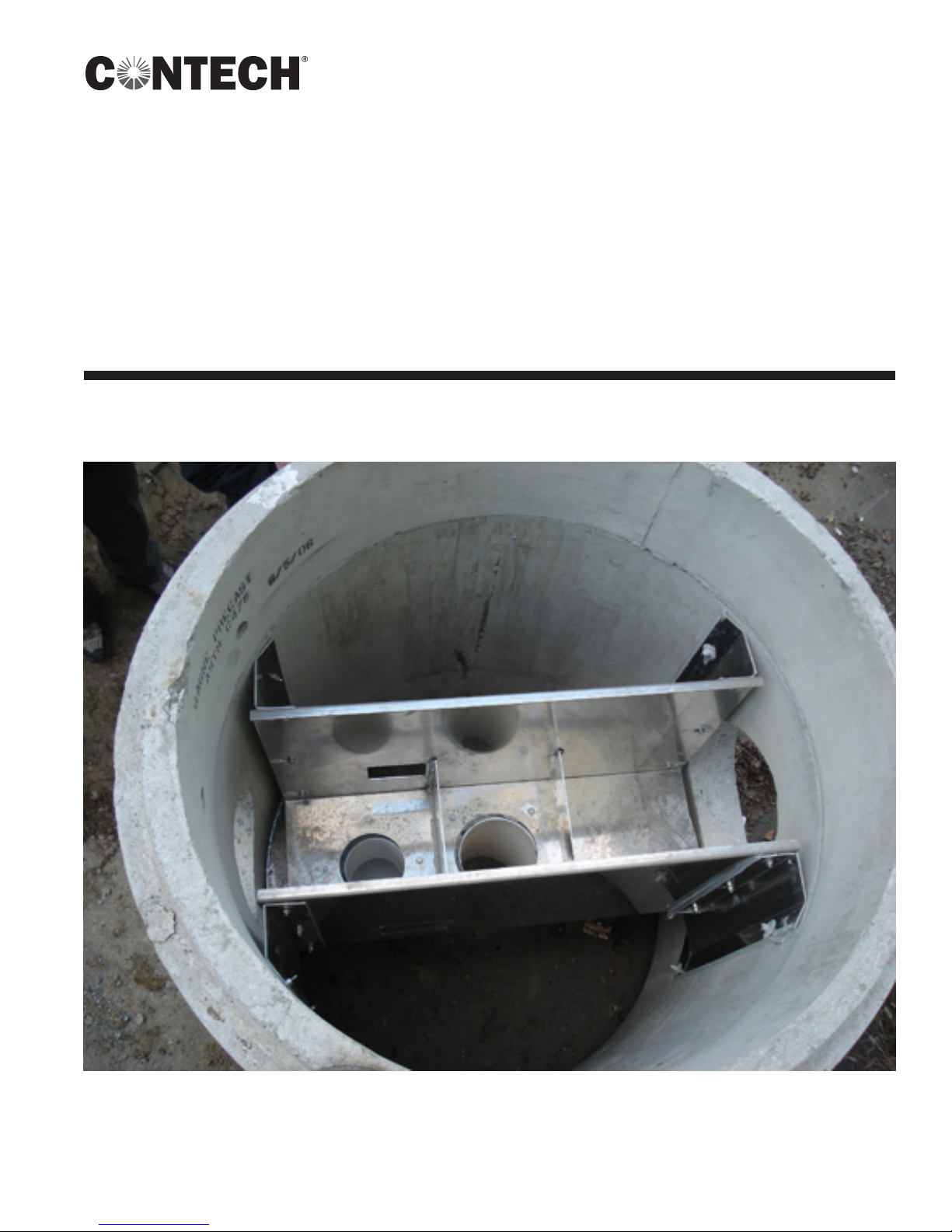
VortSentry® HS Maintenance Guide
Page 2
VortSentry® HS Maintenance
The VortSentry HS system should be inspected at regular intervals
and maintained when necessary to ensure optimum performance.
The rate at which the system collects pollutants will depend more
heavily on site activities than the size of the unit, i.e., unstable
soils or heavy winter sanding will cause the treatment chamber to
ll more quickly, but regular sweeping will slow accumulation.
Inspection
Inspection is the key to effective maintenance and is easily
performed. Pollutant deposition and transport may vary from
year to year and regular inspections will help ensure that the
system is cleaned out at the appropriate time. At a minimum,
inspections should be performed twice per year (i.e. spring and
fall) however more frequent inspections may be necessary in
equipment washdown areas and in climates where winter sanding
operations may lead to rapid accumulations of a large volume
of sediment. It is useful and often required as part of a permit
to keep a record of each inspection. A simple inspection and
maintenance log form for doing so is available for download at
www.contechstormwater.com.
The VortSentry HS should be cleaned when the sediment has
accumulated to a depth of two feet in the treatment chamber.
This determination can be made by taking two measurements
with a stadia rod or similar measuring device; one measurement
from the manhole opening to the top of the sediment pile and
the other from the manhole opening to the water surface. If the
difference between these measurements is less than the distance
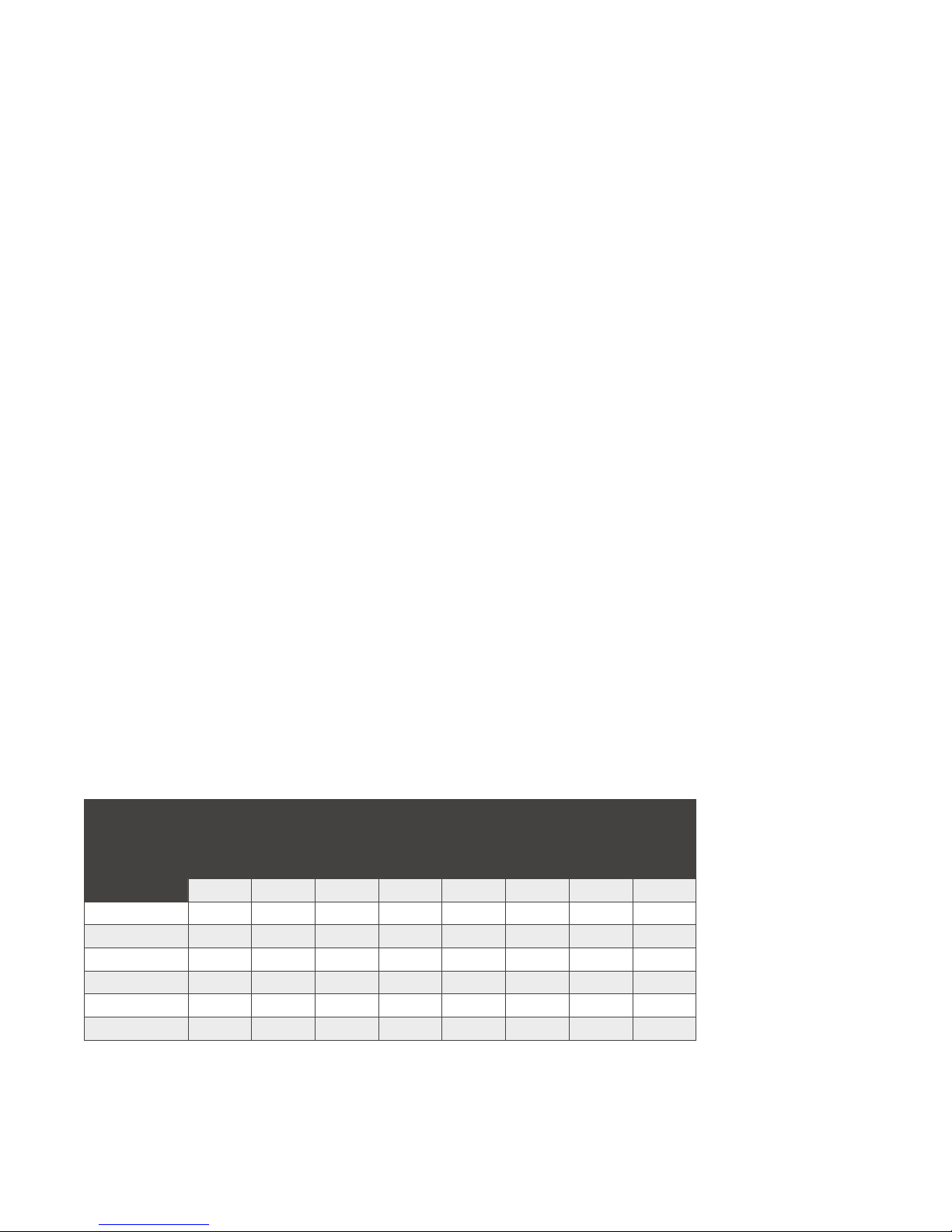
given in Table 1, the VortSentry HS should be maintained to
ensure effective treatment.
Cleaning
Cleaning of the VortSentry HS should be done during dry weather
conditions when no ow is entering the system. Cleanout of the
VortSentry HS with a vacuum truck is generally the most effective
and convenient method of excavating pollutants from the system.
Simply remove the manhole cover and insert the vacuum hose
into the sump. All pollutants can be removed from this one access
point from the surface with no requirements for Conned Space
Entry.
In installations where the risk of petroleum spills is small, liquid
contaminants may not accumulate as quickly as sediment.
However, an oil or gasoline spill should be cleaned out
immediately. Motor oil and other hydrocarbons that accumulate
on a more routine basis should be removed when an appreciable
layer has been captured. To remove these pollutants, it may be
preferable to use adsorbent pads, which solidify the oils. These
are usually much easier to remove from the unit individually, and
less expensive to dispose than the oil/water emulsion that may be
created by vacuuming the oily layer. Floating trash can be netted
out if you wish to separate it from the other pollutants.
Manhole covers should be securely seated following cleaning
activities to prevent leakage of runoff into the system from above
and also to ensure proper safety precautions. If anyone physically
enters the unit, Conned Space Entry procedures need to be
followed.
Disposal of all material removed from the VortSentry HS should
be done is accordance with local regulations. In many locations,
disposal of evacuated sediments may be handled in the same
manner as disposal of sediments removed from catch basins or
deep sump manholes. Check your local regulations for specic
requirements on disposal.
VortSentry HS
Diameter
Model
in m ft m yd
HS36 36 0.9 3.6 1.1 0.5 0.4 83 314
HS48 48 1.2 4.7 1.4 0.9 0.7 158 598
HS60 60 1.5 6 1.8 1.5 1.1 258 978
HS72 72 1.8 7.1 2.2 2.1 1.6 372 1409
HS84 84 2.1 8.4 2.6 2.9 2.2 649 2458
HS96 96 2.4 9.5 2.9 3.7 2.8 845 3199
Table 1: VortSentry HS Maintenance Indicators and Sediment Storage Capacities.
Distance Between
Water Surface and
Top of Storage
Sump
Sediment Storage Oil Spill Storage
3
3
m
gal liter
Page 3

VortSentry HS Inspection & Maintenance Log
VortSentry HS Model: Location:
Date
Water depth
to shipment
Floatable layer
1
thickness
Describe
2
maintenance
performed
Maintenance
Personnel
Comments
1. The water depth to sediment is determined by taking two measurements with a stadia rod: one measurement from the manhole opening to the
top of the sediment pile and the other from the manhole opening to the water surface. If the difference between these measurements is less
than the distance given in Table 1, the system should be cleaned out. Note: To avoid underestimating the volume of sediment in the chamber, the
measuring device must be carefully lowered to the top of the sediment pile.
2. For optimum performance, the system should be cleaned out when the oating hydrocarbon layer accumulates to an appreciable thickness. In
the event of an oil spill, the system should be cleaned immediately.
 Loading...