

Page 1

< wheelchair user manual
R
Page 2

!
It is recommended you do not remove your
Chunc wheelchair from the box or assemble
it without a Chunc representative, your
distributor/dealer or a trained healthcare
professional in attendance.
Take care when unpacking your Chunc
wheelchair and ask somebody to assist you
with the heavier parts.
Check all ordered parts are present, in
working order and are free from damage. In
the inlikely event you find a fault, contact your
supplier immediately.
< before use
> Before transferring the user, an inspection should be made of the product, ensuring all required
parts are secured and in good working order.
> Special attention should be paid to the grey hand tightened components and particularly the
backrest collet caps and the caution label at the base of the backrest.
> Ensure the wheelchair rolls freely, without excessive noise or vibration; if you are uncertain of
the wheelchair’s performance, it should not be used and your Chunc representative should be
contacted as soon as possible.
< Intended use including transportation
The Chunc One is a manual attendant controlled wheelchair. The Chunc Adapt is a manual attendant
controlled wheel base for use with a surrogate seating system. A range of accessories is available which
are intended to provide additional mobility, postural management and adjustable seating solutions.
All Chunc One wheelchairs are intended for a single occupant with moderate to specialist needs
such as cerebral palsy and whose mass does not exceed 110kg /242b. The maximum load capacity
(including an occupant up to 110kg) and any auxiliary equipment (such as communication and
respiratory aids) and, if applicable, surrogate seating for the Adapt, should not exceed 110kg/242lb.
The wheelchairs are designed for indoor and outdoor use; however they are not intended for use on
rough terrain.
All Chunc wheelchairs are suitable for use as a forward facing seat in a motor vehicle when used in
conjunction with 4 point tie down restraints (WTORS); see section “Safe Transportation in a motor
vehicle” or QLK type.
< getting started
R
page 1
Page 3

< postural management
Chunc wheelchairs are Class 1 medical devices and must not be used to seat any
person without prior consultation of a qualified health care professional. A qualified
health care professional should be present when fitting or adjusting the Chunc
wheelchair and accessories to an occupant.
The occupant’s seating posture and the positioning of adjustable parts and accessories
should be monitored closely and adjusted as directed by a healthcare professional
in accordance with the instructions in this manual. Ensure harnesses are fitted to the
manufacturer’s instructions and their adjustment monitored closely. Any adjustments
should be as directed by a health care professional and inaccordance with the
manufacturer’s instructions.
Failure to comply with these washing instructions may result in the reduction of
performance of your product. Over a prolonged period this could constitute a safety
hazard.
< lifting
A minimum of two people should only attempt this operation. Ensure the handle grips
are as high as possible and tightened, resting against the fixed end caps. If the Chair
and occupant need to be lifted, lift using the front tie down points and the rear handle
grips.Do not lift the wheelchair with the footrests.
< stability
Consider the stability of the wheelchair and occupant at all times, especially when on
slopes and uneven ground. Movement of the user and the occupant’s body position
can affect stability. Keep the user in a seated position whenever possible, with their
back firmly against the backrest.
Do not place bags or any other unauthorised equipment on the framework. Ensure the
anti-tip levers are engaged at all times where practical. When placing an occupant in a
fully reclined position consider their body position’s affect on stability.
< for your safety
At Chunc, safety is paramount in the product’s design, development and manufacture.
Misuse and adverse environments can lead to potentially hazardous situations that
could result in injury or even death. It is therefore essential this manual is read prior to
performing maintenance on a Chunc wheelbase/wheelchair and kept for reference. At
Chunc we also believe in continuous improvement. If you have any questions or comments about our customer service, product literature or products we would be pleased
to receive them. This manual can be downloaded from www.chunc.com
Chunc wheelchairs and accessories are of modular design and can be maintained
using basic tooling as detailed in section ‘Tools’. If a fault has been identified and is
beyond repair by adjusting the fitting, the part or parts must be replaced to maintain
the product warranty.The fitting or modification of any Chunc component, whether
repair, adjustment or maintenance must be carried out by Chunc approved engineers,
health care professionals or appointed NHS repairers. Failure to comply with these instructions may invalidate the warranty and endanger the occupant and attendant. If at
any time you suspect a fault or any of the equipment is damaged or behaves erratically
or you are uncertain of the wheelchair’s performance it should not be used until it has
been checked by your Chunc Representative or appointed NHS repairer.
< maintenance
Your Chunc product requires periodic maintenance in order for it to function
correctly and safely. Before transferring the user, an inspection should be made of
the wheelchair, ensuring all required parts are fixed securely in position, and in good
working order.
< occupant safety
Never leave an occupied Chunc wheelchair unattended. Never exceed the wheelchair’s
occupant weight limit, or maximum load capacity, or use for any purpose outside the
manufacturers instructions
< important information
R
page 2
Page 4

< finger traps
Be careful when operating the wheelchair, remaining aware of finger traps around
moving parts, when removing and replacing parts or making adjustments. Take extra
care when operating the grey locking collet cap of the backrest and armrests. Observe
the potential finger trap for both the occupant and operator between the rear wheel
and chassis plates. It is possible to purchase a wheel guard from your supplier.
< cleaning
All Chunc upholstered parts must be cleaned following the care label stitched
into the cover. They can be cleaned using water and commercially available fabric
washing detergents and non-toxic soap (neutral soap). The padding inside the
upholstery should not be cleaned with any liquid; only lightly brush to refresh the
surface. Always ensure all mating Velcro parts are pressed together prior to washing.
Exposed hooked Velcro can cause damage to items in a wash cycle.
The armrests are covered with closed cell foam. They can be wiped clean using
a damp cloth. We do not recommend the use of detergents on these parts.
The wheelchair frame is constructed from high quality engineering materials including
powder-coated steel, nylon composite moldings and stainless steel fasteners.It can be
cleaned using water and commercially available household detergentsand non-toxic
soap (neutral soap). Before cleaning the wheelchair, all upholstery, including the
armrests should be removed. It may be necessary to use a brush or cloth to remove
embedded dirt or remove deposits from sheltered areas. Do not pressure wash.
< extended life re-use / recycling / disposal
Your product is designed and manufactured with high quality materials and
components, which can be recycled and reused. When the wheelchair’s life can
be prolonged no further, it can be easily dismantled into its respective material
groups. Approximately 90% of the wheel-chair by weight is recyclable. Consider
the environment when disposing of your old product. Ensure it is recycled where
applicable by giving it to a recycling organisation at the end of its life.
< product warranty and disclaimer
UK, Europe, Rest of World (excluding USA)
The warranty period is 24 months, with the exception of foams, covers and Chunc
modifications which are warranted for 12 months from the date of delivery from the
manufacturer.
Any defect found within the warranty period will be corrected without charge by the
manufacturer. However, the warranty is dependent on the product having been used,
handled, stored, maintained, installed and operated in accordance with sound practice,
including any instructions issued by the manufacturer. Any misuse or unauthorized
alterations will invalidate this warranty.
The manufacture is not responsible for any modifications made by any third party. Any
individual who is to operate or maintain this wheelchair must have read the user and
maintenance manual in its entirety. In the event of any breach of the Manufacturer’s
warranty (whether by reason of defective materials, production faults or otherwise) the
Manufacturer’s liability shall be limited to the replacement of the Products in question
or at the Manufacturer’s discretion, repayment of the purchase price (where this has
been paid).
The Chunc range of products are designed and manufactured to meet the
requirements of the Medical Devices Directive 93/42/EEC for Class 1 medical devices.
Specmat Limited holds the British Standard Quality Approval to BS EN ISO 9001:2000
for the design and manufacture of medical devices.
Patents pending include EP 03251925, Design Registration includes USD 475952, EC
000080627. Granted Patent U.S. 6,994,364
Chunc is a trademark of Specmat Ltd, part of the HR Smith Group of Companies.
© Copyright Specmat Ltd 2015
All rights reserved. All technical information is subject to alteration without notice.
< safety warranty
R
page 3
Page 5
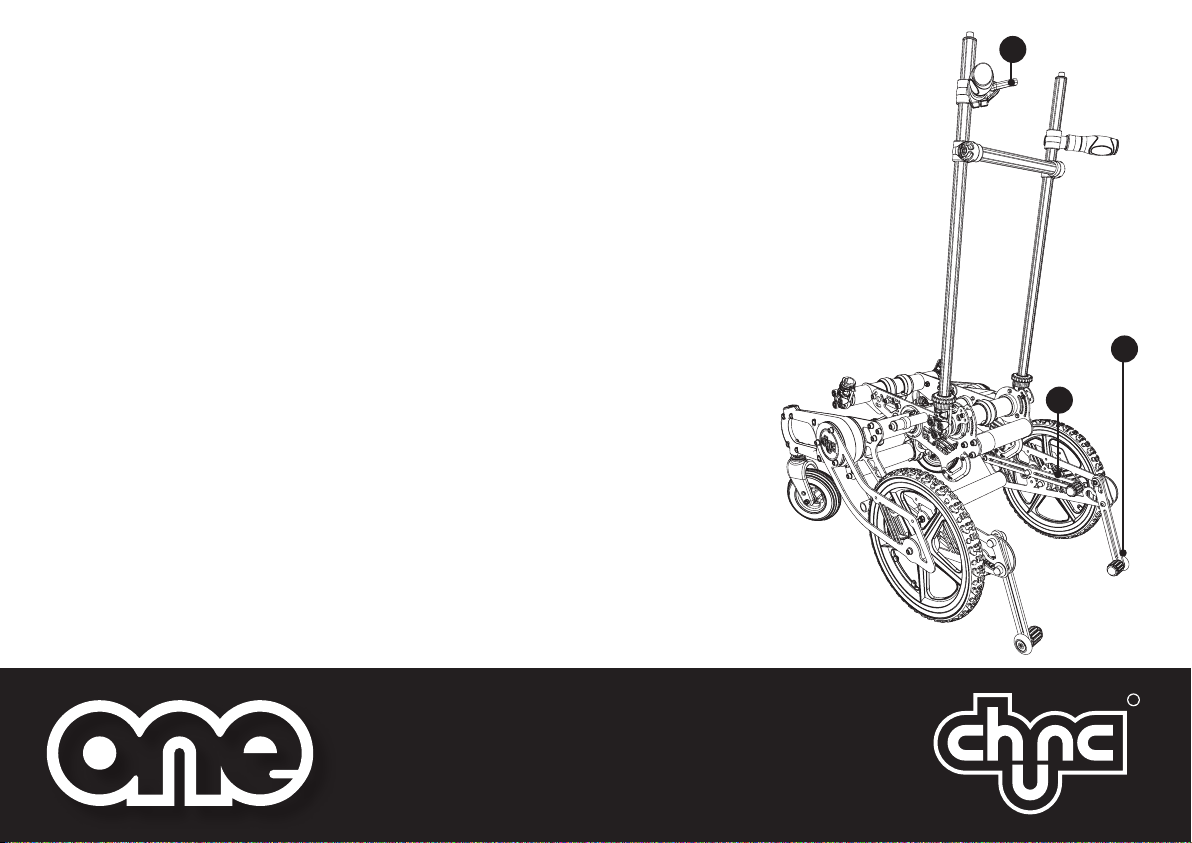
< 1. wheel locks
They are designed to prevent a stationary wheelchair from rolling and should NEVER be used as brakes to slow a
moving chair. The wheel locks can be foot engaged, by lifting the levers (C) to a stop. The locks are disengaged by
pressing down on the levers (C) until they hit a stop.
Safety note: Before disengaging the wheel locks, ensure the wheelchair is under control. Always
apply wheel locks when the chair is stationary. The wheel locks are less effective on worn tyres.
< 2. tip assist
The wheelchair can be tipped onto just its rear wheels, allowing it to traverse steps and curbs. To
perform this, press down on the wheel lock lever (C). Using the handlebars, rotate the wheelchair
about the rear wheel to lift the castors. Ensure you have full control of your chair when you perform this operation.
< 3. anti tip levers
These are designed to reduce the possibility of a tip. To increase wheelchair stability, move the anti-tip levers (B) to
their rearmost position. To disengage, push the levers (B) to their foremost position. Both anti-tip levers should be
used together to avoid potential instability.
A
B
< 4. tilt in space
The angle of the chair can be adjusted by compressing the tilt lever (A) and using the
handlebars to adjust the seat’s angle. It is advised that the wheel locks are engaged during this operation. The
wheelchair may be less stable when tilted.
< 5. swing away footrests
To swing under, pull the lower handle of the grey snap clip towards the front of the chair. The
bar it grips will be released, and the foot rests can swing away under the chair. To re-secure, bring
the footrest’s central bar to the clip, and push together firmly until they click into place. Beware of the potential
finger trap between the snap clip and the leg rest down tubes.
< everyday use
C
R
page 4
Page 6
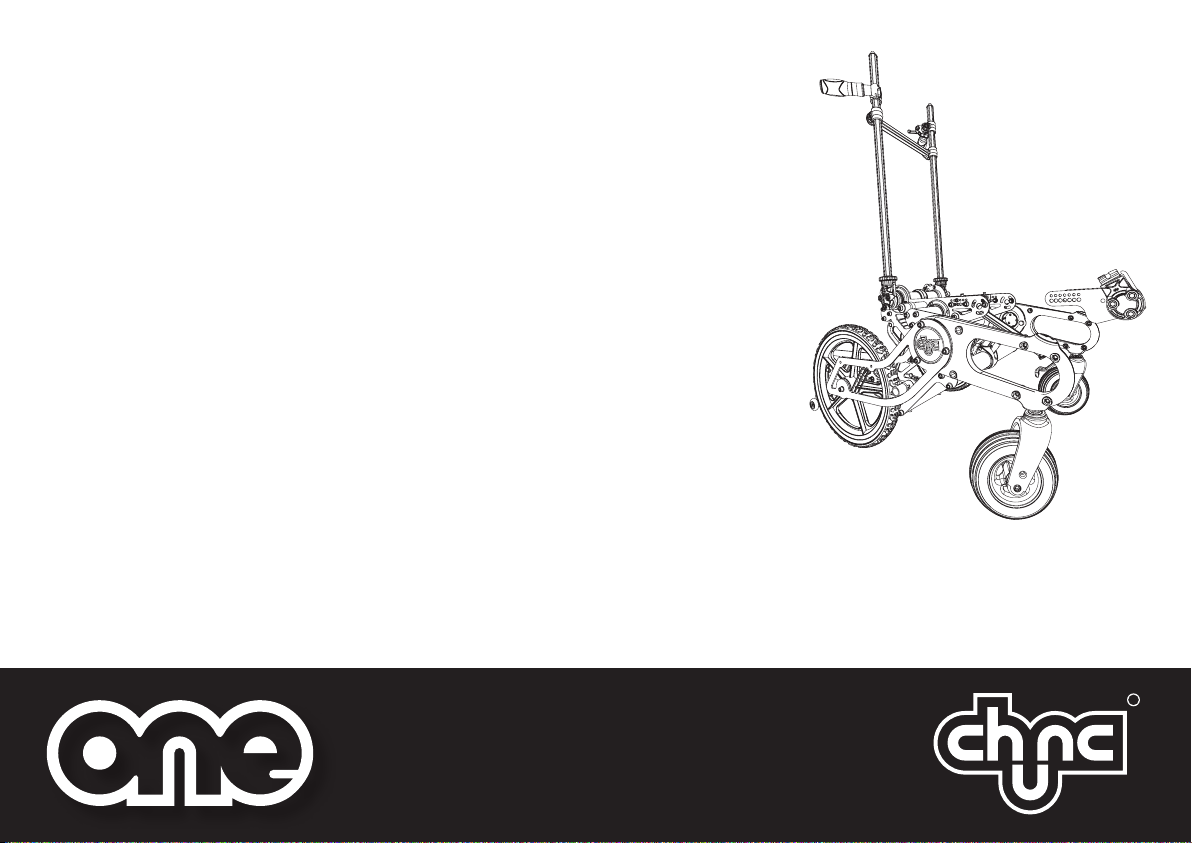
< 6. collet brackets
Armrests, the backrest and certain accessories can be removed with ease using the grey collet caps (D). To free these
components, unscrew the grey cap which allows them to be drawn away from the wheelchair. To replace these components,
insert the metal pole into the bracket, locating the bolt head into the collect groove. Finally, screw the grey cap down onto
the bracket until it is fully secured.
It is important that the components are checked before use to ensure they are fixed securely in position. A caution label
has been provided to remind attendants of this procedure, and is located at the base of the backrest. Take care when
performing this task, as there is a potential finger trap between the grey cap and the locking lever.
< 7. compacting for transport / storage (foldable versions only)
To transport or store, remove the backrest, both armrests and swing the footrest under the chair. A minimum of two people
should only attempt to lift the main assembly. Always apply the wheel locks to prevent the chair from rolling. When an
unoccupiedwheelchair is transported in a vehicle, ensure all of its components are securely fixed in position.This reduces the
risk of damage to the chair, and prevents it from becoming a hazard in the event of an accident.
< 8. seat pan removal:
Once the seat cushion has been removed, it is possible to remove the seat pan for cleaning etc. By pulling the front of
the seat pan upwards, it will release from the wheelchair. To replace the seat pan, align its holes with the orange seat pan
brackets and press down to snap into place.
< 9. height adjustable handle bars
To adjust, twist the grip (E) in an anti clockwise direction until the bracket slackens, allowing the handlebar to slide up
and down the backrest poles. To fix in position, twist the hand- grip in a clockwise direction. Check the handgrips are fully
secured before manoeuvring the wheelchair.
< 10. upholstered parts
To remove, unzip or unhook Velcro fasteners and peel away from inner core. Make note of orientation of cover and foam
when re-attching cover. For washing instructions, refer to care label attached to cover and / or “Cleaning” section. The
upholstered parts meet the European and U.S. standards for resistance to flammability. However extreme care should always
be exercised near open flames or with burning cigarettes.
< everyday use
R
page 5
Page 7
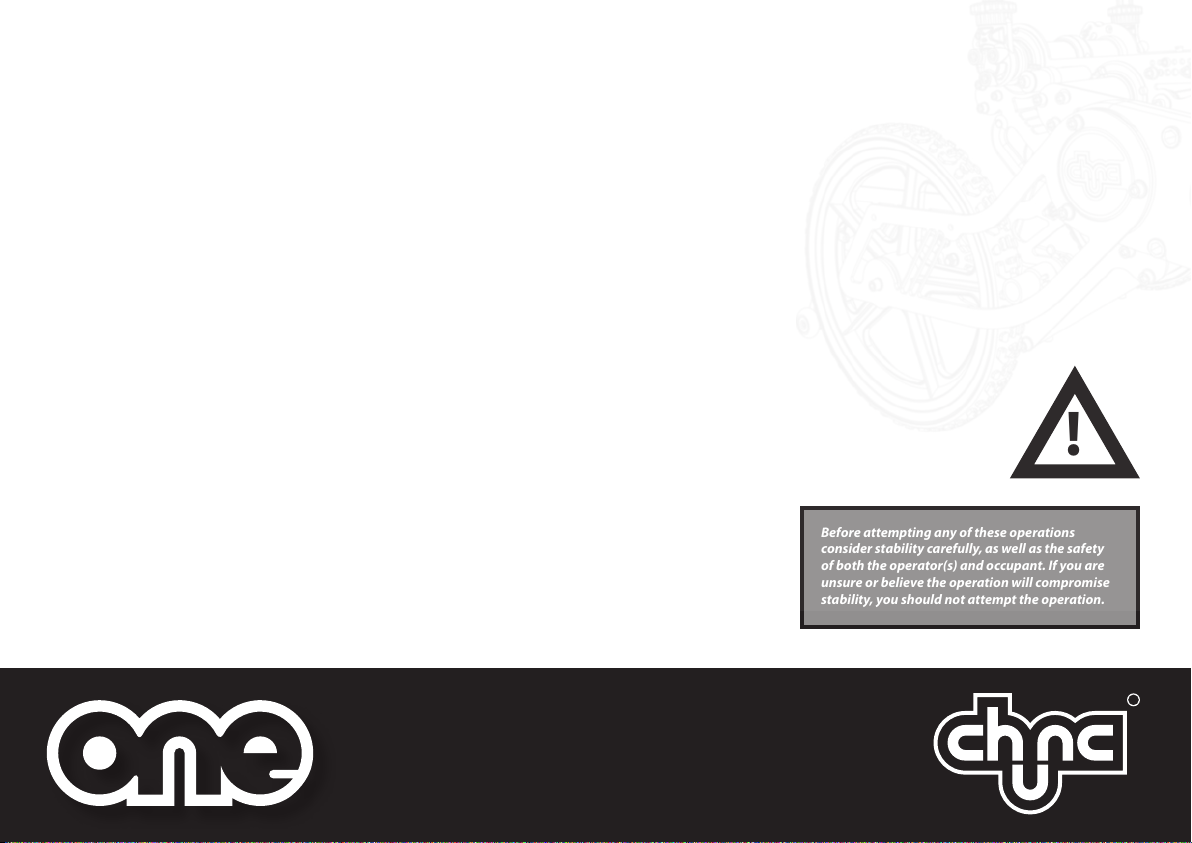
< user transfer
To safely transfer the user to and from the wheelchair, first engage the wheel locks and anti-tip levers. The tilt in space
adjustment should be set to a suitable angle and the front castors rotated as far forward as possible. One or both armrests
can then be removed as required and the foot rests swung away (if possible). It is suggested standing transfers should
only be performed when the tilt in space is adjusted to its foremost setting. When transferring with a sling, the tilt in
space should be adjusted to a reclined angle. When all transfers are complete, the armrests and footrests should be
replaced to their original position (if applicable). Safety note: It is important to check all remaining attendant-adjustable
components are secure before the user is transferred to the chair, and to check after the transfer that the items removed
are securely replaced.
< ramps steep terrain
The wheelchair will become less stable when on a slope. Travel directly up / down the slope where possible, avoiding
exposing the chair to a sideways tilt. Before ascending ramps or steep terrain, apply the anti-tip levers. The tilt in space
angle may also be adjusted to improve stability. When descending, adjust the tilt in space to a suitable angle.
< steps
Before attempting to ascend or descend steps, ensure the anti-tip levers and wheel locks are deactivated and all handtightened components are fully secured; in particular the backrest collet brackets and handgrips. When pulling up stairs,
reverse the chair into position so the rear wheels are in contact with the 1st step. Tip the chair on its rear wheels and
pull up and over the step(s). A second person must stand below the chair, holding it through the chassis mouldings,
supporting it as it travels up. When descending stairs, approach the step front on, and pivot the chair on its rear wheels
using the tip levers. Push up to the step edge and gently roll the wheels down, maintaining contact with the surface at all
times. A second individual should stand below the chair supporting the chair.
< curbs
Before attempting to ascend or descend a curb, ensure the anti-tip levers and wheel locks are disengaged. To ascend,
approach the curb front on, tip the wheelchair on its rear wheels, and push the castors onto the top of the curb. The
wheelchair can then be pushed up the curb. To descend, position the wheelchair with its front castors close to the edge
of the curb and tip the chair on its rear wheels using the tip levers. The chair can then be rolled over and down the curb
on its rear wheels. Only when the curb has been cleared should the front castors be lowered to the ground.
!
Before attempting any of these operations
consider stability carefully, as well as the safety
of both the operator(s) and occupant. If you are
unsure or believe the operation will compromise
stability, you should not attempt the operation.
< mobilisation
R
page 6
Page 8
< transfer to vehicle seat
Wheelchair occupants should transfer to vehicle seats wherever possible. An occupied wheelchair should be
adequately secured within a motor vehicle with the wheel locks on. Chunc wheelchairs should not be carried
behind a folding seat, such as the rear seat of a car, unless it is restrained by luggage straps. The wheelchair can be compacted for storage as described in the every day use section of this manual.
< appropriately tie-down and forward facing
The Chunc One can be used as a forward facing seat in a suitably adapted motor vehicle and should be used in conjunction with a 4 point, tie down system with integrated lap belt and vehicle mounted shoulder belt. The Chunc One Adapt
Wheelbase withdrop hook interface can also be used in the same manner, however you should first check the suitability
of the surrogate seating system with your provider.
< tie-down points
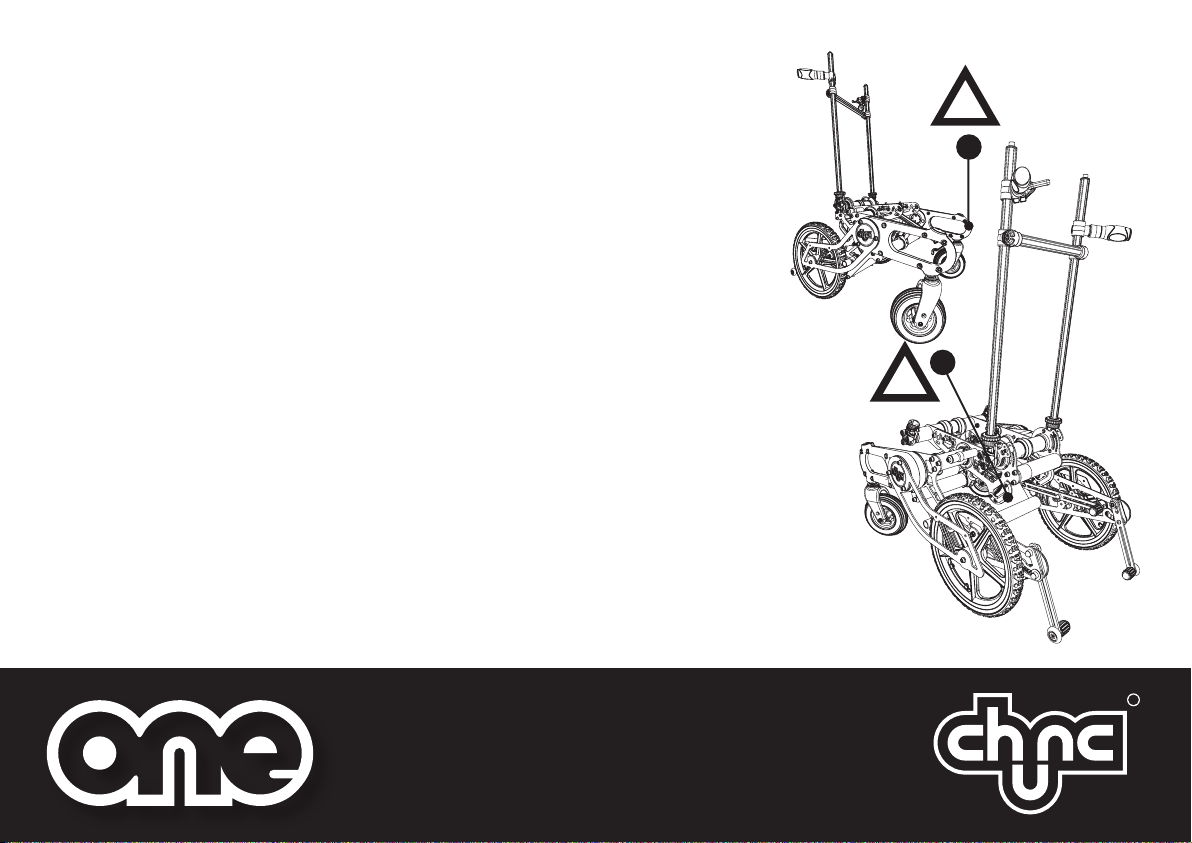
The Chunc One wheelchairs and Adapt wheelbase are equipped with 4 tie down points. The front tie down points (X)
can be found within both front chassis mouldings. The rear tie downs (X) can be located on the back of the upper frame
plate. A strap style fitting is recommended for use on the front tie down and a karabiner fitting is recommended for the
rear tie down. The tie down belt should have a clear path from the wheelchair to the rail anchor point and should not be
interfered with by any part of the vehicle, wheelchair, seating or accessory. If you spot any visible damage to any of the tie
down areas, do not transport a Chunc wheelchair in a motor vehicle without first contacting a Chunc representative.
< belt restraints
Postural supports and belts may be used in a moving vehicle in addition to the occupant belt restraint, but
should not be relied upon to replace occupant restraints that have been designed for this purpose. Restraints
should not be held away from the body by wheel- chair components or parts such as the wheelchair armrests or wheels.
Pelvic restraints should make full contact across the front of the body near the junction of the thigh and pelvis. Upper
torso belts should fit over the shoulder. Belt restraints should be adjusted as snugly as possible but with enough slack so
as not to interfere with the occupant’s breathing or create isolated pressure. Belt webbing should not be worn twisted in
a manner that significantly reduces the area of contact of the belt.
!
x
x
!
< safe transportation
R
page 7
Page 9
< wheelchair configuration
Wheelchairs should have their wheel locks applied during vehicle movement. Postural supports and belts may be used in
a moving vehicle in addition to the occupant belt restraint, but should not be relied upon to replace occupant restraints
that have been designed for this purpose. Where possible, auxiliary wheelchair equipment should be secured to the
wheelchair, or removed from the wheelchair and secured in the vehicle, during transit so it does not break free and cause
injury to vehicle occupants in a crash. Safety note: Where possible, it is recommended that knee blocks are removed prior
to transportation.
< the rear clear zone
There should be sufficient free space around the wheelchair and occupant to avoid them making contact with other
vehicle occupants, unpadded parts of the vehicle, wheelchair accessories or WTORS anchor points. This is measured from
the rear-most point on the occupant’s head. The front clear zone is measured from the front-most point on the occupant’s
head. HHT is the estimated seat height from the wheelchair ground plane to the top of wheelchair-seated occupant’s
head. The HHT should range from about 120cm / 47” for a small female adult to about 155cm / 61” for a tall male adult.
FCZ = 65cm / 26” with pelvic and upper torso belts = 95cm / 37” with only a pelvic belt. Safety note: It is strongly recommended that both pelvic and upper torso belts are used to achieve effective restraint and optimum protection in a crash
situation. Wheelchairs should not block gangway and exits for other passengers in the vehicle.
< qualification
The Chunc One has been dynamically tested to ISO 7176 part 19 and in a forward-facing mode in conjunction with a 4
point tie down system with integrated lap belt and vehicle-mounted shoulder belt with a 76kg / 167lb. ATD (crash test
dummy). This test replicates a 30mph head-on collision. The Chunc Adapt wheelbase was tested in combination with a
drop hook rail interface and a 12kg / 28lb surrogate seating system. These Chunc wheelchairs are ‘A’ rated for application
of user restraints for transport.
< alterations
Alterations or substitutions should not be made to the wheelchair securing points, or to structural and frame parts or
components, without consulting the manufacturer.
!
A Chunc representative should be consulted in
case of questions about using the wheelchair for
seating in a motor vehicle. You should also refer
to the MHRA bulletin “Guidance on safe transpor-
tation of wheelchairs
MDA DB2001(03)
< safe transportation
R
page 8
Page 10
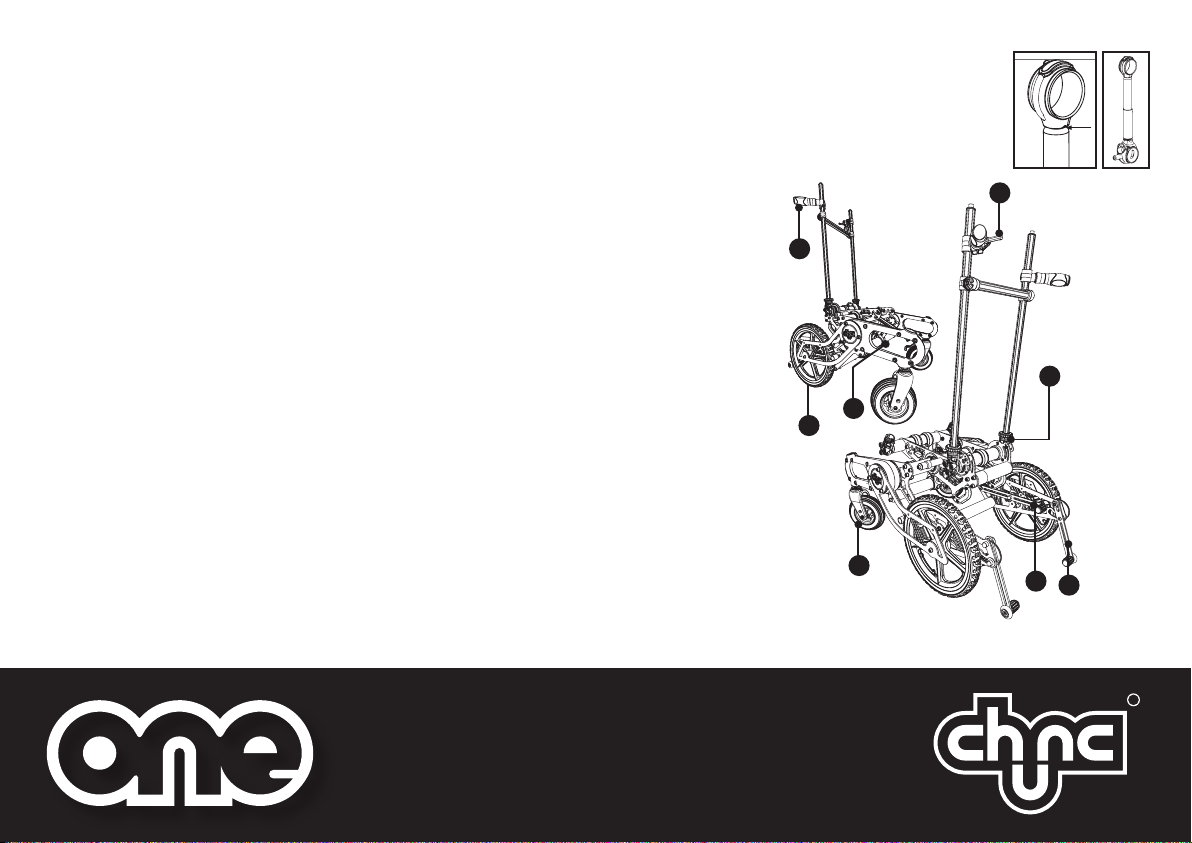
< daily checks
> 1. Handle Grips - Ensure grips are fixed in height and rubber sleaves secure
> 2. Collet Locking Cap - Ensure all caps are tightened. The caps are fully tight when there is a 2-3 mm gap between
the cap and the shoulder of the collet bracket.
> 3. Brake Assembly - Ensure the brake lever moves freely into its operative and non - operative position. Ensure all
bolts are tight. Please note : As the rear tyre wears, the brakes become less effective.
> 4. Upholstered parts must be dry, clean and free from creases. Ensure all body supports are
tight and correctly positioned. Ensure all harnesses are untangled and correctly positioned.
7A
7B
7C
8
< weekly checks
> 5. Castors - Ensure the castors rotate freely in every direction and remove any hair or dirt that has collected between
the bearings and fork. Ensure grips are free from stones / debris. Ensure the castor is not bent and that all bolts are
tightened securely.
> 6. Rear Wheels - Ensure the wheel rotates freely. Ensure grips are free from stones / debris. Do not use if the wheel is
cracked, broken or bent.
> 7. Gas Strut - Ensure the gas strut compresses / decompresses. Ensure the gas strut is secured to both the upper
pivot bracket 7A ensuring no gap at 7B and the lower gas strut release bracket
> 7C. A safety device is fitted to your Chunc wheelbase to prevent a rearward fall of the client in the unlikely event of a
gas strut failure.
> 8. Tipping levers and cables - check for damage or wear to levers and cables. Ensure cable has correct tension to
activate gas strut release.
> 9. Anti Tips - Ensure the anti tip device moves freely from operative to non - operative positions. Where possible keep
the anti tip in its operative (outward) position.
> 10. Inspect your wheelchair checking for damage or excessive wear. Check the security of all fasteners and fixings.
< safe transportation
1
2
7
6
x
5
3
9
R
page 9
Page 11

< identification
R
Page 12
R
Chunc Wheelchairs
Specmat Limited
Tarsmill Court
Rotherwas
Hereford, HR2 6JZ, UK
t. +44 (0) 1432 377512
f. +44 (0) 1432 377516
e. [email protected]
The Chunc range of wheelchairs and accessories are designed and manufactured to meet the requirements of the Medical Devices
Class 1 medical device.s Specmat Limited holds the British Standard Quality Approval to BS EN ISO 9001:2000 for the design and
manufacture of devices. All products FDA approved: site registration number 3004709721. Patents pending include EP 03251925,
Design Registration includes USD 5952, EC 000080627. Granted Patent U.S. 6,994,364. Chunc is a trademark of Specmat Ltd, part of
the HR Smith Group of Companies. 2015. All rights reserved. All technical information is subject to alteration without notice.
THIS USER MANUAL IS AVAILABLE IN LARGE PRINT
Chunc One User Manual HRS1205-09-15 C/N 6066 Issue 1 - 29/9/15
BS EN ISO 9001:2000
 Loading...