

Page 1

The Brief Pain Inventory
User Guide
Charles S. Cleeland, PhD
ii
Copyright and Terms of Use
The Brief Pain Inventory (BPI) copyright is held by
Dr. Charles S. Cleeland (1991). The copyright
applies to the BPI and all its derivatives in any
language.
The BPI may not be used or reproduced without
permission from Charles S. Cleeland, PhD, or his
designee . Fees for use may apply.
The BPI may not be modified or translated into
another language without the express written
consent of the copyright holder. Failure to
comply may result in legal action. Permission to
alter or translate the instrument m ay be obtained
by contacting Dr. Charles S. Cleeland either by
e-mail at[email protected]
or
by mail at:
Charles S. Cleeland, PhD
Professor and C hair, Departm ent of
Symptom R esearch
The University of Texas M. D. Anderson
Cancer Center
1515 Holcombe Boulevard, Unit 1450
Houston, Texas 77030
Visit www.mdanderson.org/departments/p rg >
Assessment Tools > Brief Pain Inventory for more
information.
© 2009 Charles S. Cleeland
All rights reserved
Page 2

i
Tabl e of Co nten ts
Chapt er 1....... .......................................................... 1
De velopment o f the Brief Pain Inventory..............1
Back ground ......................................... ............... 1
Developing a Measurement Mo del an d It ems2
Test Construction Standards......................... 3
Measurement Conceptualization: Multiple
Dimensions of Pa i n........................................3
Early Version: The Wisconsin Brief Pain
Questionnaire..................................................... 5
The Brief Pain Inventory...................................... 6
Scoring the Brief Pain Inventory as an
Outco me Measur e....................................... 7
Psychometric Properties of the Brief Pain
Inventory........................................................ 8
References........................................................11
Chapt er 2....... .........................................................15
BPI References: Use of th e BPI in Various Studies 15
Cancer Bone P ain.............................................16
Cancer Epid emiol o gy ......................................20
Cancer Pain......................................................21
Depr es sive D iso rd ers.........................................31
Fabry Disease....................................................32
Fibromyal gi a....... ...............................................33
HIV/A IDS.......... ..................................................34
Minor i ty Studies ..................................................35
Neuromusc ular Pain..........................................36
Neuro pathi c P ain.......... ....................................40
Osteoarthritis and Other Joint Diseases...........42
Psychosocial Studies.........................................45
Surgical and Procedural Pain...........................46
Validation Studies.............................................49
Language Tr anslations.. ....................................58
Methods Papers................................................59
ii
Page 3

1
Chapter 1
Deve lopment of the Brief Pain
Inventory
The Brief Pain Inventory (BPI) has become one of
the most widely used measurement tools for
assessing clinical pain. The BPI allows patients to
rate the severity of their pain and the degree to
which their pain interferes with common
dimensions of feeling and function. Initially
developed to assess pain related to cancer, the
BPI has been shown t o be an appropriate
measure for pain caused by a wide range of
clinical conditions. The BPI has been used in
hundreds of studies. In some ways, the BPI is a
“legacy” instr ument—a self-report measure that
has, over time, become a standard for the
assessm ent of pain and its impact.
Background
In the late 1970s, it became incr easingly evident
that patients with cancer, especially the later
stages of th e disease, experienced
incapac itating pain that was often poorly
controlled. A constellation of events— the
publishing of opinion pieces by prominent
persons with cancer pain, the increasing
advocacy of pain professionals and
organizations for better cancer pain
management, a grow in g awareness of the
problem by national and international policy
groups, and the simple recognition that pain
often could be controlled—created the climate
for a sustained effort to improve pain
management for those wit h c ancer.
2
A first step in this effort was to document the extent of poor pain
management. The Nat ional Cancer In stitute (NCI) and the Canc er
Unit of the World Health Organization (WHO) wanted
measurem ent instruments that would better capt ure the severity
and impact of cancer pain and measure improvement in pain
after changes in analgesic practice or implementation of new
pain treatm ents. These instruments also needed to function well in
large-scal e national and internation al studies of the epidemiology
of cancer pain.
With grant support from both the NCI and the WHO, the Pain
Research Group at the University of Wisconsin Medical SchoolMadison, under the direction of Charles S. Cleeland, PhD,
undertook a program to t est and develop self-report measures of
cancer pain and to apply them to studies of pain and its
treatment in the United States and internationally. The Pain
Research Group, now the Department of Symptom Research at
The University of Texas M. D. Anderson Cancer Center, was also the
WHO Collaborating Center for Symptom Research in Cancer.
Developing a Measurement Model and Items
Several existing pain measures (su ch as the McGill Pain
Questionnaire; Melzack, 1975) were field-tested in interviews w ith
cancer pat ie nts who had pain (N=50). Almost all of th ese
measures had been designed to assess pain in patients with
nonmalignant disease. The patients reported that the m easures
were too complex and too long, making them excessively
burdensome for patients with high levels of pain. Patients also
noted that the existing instruments included items not relevant to
cancer patients and sometimes required responses that patients
felt were ambiguous (Cleeland, 1984). Patients were also asked
what questions they felt were the most important for
communicating their experience of pain. The results of this study
made clear that a new measurement instrument was needed.
The Pain Research Group planned a program to develop such an
instrument. The aims were to have a scale that: (a) would take
only a short time to complete; (b) would be easy for patients to
understand; (c) could be self-administered for literate patients, or
be completed by interview for illiterate or low-literacy p atients; (d)
Page 4
3
would be easily translate d for non-English-speaking patients; and
(e) would capture not only pain severity, but also the perception
of how pain interfered with daily life.
Test Construction Standards
As a guide to scal e constructio n, we used t hen-current
psychometri c standards found in the Standards for Educational
and Psychological Tests published by the American Psychological
Association, American Educational Research Asso ciation, and t he
National Council on Measurement in Education ( 1974). These
standard s incl ud ed common elem ent s of test validity (content,
criterion, and construct) and reliability (internal consistency and
test-retest). These standards had not been systematic ally applied
in t he development of the e xisting pain report sca les.
Measurement Conceptualization: Multiple Dimensions of Pain
That pain is multidimensional was ma de clear during o ur patient
interviews: patients reported that an adequate represent ation of
pain required more than one simple measure of pain intensity.
Melzack and Casey (1968) suggested that, based on the
underlying neurophysiological mechanisms of pain, pain
assessment should include three dimensions: sensorydiscriminative, motivational-affective, and cognitive-evaluative.
This approach to sel f-report measurement relied on three distinct
patterns of responses to the words that patients used to describe
their pain. H ow ever, the patient s we int erviewed had d ifficulty
discriminating between the motivational-affective and cognitiveevaluati ve dimensions (Cleeland, 1989; Cleeland, 1990).
More comm only, researchers have foun d that two dimensions of
pain self-report account for most of the variability in the way
patients describe pain. Beecher (1959) called these dimensions
“pain” and “reaction to pain”; Clark and Yang (1983) called them
“sensory-discriminative” and “attitudinal.” Following Beech er, we
called these dimensio ns “sensory” and “reactive” (Cleeland,
1989).
Accordingly , our new questionnaire was developed to include
items that reported the “sensory” dimension of pain (intensity, or
severity) and the “reactive” dimension of pa in (interference with
4
daily function). We constructed four items to capture the variability
of pain over time: pain at its “worst,” “least,” “average,” and
“now” (current pain). On the basis of patient interviews from
additional field testing, we chose seven items that measured ho w
much pain int erfered with var io u s da ily activities, including gen eral
activity, walking, work, mood, enjoyment of life, re lations with
others, and sl eep. Two subd imen sions of pain interference were
proposed: an affective subdimension (REM: relations with others,
enjoyment of life, and mood) and an activity subdimension (WAW:
walking, general activity, and work). The appropriate
categorization of sle ep within th ese two subdimensions was
unclear.
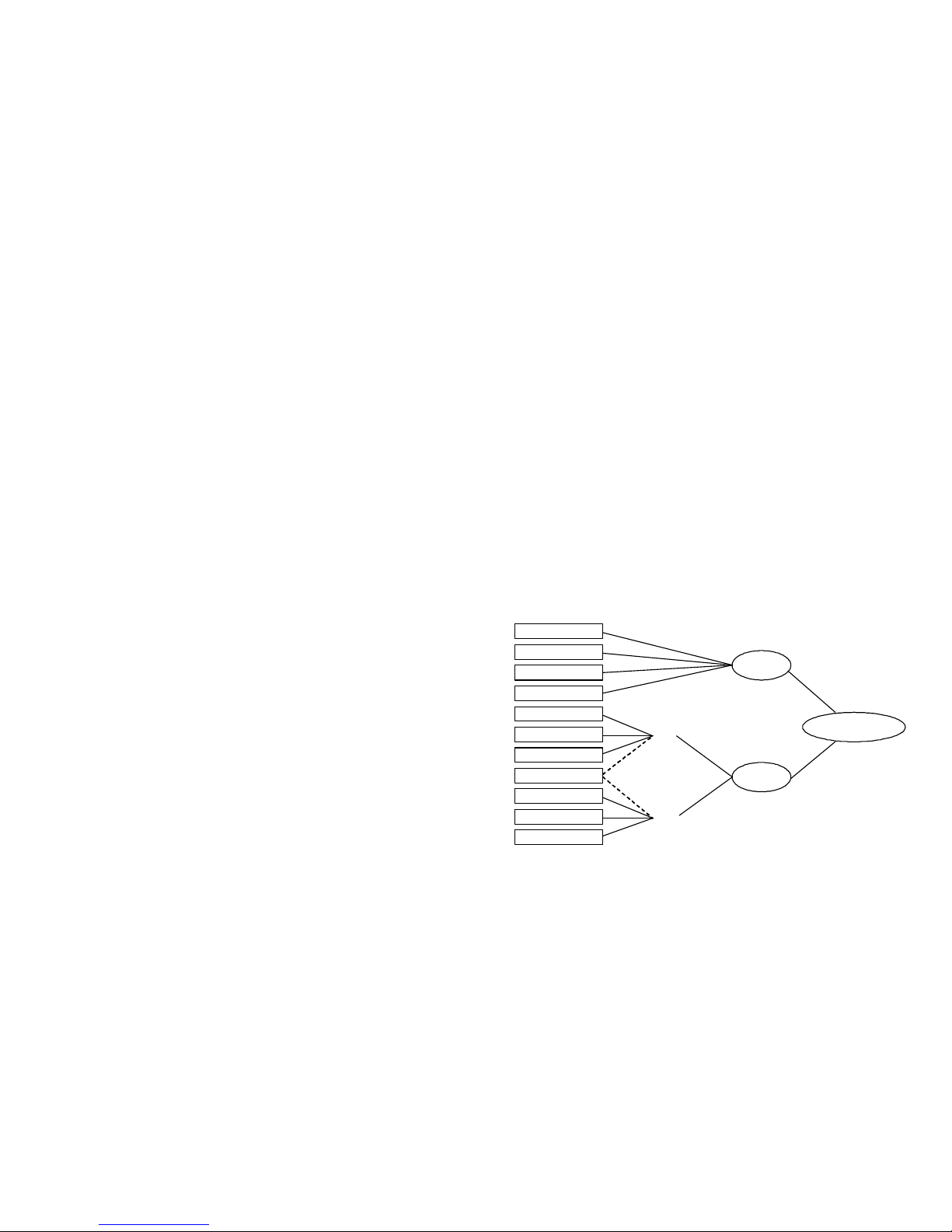
A graphic representation of the conceptual fr amework for our
measurement model is shown below. The model conforms to the
U.S. Food and Drug Administration’s Draft Guidance for Industry,
Patient-reported Ou tcom e Measures: Use in Medical Product
Develo pm ent to Sup port Labeling Claims (Food and Drug
Administration , 2006) .
REM
WAW
Interference
Pain Severity
Working
General Activity
Walking
Mood
Enjoyment of Life
Relati ons with Ot hers
Pain Now
Aver age Pain
Least P ain
Worst Pain
Patient Pain Experience
Sleep?
CONSTRUCTS ITEMS
Page 5

5
Early Version: The Wisconsin Brief Pain Questionnaire
The first version of our pain measure was the Wisconsin Brief Pain
Questionnaire (BPQ; Daut & Cleeland, 1982; Daut, Cleeland, &
Flanery, 1983). In the initial phase of scale development, 667
patients wit h cancer and 32 patients with rheumatoid arthritis were
administered a three-page questionnaire and interviewed about
the basic parameters of their pain (Daut et al., 1982). Patients who
had experienced pain in the last month were asked to rate their
pain intens ity at its “worst,” “average,” and “now” and to rate th e
extent to which pain had interfered with act ivit y and enjoyment of
life. Patients were also asked to mark their pain location(s) on
front/back body diagrams and to describe their perception of the
cause of pain, the types of pain treatment they were receiving,
and the amount of relief provided by their treatment. Patients
were also asked to describe the quality of their pa in by choosing
words among a list of verbal descriptors derived from the McGill
Pain Questionnaire (Melzack, 1975).
The design of the four-page BPQ was based on this initial
questionnaire. In the BPQ, a 0–10 numerical rating scale was used
to measure three pain severity items: “worst” in the past mo nth,
“average,” and “now,” where 0=no pain and 10=pain as bad as
you can imagine. The interference items were measured using a
five-option verbal descriptor scale, with ratings of 0=not at all, 1 =a
little bit, 2=moderately, 3=quite a bit, and 4=extremely. The recall
period for b oth severity and interference scales was “in the la st
week.” The BPQ also retained the body diagram from the initial
questionnaire, along with word descriptors of pain quality and
questions about type s and effectiveness of pain treatment, the
patient’s perception of the cause of pain, and cer t ain
dem ogr aphic in for m a tion.
A second study (Daut et al., 1983) investigated the psychometric
properties of the BPQ. This set of analyses was ba sed on BPQ dat a
obtained from more than 1200 patients with cancer at Th e
University of Wisconsin Cancer Center. To determine test-retest
character istics of the BPQ, subsamples of patients complet ed the
BPQ on two or more oc casions. For comparison with other disease
sites, a sampl e of patients with pain from rheum atoid arthritis was
also surveyed.
6
Most of the patients were able to complete the BPQ by
themselves with little or no instr uction; others were interviewed to
complete the questionnaire. A subset 25 patients compl et ed both
an interview-administered and self-administered version of the
survey in counterbalanced order. We found little difference in
ratings due to mode of administration. As expected, test-retest
reliability varied by item. Short (day s) test-retest reliability w as 0.93
for “worst pain,” but only 0.59 for “pain now.” Preliminary
exploration found that patient-reported pain severity and
interference were directly associated with the use of opioid
analgesics and the severity of disease.
The Brief Pain Inventory
The next iteration of our pain measure was the long form
of the
Brief Pain Inventory (BPI; Cleeland, 1989; Cleeland, 1990; Cleeland,
1991; Cleeland & Ryan, 1994). In this new instrument, we added
the item “least pain” to the severity items and dropp ed the
categorical rating scale for the interference items, in response to
patient pr eference. The in terference items were now presented
with 0–10 scales, with 0=no interference and 10=interferes
completely. The initial version of the BPI used a recall period of one
week for both pain sever ity an d pain interfer ence ratings, included
questions about medicat ion use, and a sked the patient to check
potential pain quality descriptors that may describe their pain. The
BPI long form also asked questions about the percentage and
duration of pain relief and nonmedical methods used to relieve
pain.
This version of the BPI proved to be too lengthy for repeated use in
clinical monitoring or as a repeated measure in research. As a
result, we developed a shorter version
of the BPI. This version of the
BPI retained the front and back body diagrams, the four pain
severity items and seven pain interference items rated on 0–10
scales, and the question about percentage of pain relief by
analgesics. The most important difference between the longer
and shorter versions of the BPI is that the latt er uses a 24-hour recall
period.
Whereas the BPI long form is still used as a baseline measure in
clinical trials, the shorter version has become the standard for use
Page 6

7
in clinical and research applications. The short for m is typically
what is referred to when the BPI is cited in research, and it is the
version we describe below. Most psychometric evaluations of the
BPI have been performed on the short form.
Scoring the Brief Pain Inventory as an Outcome Measure
A recent consensus panel recommended that the two domains
measured by the BPI— pain intensity (severity) and the impact of
pain on functioning (interference)— be included as outcomes in all
chronic-pain clinical trials (IMMPACT, Turk et al., 2003). The
IMMPACT panel (www.immpact.org
) specifically identified the
interference items of the BPI, rated on a 0–10 scale, as one of the
two scales recommended for assessment of pain-related
functional impairment (Dworkin et al., 2005).
How to Score the BPI: Pain Severity
The BPI assesses pain at its “worst,” “least,” “average,” and “now”
(current pain). In clinical trials, the item s “worst” and “average”
have each been used singly to represent pain severity. A
composite of the four pain items (a mean severity score) is
sometimes presented as supplemental information . The use of
these single items is supported by the IMMPACT recommendations
for assessing pain in clinical trials (Dworkin et al., 2005; Turk et al.,
2006; Dworkin et al., 2008) and by the FDA Draft Guidance for
Industry: Patient-Reported Outcome Measures (Food and Drug
Administration, 2006). However, the BPI’s developers recommen d
that all four severity items be used, because the models for
validation of the BPI included all four items.
How to Score the BPI: Pain Interference
The BPI measures how much pain has interfered with seven daily
activities, including general activity, walking, work, mood,
enjoyment of life, relations with others, and sleep. BPI pain
interference is typically scored as the mean of the seven
interference items. This mean can be used if more than 50%, or
four of seven, of the total items have b een completed on a given
administration.
8
We are exploring the utility of scoring the activity and affective
dimensions described above (WAW and REM, see diagram[link])
as arithmetic means of these set s of items.
How to Score the BPI: Other Items
The item, “Throughout our lives, most of us have had pain from
time to t ime (such as minor headaches, sprains, and tootha ches).
Have you had pain other than these everyday kinds of pain
today?” is a YES/NO preliminary screening question at the
beginning of the BPI. This item is optional and we have not
evaluated its psychomet ric properties. The BPI also asks the patient
to indicat e the percentage of relief provided by pain treatm ent s
or medications, but we have not found this item to be very useful
in our studies.
Psychometric Properties of the Brief Pain Inventory
Dimensions of the BPI: Two-Factor Structure
Several approaches have explored the un derl ying dimen sions of
the BPI. As described above, the BPI was designed to capture two
dimensions of pain: severity and interference. The BPI was also
intended to capture two components of interference— activity
and affect (emotions).
One of the first studies of the dimensions of the BPI compared the
factor stru cture of four language versions of the BPI used to a ssess
cancer pain in the United States, Mexico, the Philippines, and
Vietnam (Cleeland, 1990). Factor analysis was applied to the
matrix of int ercorrelations of the item scores of each sample. For
each language version, th e same two factors em erged with an
eigenvalue greater than 1: the first factor comprised the p ain
interference items and the second factor comprised the pa in
severity items. The similarity of the factor loading among the
language ve rsions indicated that patients experiencin g cancer
and pain, living in var iou s countries a nd speaking var ious
languages, responded to the items in a similar fashion.
This two-factor structure was confirmed in a large national study
conducted in the U.S. by the Eastern Cooperative Oncology
Group. Outpatients (N= 1261) with recurrent or metastatic cancer
Page 7

9
from 80 centers were enrolled in the study (Cleeland et al., 1994).
Factor analy sis verified t he two separate factors, pain severity and
interference, found in the previous study. Intern al stability
(Cronba ch alpha) was also examined in th is stu dy. Alpha s showed
good internal consistency, ranging from 0.80 to 0.87 for the four
pain severity items and from 0.89 to 0.92 for the seven interference
items. Subsequent data from studies of cancer patients in many
countrie s and many languages have demonstrated h igh internal
consistency and the robust nature of these two dimensions of the
BPI.
Dimensions of the BPI: Multidimensional Scaling of Interference
We have also used multidimensional scaling (MDS) to examine the
dimensions of the BPI. We used a four-country sample with BPI
responses from patient s wit h cancer and pa in (Cleeland et al.,
1996). In this MDS analysis, we focused on only the interference
items of the survey. Our purpose was to explore potential linguistic
and cultur al difference s in the repor t of pain interference.
As we had hypothesized , two dimensions of the interference scale
were demon strated. The f irst dimension consisted of pat ients’
ratings of pain’s interference with enjoyment of life, mood, and
relations wit h others (REM, the affective cluster of interferen ce
items). A second dimension of interference ratings consisted of
patients’ ratings of pa in’s interf erence with wal k ing, g eneral
activity, work, and sleep (WAW, the activity cluster of interference
items). Subsequent studies of additional language versions (Hindi in
Saxena, Mendoza, & Cleeland, 1999; Norwegian in Klepstad et al.,
2002) ha ve s hown a similar decomposition of the interference
items into the affective (REM ) and activity (WAW) interference
subscales.
In summary, there is strong psychometric support for the
independent measurement of pain severity and interferen ce in
the BPI. In addition, there is provisional evidence that the
interferen ce items independently measure activity and affective
interferen ce.
10
Test-Retest Relia bility
Values from any measure should not differ significantly between
assessments. The underlying concept of a measure should not
change between assessments. This psychometric concept ap plies
to patient-r eport instruments and is examined by test -retest
reliability.
The test-retest reliability of the BPI has been studied in cancer
patients and other patients with pain. Initial short-term (1 day to 1
week) reliability for ratings of pain “worst” (0.93) and “usual” or
“average” pain (0.78) in patients with cancer was high, which
signals acceptable reliability. As expected, test-retest reliability for
pain “now” severity ratings were lower (0.59), because pain
intensity often changes over time (Daut et al., 1983).
Several mor e recent studies have fou nd similar test-retest
coefficients for these items. For example, Radbruch et al. (1999)
examined test-retest coefficients in 109 outpatients in a German
pain clinic, with the retest occurring 30 to 60 minutes after the first
administration. Test-r etest values w er e 0 .98 for pain se verity and
0.97 for pain interference. The individu al item with the lowest
value, 0.78, was pain “least.”
Reliabilities have also b een examined w ith daily administration of
the BPI. In patients with osteoarthritis (Mendoza et al., 2006), testretest reli abilities of pain severity (pain “worst,” “average,” and
“current”) between consecutive daily administration for a w eek
showed correlations ranging from 0.83 to 0.88. The test-retest
reliabilities for pain interference ranged from 0.83 to 0.93,
beginning at day 1 for the week.
In another stu dy of patients wh o underwent coronary artery
bypass graft, the test-retest reliability coefficients for pain severity
ranged from 0.72 to 0.95 during assessment periods where
postsurgic al pain declined in an expected direction (Mendoz a et
al., 2004). Similarly, the test-retest reliability coefficients for pain
interferen ce ranged from 0.81 to 0.93 during the sa me assessment
period.
Page 8

11
Test-Retest Reliability and Alternate-Forms Reliability: the Hindi
Translation
Finally, one study combined an examination of both test-ret est
reliability and alternate-forms reliability (Saxena et al., 1999). In this
study, 100 patients wit h can cer who spoke both English and Hindi
completed both language versions of the BPI on different days in a
counterbal anced design. In addition to reporting rel iabi lity based
on internal consistency, the study design allowed calculation of
the alternate-forms reliability of the BPI. Treating the Hindi and
English ver sions of the BPI a s al ternate test f orms, the alternate-form
reliabilities of the int erference and severit y subscales were 0.88
and 0.95, respectively. These reliabilities demonstrated that the
Hindi and English versions could be substituted for one another in
assessing the severity of pain and its imp act in bilingual pat ients.
These data also pro vided support for the high test-retest reliability
of the BPI.
In summary, the BPI is reliable to the extent that high test-retest
reliability and alternate-form reliability is demonstrated when pain
is stable or when pain changes in a predictable way.
References
American Psychological Association, Am erican Educati onal
Research Association, National Council on Measurement in
Education. Standards for Educational and Psychological Tests.
Washington DC: 1974.
Cleeland CS. The impact of pain on the patient with cancer.
Cancer 54(11 Suppl): 2635-2641, 12/1984.
Cleeland CS. Measurement of pain by subjective report. In:
Chapman CR, Loeser JD, editors. Issues in Pain Measurement.
New York: Raven Press; pp. 391-403, 1989Advances in Pain
Research and Therapy; Vol. 12.
Cleeland CS. Assessment of pain in can cer: measurement issues.
In: Foley KM, Bonica JJ, Ventafridda V, editors. Proceedings of
the Second International Congress on Cancer Pain. New York:
Raven Press; pp. 47-55, 1990Advances in Pain Research and
Therapy; Vol. 1 6.
12
Cleeland CS. Pain assessment in cancer. In: Osoba D, editor. Effect
of Cancer on Quality of Life. Boca Raton: CRC Press, Inc.; pp.
293-305, 1991.
Cleeland CS, Gonin R, Hatfield AK, Edmonson JH, Blum RH, Stewart
JA, Pandya KJ. Pain and its treatment in outpatients with
metastatic cancer. N Engl J Med 330(9): 592-596, 3/1994.
Cleeland CS, Nakamura Y, Mendoza TR, Edwards KR, Douglas J,
Serlin RC. Dimensions of the impact of cancer pain in a four
country sample: new information from multidimensional
scaling. Pain 67(2-3): 267-273, 10/1996.
Cleeland CS, Ryan KM. Pain assessment: global use of the Brief
Pain Inventory. Ann Acad Med Singapore 23(2): 129-138,
3/1994.
Daut RL, Cleeland CS. The prevalence and severity of pain in
cancer.Cancer 50(9): 1913-1918, 11/1982.
Daut RL, Cleeland CS, Flanery RC. Development of the Wisconsin
Brief Pain Questionnaire to as sess pain in cancer and other
diseases.Pain 17(2): 197-210, 10/1983.
Dworkin RH, Turk DC, Farrar JT, Haythornthwaite JA, Jensen MP,
Katz NP, Kerns RD, Stucki G, Allen RR, Bellamy N, Carr DB,
Chandler J, Cowan P, Dionne R, Galer BS, Hertz S, Jadad AR,
Kramer LD, Manning DC, Martin S, McCormick CG, McDermott
MP, McGrath P, Quessy S, Rappaport BA, Robbins W, Robinson
JP, Rothman M, Royal MA, Simon L, Stauffer JW, Stein W, Tollett
J, Wernicke J, Witter J. Core outcome measures for chronic
pain clinical trials: IMMPACT recommendations. Pain 113(1-2):
9-19, 1/2005.
Dworkin RH, Turk DC, Wyrwich KW, Beaton D, Cleeland CS, Farrar
JT, Haythornthwaite JA, Jensen MP, Kerns RD, Ader DN,
Brandenburg N, Burke LB, Cella D, Chandler J, Cowan P,
Dimitrova R, Dionne R, Hertz S, Jadad AR, Katz NP, Kehlet H,
Kramer LD, Manning DC, McCormick C, McDermott MP,
McQuay HJ, Patel S, Porter L, Quessy S, Rappaport BA,
Rauschkolb C, Revicki DA, Rothman M, Schmader KE, Stacey
BR, Stauffer JW, von ST, White RE, Witter J, Zavisic S. Interpreting
the clinical importance of treatment outcomes in chronic pain
Page 9

13
clinical trials: IMMPACT recommendations.J Pain 9(2): 105-121,
2/2008.
Food and Drug Administration. Guidelines for Indust ry (draft).
Patient- Reported Outcome Measur es: Use in Medical Product
Development to Support Labeling Claims. 2006. Rockville MD,
U.S. Department of Health and Human Services.
Ref Type: Report
Klepstad P, Loge JH, Borchgrevink PC, Mendoza TR, Cleeland CS,
Kaasa S. The Norwegian Brief Pain In vent ory questionnaire:
translation and val idation in cancer pain patients. J Pain
Symptom Manage 24(5): 517-525, 11/2002.
Melzack R. The McGill Pain Questionnaire: major properties and
scoring me t hods. Pain 1(3): 277-299, 9/1975.
Melzack R, Casey KL. Sensory, motivational, and central control
determinants of pain: a new conceptual model. In: Kenshalo
DR, editor. The Skin Senses Proceedings. Springfield IL: Thomas;
pp. 423-439, 1968.
Mendoza T, Mayne T, Rublee D, Cleeland C. Reliability and validity
of a modified Brief Pain Inventory short form in patients with
osteoarthritis. Eur J Pain 10(4): 353-361, 5/2006.
Mendoza TR, Chen C, Brugger A, Hubbard R, Snabes M, Palmer SN,
Zhang Q, Cleeland CS. The utility and validity of the modified
Brief Pain Inventory in a multiple-dose postoperative analgesic
trial. Clin J Pain 20(5): 357-362, 9/2004.
Radbruch L, Loick G, Ki encke P, Lindena G, Saba towski R, Grond S,
Lehmann KA, Cleeland CS. Validation of the German version of
the Brief Pain Inventory. J Pain Symptom Manage 18(3): 180-
187, 9/1999.
Saxena A, Mendoza T, Cleeland CS. The assessment of cancer
pain in north India: the validation of the Hindi Brief Pain
Inventory--BPI-H. J Pain Symptom Manage 17(1): 27-41, 1/1999.
Turk DC, Dworkin RH, Allen RR, Bellamy N, Brandenburg N, Carr DB,
Cleeland CS, Dionne R, Farrar JT, Galer BS, Hewitt DJ, Jadad
AR, Katz NP, Kramer LD, Manning DC, McCormick CG,
McDermott MP, McGrath P, Quessy S, Rappaport BA, Robinson
14
JP, Royal MA, Simon L, Stauffer JW, Stein W, Tollett J, Witter J.
Core outcome domains for chronic pain clinical trials:
IMMPACT recommendations. Pain 106: 337-345, 2003.
Turk DC, Dworkin RH, Burke LB, Gershon R, Rothman M, Scott J,
Allen RR, Atkinson JH, Chandler J, Cleeland C, Cowan P,
Dimitrova R, Dionne R, Farr ar JT, Haythornt hwaite JA, Hert z S,
Jadad AR, Jensen MP, Kellstein D, Kerns RD, Manning DC,
Martin S, Max MB, McDermott MP, McGrath P, Moulin DE,
Nurmikko T, Quessy S, Raja S, Rappaport BA, Rauschkolb C,
Robinson JP, Royal MA, Simon L, Stauffer JW, Stucki G, Tollett J,
von ST, Wallace MS, Wernicke J, White RE, Williams AC, Witter J,
Wyrwich KW. Developing patient-reported outcome measur es
for pain clinical trials: IMMPACT recommendations.Pain 125(3) :
208-215, 12/2006.
Page 10

15
Chapter 2
BPI References: Use of the BPI in
Various Studies
The Brief Pain Inventory has been used in more
than 400 studies worldwide. Here we present BPI
references categoriz ed by type of study.
Cancer Bone Pain .................................................16
Cancer Epidemiology...........................................20
Cancer Pain...........................................................21
Depr essive Disor ders......... .....................................31
Fabry Disease.........................................................32
Fibro myalgia ..........................................................33
HIV/A IDS................. ................................................34
Minority Studies......................................................35
Neuro muscular Pain ............ ..................................36
Neuropathic Pain...................................................40
Osteoarthritis and Other Joint Diseases................42
Psychosocial Studies..............................................45
Surgical and Procedural Pain...............................46
Validation Studies................ ..................................49
Language Translations...........................................58
Meth ods Papers................ ................................ .....59
16
Cancer Bone Pain
1. Ahles TA, Herndon JE, Small EJ, Vogelzang NJ, Kornblith AB,
Ratain MJ, Stadler W, Palchak D, Marshall ME, Wilding G,
Petrylak D, Holland JC. Quality of life impact o f three different
doses of suramin in patients with metastatic hormonerefractory prostate car cinoma: re sults of Intergroup
O159/Cancer and Leukemia Group B 9480. Cancer 101(10):
2202-2208, 11/2004.
2. Borden LS, Jr., Clark PE, Lovato J, Hall MC, Stindt D, Harmon M,
Mohler M, Torti FM. Vinorelbine, doxorubicin, and prednisone
in androgen-independent prostate cancer. Cancer 107(5):
1093-1100, 9/2006.
3. Callstrom MR, Charboneau JW, Goetz MP, Rubin J, Wong GY,
Sloan JA, Novotny PJ, Lewis BD, Welch TJ, Farrell MA, Maus TP,
Lee RA, Reading CC, Petersen IA, Pickett DD. Painful
metastases involving bon e: feasibility of percutaneous C Tand US-guided radio-frequency ablation. Radiology 224(1):
87-97, 7/2002.
4. Callstrom MR, Atwell TD, Charboneau JW, Farrell MA, Goetz
MP, Rubin J, Sloan JA, Novotny PJ, Welch TJ, Maus TP, Wong
GY, Brown KJ. Painful metastases involving bone:
percutaneous image-g uided cryoablation--pro spective tr ial
interim analysis. Radiology 241(2): 572-580, 11/2006.
5. Carrafiello G, Lagana D, Ianniello A, Nicotera P, Fontana F,
Dizonno M, Cuffari S, Fugazzola C. Radiofrequency thermal
ablation for pain control in patients with single painful bone
metastasis from hepatocellular carcinoma. Eur J Radiol: e-pub
ahead of print, 5/2008.
6. Castel LD, Saville BR, Depuy V, Godley PA, Hartmann KE,
Abernethy AP. Racial differences in pain during 1 year among
women with metastatic breast cancer: a hazards analysis of
interval-censored data. Cancer 112(1): 162-170, 1/2008.
7. Chow E, Loblaw A, Harris K, Doyle M, Goh P, Chiu H,
Panzarella T, Tsao M, Barnes EA, Sinclair E, Farhadian M,
Danjoux C. Dexamethasone for the prophylaxis of radiation-
Page 11

17
induced pain flare after palliative rad iotherapy for bone
metastases-a pilot study. Support Care Cancer 15(6): 643-647,
6/2007.
8. Cleeland CS. The measurement of pain from metastatic bone
disease: capturing the patient' s experience. Clin Cancer Res
12(20 Pt 2): 6236s-6242s, 10/2006.
9. Colella J, Scrofine S , Galli B, Knorr-Mulder C, Gejerman G,
Scheuch J, Lanteri V, Siegel A, Levey S, Watson R, Block M,
Sawczuk I. Prostate HDR radiation therapy: a comparative
study evaluating the effectiveness of pain management with
peripheral PCA vs. PCEA. Urol Nurs 26(1): 57-61, 2/2006.
10. Depuy V, Anstrom KJ, Castel LD, Schulman KA, Weinfurt KP,
Saad F. Effects of sk eletal morbid ities on longitudinal patientreported outcomes an d survival in patients with metastatic
prostate cancer. Support Care Cancer 15(7): 869-876, 7/2007.
11. Goetz MP, Callstrom MR, Charboneau JW, Farrell MA, Maus
TP, Welch TJ, Wong GY, Sloan JA, Novotny PJ, Petersen IA,
Beres RA, Regge D, Capanna R, Saker MB, Gronemeyer DH,
Gevargez A, Ahrar K, Choti MA, de Baere TJ, Rubin J.
Percutaneous image- guided radiofrequency ablation of
painful metastases involving bone: a multicenter study. J Clin
Oncol 22(2): 300-306, 1/2004.
12. Hadi S, Fan G, Hird AE, Kirou-Mauro A, Filipczak LA, Chow E.
Symptom clusters in patients with can cer with met ast atic
bone pain. J Palliat Med 11(4): 591-600, 5/2008.
13. Halabi S, Vogelzang NJ, Kornblith AB, Ou SS, Kantoff PW,
Dawson NA, Small EJ. Pain predicts overall survival in men with
metastatic castration-refractory prostate cancer. J Cl in Oncol
26(15): 2544-2549, 5/2008.
14. Harris K, Pugash R, David E, Yee A, Sinclair E, Myers J, Chow E.
Percutaneous cementoplasty of lytic metastasis in left
acetabulum. Curr Oncol 14(1): 4-8, 2/2007.
15. Harris K, Li K, Flynn C, Chow E. Worst, average or current pain
in the brief pain in ventory: Which should be used to calculate
the respon se to palliat ive radiotherapy in patients wit h bone
metastases? Clinical Oncology 19(7): 523-527, 9/2007.
18
16. Hartsell WF, Scott CB, Bruner DW, Scarantino CW, Ivker RA,
Roach M, III, Suh JH, Demas WF, Movsas B, Petersen IA, Konski
AA, Cleeland CS, Janjan NA, DeSilvio M. Randomized trial of
short- versus long-course radioth erapy for palliation of painful
bone metastases. J Natl Cancer Inst 97(11): 798-804, 6/2005.
17. Hong SJ, Cho KS, Choi HY, Ahn H, Kim CS, Chung BH. A
prospective, multicenter, open-label trial of zoledronic acid in
patients w ith hormone refractory prostate cancer. Yonsei
Medical Journal 48(6): 1001-1008, 12/2007.
18. Janjan NA, Payne R, Gillis T, Podoloff D, Libshitz HI, Lenzi R,
Theriault R, Martin C, Yasko A. Presenti ng symptoms in patients
referred to a multidisciplinary clinic for bone metastases. J
Pain Symptom Manage 16(3): 171-178, 9/1998.
19. Kornblith AB, Herndon JE, Zuckerman E, Godley PA, Savarese
D, Vogelzang NJ. The impact of docetaxel, estramustine, and
low dose hydrocortisone on the quality of life of men with
hormone refractory pro state cancer and their partners: a
feasibility st udy. Ann Oncol 12( 5): 633-641, 5/2001.
20. Loblaw A, Chow E, Panzarella T, Tsao M, Barnes EA, Sinclair E,
Farhadian M, Danjou x C . Dexamethasone for the prophylaxis
of radiation-induced pain flare following palliative
radiotherapy for bone metastases. Int J Radiat Oncol Biol Phys
66(3 Supplement 1): S525, 11/2 006.
21. Lothman H, Heatley S, Lipton A. Zoledronic acid (zol) provides
long-term palliation of bone pain in breast cancer (bc)
patients (pts) with bone metastases. Eur J Oncol Nurs 10(3):
225-226, 7/2006.
22. Mystakidou K, Katsouda E, Parpa E, Kouskouni E, Chondros C,
Tsiatas ML, Galanos A, Vlahos L. A prospective randomized
controlled clinical trial of zoledronic a cid for bone metastases.
Am J Hosp Palliat Care 23(1): 41-50, 1/2006.
23. Nishio M, Sano M, Tamaki Y, Fujii H, Shima Y, Fujimoto H, Kubo
A, Koizumi K, Tokuda Y, Adachi S, Sumiyoshi Y, Hasegawa T,
Eguchi K. [A multicenter study to determine the efficacy and
safety of strontium (89Sr) chloride for palliat ion of painful bony
Page 12

19
metastas es in cancer patients]. Nippon Igaku Ho shasen
Gakkai Zasshi 65(4): 399-410, 10/2005.
24. Pistevou-Gompaki K, Kouloulias VE, Varveris C, Mystakidou K,
Georgakopoulos G, Eleftheriadis N, Gompakis N, Kouvaris J.
Radiot herapy plus either tr ansdermal fentanyl or paracetamol
and codeine for painful bone metastases: a randomised
study of pain relief and quality of life. Curr Med Res Opin
20(2): 159-163, 2004.
25. Saad F. Clinical benefit of zoledronic acid for the prevention
of skeletal complicatio ns in advanced pro st at e cancer. Clin
Prostate Cancer 4(1): 31-37, 6/2005.
26. Tester W, Ackler J, Tijani L, Leighton J. Phase I/II study of weekly
doceta xel and vinblastine in the treatment of metastatic
hormone-refractory prostate carcinoma. Ca ncer J 12(4): 299304, 7/2006.
27. Thanos L, Mylona S, Galani P, Tzavoulis D, Kalioras V, Tanteles
S, Pomoni M. Radiofrequency ablation of osseous metast ases
for the palliation of pain. Skeletal Radiol 37(3): 189-194,
3/2008.
28. Vassiliou V, Kal ogeropoulou C, Christopoul os C , Solomou E,
Leotsinides M, Kardama k is D. C ombination iban dronate and
radiotherapy for the treatment of bone metastases: Clinical
evaluation and radiologic assessment. Int J Radiat Oncol Biol
Phys 67(1): 264-272, 1/2007.
29. Wardley A, Davidson N, Barrett-Lee P, Hong A, Mansi J,
Dodwell D, Murphy R, Mason T, Cameron D. Zoledronic acid
significantly improves pain scores and quality of life in breast
cancer patients with bone metastases: a randomised,
crossover study of community vs hospital b isphosphonate
administration. Br J Cancer 92(10): 1869-1876, 5/2005.
30. Weinfurt KP, Anstrom KJ, Castel LD, Schulman KA, Saad F.
Effect of zoledronic acid on pain associated with bone
metastas is in pat ients with pro state cancer. Ann Oncol 17(6):
986-989, 6/2006.
31. Wu JS, Monk G, Clark T, Robinson J, Eigl BJ, Hagen N. Palliative
radiotherapy improves pain and reduces functional
20
interference in patients with painful bone metastases: a
quality assurance study. Clin Oncol (R Coll Radiol ) 18(7): 539544, 9/2006.
32. Yamada K, Kohno N. [Efficacy of bisphosphonates for bone
pain control] . Nippon Rinsh o 65(1): 152-156, 1/2007.
Cancer Epidemiology
1. Beck SL, Falkson G. Prevalence and management of cancer
pain in South Africa. Pain 94(1): 75-84, 10/2001.
2. Cleeland CS, Gonin R, Hatfield AK, Edmonson JH, Blum RH,
Stewart JA, Pandya KJ. Pain and its treatment in outpatients
with metastatic cancer. N Engl J Med 330(9 ): 592-596, 3/1994.
3. Cleeland CS, Gonin R, Baez L, Loehrer P, Pandya KJ. Pain and
treatment of pain in minority patients with cancer. The Eastern
Cooperative Oncology Group Minority Outpatient Pain Study.
Ann Intern Med 127(9): 813-816, 11/1997.
4. Costantini M, Viterbori P, Flego G. Prevalence of pain in Italian
hospitals: results of a regional cross-sectional survey. J Pain
Symptom Manage 23(3): 221-230, 3/2002.
5. Crosby FE, Colestro J, Ventura MR, Graham K. Survey of pain
among veterans in western N ew Y or k.Pain Manag Nurs 7(1):
12-22, 3/2006.
6. Enting RH, Oldenmenger W H, Van Gool AR, van der R ijt CC,
Sillevi s Smitt PA. The effects of analgesic prescription and
patient adherence on pain in a Dutch outpatient cancer
population. J Pain Symptom Manage 34(5): 523-531, 11/2007.
7. Everding en MHJV, de Rijke JM, Kessels AG, Schouten HC, van
Kleef M, Patijn J. High prevalence of pain in patients with
cancer in a large population-based study in The Netherl ands.
Pain 132( 3): 312-320, 12/2007.
8. Garbez RO, Chan GK, Neighbor M, Puntillo K. Pain after
discharge: a pilot study of factors associated with pain
management and funct ion al status. Journal of Eme rg ency
Nursi ng 32(4): 288-293, 8/2006.
Page 13

21
9. Holtan A, Aass N, Nordoy T, Haugen DF, Kaasa S, Mohr W,
Kongsgaard UE. Prevalence of pain in hospitalised cancer
patients in Norway: a national survey. Palliat Med 21(1): 7-13,
1/2007.
10. Kongsgaard UE, Holtan A, Aass N. Prevalence of cancer pain
in outpatients at a Norw egian comprehensive cancer centre.
European Journal of Pain 10(Supplement 1): S247, 9/2006.
11. Mystak id ou K, Parpa E, Katsouda E, Galanos A, Vlahos L. Pain
and desire for hasten ed death in terminally ill cancer patients.
Cancer Nurs 28(4): 318-324, 7/2005.
12. Rabow MW, Dibble SL. Ethnic differences in pain among
outpatients with terminal and end-stage chronic illness. Pain
Med 6(3): 235-241, 5/2005.
13. Shin H, Kim K, Young HK, Chee W, Im EO. A comparison of two
pain meas ures for Asian Amer ican cancer pat ie nts. West J
Nurs Res 30(2): 181-196, 3/2008.
14. van den Beuken-van Everdingen MH, de Rijke JM, Kessels AG,
Schouten HC, van KM, Patijn J. High prevalence of pain in
patients w ith cancer in a large populat ion-based st udy in The
Netherland s. Pa in 132(3): 312-320, 12 /20 07.
Cancer Pain
1. Auret K, Roger GC, Ilett KF, Page-Sharp M, Boyd F, Oh TE.
Pharmacokinetics and pharmac od ynamics of methadone
enantiomers in hospice patients with cancer pain. Ther Drug
Monit 28(3): 359-366, 6/2006.
2. Beck SL, Dudley WN, Barsevick A. Pain, sleep disturbance, and
fatigue in patients with cancer: using a mediat ion model to
test a symptom cluster. Oncol Nurs Forum 32(3): 542, 5/2005.
3. Burckhardt CS, Jones KD. Effects of chronic widespread pain
on the he alth status and quality of l ife of women a fter breast
cancer surgery. Health Qual Life Outcomes 3: 30, 2005.
4. Caraceni A, Portenoy RK. An international survey of cancer
pain characteristics and syndromes. IASP Task Force on
22
Cancer Pai n. Internat ional Associat ion f or the Study of Pain.
Pain 82(3): 263-274, 9/1999.
5. Caraceni A, Martini C, Zecca E, Portenoy RK, Ashby MA,
Hawson G, Jackson KA, Lickiss N, Muirden N, Pisasale M,
Moulin D, Schulz VN, Rico Pazo MA, Serrano JA, Andersen H,
Henriksen HT, Mejholm I, Sjogren P, Heiskanen T, Kalso E, Pere
P, Poyhia R, Vuorinen E, Tigerstedt I, Ruismaki P, Bertolino M,
Larue F, Ranchere JY, Hege-Scheuing G, Bowdler I, Helbing F,
Kostner E, Radbruch L, Kastrinaki K, Shah S, Vijayaram S,
Sharma KS, Devi PS, Jain PN, Ramamani PV, Beny A, Brunelli C,
Maltoni M, Mercadante S, Plancarte R, Schug S, Engstrand P,
Ovalle AF, Wang X, Alves MF, Abrunhosa MR, Sun WZ, Zhang L,
Gazizov A, Vaisman M, Rudoy S, Gomez SM, Vila P, Trelis J,
Chaudakshetrin P, Koh ML, Van Dongen RT, VielvoyeKerkmeer A, Boswell MV, Elliott T, Hargus E, Lutz L.
Breakthrough pain characteristics and syndromes in patients
with cancer pain. An international survey. Palliat Med 18(3):
177-183, 4/2004.
6. Carpenter JS, Sloan P, Andrykowski MA, McGrath P, Sloan D,
Rexford T, Kenady D. Risk factors for pain after
mastectomy/lumpectomy. Cancer Pract 7(2): 66-70, 3/1999.
7. Chang MC, Chang YC, Chiou JF, Tsou TS, Lin CC. Overcoming
patient-r elated barriers to cancer pain management for
home care patients. A pilot study. Cancer Nurs 25(6): 470-476,
12/2002.
8. Chang VT, Hw ang SS, Feuerman M, Kas im is BS. Symptom and
quality of life sur vey of medical o ncology patients at a
veterans affairs medical center: a role for symptom
assessment. Cancer 88(5): 1175-1183, 3/2000.
9. Chang VT, Hwang SS, Kasimis B. Longit udinal documentation
of cancer pa in management outcomes: a pilot study at a VA
medical center. J Pain Symptom Manage 24(5): 494-505,
11/2002.
10. Cleeland CS, Portenoy RK, Rue M, Mendoza TR, Weller E,
Payne R, Kirshner J, Atkins JN, Johnson PA, Marcus A. Does an
oral analgesic protocol improve pain control for patients with
cancer? An intergroup study coordinat ed by the Eastern
Page 14

23
Cooperative Oncology Group. Ann Oncol 16(6): 972-980,
6/2005.
11. Du Pen SL, Du Pen AR, Polissar N, Hansberry J, Kraybill BM,
Stillman M, Panke J, Everly R, Syrjala K. Implementing
guidelines for can cer pain management: results of a
randomized controlled clinical trial. J Clin Oncol 17(1): 361370, 1/1999.
12. Elliott BA, Elliott TE, Murray DM, Braun BL, Johnson KM. Patients
and family members: the role of knowledge and attitudes in
cancer pain. J Pain Symptom Manage 12(4): 209-220,
10/1996.
13. Esnaola NF, Cantor SB, Johnson ML, Mirza AN, Miller AR, Curley
SA, Crane CH, Cleeland CS, Janjan NA, Skibber JM. Pain and
quality of life after treat ment in pat ie nts with locally recurrent
rectal cancer. J Clin Oncol 20(21): 4361-4367, 11/2002.
14. Ferrell BR, Grant MM, Funk BM, Otis-Green SA, Garcia NJ.
Quality of life in breast cancer survivors: implications for
developing support services. Oncol Nurs Forum 25(5): 887-895,
6/1998.
15. Gabrail NY, Dvergsten C , Ah dieh H. Establ ishing the dosage
equivalency of oxymorphone extended release and
oxycodone controlled release in patients with cancer pain: a
randomized controlled study. Curr Med Res Opin 20(6): 911918, 6/2004.
16. Gulluoglu BM, Cingi A, Cakir T, Gercek A, Barlas A, Eti Z.
Factors rel at ed to post-treatment chronic pain in breast
cancer survivors: the interference of pain with life functions.
Int J Fertil Womens Med 51(2): 75-82, 3/2006.
17. Holtan A, Kongsgaard UE, Ohnstad HO. [Cancer pain in
hospitalized patients]. Tidsskr Nor Laegeforen 125(4): 416-418,
2/2005.
18. Holtan A, Kongsgaard UE, Haugen DF. Episodic pain in
hospital ize d can cer patients. European Journal of Pain
10(Suppl ement 1): S247, 9/2006.
24
19. Hsu TH, Lu MS, Tsou TS, Lin CC. The relationship of pain,
uncertainty, and hope in Taiwanese lung cancer patients. J
Pain Symptom Manage 26(3): 835-842, 9/2003.
20. Huang HY, Wilkie DJ, Chapman CR, Ting LL. Pain trajectory of
Taiwan ese with nasopharyngeal carcinoma over th e course
of radiation therapy. J Pain Sy mpto m Manage 25(3): 247-255,
3/2003.
21. Hwang SS, Chang VT, Fairclough DL, Kasimis B. Development
of a cancer pain prognostic scale. J Pain Symptom Manage
24(4): 366-378, 10/2002.
22. Hwang SS, Chang VT, Kasimis B. Cancer breakthrough pain
characteristics and responses to treatment at a VA medical
center. Pain 101(1-2): 55-64, 1/2003.
23. Kashikar-Zuck S, Keefe FJ, Kornguth P, Beaupre P, Holzberg A,
Delong D. Pain coping and the pain experience during
mammography: a preliminary study. Pain 73(2): 165-172,
11/1997.
24. Klepstad P, Borchgrevink PC, Dale O, Zahlsen K, Aamo T,
Fayers P, Fougner B, Kaasa S. Routine drug monitoring of
serum concentrations of morphine, morphine-3-glucuronide
and morphine-6-glucuronide do not predict clinical
observations in cancer patients. Palliat Med 17(8): 679-687,
12/2003.
25. Konski A, DeSilvio M, Hartsell W, Watkins-Bruner D, Coyne J,
Scarantino C, JanJan N. Continuing evidence for poorer
treatment outcomes for single male patients: Retreatment
data from RTOG 97-14. Int J Radiat Oncol Biol Phys 66(1): 229233, 9/2006.
26. Lai YH, Guo SL, Keefe FJ , Tsa i SL, Chien CC, Sung YC, Chen
ML. Effects of brief pain edu cation on hospitalized cancer
patients with moderat e to severe pain. Support C are Cancer
12(9): 645-652, 9/2004.
27. Leppert W. Controlled release dihydrocodeine and tramadol
in cancer pain treatme nt-Polish exp erience. Eur J Pain
10(Suppl ement 1): S147, 9/2006.
Page 15

25
28. Liang SY, Yates P, Edwards H, Tsay SL. Factors influencing
opioid-ta k ing self-efficac y and analges ic adherence in
Taiwan ese outpatients with cancer. P sychooncology, 3/2008.
29. Lin CC. Comparison of the effects of perceived self-efficacy
on coping with chronic cancer pain and coping with chronic
low back pain. Clin J Pain 14(4): 303-310, 12/1998.
30. Lin CC, Wang P, Lai YL, Lin CL, Tsai SL, Chen TT. Identifying
attitudinal barriers to family management of cancer pain in
palliative care in Taiwan. Palliat Med 14(6): 463-470 , 11/2000.
31. Lin CC. Barriers to th e analgesic management of cancer
pain: a com parison of attitudes of Taiwanese pat ients and
their family caregivers. Pain 88(1): 7-14, 10/2000.
32. Lin CC. Congruity of cancer pain perceptions between
Taiwanese patients and family caregivers: relationship to
patients' concerns a bout reportin g pain and using analge sics.
J Pain Symptom Manage 21(1): 18-26, 1/2001.
33. Lin CC, Lai YL, Ward SE. Effect of cancer pain on performance
status, mood states, and level of hope among Taiwanese
cancer patients. J Pain Symptom Manage 25(1): 29-37,
1/2003.
34. Lin JT, Mathew P. Cancer pain management in prisons: a
survey of primary care practitioners and inmates. J Pain
Symptom Manage 29(5): 466-473, 5/2005.
35. Long HJ, III, Monk BJ, Huang HQ, Grendys EC, Jr., McMeekin
DS, Sorosky J, Miller DS, Eaton LA, Fiorica JV. Clinical results
and quality of life analysis for t he MVAC combination
(methotrexate, vinblastine, doxorubicin, and cisplatin) in
carcinoma of the uterine cervix: A Gynecologic Oncology
Group study. Gynecol Oncol 100(3): 537-543, 3/2006.
36. Lundorff L, Peuckmann V, Sj ogren P. Pain management of
opioid-treated cancer patients in hospital settings in
Denmark. Acta Anaesthesiol Scand 52(1): 137-142, 1/2008.
37. Maltoni M, Scarpi E, Modonesi C, Passardi A, Calpona S,
Turriziani A, Speranza R, Tassinari D, Magnani P, Saccani D,
Montanari L, Roudnas B, Amadori D, Fabbri L, Nanni O, Raulli
26
P, Poggi B, Fochessati F, Giannunzio D, Barbagallo ML,
Minnotti V, Betti M, Giordani S, Piazza E, Scapaticci R, Ferrario
S. A validation study o f the WHO analges ic ladder: a two-step
vs three-step strategy. Support Care Cancer 13(11): 888-894,
11/2005.
38. McMillan SC, Tittle M, Hagan S, Laughlin J. Management of
pain and pa in-related sympt oms in hospital ized veterans with
cancer. Cancer Nurs 23(5): 327-336, 10/2000.
39. McMillan SC, Tofthagen C, Morgan MA. Relation ships amon g
pain, sleep disturbances, and depressive symptoms in
outpatients from a compr ehensive canc er center . Oncol Nurs
Forum 35(4): 603-611, 7/2008.
40. McQuellon RP, Thaler HT, Cella D, Moore DH. Quality of life
(QOL) outcomes from a randomized trial of cisplatin versus
cisplatin plus paclitaxel in advanced cervical cancer: a
Gynecologic Oncology Group study. Gynecol Oncol 101(2):
296-304, 5/2006.
41. McQuellon RP, Danhauer SC, Russell GB, Shen P, Fensterma ker
J, Stewart JH, Levine E A. Monitor ing health outcomes
following cytor educti ve sur gery plus intraper itoneal
hyperth er mic chemother apy for peritoneal carcinomatos is.
Ann Surg Oncol 14(3): 1105-1113, 3/2007.
42. Meghani SH, Kean e A. Preference for analgesic treatment for
cancer pain among African Americans. J Pain Symptom
Manage 34(2): 136-147, 8/2007.
43. Monk BJ, Huang HQ, Cella D, Long HJ, III. Quality of life
outcomes from a randomized phase III trial of cisplatin with or
without topotecan in advanced carcinoma of the cervix: a
Gynecologic Oncology Group Study. J Clin Oncol 23(21):
4617-4625, 7/2005.
44. Mystakidou K, Parpa E, Tsilika E, Mavromati A, Smyrniotis V,
Georgaki S, Vlahos L. Long-term management of noncancer
pain with transdermal therapeutic system-fentanyl. J Pain 4( 6):
298-306, 8/2003.
45. Mystakidou K, Tsilika E, Parpa E, Kouloulias V, Kouvaris I,
Georgaki S, Vlahos L. Long-term cancer pain management in
Page 16

27
morphine pre-treated and opioid naive patients with
transdermal fentanyl. Int J Cancer 107(3): 486-492, 11/2003.
46. Mystak id ou K, Parpa E, Katsouda E, Galanos A, Vlahos L.
Influence of pain and quality of life on desire for h astened
death in patients with advanced cancer. Int J Palliat Nurs
10(10): 476-4 83, 10 /2 004.
47. Mystakidou K, Parpa E, Tsilika E, Katsouda E, Kouloulias V,
Kouvaris J, Georgaki S, Vlahos L. Pain management of cancer
patients with transdermal fentanyl: a study of 1828 step I, II, &
III transfers. J Pain 5(2): 119-132, 3/2004.
48. Mystakidou K, Rosenfeld B, Parpa E, Katsouda E, Tsilika E,
Galanos A, Vlahos L. Desire for death near the end of life: the
role of depression, anxiety and pain. Gen Hosp Psychiatry
27(4): 258-262, 7/2005.
49. Mystak idou K, Tsilika E, Parpa E, Katsouda E, G alanos A,
Vlahos L. Psy chological distress of p atients with advanced
cancer: influence and contribution of pain severity and pain
interference. Cancer Nurs 29(5): 400-405, 9/20 06.
50. Mystakidou K, Parpa E, Tsilika E, Pathiaki M, Patiraki E, Galanos
A, Vlahos L. S leep quality in advanced cancer pat ients. J
Psychosom Res 62(5): 527-533, 5/2007.
51. Nie J, Liu S, Di L. [Cancer pain and its influence on cancer
patients' quality of life]. Zhonghua Zhong Liu Za Zhi 22(5): 432434, 9/2000.
52. O'Mahony S, Goulet J, Kornblith A, Abbatiello G, Clarke B,
Kless-Siegel S, Breitbart W, Payne R. Desire for hastened death,
cancer pain and depression: report of a longitudinal
observational study. J Pain Symptom Manage 29(5): 446-457,
5/2005.
53. Owen JE, Klapow JC, Casebeer L. Evaluating the relationship
between pain presentation and health-related quality of life
in outpatients with metastatic or recurrent neoplastic disease.
Qual Life Res 9(7): 855-863, 2000.
54. Oxman MN, Levin MJ, Johnson GR, Schmader KE, Straus SE,
Gelb LD, Arbeit RD, Simberkoff MS, Gershon AA, Davis LE,
28
Weinberg A, Boardman KD, Williams HM, Zhang JH, Peduzzi
PN, Beisel CE, Morrison VA, Guatelli JC, Brooks PA, Kauffman
CA, Pachucki CT, Neuzil KM, Betts RF, Wright PF, Griffin MR,
Brunell P, Soto NE, Marques AR, Keay SK, Goodman RP,
Cotton DJ, Gnann JW, Jr., Loutit J, Holodniy M, Keitel WA,
Crawford GE, Yeh SS, Lobo Z, Toney JF, Greenberg RN, Keller
PM, Harb ecke R, Hayward AR, Irwin MR, Kyriakides TC, Chan
CY, Chan IS, Wang WW, Annunziato PW, Silber JL. A vaccine
to prevent herpes zoster and postherpetic neuralgia in older
adults. N Engl J Med 352(22): 2271-2284, 6/2005.
55. Palangio M, Northfelt DW, Portenoy RK, Brookoff D, Doyle RT,
Jr., Dornseif BE, Damask MC. Dose conversion and titration
with a novel, once-daily, OROS osmotic technology,
extended-release hydromorphone formulation in the
treatment of chronic malignant or nonmalignant pain. J Pain
Symptom Manage 23(5): 355-368, 5/2002.
56. Payne R, Mathias SD, Pasta DJ, Wanke LA, Williams R,
Mahmou d R. Quality of life and cancer pain: satisfaction and
side effects with tran sdermal fentan yl versus oral m or phine. J
Clin Oncol 16(4): 1588-1593, 4/1998.
57. Portenoy RK, Payne D, Jacobsen P. Breakthrough pain:
characteristics and impact in patients with cancer pain. Pain
81(1-2): 129-134, 5/1999.
58. Poulos AR, Gertz MA, Pankratz VS, Post-White J. Pain, mood
disturbance, and qual ity of life in pat ients with m ultiple
myeloma. O ncol Nurs Forum 28(7): 1163-117 1, 8/2001.
59. Reyes-Gibby CC, Ba DN, Phi YN, Hoai NN, Van TT, Guo H, Bhat
S, Cleeland C. Status of cancer pain in Hanoi, Vietnam: A
hospital-wide survey in a tertiary cancer treatment center. J
Pain Symptom Manage 31(5): 431-439, 5/2006.
60. Rodin G, Zimmermann C, Rydall A, Jones J, Shepherd FA,
Moore M, Fruh M, Donner A, Gagliese L. The desire for
hastened death in patients with met astatic can cer. J Pain
Symptom Manage 33(6): 661-675, 6/2007.
61. Sandblom G, Carlsson P, Sigsjo P, Varenhorst E. Pain and
health-related quality of life in a geographically defined
Page 17

29
population of men with prostate cancer. Br J Cancer 85(4):
497-503, 8/2001.
62. Sandblom G, Carlsson P, Sennfalt K, Varenhorst E. A
population-based study of pain and quality of life during the
year before death in m en with prostate cancer. Br J Cancer
90(6): 1163-1168, 3/2004.
63. Seidman AD, Portenoy R, Yao TJ, Lepore J, Mont EK,
Kortmansky J, Onetto N, Ren L, Grechko J, Beltangady M, .
Quality of life in phase II trials: a study of methodology and
predictive value in pat ients with adva nced brea st can cer
treated with paclitaxel plus granulocyte colony-stimulating
factor. J Natl Cancer Inst 87(17): 1316-1322, 9/1995.
64. Sherman AC, Coleman EA, Griffith K, Simonton S, Hine RJ,
Cromer J, Latif U, Farley H, Garcia R, Anaissie EJ. Use of a
support ive care team for screening and preemptive
intervention among multiple myeloma patients receiving stem
cell transplantation. Support Care Cancer 11(9): 568-574,
9/2003.
65. Shvartzman P, Friger M, Shani A, Barak F, Yoram C, Singer Y.
Pain control in ambulatory cancer patients--can w e do
better? J Pain Symptom Manage 26(2): 716-722, 8/2003.
66. Small EJ, Smith MR, Seaman JJ, Petrone S, Kowalski MO.
Combined analysis of two multicenter, randomized, placebocontrolled studies of pam idronate disodium for the palliation
of bone pain in men with metastatic prostate cancer. J Clin
Oncol 21(23): 4277-4284, 12/2003.
67. Syrjala KL, Abrams JR, Polissar NL, Hansberry J, Robison J,
Dupen S, Stillman M, Fredrickson M, Rivkin S, Feldman E,
Gralow J, Rieke JW, Raish RJ, Lee DJ, Cleeland CS, Dupen A.
Patient training in cancer pain mana gement using integrated
print and video materials: a multisite randomized controlled
trial. Pain 135(1-2): 175-186, 3/2008.
68. Thienthong S, Pratheepawanit N, Lim wattananon C,
Maoleekoonpairoj S, Lertsanguansinchai P, Chanvej L. Pain
and quality of life of cancer patients: a multi-center study in
Thailand. J Med Assoc Thai 89(8): 1120-1126, 8/2006.
30
69. Tsai PS, Chen PL, Lai YL, Lee MB, Lin CC. Effects of
electromyography biofeedback-assisted rel axation on pain in
patients with advanced cancer in a palliat ive car e unit.
Cancer Nurs 30(5): 347-353, 9/2007.
70. Twycross R, Harcourt J, Bergl S. A survey of pain in patients
with advanced cancer. J Pain Symptom Manage 12(5): 273282, 11/1996.
71. Tzeng JI, Ch ang CC, Chang HJ, Lin CC. Assessing analgesic
regimen adherence w ith the Morisky Medication Adherence
Measure for Taiwanese patients with cancer pain. J Pain
Symptom Manage 36(2): 157-166, 8/2008.
72. Wallace M, Rauck RL, Moulin D, Thipphawong J, Khanna S,
Tudor IC. Conversion from standard opioid therapy to oncedaily oral extended-release hydrom or phone in patients with
chronic cancer pain. J Int Med Res 36(2): 343-352, 3/2008.
73. Wang KY, Ho ST, Ger LP, Wang JJ, Cherng CH, Lin CC. Patient
barr iers to cancer pa in m anagement: from the viewpoint of
the cancer patients receiving analgesics in a teaching
hospital of Taiwan. Acta Anaesth esiol Sin 35(4): 201-208,
12/1997.
74. Wang RC, Wang SJ, Chang YC, Lin CC. Mood state and
quality of sleep in can cer pain patients: a comparison to
chronic daily headache. J Pain Symptom Manage 33(1): 3239, 1/2007.
75. Wells N. Pain intensity and pain interference in hospitalized
patients wit h cancer. Oncol Nurs Forum 27(6): 985-991, 7/2000.
76. Yeo W, Lam KK, Chan AT, Leung TW, Nip SY, Johnson PJ.
Transder mal fentanyl for severe cancer-rel ated pain. Palliat
Med 11 ( 3): 233-239, 5/199 7.
77. Yun YH, Heo DS, Lee IG, Jeong HS, Kim HJ, Kim SY, Kim YH, Ro
YJ, Yoon SS, Lee KH, Huh BY. Multicenter study of pain and its
management in patient s with advanced cancer in Korea. J
Pain Symptom Manage 25(5): 430-437, 5/2003.
Page 18

31
Depressive Disorders
1. Brannan SK, Mallinckrodt CH, Brown EB, Wohlreich MM, Watkin
JG, Schatzberg A F. Duloxetine 60 mg once-daily in the
treatment of painful physical symptoms in patients with major
depressive disorder. J Psychiatr Res 39(1): 43-53, 1/2005.
2. Brecht S, C ourtecuisse C, Debieuvr e C, Croenlein J, Desaia h
D, Raskin J, Petit C, Dernyttenaere K. Efficacy and safety of
duloxetine 60 mg once daily in the treatment of pain in
patients with major depressive disorder and at least moderate
pain of unknown etiology: A Randomized controlled trial.
Journal of Clinical Psychiatry 68(11): 1707-1716, 11/2007.
3. Coats TL, Borenstein DG, Nangia NK, Brown MT. Effects of
valdecoxib in the treatment of chronic low back pain: results
of a randomized, placebo-co ntrolled trial. Clin Ther 26(8):
1249-1260, 8/2004.
4. Davison SN, Jhangri GS. The impact of chronic pain on
depression, sleep, and the desire to withdraw from dialysis in
hemodialysis patients. J Pain Symptom Manage 30(5): 465473, 11/2005.
5. Friedberg F, Quick J. Alexithymia in chronic fatigue syndrome:
associations with momentary, recall, and retrospective
measures of somatic complaints and emotions. Psychosom
Med 69(1): 54-60, 1/2007.
6. Hartman JM, Berger A, Baker K, Bolle J, Handel D, Mannes A,
Pereira D, St GD, Sonbolian N, Ronsaville D, Torvik S, Calis KA,
Phillips TM, Cizza G. Q uality of life a nd pain in premenopausal
women with major depressive disorder: The POWER Study.
Health Qual Life Outcomes 4(1): 2, 1/2006.
7. O'Mahony S, Goulet J, Kornblith A, Abbatiello G, Clarke B,
Kless-Siegel S, Breitbart W, Payne R. Desire for hastened death,
cancer pain and depression: report of a longitudinal
observational study. J Pain Symptom Manage 2005;29:446-
457.Passik SD, Kirsh KL, Donaghy KB, Portenoy RK. Pain and
aberrant drug-related behaviors in medically ill pat ients with
and without histories of substance abuse. Clin J Pain 22(2):
173-181, 2/2006.
32
8. Poleshuck EL, Giles DE, Tu X. Pain and depressive symptoms
among financially d isadvantaged wom en's health patients. J
Womens Health (Larchmt ) 15(2): 182-193, 3/2006.
9. Wasan AD, Butler SF, Budman SH, Benoit C, Fernandez K,
Jamison RN. Psychiatric History and Psychologic Adjustment
as Risk Factors for Aberrant Drug-related Behavior Among
Patients With Chronic Pain. Clin J Pain 23(4): 307-315, 5/2007.
10. Williams LS, Jones WJ, Shen J, Robinson RL, Kroenke K.
Outcom es of newly referred neurology outpatients with
depression and pain. Neurology 63(4): 674-677, 8/2004.
Fabry Disease
1. Beck M, Ricci R, Widmer U, Dehout F, de Lorenzo AG,
Kampmann C, Linhart A, Sunder-Plassmann G, Houge G,
Ramaswam i U, Gal A, Mehta A. Fa bry disease: o verall effects
of agalsidase alfa treatment. Eur J Clin Invest 34(12): 838-844,
12/2004.
2. Cleeland CS. Pain assessment: the advantages of using pain
scales in lysosomal storage diseases. Acta Paediatr Suppl
91(439): 43-47, 2002.
3. Deegan PB, Baehner AF, Barba Romero MA, Hughes DA,
Kampmann C, Beck M. Natural history of Fabry disease in
females in the Fabry Outcome Survey. J Med Genet 43(4):
347-352, 4/2006.
4. Hoffmann B, Garcia de LA, Mehta A, Beck M, Widmer U, Ricci
R. Effects of enzyme replacement therapy on pain and health
related quality of life in patient s with Fabry d isease: data from
FOS (Fabry Outcome Survey). J Med Genet 42(3): 247-252,
3/2005.
5. Ram aswami U, Wendt S, Pintos-Morell G, Parini R, Whybra C,
Leon Leal JA, Santus F, Beck M. Enzym e replacement therapy
with agalsidase alfa in children with Fabry disease. Acta
Paediatr 96(1): 1 22-127, 1/2007.
6. Ries M, Mengel E, Kutschke G, Kim KS, Birklein F, Krummenauer
F, Beck M. Use of gabapentin to reduce chronic neuropathic
pain in Fabry disease. J Inherit Metab Dis 26(4): 413-414, 2003.
Page 19

33
7. Schiffmann R, Kopp JB, Austin HA, III, Sabnis S, Moore DF,
Weibel T, Balow JE, Brady RO. Enzyme replacement therapy in
Fabry disease: a randomized controlled trial. JAMA 285(21):
2743-2749, 6/2001.
Fibromyalgia
1. Armstrong DG, Chappell AS, Le TK, Kajdasz DK, Backonja M,
D'Souza DN, Russell JM. Duloxetine for the management of
diabetic peripheral neuropathic pain: evaluation of
functional outcomes. Pain Med 8(5): 410-418, 7/2007.
2. Arnold LM, Lu Y, Crofford LJ, Wohlreich M, Detke MJ, Iyengar
S, Goldstein DJ. A double-blind, multicenter trial comparing
duloxetine with placebo in the treatment of fibrom yalgia
patients with or without major depressive disorder. Arthritis
Rheum 50(9): 2974-2984, 9/2004.
3. Arnold LM, Rosen A, Pritchett YL, D'Souza DN, Goldstein DJ,
Iyengar S, Wernicke JF. A random ized, double-blind, placebocontrolled trial of duloxetine in the treatment of women with
fibromyalgia with or without major depressive disorder. Pain
119(1-3): 5-15, 12/2005.
4. Arnold LM, Pritchett YL, D'Souza DN, Kajdasz DK, Iyengar S,
Wernicke JF. Duloxetine for the treatment of fibromyalgia in
women: pooled results from two randomized, placebocontrolled clinical trials. J Womens Health (Larchmt ) 16(8):
1145-1156, 10/2007.
5. Arnold LM, Goldenberg DL, Stanford SB, Lalonde JK, Sandhu
HS, Keck PE, Welge JA, Bishop F, Stanford KE, Hess EV, Hudson
JI. Gabapentin in the treatment of fibromyalgia - A
randomized, double-blind, placebo-controlled, multicenter
trial. Arthritis and Rheumatism 56(4): 1336-1344, 4/2 007.
6. Dungey J, Arnold L, Pritchett Y, Robinson M, D'Souza D,
Wernicke J. PR_186: Duloxetine in the Treatment o f
Fibromyalgia in Women: Results From 2 Cl inical Tr ials. Archives
of Physical Medicine and Reha bil itation 87(11): e36, 11/2006.
7. Russell IJ, Mease PJ, Smith TR, Kajdasz DK, Wohlreich MM,
Detke MJ, Walker DJ, Chappell AS, Arnold LM. Efficacy and
34
safety of dul oxetine for treat ment of fibromyalgia in patients
with or without major depressive disorder: Results from a 6month, randomized, double-blind, placebo-controlled, fixeddose trial. Pain 136(3): 432-444, 6/2008.
8. Rutledge DN, Jones CJ . Effects of topical essential oil on
exercise volume after a 12-week exercise program for women
with fibromyalgia: A pilot study. Journal of Alternative and
Complementary Medicine 13(10): 1099-1106, 12/2007.
HIV/AIDS
1. Breitbart W, McDonald MV, Rosenfeld B, Passik SD, Hewitt D,
Thaler H, Portenoy RK. P ain in ambulatory AIDS patients. I: Pain
characteristics and medical correlates. Pain 68(2-3): 315-321,
12/1996.
2. Breitbart W, Rosenfeld BD, Passik SD, McDonald MV, Thaler H,
Portenoy RK. The undertreatment of pain in ambulatory AIDS
patients. Pain 65(2-3): 243-249, 5/1996.
3. Breitbart W, Rosenfeld B, Passik S, Kaim M, Funesti-Es ch J, Stein
K. A comparison of pain report and adequacy of analges ic
therapy in ambulatory AIDS patients with and without a history
of substance abuse. Pain 72(1-2): 235-243, 8/1997.
4. Breitbart W, Passik S, McDonald MV, Rosenfeld B, Smith M,
Kaim M, Funesti-Esch J. Patient-related barriers to pain
management in ambulatory AIDS patients. Pain 76(1-2): 9-16,
5/1998.
5. Griswold GA, Evans S, Spielman L, Fishman B. Coping
strategies of HIV patients with peripheral neuropathy. AIDS
Care 17(6): 711-720, 8/2005.
6. Hoyt MJ, Nokes K, Newshan G, Staats JA, Thorn M. The effect
of chemical depend ency on pain perception in persons with
AIDS. J Assoc Nurses AIDS Care 5(3): 33-38, 5/1994.
7. Larue F, Fontaine A, Colleau SM. Underestimation and
undertreatment of pain in HIV disease: multicentre study. BMJ
314(7073): 23-28, 1/1997.
Page 20

35
8. Newshan G, Lefkowitz M. Transdermal fentanyl for chronic
pain in AIDS: a pilot study. J Pain Symptom Manage 21(1): 6977, 1/2001.
9. Simmonds MJ, Novy D, Sandoval R. The differential influence
of pain and fatigue on physical performance and h ealth
status in ambulatory patients with human immunodeficiency
virus. Clin J Pain 21(3): 200-206, 5/2005.
10. Smith MY, Egert J, Winkel G, Jacobson J. The impact of PTSD
on pain experience in persons with HIV/AIDS. Pain 98(1-2): 917, 7/2002.
11. von Gunten CF, Eappen S, Cleary JF, Taylor SG, Moots P,
Regevik N, Cleeland C, Celia D. Flecainide for the treatment
of chronic neuropathic pain: A Phase II trial. Palliat Med 2 1(8):
667-672, 2007 .
Minority Studies
1. Breitbart W, McDonald MV, Rosenfeld B, Passik SD, Hewitt D,
Thaler H, Portenoy RK. P ain in ambulatory AIDS patients. I: Pain
characteristics and medical correlates. Pain 68(2-3): 315-321,
12/1996.
2. Castel LD, Abernethy AP, Li Y, Depuy V, Saville BR, Hartmann
KE. Hazards for pain severity and pain interference with daily
living, with exploration of brief pain inventory cutpoints,
among women with metastatic breast cancer. J Pain
Symptom Manage 34(4): 380-392, 10/2007.
3. Castel LD, Saville BR, Depuy V, Godley PA, Hartmann KE,
Abernethy AP. Racial differences in pain during 1 year among
women with metastatic breast cancer: a hazards analysis of
interval-censored data.Cancer 112(1): 162-170, 1/2008.
4. Cleeland CS, Gonin R, Baez L, Loehrer P, Pandya KJ. Pain and
treatment of pain in minority patients with cancer. The Eastern
Cooperative Oncology Group Minority Outpatient Pain Study.
Ann Intern Med 127(9): 813-816, 11/1997.
5. Meghani SH, Kean e A. Preference for analgesic treatment for
cancer pain among African Americans. J Pain Symptom
Manage 34(2): 136-147, 8/2007.
36
6. Poleshuck EL, Giles DE, Tu X. Pain and depressive symptoms
among financially disadvanta ged women's healt h patients. J
Womens Health (Larchmt ) 15(2): 182-193, 3/2006.
Neuromuscular Pain
1. Abe Y, Miyashita M, Ito N, Shirai Y, Momose Y, Ichikawa Y, Tsuji
S, Kazuma K. Attitude of outpatients with neuromuscular
diseases in Japan to pain and use of analgesics. J Neurol Sci
267(1-2): 22-27, 4/2008.
2. Ang D, Kesavalu R, Lydon JR, Lane KA, Bigatti S. Exercisebased mot iva tional interviewing for female patient s wit h
fibromyalgia: a case series. Clin Rheumatol 26(11): 1843-184 9,
11/2007.
3. Babic-Naglic D. [The diagnostics of chronic musculoskeletal
pain]. Reumatizam 54(2): 32-36, 2007.
4. Breuer B, Pappagallo M, Knotkova H, Guleyupoglu N,
Wallenstein S, Portenoy RK. A randomized, double-b lind,
placebo-controlled, two-period, crossover, pilot trial of
lamotrigine in patients with central pain due t o m ultiple
sclerosis. Clinical Therapeutics 29(9): 2022-2030, 9/2007.
5. Bryce TN , Norrbrink C, Cardenas DD, Dijkers M, Felix ER,
Finnerup NB, Kennedy P, Lundeberg T, Richards JS, Rintala DH,
Siddall P, Widerstrom-Noga E. From the 2006 NIDRR SCI
measure s meeting - Pain a fter spinal cord injury: An evidencebased re view for clinic al practice and research. Journal of
Spinal C ord Medicine 30(5): 421-440, 2007.
6. Chae J, Yu DT, Walker ME, Kirsteins A, Elovic EP, Flanagan SR,
Harvey RL, Zorowitz RD, Frost FS, Grill JH, Fang ZP. Intramuscular
electrical stimulation for hem iplegic shoulder pain: a 12month follow-up of a multiple-center, randomized clinical trial.
Am J Phys Med Rehabil 84(11): 832-842, 11/2005.
7. Chae J, Ng A, Yu DT, Kirsteins A, Elovic EP, Flanagan SR,
Harvey RL, Zorowitz RD, F ang ZP. Intramuscular electrical
stimulation for shoulder pain in hemiplegia: does time from
stroke on set predict treat ment success? Neuroreh abil Neural
Repair 21(6): 561-567, 11-12/2007.
Page 21

37
8. Chae J, Mascarenhas D, Yu DT, Kirsteins A, Elovic EP, Flanagan
SR, Harvey RL, Zorowitz RD, Fang ZP. Poststroke shoulder pain:
its relationship to motor impairment, activity limitation, and
quality of life. Arch Phys Med Rehabil 88(3): 298-301, 3/2007.
9. Dalpiaz AS, Dodds TA. Myofascial pain response to topical
lidocaine patch therapy: case report. J Pain Palliat Care
Pharmacother 16(1): 99-104, 2002.
10. Dalpiaz AS, Lordon SP, Lipman AG. Topical lidocaine patch
therapy for myofascial pain. J Pain Palliat Care Pharmacoth er
18(3): 15-34, 2004.
11. Damush TM, Wu J, Bair MJ, Sutherland JM, Kroenke K. Selfmanagement practices among primar y car e pat ients with
musculoskeletal pain and depr ession. J Behav Med 31(4): 301307, 8/2008.
12. Djaldetti R, Yust-Katz S, Kolianov V, Melamed E, Dabby R. The
effect of duloxetine on primary pain symptoms in Parkinson
disease. Clin Neuropharm acol 30(4): 201-205, 7/2007 .
13. Ehde DM, Osborne TL, Hanley MA, Jensen MP, Kraft GH. The
scope and nature o f pain in persons with multiple scler osis.
Mult Scler 12(5): 629-638, 10/2006.
14. Guy-Coichard C, Nguyen DT, Delorme T, Boureau F. Pain in
hereditary neuromuscular disorders and myasthenia gra vis : a
national survey of frequency, characteristics, and impact. J
Pain Symptom Manage 35(1): 40-50, 1/2008.
15. Harris JE, Eng JJ. Individuals with the dominant hand affected
following stroke demonstrate less impairme nt t han those with
the nondominant han d affected. Neurorehabil Neural Repair
20(3): 380-389, 9/2006.
16. Harr is JE, Eng JJ. Paretic upper-limb strength best explains arm
activity in people with stroke. Physical Therapy 87(1): 88-97,
1/2007.
17. Iolascon G, Gimigliano F, Gimigliano R. PR_279: Pain in Stroke
Survivors: Epidemiology and Impact on Functional Outcome.
Archives of Physical Medicine and Rehabilitation 87(1 1): e51,
11/2006.
38
18. Jensen MP, Hoffman AJ, Cardenas DD. Chronic pain in
individuals with spinal cord injury: a survey and longitudinal
study. Spinal Cord 43(12): 704-712, 12/2005.
19. Jensen MP, Abresch RT, Carter GT, McDonald CM. Chronic
pain in per sons with neurom uscular dise ase. Arch Phys Med
Rehabil 86(6): 1155-1163, 6/2005.
20. Kong KH, Woon VC, Yang SY. Prevalence of chronic pain and
its impact on health-related quality of life in stroke survivors.
Arch Phys Med Rehabil 85(1): 35-40, 1/2004.
21. Lang E, Eisele R, Jankowsky H, Kastner S, Liebig K, Martus P,
Neundorfer B. [Outcome quality of treatment for chronic low
back pain under primary care conditions]. Schmerz 14(3): 146159, 6/2000.
22. Lang E, Liebig K, Kastner S, Neundorfer B, Heuschmann P.
Multidisciplinary rehabilitation versus usual care for chronic
low back pain in the community: effects on quality of life.
Spine J 3(4): 270-276, 7/2003.
23. Lee MA, Walker RW, Hildreth TJ, Prentice WM. A survey of pain
in idiopat hic Parkinson's disease. J Pain Symptom Manage
32(5): 462-469, 11/2006.
24. Nalamachu S, Crockett RS, Gammaitoni AR, Gould EM. A
Comparison of the Lidocaine Patch 5% vs Naproxen 500 mg
Twice Daily for the R elief of Pain Associated With Carpal
Tunnel Syndrome: A 6-Week, Randomized, Parallel-Group
Study. MedGenMed 8(3): 33, 2006.
25. Nalamachu S, Crockett RS, Mathur D. Lidocaine patch 5 for
carpal tunnel syndrome: how it compares with injections: a
pilot study. J Fam Pract 55(3): 209-2 14, 3/2006.
26. Osborne TL, Raichle KA, Jensen MP, Ehde DM, Kraft G. The
reliability and validity of pain interference measures in persons
with multiple sclerosis. J Pain Symptom Manage 32(3): 217229, 9/2006.
27. Raichle KA, Osborne TL, Jensen MP, Cardenas D. The reliability
and valid it y of pain interferen ce measures in persons with
spinal cord injur y. J Pain 7(3): 179-1 86, 3/2006.
Page 22

39
28. Renzenbrink GJ, IJzerman MJ. Per cutaneous neuromuscular
electrical stimulation (P-NMES) for treating shoulder pain in
chronic hemiplegia. Effects on shoulder pain and quality of
life. Clin Rehabil 18(4): 359-365, 6/2004.
29. Sawatzky BJ, Slobogean GP, Reilly CW, Chambers CT, Hol AT.
Prevalen ce of shoulder pain in adult- ver sus childhood-onset
wheelchair users: a pilot study. J Rehabil Res Dev 42(3 Suppl
1): 1-8, 5/2005.
30. Sculco AD, Paup DC, Fernhall B, Sculco MJ. Effects of aerobic
exercise on low back pain patients in treatment. Spine J 1(2):
95-101, 3/2001.
31. Shah RR, Haghpanah S, Elovic EP, Flanagan SR, Behnegar A,
Nguyen V, Page SJ, Fang ZP, Chae J. MRI Findings in the
Painful Poststroke Shoulder. Stroke 39(6): 1808-1813, 6/2008.
32. Tyler EJ, Jensen MP, Engel JM, Schwartz L. The reliability and
validity of pain interference measur es in persons with cerebral
palsy. Arch Phys Med Rehabil 83(2): 236-239, 2/2002.
33. Wallace M, Rauck RL, Moulin D, Thipphawong J, Khanna S,
Tudor IC. Once-daily OROS((R)) hydromorphone for the
management of chron ic nonmalignant pain: a doseconversion and titration study. Int J Clin Pract 61(10): 16711676, 10/2007.
34. Wallace M, Skowronski R, Khanna S, Tudor IC, Thipphawong J.
Efficacy and safety evaluation of once-daily OROS
hydromorphone in patients with chronic low back pain: a
pilot open-label study (DO-127). Curr Med Res Opin 23(5): 981989, 5/2007.
35. Yu DT, Chae J, Walker ME, Fang ZP. Percutaneous
intramuscular neurom uscular electric stimulation for the
treatment of shoulder subluxation and pain in patients with
chronic hemiplegia: a pilot study. Arch Phys Med Rehabil
82(1): 20-25, 1/2001.
36. Yu DT, Chae J, Walker ME, Kirsteins A, Elovic EP, Flanagan SR,
Harvey RL, Zorowitz RD, Frost FS, Grill JH, Feldstein M, Fang ZP.
Intramuscular neuromuscular electric stimulation for poststroke
40
shoulder pain: a multicenter randomized clinical trial. Arch
Phys Med Rehabil 85(5): 695-704, 5/2004.
Neuropathic Pain
1. Backonja MM, Stacey B. Neuropathic pain symptoms relative
to overall pain rating. J Pain 5(9): 491-497, 11/2004.
2. Clermont-Gnamien S, Atlani S, Attal N, Le MF, Guirimand F,
Brasseur L. [The therapeutic use of D9-tetrahydrocannabinol
(dronabinol) in refractory neuropathic pain]. Presse Med
31(39 Pt 1): 1840-1845, 11/2002.
3. Coplan PM, Schmader K, Nikas A, Chan IS, Choo P, Levin MJ,
Johnson G, Bauer M, Williams HM, Kaplan KM, Guess HA,
Oxman MN. Development of a measure of the burden of pain
due to herpes zoster and postherpetic neuralgia for
prevention trials: adaptation of the brief pain inventory. J Pain
5(6): 344-356, 8/2004.
4. Erdemogl u AK, Varlibas A. E ffectiveness of oxcarbazepine in
symptomatic treatment of painful diabetic neuropathy.
Neurol India 54(2): 173-177, 6/2006.
5. Freynhagen R, Grond S, Schupfer G, Hagebeuker A, Schmelz
M, Ziegler D, Von Giesen HJ, Junker U, Wagner KJ, Konrad C.
Efficacy and safety of pregabalin in treatment refractory
patients w ith various ne uropathic pain entities in cl inical
routine. International Journal of Clinical Practice 61(12): 19891996, 12/2007.
6. Gore M, Brandenburg NA, Dukes E, Hoffman DL, Tai KS, Stacey
B. Pain severity in diab et ic peripheral neuropathy is
associat ed with patient f unctioning, symptom leve ls of anxiety
and depression, and sleep. J Pain Sy mptom Manage 30(4):
374-385, 10/2005.
7. Gore M, Brandenburg NA, Hoffman DL, Tai KS, Stacey B.
Burden of illness in painful diabetic p er ipheral neuropat hy: the
patients' perspectives. J Pain 7(12): 892-900, 12/2006.
8. Hardy JR, Rees EA, Gwilliam B, Ling J, Broadley K, A'hern R. A
phase II study to establish the efficacy and toxicity of sodium
Page 23

41
valproate in patients w ith cancer-r el ated neuropat hic pain. J
Pain Symptom Manage 21(3): 204-209, 3/2001.
9. Katz NP, Gammaitoni AR, Davis MW, Dworkin RH. Lidocaine
patch 5% r educes pain intensity and interference wit h quality
of life in patients with postherpetic neuralgia : an effectiveness
trial. Pain Med 3(4): 324-332, 12/2002.
10. McDermott AM, Toelle TR, Rowbotham DJ, Schaefer CP,
Dukes EM. The burden of neuropathic pain: results from a
cross-sectional survey. Eur J Pain 10(2): 127-135, 2/2006.
11. Patarica Huber E, Pje vic M. 52 6 Therapy relat ed neuropath ic
pain in breast cancer patients and its treatment. European
Journal of Pain 10(Supplement 1): S139, 9/2006.
12. Raskin J, Wang F, Pritchett YL, Goldstein DJ. Duloxetine for
patients w ith diabetic peripheral neuropathic pain: a 6-month
open-label safety study. Pain Med 7(5): 373-385, 9/2006.
13. Schmader KE, Sloane R, Pieper C, Coplan PM, Nikas A,
Saddier P, Chan IS, Choo P, Levin MJ, Johnson G, Williams HM,
Oxman MN. The impact of acute herpes zoster pain and
discomfort on functional status and q uality of l ife in older
adults. Clin J Pain 23 (6): 490-496, 7/20 07.
14. Semenchuk MR, Sherman S. Effectiveness of tizanidine in
neuropathic pain: an open-label study. J Pain 1(4): 285-292,
2000.
15. Tolle T, Xu X, Sadosky AB. Painful diabetic neuropathy: a crosssectional survey of health state impairment and tr eatment
patterns. J Diabetes Compl ications 20(1): 26-33, 1/2006.
16. Tolle T, Dukes E, Sadosky A. Patient burden of trigeminal
neuralg ia: results from a cross-sectional survey of health state
impairment and treatment pattern s in six European countries.
Pain Pract 6(3): 153-160, 9/2006.
17. von Gunten CF, Eappen S, Cleary JF, Taylor SG, Moots P,
Regevik N, Cleeland C, Celia D. Flecainide for the treatment
of chronic neuropathic pain: A Phase II trial. Palliative
Medicine 21(8): 667-672, 2007.
42
18. Wardell DW, Rintala DH, Duan Z, Tan G. A pilot study of
healing touch and progressive relaxation for chronic
neuropathic pain in persons with spinal cord injury. J Holist
Nurs 24(4): 231-240, 12/2006.
19. White S. Assessment of chronic neuropathic pain and the use
of pain tools. Br J Nurs 13(7): 372-378, 4/2004.
20. White WT, Patel N, Drass M, Nalamachu S. Lidocaine patch 5%
with systemic analgesics such as gabapentin: a rational
polypharmacy approach for the treatment of chronic pain.
Pain Med 4(4): 321-330, 12/2003.
21. Wu EQ, Borton J, Said G, Le TK, Monz B, Rosilio M, Avoinet S.
Estimat ed prevalence of p eripheral neuropathy and
associat ed p ain in adults wit h diabetes in Fr ance. Curr Med
Res Opin 23(9): 2035-2042, 9/2007.
22. Zakrzewska JM, Lopez BC, Kim SE, Varian EA, Coakham HB.
Patient satisfaction after surgery for trigeminal neuralgia development of a questionnaire. Acta Neurochir (Wien )
147(9): 925-9 32, 9 /20 05.
Osteoarthritis and Other Joint Diseases
1. Measuring quality of life in women with osteoporosis.
Osteoporosis Quality of Life Study Group. Osteoporos Int 7(5):
478-487, 1997 .
2. Brinker MR, O'connor DP. Outcomes of tibial nonunion in older
adults following treatment using the Ilizarov method. J Orthop
Trauma 21(9): 634-642, 10/2007.
3. Brinker MR, O'connor DP, Crouch CC, Mehlhoff TL, Bennett JB.
Ilizarov Treatment of In fected Nonunions of the Dist al H umerus
After Failure of Internal Fixation: An Outcomes Study. J Orthop
Trauma 21(3): 178-184, 3/2007.
4. Coats TL, Borenstein DG, Nangia NK, Brown MT. Effects of
valdecoxib in the treatment of chronic low back pain: results
of a randomized, placebo-co ntrolled trial. Clin Ther 26(8):
1249-1260, 8/2004.
Page 24

43
5. Cowan DT, Wilson-Barnett J, Griffiths P, Vaughan DJ, Gondhia
A, Allan LG. A randomized, double-blind, placebo-controlled,
cross-over pilot study to assess the effects of long-term opioid
drug consumption and subsequent abstinence in chronic
noncancer pain patients receiving controlled-release
morphine. Pain Med 6(2): 113-121, 3/2005.
6. Galer BS, Sheldon E, Patel N, Codding C, Burch F, Gammaitoni
AR. Topical lidocaine patch 5% may target a novel underlying
pain mechanism in osteoarthritis. Curr Med Res Opin 20(9):
1455-1458, 9/2004.
7. Gammaitoni AR, Galer BS, Lacouture P, Domingos J,
Schlagheck T. Effectiveness and safety of new
oxycodo n e/acetaminophen formulat ions with redu ced
acetaminophen for the treatment of low back pain. Pain
Med 4(1): 21-30, 3/2003.
8. Gerber L, el-Gabalawy H, Arayssi T, Furst G, Yarboro C,
Schumacher HR. Polyarticular arthritis, independent of
rheumatoid factor, is associated with poor functional
outcome in recent onset inflammatory syno vitis. J ournal of
Back and Musculoskeletal Rehabilitation 14(3): 105-109, 2000.
9. Gerber LH, Furst G, Yarboro C, el-Gabalawy H. Number of
active joints, not diagnosis, is the primary determinant of
function and performance in early synovitis. Clin Exp
Rheumatol 21(5 Suppl 31): S65-S70, 9/2003.
10. Gimbel J, Linn R, Hale M, Nicholson B. Lidocaine patch
treatment in patients with low back pain: results of an openlabel, nonrandomized pilot study. Am J Ther 12(4): 311-319,
7/2005.
11. Gorodetskyi IG, Gorodnichenko AI, Tursin PS, Reshetnyak VK,
Uskov ON. Non-invasive interactive neurostimulation in the
post-operative recovery of patients with a trochanteric
fracture of the femur. Journal of Bone and Joint Surgery-British
Volume 89B(11): 1488-1494, 11/2007.
12. Gould E, Ma T. Back pain. Archives of Physical Medicine and
Rehabilitation 87(11): e38, 11/2006.
44
13. Kapstad H, Hanestad BR, Langeland N, Rustoen T, Stavem K.
Cutpoint s for mild, moderat e and severe pain in patients with
osteoarthritis of the hip or knee ready for joint replacement
surgery. BMC Musculoskelet Disord 9(1): 55, 4/2008.
14. Kelly MH, Brillante B, Collins MT. Pain in fibrous dysplasia of
bone: ag e-related changes and th e anatomical distribution
of skeletal lesions. Osteoporos Int 19(1): 57-63, 1/2008.
15. Kelly MH, Brillante B, Collins MT. Pain in fibrous dysplasia of
bone: ag e-related changes and th e anatomical distribution
of skeletal lesions. Osteoporos Int 19(1): 57-63, 1/2008.
16. Markenson JA, Croft J, Zhang PG, Richards P. Treatment of
persisten t pain assoc iated with osteoarthritis with controll edrelease oxycodone tablets in a randomized controlled clinical
trial. Clin J Pain 21(6): 524-535, 11/2005.
17. McDonald C, Wilson M, Todd J. 686 Butrans (Buprenorphine)
Transder mal Patches Improve Quality of Life in patient s with
Osteoar thritis(OA). European Journal of Pain 10( Supplem ent
1): S179, 9/2006.
18. Mystakidou K, Parpa E, Tsilika E, Mavromati A, Smyrniotis V,
Georgaki S, Vlahos L. Long-term management of noncancer
pain with transdermal therapeutic system-fentanyl. J Pain 4( 6):
298-306, 8/2003.
19. Pavelka K, Le L, X, Bjorneboe O, Herrero-Beaumont G, Richarz
U. Benefits of transdermal fentanyl in patients with rheumatoid
arthritis or with osteoarthritis of the knee or hip: an ope n-label
study to assess pain control. Curr Med Res Opin 20(12): 19671977, 12/2004.
20. Portenoy RK, Farrar JT, Backonja MM, Cleeland CS, Yang K,
Friedman M, Colucci SV, Richards P. Long-term Use of
Controlled-release Oxycodone for Noncancer Pain: Results of
a 3-year Registry Study. Clin J Pain 23(4): 287-299, 5/2007.
21. Rosenthal M, Moore P, Groves E, Iwan T, Schlosser LG,
Dziewan ow ska Z, Negr o-Vilar A. Sleep improves when pat ients
with chronic OA pain are managed with morning dosing of
once a day extended-release morphine sulfate (AVINZA):
Page 25

45
findings from a pilot study. J Opioid Manag 3(3): 145-154,
5/2007.
22. Thie NM, Prasad NG, Major PW. Evaluation of glucosamine
sulfate compared to ibuprofen for the treatment of
temporoman dibular joint osteoarthritis: a randomized double
blind controlled 3 month clinical trial. J Rheumatol 28(6): 13471355, 6/2001.
23. Williams,V.S.; Smith,M.Y.; Fehnel,S.E. The validity and utility of
the BPI interference measures for evaluating the impact of
osteoarthritic pain. J Pain Symptom Manage 31(1): 48-57,
1/2006.
Psychosocial Studies
1. Babic-Naglic D. [The diagnostics of chronic musculoskeletal
pain].Reumatizam 54(2): 32-36, 2007.
2. Ehde DM, Osborne TL, Hanley MA, Jensen MP, Kraft GH. The
scope and nature o f pain in persons with multiple scler osis.
Mult Scler 12(5): 629-638, 10/2006.
3. Ersek M, Turner JA, Cain KC, Kemp CA. Chronic pain selfmanagement for older adults: a randomized controlled trial
[ISRCTN11899548]. BMC Geriatr 4: 7, 7/2004.
4. Jensen MP, Keefe F J, Lefebvre JC, Romano JM, Turner JA.
One- and two-item measures of pain beliefs and coping
strategies.Pain 104(3): 453-469, 8/2003.
5. Karasz A, Zallman L, Berg K, Gourevitch M, Selwyn P, Arnsten
JH. The experience of chronic severe pain in patients
undergoing methadone maintenance treatment.J Pain
Symptom Manage 28(5): 517-525, 11/2004.
6. Poleshuck EL, Giles DE, Tu X. Pain and depressive symptoms
among financially disadvanta ged women's healt h patients. J
Womens Health (Larchmt ) 15(2): 182-193, 3/2006.
7. Rodin G, Zimmermann C, Rydall A, Jones J, Shepherd FA,
Moore M, Fruh M, Donner A, Gagliese L. The desire for
hastened death in pat ie nts with metastatic canc er.J Pain
Symptom Manage 33(6): 661-675, 6/2007.
46
8. Sherman AC, Coleman EA, Griffith K, Simonton S, Hine RJ,
Cromer J, Latif U, Farley H, Garcia R, Anaissie EJ. Use of a
support ive care team for screening and preemptive
intervention among multiple myeloma patients receiving stem
cell transplantation. Support Care Cancer 11(9): 568-574,
9/2003.
9. Stroud MW, Turner JA, Jensen MP, Cardenas DD. Partner
responses to pain behaviors are associated with depression
and activity interference among persons with chronic pain
and spinal cord injury. J Pain 7(2): 91-99, 2/2006.
10. Wasan AD, Butler SF, Budman SH, Benoit C, Fernandez K,
Jamison RN. Psychiatric History and Psychologic Adjustment
as Risk Factors for Aberrant Drug-related Behavior Among
Patients With Chronic Pain. Cli n J Pain 23(4): 307-315, 5/2007.
Surgical and Procedural Pain
1. Beauregard L, Pomp A, Choiniere M. Severity and impact of
pain after day-surgery. Can J Anaesth 45(4): 304-311, 4/1998.
2. 2. 3. Callstrom MR, Charboneau JW, Goetz MP,
Rubin J, Wong GY, Sloan JA, Novotny PJ, Lewis BD, Welch TJ,
Farrell MA, Maus TP, Lee RA, Reading CC, Petersen IA, Pickett
DD. Painful metastases involving bone: feasibility of
percutaneous CT- and US -guided radio-frequ ency ablation.
Radiology 224(1): 87-97, 7/2002.
3. Chelly JE, Nissen CW, Rodgers A J, Smugar SS, Tershakovec
AM. The efficacy of rofecoxib 50 mg and
hydrocodone/acetaminophen 7.5/750 mg in patients with
post-arthroscopic pain.Curr Med Res Opin 23(1): 195-206,
1/2007.
4. Coleman KL, Boone DA, Laing LS, Mathews DE, Smith DG.
Quantification of prosthetic outcomes: Elastomeric gel liner
with locking pin suspension versu s polyethylene foam liner
with neoprene sleeve suspension. J Rehabil Res Dev 41(4):
591-602, 7/2004.
Page 26

47
5. Davison SN. Pain in hemodialysis patients: prevalence, cause,
severity, and management. Am J Kidney Dis 42(6): 1239-1247,
12/2003.
6. Dell DD, Weaver C, Kozempel J, Barsevick A. Recovery after
trans vers e rectus abdominis myocutaneous flap breast
reconstruction surgery.Oncol Nurs Forum 35(2): 189-196,
3/2008.
7. Girard F, Chouinard P, Boudreault D, Poirier C, Richard C, Ruel
M, Ferraro P. Prevalence and impact of pain on the quality of
life of lung transplant recipients: a prospective observational
study. Chest 130(5): 1535-1540, 11/2006.
8. Kaplan M, Miliman A, Drummond P. PR_196: Treatment of
Chronic N onmalignant Pa in W ith Pol ym er-Coated ExtendedRelease Morphine Sulfate Capsules in Patients Transitioned
From Other Sust ained-Rel ease Opioids. Arch Phys Med
Rehabil 87(11): e38, 11/2006.
9. Kushner DM, LaGalbo R, Connor JP, Chappell R, Stewart SL,
Hartenbach EM. Use of a bupivacaine continuous wound
infusion system in gynecologic oncology: a randomized trial.
Obstet Gynecol 106(2): 227-233, 8/2005.
10. Lin LY, Wang RH. Abdominal surgery, pain and anxiety:
preoperative nursing int ervention. J Adv Nurs 51(3): 252-260,
8/2005.
11. Locklin JK, Mannes A, Berger A, Wood BJ. Palliation of soft
tissue cancer pain wit h r adiofrequency ablation.J Support
Oncol 2(5): 439-445, 9/2004.
12. Mendoza TR, Chen C, Brugger A, Hubbard R, Snabes M,
Palmer SN, Zhang Q, Cleeland CS. The utility and validity of
the modified brief pain inventory in a multiple-dose
postoperative analgesic trial.Clin J Pain 20(5): 357-362,
9/2004.
13. Mendoza TR, Chen C, Brugger A, Hubbard R, Snabes M,
Palmer SN, Zhang Q, Cleeland CS. Lessons learned from a
multiple-dose post-operative analgesic trial. Pain 109(1-2):
103-109, 5/2004.
48
14. Mitchell AC, Fallon MT. A single infusion of intravenous
ketamine impr oves pain re lief in patients with critic al limb
ischaemia: results of a double blind randomised controlled
trial. Pain 97(3): 275-281, 6/200 2.
15. Ochroch EA, Gottschalk A, Augoustides JG, Aukburg SJ,
Kaiser LR, Shrager JB. Pain and physical function are similar
following axillary, muscle-sparing vs posterolateral
thoracotomy. Chest 128(4): 2664-2670, 10/2005.
16. Ochroch EA, Gottschalk A, Troxel AB, Farrar JT. Women suffer
more short and long -term pain than men after major
thoracotomy. Clin J Pain 22(5): 491-498, 6/2006.
17. Ott E, Nussmeier NA, Duke PC, Feneck RO, Alston RP, Snabes
MC, Hubbard RC, Hsu PH, Saidman LJ, Mangano DT. Efficacy
and safety of the cycloox y genase 2 inhibitor s parecoxib and
valdecoxib in patients undergoin g coronary artery bypass
surgery. J Thorac Cardiovasc Surg 125(6): 1481-1492, 6/2003.
18. Passard A, Attal N, Benadhira R, Brasseur L, Saba G, Sichere P,
Perrot S, Ja nuel D, Bouhassira D. Effects of unilateral repetitive
transcranial magnetic stimulation of the motor cortex on
chronic w id espread pain in f ibr omyalgia.Brain 130(Pt 10):
2661-2670, 10/2007.
19. Ponsford J, Hill B, Karamitsios M, Bahar-Fuchs A. Factors
influencing outcome after orthopedic trauma. J Trauma
64(4): 1001-1009, 4/2008.
20. Schoedinger GR, III, Hildebolt CF, Kumar A. A short pain survey
for postoperative as sessment of sp ine patients in a
nonacad em ic setting. J Surg Orthop Adv 13(4): 199-205, 2004.
21. Soulez G, Therasse E, Monfared AA, Blair JF, Choiniere M,
Elkouri S, Beaudoin N, Giroux MF, Cliche A, Lelorier J, Oliva VL.
Pain and quality of life assessment after endovascular versus
open repair of abdom inal aortic a neurysms in pat ients at low
risk. J Vasc Interv Radiol 16(8): 1093-1100, 8 /2005.
22. Su L, Tucker R, Frey SE, Gress JO, Chan IS, Kuter BJ, Guess HA.
Measur ing inject ion-site pain associated with vaccine
administration in adults: a randomised, double-blind,
Page 27

49
placebo-controlled clinical trial. J Epidemiol Biostat 5(6): 359-
365, 2000.
23. Tittle MB, McMillan SC, Hagan S. Validating the brief pain
inventory for use with surgical patients with cancer. Oncol
Nurs Forum 30(2): 325-330, 3/2003.
24. Van Tongeren RB, Hamming JF, Fibbe WE, Van W, V, Frerichs
SJ, Stiggelbout AM, Van Bockel JH, Lindeman JH.
Intramusc ular or com bined intramuscular/intr a-ar t erial
administ ration of bon e marrow mononuclear cells: a cl inical
trial in patients with advanced limb ischemia.J Cardiovasc
Surg ( Tor ino) 49(1): 51-58, 2/2008.
25. Vickers AJ, Rusch VW, Malhotra VT, Downey RJ, Cassileth BR.
Acupuncture is a feasible treatm ent for post-thoracotomy
pain: results of a prospective pilot trial. BMC Anesthesiol 6: 5,
2006.
26. Vo PG, Marx S, Best AE, Lockhart E. Systematic overview of the
psychomet ric properties of the brief pain inventory in
malig nant and non-ma lignant pain. Value in Health 10(3):
A176, Abbott Labs, Abbott Pk, IL 60064 USA, 5/2007.
27. Zalon ML. Comparison of pain measures in surgical patients. J
Nurs M ea s 7(2): 135-152, 1999.
28. Zalon ML. Correlates of recovery amo ng older adult s a fter
major abdominal surgery. Nurs Res 53(2): 99-106, 3/2004.
Validation Studies
1. Aisyaturridha A, Naing L, Nizar AJ. Validation of the Malay
Brief Pain Inventory questionnaire to measure cancer pain. J
Pain Symptom Manage 31(1): 13-21, 1/2006.
2. Badia X, Muriel C, Gracia A, Nunez-Olarte JM, Perulero N,
Galvez R, Carulla J, Cleeland CS. [Validation of the Spanish
version of the Brief P ain Inventory in patients with oncological
pain]. Med Clin (Barc) 120(2): 52-59, 1/2003.
3. Bonezzi C, Nava A, Barbieri M, Bettaglio R, Demartini L, Miotti
D, Paulin L. [Validaz ion e della versione italiana del Brief Pain
50
Inventor y nei pazienti con dolore cronico]. Minerva Anestesiol
68(7-8): 607-611, 7/2002.
4. Breitbart W, Rosenfeld B, Passik S, Kaim M, Funesti-Es ch J, Stein
K. A comparison of pain report and adequacy of analges ic
therapy in ambulatory AIDS patients with and without a history
of substance abuse. Pain 72(1-2): 235-243, 8/1997.
5. Breuer B, Pappagallo M, Knotkova H, Guleyupoglu N,
Wallenstein S, Portenoy RK. A randomized, double-b lind,
placebo-controlled, two-period, crossover, pilot trial of
lamotrigine in patients with central pain due t o m ultiple
sclerosis. Clinical Therapeutics 29(9): 2022-2030, 9/2007.
6. Bryce TN , Norrbrink C, Cardenas DD, Dijkers M, Felix ER,
Finnerup NB, Kennedy P, Lundeberg T, Richards JS, Rintala DH,
Siddall P, Widerstrom-Noga E. From the 2006 NIDRR SCI
measure s meeting - Pain a fter spinal cord injury: An evidencebased review for clinical pract ic e and research. Journal of
Spinal C ord Medicine 30(5): 421-440, 2007.
7. Caraceni A, Cherny N, Fainsinger R, Kaasa S, Poulain P,
Radbruch L, de CF. Pain measurement tools and methods in
clinical research in palliative car e: recommendat ions of an
Expert Working Group of the European Association o f
Palliative Care. J Pain Symptom Manage 23(3): 239-255,
3/2002.
8. Caraceni A, Mendoza TR, Mencaglia E, Baratella C, Edwards
K, Forjaz MJ, Martini C, Serlin RC, de CF, Cleeland CS. A
validation study of an Italian version of the Brief Pain Inventory
(Breve Questionario p er la Valutaz ion e del Dolore). Pa in 6 5( 1):
87-92, 4/1996.
9. Caraceni A. Evaluation and asses sment of cancer pain and
cancer pain treatment. Acta Anaesthesiol Scand 45(9): 10671075, 10/2001.
10. Chang VT, Hwang SS, Feuerman M. Valid ation o f th e
Edmonton Symptom Assessment Scale. Cancer 88(9): 21642171, 5/2000.
11. Clark K, Greaves J, Sung E, Glare P. Development and
introduction of a pain score documentation chart in the
Page 28

51
acute oncology setting. Asia-Pacific Journal of Clinical
Oncology 3(2): 89-94, 6/2007.
12. Cleeland CS, Ryan KM. Pain assessment: global use of the
Brief Pain Inventory. Ann Acad Med Si ngapore 23(2): 129-138,
3/1994.
13. Cleeland CS. Pain assessment: the advantages of using pain
scales in lysosomal storage diseases. Acta Paediatr Suppl
91(439): 43-47, 2002.
14. Cleeland CS. The measurement of pain from metastatic bone
disease: capturing the patient' s experience. Clin Cancer Res
12(20 Pt 2): 6236s-6242s, 10/2006.
15. Coplan PM, Schmader K, Nikas A, Chan IS, Choo P, Levin MJ,
Johnson G, Bauer M, Williams HM, Kaplan KM, Guess HA,
Oxman MN. Development of a measure of the burden of pain
due to herpes zoster and postherpetic neuralgia for
prevention trials: adaptation of the brief pain inventory. J Pain
5(6): 344-356, 8/2004.
16. Daut RL, Cleeland CS, Flanery RC. Development of the
Wisconsin Brief Pain Questionnaire to assess pain in cancer
and other diseases. Pain 17(2): 197-210, 10/1983.
17. Dworkin RH, Turk DC, Wyrwich KW, Beaton D, Cleeland CS,
Farrar JT, Haythornthwaite JA, Jensen MP, Kerns RD, Ader DN,
Brandenburg N, Burke LB, Cella D, Chandler J, Cowan P,
Dimitrova R, Dionne R, Hertz S, Jadad AR, Katz NP, Kehlet H,
Kramer LD, Manning DC, McCormick C, McDermott MP,
McQuay HJ, Patel S, Porter L, Quessy S, Rappaport BA,
Rauschkolb C, Revicki DA, Rothman M, Schmader KE, Stacey
BR, Stauffer JW, von ST, White RE, Witter J, Zavisic S.
Interpreting the clinical importance of treatment outcomes in
chronic pain clinical trials: IMMPACT recommendations. J Pain
9(2): 105-121, 2/2008.
18. Ersek M, Turner JA, Kemp CA. Use of the chronic pain coping
inventory to assess older adults' pain coping strategies. J Pain
7(11): 833-842, 11/2006.
19. Ewing G, Todd C, Rogers M, Barclay S, McCabe J, Martin A.
Validat ion of a symptom measure suitable for use among
52
palliative care patients in the community: CAMPAS-R. J Pain
Symptom Manage 27(4): 287-299, 4/2004.
20. Franneby U, Gunnarsson U, Andersson M, Heuman R, Nordin P,
Nyren O, Sandblom G. Validation of an Inguinal Pain
Questionnaire for assessment of chronic pain after groin
hernia repair. Br J Surg 95(4): 488-493, 4/2008.
21. Freynhagen R, Grond S, Schupfer G, Hagebeuker A, Schmelz
M, Ziegler D, Von Giesen HJ, Junker U, Wagner KJ, Konrad C.
Efficacy and safety of pregabalin in treatment refractory
patients w ith various ne uropathic pain entities in cl inical
routine. International Journal of Clinical Practice 61(12): 19891996, 12/2007.
22. Galer BS, Henderson J, Perander J, Jen sen MP. Cour se of
symptoms and quality of life measurement in Complex
Regional Pain Syndrome: a pilot survey. J Pain Symptom
Manage 20(4): 286-292, 10/2000.
23. Ger LP, Ho ST, Sun WZ, Wang MS, Cleeland CS. Validation of
the Brief Pain Inventory in a Taiwanese population. J Pain
Symptom Manage 18(5): 316-322, 11/1999.
24. Gjeilo KH, Stenseth R, Wahba A, Lydersen S, Klepstad P.
Validation of the Brief Pain Inventory in Patients Six Months
After Cardiac Surgery. J Pain Symptom Manage, 7/2007.
25. Gunnarsdottir S, Serlin RC, Ward S. Patient-rel ated barrier s to
pain management: the Icelandic Barriers Questionnaire II. J
Pain Symptom Manage 29(3): 273-285, 3/2005.
26. Halabi S, Vogelzang NJ, Kornblith AB, Ou SS, Kantoff PW,
Dawson NA, Small EJ. Pain predicts overall survival in men with
metastatic castration-refractory prostate cancer. J Cl in Oncol
26(15): 2544-2549, 5/2008.
27. Harris K, Li K, Flynn C, Chow E. Worst, average or current pain
in the brief pain in ventory: Which should be used to calculate
the respon se to palliat ive radiotherapy in patients wit h bone
metastases? Clinical Oncology 19(7): 523-527, 9/2007.
28. Holen JC, Hjermstad MJ, Loge JH, Fayers PM, Caraceni A, de
CF, Forbes K, Furst CJ, Radbruch L, Kaasa S. Pain Assessment
Page 29

53
Tools: Is the Content Appropriate f or Use in Palliat ive Care? J
Pain Symptom Manage 32(6): 567-580, 12/2006.
29. Janjan NA, Payne R, Gillis T, Podoloff D, Libshitz HI, Lenzi R,
Theriault R, Martin C, Yasko A. Presenti ng symptoms in patients
referred to a multidisciplinary clinic for bone metastases. J
Pain Symptom Manage 16(3): 171-178, 9/1998.
30. Jensen MP, Keefe F J, Lefebvre JC, Romano JM, Turner JA.
One- and two-item measures of pain beliefs and coping
strategies. Pain 104(3): 453-469, 8/2003.
31. Kalyadina SA, Ionova TI, Ivanova MO, Uspenskaya OS,
Kishtovich AV, Mendoza TR, Guo H, Novik A, Cleeland CS,
Wang XS. Russian Brief Pain Inventory: validation and
application in cancer pain. J Pain Symptom Manage 35(1):
95-102, 1/2008.
32. Kapstad H, Hanestad BR, Langeland N, Rustoen T, Stavem K.
Cutpoint s for mild, moderat e and severe pa in in patients with
osteoarthritis of the hip or knee ready for joint replacement
surgery. BMC Musculoskelet Disord 9(1): 55, 4/2008.
33. Keller S, Bann CM, Dodd SL, Schein J, Mendoza TR, Cleeland
CS. Validity of the brief pain inventory for use in documenting
the outcomes of patients with noncancer pain. Clin J Pain
20(5): 309-318, 9/2004.
34. Klepstad P, Loge JH, Borchgrevink PC, Mend oza TR, Cleeland
CS, Kaasa S. The Norwegian brief pain inventory
questio nnaire: transl ation and validation in cancer pain
patients. J Pain Symptom Manage 24(5): 517-525, 11/2002.
35. Krebs EE, Bair MJ, Damush TM, Wu J, Sutherland J, Kroenke K.
Development and initial validation of a 3-item brief pain
inventory. Journal of General Internal Medicine 23: 278-279,
3/2008.
36. Lydick E, Epstein RS, Himmelberger D, White CJ. Area under
the curve: a metric for patient subjective responses in
episodic diseases. Qual Life Res 4(1): 41-45, 2/1995.
37. Maltoni M, Scarpi E, Modonesi C, Passardi A, Calpona S,
Turriziani A, Speranza R, Tassinari D, Magnani P, Saccani D,
54
Montanari L, Roudnas B, Amadori D, Fabbri L, Nanni O, Raulli
P, Poggi B, Fochessati F, Giannunzio D, Barbagallo ML,
Minnotti V, Betti M, Giordani S, Piazza E, Scapaticci R, Ferrario
S. A validation study o f the WHO analges ic ladder: a two-step
vs three-step strategy. Support Care Cancer 13(11): 888-894,
11/2005.
38. Mendoza T, Mayne T, Rublee D, Cleeland C. Reliability and
validity of a modified Brief Pain Inventory short form in patients
with osteoarthritis. Eur J Pain 10(4): 353-361, 5/2006.
39. Mendoza TR, Chen C, Brugger A, Hubbard R, Snabes M,
Palmer SN, Zhang Q, Cleeland CS. The utility and validity of
the modified brief pain inventory in a multiple-dose
postoperative analgesic trial. Clin J Pain 20(5): 357-362,
9/2004.
40. Mystakidou K, Mendoza T, Tsilika E, Befon S, Parpa E, Bellos G,
Vlahos L, Cleeland C. Greek brief pain inventory: validation
and utility in cancer pain. Oncology 60(1): 35-42, 2001.
41. Osborne TL, Raichle KA, Jensen MP, Ehde DM, Kraft G. The
reliability and validity of pain interference measures in persons
with multiple sclerosis. J Pain Symptom Manage 32(3): 217229, 9/2006.
42. Payne R, Mathias SD, Pasta DJ, Wanke LA, Williams R,
Mahmou d R. Quality of life and cancer pain: satisfaction and
side effects with tran sdermal fentan yl versus oral m or phine. J
Clin Oncol 16(4): 1588-1593, 4/1998.
43. Philip J, Smith WB, Craft P, Lickiss N. Concurrent validity of the
modified Edmonton Symptom Assessment System with the
Rott erdam Symptom Checklist and the Brief Pain Inventory.
Support Care Cancer 6(6): 539-541, 11/1998.
44. Poundja J, Fikretoglu D, Guay S, Brunet A. Validation of the
French version of the brief pain inventory in Canadian
veterans suffering from traumatic stress. J Pain Symptom
Manage 33(6): 720-726, 6/2007.
45. Puhan MA, Schunemann HJ, Wong E, Griffith L, Guyatt GH.
The standard gamble showed better construct val idity than
Page 30

55
the time trade-off. Journal of Clinical Epidemiology 60(10):
1029-1033, 10/2007.
46. Radbruch L, Loick G, Kiencke P, Lindena G, Sabatowski R,
Grond S, Lehm ann KA, Cleeland CS. Validat ion of the
German version of the Brief Pain Inventory. J Pain Symptom
Manage 18(3): 180-187, 9/1999.
47. Radbruc h L, Sabatowski R, Loick G, Jonen-Thielemann I, Elsner
F, Hormann E. [MIDOS--validation of a minimal
docum ent ation system for palliative medicine]. Schmerz
14(4): 231-239, 8/2000.
48. Raichle KA, Osborne TL, Jensen MP, Cardenas D. The reliability
and valid it y of pain interferen ce measures in persons with
spinal cord injur y. J Pain 7(3): 179-1 86, 3/2006.
49. Rutledge DN, Jones CJ . Effects of topical essential oil on
exercise volume after a 12-week exercise program for women
with fibromyalgia: A pilot study. Journal of Alternative and
Complementary Medicine 13(10): 1099-1106, 12/2007.
50. Saxena A, Mendoza T, Cleeland CS . T he assessment of
cancer pain in north India: the validation of the Hindi Brief
Pain Inventory--BPI-H. J Pain Symptom Manage 17(1): 27-41,
1/1999.
51. Seidman AD, Portenoy R, Yao TJ, Lepore J, Mont EK,
Kortmansky J, Onetto N, Ren L, Grechko J, Beltangady M, .
Quality of life in phase II trials: a study of methodology and
predictive value in pat ients with ad vanced brea st can cer
treated with paclitaxel plus granulocyte colony-stimulating
factor. J Natl Cancer Inst 87(17): 1316-1322, 9/1995.
52. Serlin RC, Mendoza TR, Nakamura Y, Edwards KR, Cleeland
CS. When is cancer pain mild, moderat e or severe? Grading
pain severity by its interference with function. Pain 61(2): 277284, 5/1995.
53. Shin H, Kim K, Young HK, Chee W, Im EO. A comparison of two
pain meas ures for Asian Amer ican cancer pat ie nts. West J
Nurs Res 29(5): 545-560, 8/2007.
56
54. Shin H, Kim K, Young HK, Chee W, Im EO. A comparison of two
pain measures for asian american cancer pat ients. West J
Nurs Res 30(2): 181-196, 3/2008.
55. Smith BH, Torrance N, Bennett MI, Lee AJ. Health and Quality
of Life A ssociated With Chronic Pain of Predominantly
Neuropathic Origin in the Community. Clin J Pain 23(2): 143149, 2/2007.
56. Su L, Tucker R, Frey SE, Gress JO, Chan IS, Kuter BJ, Guess HA.
Measur ing inject ion-site pain associated with vaccine
administration in adults: a randomised, double-blind,
placebo-controlled clinical trial. J Epidemiol Biostat 5(6): 359365, 2000.
57. Tan G, Jensen MP, Thornby JI, Shanti BF. Validation of the Brief
Pain Inventory for chronic nonmalignant pain. J Pain 5(2): 133137, 3/2004.
58. Tittle MB, McMillan SC, Hagan S. Validating the brief pain
inventory for use with surgical patients with cancer. Oncol
Nurs Forum 30(2): 325-330, 3/2003.
59. Tyler EJ, Jensen MP, Engel JM, Schwartz L. The reliability and
validity of pain interference measur es in persons with cerebral
palsy. Arch Phys Med Rehabil 83(2): 236-239, 2/2002.
60. Tzeng JI, Chang CC, Chang HJ, Lin CC. Assessing Analgesic
Regimen Adherence w ith the Morisky Medication Adherence
Measure for Taiwanese Patients with Cancer Pain. J Pain
Symptom Manage, 4/2008.
61. Uki J, Mendoza T, Cleeland CS, Nakamura Y, Takeda F. A brief
cancer pain assessment tool in Japanese: the utility of the
Japane se Brief Pain Inventory--BPI-J. J Pain Sympt om Manage
16(6): 364-373, 12/1998.
62. Wang XS, Mendoza TR, Gao SZ, Cleeland CS. The Chinese
version of the Brief Pain Inventory (BPI-C): its development
and use in a study of cancer pain. Pain 67(2-3): 407-416,
10/1996.
63. Williams VS, Smith MY, Fehnel SE. The validity and utility of the
BPI interference measures for eval uating the impact of
Page 31

57
osteoarthritic pain. J Pain Symptom Manage 31(1): 48-57,
1/2006.
64. Wu EQ, Borton J, Said G, Le TK, Monz B, Rosilio M, Avoinet S.
Estimat ed prevalence of p eripheral neuropathy and
associat ed p ain in adults wit h diabetes in Fr ance. Curr Med
Res Opin 23(9): 2035-2042, 9/2007.
65. Yun YH, Mendoza TR, Heo DS, Yoo T, Heo BY, Park HA, Shin HC,
Wang XS, Cleeland CS. Development of a cancer pain
assessm ent tool in Korea: a validation study of a Korean
version of the brief pain inventory. Oncology 66(6): 439-444,
2004.
66. Yun YH, Park YS, Lee ES, Bang SM, Heo DS, Park SY, You CH,
West K. Validation of the Korean version of the EORTC QLQC30. Qual Life Res 13(4): 863-868, 5/2004.
67. Yun YH, Wang XS, Lee JS, Roh JW, Lee CG, Lee WS, Lee KS,
Bang SM, Mendoza TR, Cleeland CS. Validation study of the
korean version of the brief fatigue inventory. J Pain Symptom
Manage 29(2): 165-172, 2/2005.
68. Zakrzewska JM, Lopez BC, Kim SE, Varian EA, Coakham HB.
Patient satisfaction after surgery for trigeminal neuralgia development of a questionnaire. Acta Neurochir (Wien )
147(9): 925-9 32, 9 /20 05.
69. Zalon ML. Using and understanding factor analysis: the Brief
Pai n i nventor y. Nurse Res 14 (1): 71-84, 2006.
70. Zelman DC, Dukes E, Brandenburg N, Bostrom A, Gore M.
Identification of cut-points for mild, moderate and severe
pain due to diabetic peripheral neuropathy. Pain 115(1-2): 2936, 5/2005.
71. Zelman DC, Gore M, Dukes E, Tai KS, Brandenburg N.
Validation of a modified version of the brief pain inventory for
painful diabetic peripheral neuropathy. J Pain Symptom
Manage 29(4): 401-410, 4/2005.
72. Zelman DC, Gore M, Dukes E, Tai KS, Brandenburg N.
Validation of a modified version of the Brief Pain Inventory for
58
painful diabetic peripheral neuropat hy. J Vasc Nurs 23(3): 97104, 9/2005.
Language Translations
1. Badia X, Muriel C, Gracia A, Nunez-Olarte JM, Perulero N,
Galvez R, Carulla J, Cleeland CS. [Validation of the Spanish
version of the Brief P ain Inventory in patients with oncological
pain]. Med Clin (Barc) 120(2): 52-59, 1/2003.
2. Caraceni A, Mendoza TR, Mencaglia E, Baratella C, Edwards
K, Forjaz MJ, Martini C, Serlin RC, de CF, Cleeland CS. A
validation study of an Italian version of the Brief Pain Inventory
(Breve Questionario p er la Valutaz ion e del Dolore). Pa in 6 5( 1):
87-92, 4/1996.
3. Ger LP, Ho ST, Sun WZ, Wang MS, Cleeland CS. Validation of
the Brief Pain Inventory in a Taiwanese population. J Pain
Symptom Manage 18(5): 316-322, 11/1999.
4. Kalyadina SA, Ionova TI, Ivanova MO, Uspenskaya OS,
Kishtovich AV, Mendoza TR, Guo H, Novik A, Cleeland CS,
Wang XS. Russian Brief Pain Inventory: validation and
application in cancer pain. J Pain Symptom Manage 35(1):
95-102, 1/2008.
5. Klepstad P, Loge JH, Borchgrevink PC, Mend oza TR, Cleeland
CS, Kaasa S. The Norwegian brief pain inventory
questio nnaire: transl ation and validation in cancer pain
patients. J Pain Symptom Manage 24(5): 517-525, 11/2002.
6. Mystakidou K, Mendoza T, Tsilika E, Befon S, Parpa E, Bellos G,
Vlahos L, Cleeland C. Greek brief pain inventory: validat ion
and utility in cancer pain. Oncology 60(1): 35-42, 2001.
7. Poundja J, Fikretoglu D, Guay S, Brunet A. Validation of the
French version of the brief pain inventory in Canadian
veterans suffering from traumatic stress. J Pain Symptom
Manage 33(6): 720-726, 6/2007.
8. Radbruch L, Loick G, Kiencke P, Lindena G, Sabatowski R,
Grond S, Lehm ann KA, Cleeland CS. Validat ion of the
German version of the Brief Pain Inventory. J Pain Symptom
Manage 18(3): 180-187, 9/1999.
Page 32

59
9. Uki J, Mendoza T, Cleeland CS, Nakamura Y, Takeda F. A brief
cancer pain assessment tool in Japanese: the utility of the
Japane se Brief Pain Inventory--BPI-J. J Pain Sympt om Manage
16(6): 364-373, 12/1998.
10. Wang XS, Mendoza TR, Gao SZ, Cleeland CS. The Chinese
version of the Brief Pain Inventory (BPI-C): its development
and use in a study of cancer pain. Pain 67(2-3): 407-416,
10/1996.
11. Yun YH, Park YS, Lee ES, Bang SM, Heo DS, Park SY, You CH,
West K. Validation of the Korean version of the EORTC QLQC30. Qual Life Res 13(4): 863-868, 5/2004.
Methods Papers
1. Anderson KO, Syrjala KL, C leel and CS. How to assess cancer
pain. In: Turk DC, Melzack R, editors. Handbook of Pain
Assessment. New York: Guilford Press; pp. 579-600, 2001.
2. Anderson KO, Cleeland CS. The assessment of cancer pain.
In: Bruera E, Portenoy RK, eds. Cancer Pain: Assessment and
Management. Cambridge, UK: Cambridge University Press;
2003.
3. Anderson KO, Cl eeland CS. Asse ssme nt of ca n cer- rel at ed
symptoms. In: Nelson K, ed. Palliative Care for the Oncologist.
Totowa, New Jersey: Humana Press; 2003.
4. Auret KA, Toye C, Goucke R, Kristjanson LJ, Bruce D, Schug S.
Development and testing of a modified version of the brief
pain inventory for use in r esidential a ged care facilit ies. J Am
Geri atr S oc 56(2): 301-306, 2/2008.
5. Barlesi F, Picard M, Astoul P, Villani P. [Pain management of
lung cancer patients by general practitioners]. Therapie 61(6):
501-505, 11/2006.
6. Broderick JE, Schwartz JE, Vikingstad G, Pribbernow M,
Grossman S, Stone AA. The accuracy of pain and fatigue
items across different reporting periods. Pain [Epub], 4/2008.
60
7. Caraceni A. Evaluation and asses sment of cancer pain and
cancer pain treatment. Acta Anaesthesiol Scand 45(9): 10671075, 10/2001.
8. Caraceni A, Cherny N, Fainsinger R, Kaasa S, Poulain P,
Radbruch L, de CF. Pain measurement tools and methods in
clinical research in palliative car e: recommendat ions of an
Expert Working Group of the European Association o f
Palliative Care. J Pain Symptom Manage 23(3): 239-255,
3/2002.
9. Casarett D, Karlawish J, Sankar P, Hirschman K, Asch DA.
Design ing pain research from the patient's perspective: what
trial end points are important to patients with chronic pain?
Pain Med 2(4): 309-316, 12/2001.
10. Castel LD, Abernethy AP, Li Y, Depuy V, Saville BR, Hartmann
KE. Hazards for Pain Severity and Pain Interference with Daily
Living, with Exploration of Brief Pain Inventory Cutpoints,
Among Women with Metastatic Breast Cancer. J Pain
Symptom Manage 34(4): 380-92, 6/2007.
11. Chang VT, Hwang SS, Feuerman M. Valid ation o f th e
Edmonton Symptom Assessment Scale. Cancer 88(9): 21642171, 5/2000.
12. Chang Y, Lin YP, Chang HJ, Lin CC. Cancer patient and staff
ratings of caring behaviors: relationship to level of pain
intensity. Cancer Nurs 28(5): 331-339, 9/2005.
13. Chelminski PR, Ives TJ, Felix KM, Prakken SD, Miller TM, Perhac
JS, Malone RM, Bryant ME, DeWalt DA, Pignone MP. A primary
care, multi-disciplinary disease management program for
opioid-treated patients with chronic non-cancer pain and a
high burden of psychiatric comorbidity. BMC Health Serv Res
5(1): 3, 1/2005.
14. Clark K, Greaves J, Sung E, Glare P. Development and
introduction of a pain score documentation chart in the
acute oncology setting. Asia-Pacific Journal of Clinical
Oncology 3(2): 89-94, 6/2007.
15. Cleeland CS. The impact of pain on the patient with cancer.
Cancer 54(11 Suppl): 2635-2641, 12/1984.
Page 33

61
16. Cleeland CS. Measurement and prevalence of pain in
cancer. Semin Oncol Nurs 1(2): 87-92, 5/1985.
17. Cleeland CS. How to treat a "construct". J Pain Symptom
Manage 1(3): 161-162, 1986.
18. Cleeland CS, Ladinsky JL, Serlin RC, Nugyen CT.
Multidimensional measurement of cancer pain: comparisons
of US and Vietnamese patients. J Pa in Symptom Manage 3(1):
23-27, 1988.
19. Cleeland CS. Measurement of pain by subjective report. In:
Chapman CR, Loeser JD , eds. Issues in Pain Measurement.
New York: Raven Press; pp. 391-403, 1989 Advances in Pain
Research and Therapy; Vol. 12.
20. Cleeland CS. Pain assessment. In: Lipton S, editor. Issues in
Pain Management. New York: Raven Press; pp. 287-291, 1990
Advances in Pain Research and Therapy; Vol. 12.
21. Cleeland CS. Assessment of pain in cancer: Measurement
issues. In: Foley KM, editor. Advances in Pain Research and
Ther apy. New York: Raven Press; pp. 47-55, 1990 Vol. 16.
22. Cleeland CS. Pain Assessment in Cancer. In: Osoba D, editor.
Effect of Cancer on Quality of Life. Boca Raton: CRC Press;
1991.
23. Cleeland CS, Syrjala KL. How to assess cancer pain. In: Turk D,
Melzack R, editors. Pai n Assessment. New York: Guilford Press;
pp. 360-387, 1992.
24. Cleeland CS, Ryan KM. Pain assessment: global use of the
Brief Pain Inventory. Ann Acad Med Si ngapore 23(2): 129-138,
3/1994.
25. Cleeland CS, Bruera E. Managing Cancer Pain. In: Brain MC,
Carbone PP, editors. C urrent Therap y in HematologyOncology. St. Louis: Mosby; pp. 571-578, 1995.
26. Cleeland CS, Nakamura Y, Mendoza TR, Edwards KR, Douglas
J, Serlin RC. Dimensions of the impact of cancer pain in a four
country sample: new information from multidimensional
scaling. Pain 67(2-3): 267-273, 10/1996.
62
27. Cleeland CS, Serlin RC, Nakamura Y, Mendoza TR. Effects of
culture and language on ratings of canc er pain and patterns
of functional interference. In: Jensen TS, Turner JA, WiesenfeldHallin Z, editors. Progress in Pain Research and Management.
Seattle: IASP Press; pp. 35-51, 1997 Proceedings of the 8th
World Congress on Pain; Vol. 8.
28. Cleeland CS. Pain assessment: the advantages of using pain
scales in lysosomal storage diseases. Acta Paediatr Suppl
91(439): 43-47, 2002.
29. Cleeland CS, Anderson K O. Assessme nt of cancer-relat ed
symptoms: relevance for C AM research m eth odology. In:
Expert Opinions on Methodology: Development of Cancer
CAM Symptom Research, Publication No. 03-5427 [Final
Report From the Expert Panel on Symptom Research, Nov 2930, 2001]. Bethesda, MD: National Cancer Institute; pp. 67-90,
9/2003.
30. Cook K, Johnson K, Amtmann D. (936): The impact on
reliability of scoring the brief pain inventory int erferen ce scale
with fewer than eleven categories. The Journal of Pain 7(4,
Supplement 1): S83, 4/2006.
31. Daut RL, Cleeland CS. The prevalence and severity of pain in
cancer. Cancer 50(9): 1913-1918, 11/1982.
32. Daut RL, Cleeland CS, Flanery RC. Development of the
Wisconsin Brief Pain Questionnaire to assess pain in cancer
and other diseases. Pain 17(2): 197-210, 10/1983.
33. Donovan KA, Taliaferro LA, Brock CW, Bazargan S. Sex
Differen ces in the Adequacy of Pain Manag ement among
Patients Referred to a Multidisciplinary Cancer Pain Clinic. J
Pain Symptom Manage, 4/2008.
34. Dworkin RH, Turk DC, Wyrwich KW, Beaton D, Cleeland CS,
Farrar JT, Haythornthwaite JA, Jensen MP, Kerns RD, Ader DN,
Brandenburg N, Burke LB, Cella D, Chandler J, Cowan P,
Dimitrova R, Dionne R, Hertz S, Jadad AR, Katz NP, Kehlet H,
Kramer LD, Manning DC, McCormick C, McDermott MP,
McQuay HJ, Patel S, Porter L, Quessy S, Rappaport BA,
Rauschkolb C, Revicki DA, Rothman M, Schmader KE, Stacey
Page 34

63
BR, Stauffer JW, von ST, White RE, Witter J, Zavisic S.
Interpreting the clinical importance of treatment outcomes in
chronic pain clinical trials: IMMPACT recommendations. J Pain
9(2): 105-121, 2/2008.
35. Ewing G, Todd C, Rogers M, Barclay S, McCabe J, Martin A.
Validat ion of a symptom measure suitable for use among
palliative care patients in the community: CAMPAS-R. J Pain
Symptom Manage 27(4): 287-299, 4/2004.
36. Ferre ira KA, Kimura M, Teixeira MJ, Mendoza TR, da Nobrega
JC, Graziani SR, Takagaki TY. Impact of Cancer-Related
Symptom Synergisms on Health-Related Quality of Life and
Performance Status. J Pain Symptom Manage, 3/2008.
37. Franneby U, Gunnarsson U, Andersson M, Heuman R, Nordin P,
Nyren O, Sandblom G. Validation of an Inguinal Pain
Questionnaire for assessment of chronic pain after groin
hernia repair. Br J Surg 95(4): 488-493, 4/2008.
38. Gjeilo KH, Stenseth R, Wahba A, Ly dersen S, Klepstad P.
Validation of the Brief Pain Inventory in Patients Six Months
After Cardiac Surgery. J Pain Symptom Manage 34(6): 648656, 12/2007.
39. Gunnarsdottir S, Serlin RC, Ward S. Patient-rel ated barrier s to
pain management: the Icelandic Barriers Questionnaire II. J
Pain Symptom Manage 29(3): 273-285, 3/2005.
40. Hadjistavropoulos T, Herr K, Turk DC, Fine PG, Dworkin RH,
Helme R, Jackson K, Parmelee PA, Rudy TE, Lynn BB, Chibnall
JT, Craig KD, Ferrell B, Ferrell B, Fillingim RB, Gagliese L,
Gallagher R, Gibson SJ, Harrison EL, Katz B, Keefe FJ, Lieber SJ,
Lussier D, Schmader KE, Tait RC, Weiner DK, Williams J. An
Interdisciplinary Expert Consensus Statement on Assessment of
Pain in Older Persons. Clin J Pain 23 Suppl 1: S1-S43, 1/2007.
41. Hojsted J, Nielsen PR, Eriks en J , Hansen OB, Sjogr en P.
Brea kthroug h pain in opi oid-treated chr onic non-malignant
pain patients referred to a multidisciplinary pain centr e: a
prelimi nary stu dy. Act a Ana esthesiol Scand 50(10): 1290-1296,
11/2006.
64
42. Holen JC, Hjermstad MJ, Loge JH, Fayers PM, Caraceni A, de
CF, Forbes K, Furst CJ, Radbruch L, Kaasa S. Pain Assessment
Tools: Is the Content Appropriate for Use in Palliative Care? J
Pain Symptom Manage 32(6): 567-580, 12/2006.
43. Holen JC, Lydersen S, Klepstad P, Loge JH, Kaasa S. The Brief
Pain Inventory: Pain's Interference With Functions Is Different in
Cancer Pain Compared With Noncancer Chronic Pain. Clin J
Pain 24(3): 219-225, 3/2008.
44. Hwang SS, Chang VT, Kasimis B. Dynamic cancer pain
management outcomes: the relationship between pain
severity, pain relief, functional interference, satisfaction and
global quality of life over time. J Pain Symptom Manage 23(3):
190-200, 3/2002.
45. Jensen MP, Keefe F J, Lefebvre JC, Romano JM, Turner JA.
One- and two-item measures of pain beliefs and coping
strategies. Pain 104(3): 453-469, 8/2003.
46. Jensen MP, Dworkin RH, Gammaitoni AR, Olaleye DO, Oleka
N, Galer BS. Do Pain Qualities and Spatial Characteristics
Make Independent Contributions to Interference With
Physical and Emotional Functioning? J Pain 7(9): 644-653,
9/2006.
47. Keller S, Bann CM, Dodd SL, Schein J, Mendoza TR, Cleeland
CS. Validity of the brief pain inventory for use in documenting
the outcomes of patients with noncancer pain. Clin J Pain
20(5): 309-318, 9/2004.
48. Krebs EE, Carey TS, Weinberger M. Accuracy of the pain
numeric rating scale as a screening test in primary care. J
Gen Intern Med 22(10): 1453-1458, 10/2007.
49. Krebs EE, Bair MJ, Damush TM, Wu J, Sutherland J, Kroenke K.
Development and initial validation of a 3-item brief pain
inventory. Journal of General Internal Medicine 23: 278-279,
3/2008.
50. Lang E. [Structure quality of independent physicians for pain
management--is there a standard?]. Schmerz 14(4): 226-230,
8/2000.
Page 35

65
51. Li KK, Harris K, Hadi S, Chow E. What should be the optimal cut
points for mild, moderate, and severe pain? Journal of
Palliative Medicine 10(6): 1338-1346, 12/2007.
52. Li KK, Hadi S, Kirou-Mauro A, Chow E. When should we define
the response rates in the treatment of bone metastases by
palliative radiotherapy? Clin Oncol (R Coll Radiol ) 20(1): 8389, 2/2008.
53. Li KK, Harris K, Hadi S, Chow E. What should be the optimal cut
points for mild, moderate, and se vere pain? J Palliat Med
10(6): 1338-1346, 12/2007.
54. Li KK, Hadi S, Kirou-Mauro A, Chow E. When should we define
the response rates in the treatment of bone metastases by
palliative radiotherapy? Clin Oncol (R Coll Radiol ) 20(1): 8389, 2/2008.
55. Lydick E, Epstein RS, Himmelberger D, White CJ. Area under
the curve: a metric for patient subjective responses in
episodic diseases. Qual Life Res 4(1): 41-45, 2/1995.
56. McDonald DD, Poudrier S, Gonzalez T, Brace J, Lakhani K,
Landry S, Wrigley P. Pain problems in young adults and pain
reduction strategies. Pain Manag Nurs 3(3): 81-86, 9/2002.
57. McGillis HL, Doran D, Baker GR, Pink GH, Sidani S, O'BrienPallas L, Donner GJ. Nurse staffing models as predictors of
patient outcomes. Med Care 41(9): 1096-1109, 9/2003.
58. Miaskowski C, Dodd M, West C, Paul SM, Schumacher K,
Tripathy D, Koo P. The use of a responder analysis to identify
differences in patient outcomes following a self-care
intervention to improve cancer pain management. Pain
129(1-2): 55-63, 5/2007.
59. Philip J, Smith WB, Craft P, Lickiss N. Concurrent validity of the
modified Edmonton Symptom Assessment System with the
Rott erdam Symptom Checklist and the Brief Pain Inventory.
Support Care Cancer 6(6): 539-541, 11/1998.
60. Puhan MA, Schunemann HJ, Wong E, Griffith L, Guyatt GH.
The standard gamble showed better construct val idity than
66
the time trade-off. Journal of Clinical Epidemiology 60(10):
1029-1033, 10/2007.
61. Radbruch L, Sabatowski R, Loick G, Jonen-Thielemann I,
Kasper M, Gondek B, Lehmann KA, Thielemann I. Cognitive
impairment and its influence on pain and symptom
assessm ent in a palliative care unit: developm ent of a
Minimal Documentation System. Palliat Med 14(4): 266-276,
7/2000.
62. Radbruch L, Sabatowski R, Loick G, Jonen-Thielemann I,
Kasper M, Gondek B, Lehmann KA, Thielemann I. Cognitive
impairment and its influence on pain and symptom
assessm ent in a palliative care unit: developm ent of a
Minimal Documentation System. Palliat Med 14(4): 266-276,
7/2000.
63. Radbruc h L, Sabatowski R, Loick G, Jonen-Thielemann I, Elsner
F, Hormann E. [MIDOS--validation of a minimal
docum ent ation system for palliative medicine]. Schmerz
14(4): 231-239, 8/2000.
64. Serlin RC, Mendoza TR, Nakamura Y, Edwards KR, Cleeland
CS. When is cancer pain mild, moderat e or severe? Grading
pain severity by its interference with function. Pain 61(2): 277284, 5/1995.
65. Shacham S, Reinhardt LC , Raubertas RF, Cleeland CS.
Emotional st at es and pain: intraindividual and interind ividual
measures o f association. J Behav Med 6(4): 405-419, 12/1983.
66. Shacham S, Dar R, Cleeland CS. The relationship of mood
state to the s everity of clinical pain. Pain 18(2): 187-197,
2/1984.
67. Stenseth G, Bjornes M, Kaasa S, Klepstad P. Can cancer
patients assess the influ ence of pain on functions? A
randomised, controlled study of the pain interference items in
the Brief Pain Inventory. BMC Palliat Care 6(1): 2, 3/2007.
68. Stroud MW, Turner JA, Jensen MP, Cardenas DD. Partner
responses to pain behaviors are associated with depression
and activity interference among persons with chronic pain
and spinal cord injury. J Pain 7(2): 91-99, 2/2006.
Page 36

67
69. Tan G, Jensen MP, Thornby JI, Shanti BF. Validation of the Brief
Pain Inventory for chronic nonmalignant pain. J Pain 5(2): 133137, 3/2004.
70. Yun YH, Park YS, Lee ES, Bang SM, Heo DS, Park SY, You CH,
West K. Validation of the Korean version of the EORTC QLQC30. Qual Life Res 13(4): 863-868, 5/2004.
71. Zalon ML. Using and understanding factor analysis: the Brief
Pai n i nventor y. Nurse Res 14 (1): 71-84, 2006.
 Loading...