

Page 1
C
erious
echnologies
T
C
erious One
Monitors
T
echnology Serving Music...
Page 2
The Story
Carbon fiber, Kevlar, ballistic ceramic, stainless steel, aerospace aluminum,
high density fiber board, phenolic sheet, reactive ballistic fluid, select
hardwoods and eight different adhesives may seem a little bit outrageous
when contemplating the design and construction of a loudspeaker cabinet.
Until you hear the loudspeaker...
Modern loudspeaker design suffers from many ill-conceived notions of the
actual function a cabinet serves. In simplistic terms, the cabinet must
dissipate the rear wave energy created by the back of individual driver
cones and not allow it to interfere with the front wave - which we do desire
to hear. It is common knowledge that the cabinet must, therefore, be
totally rigid and inert so it may not impart any character of its own upon the
final sonic event. In other words, we must have an enclosure that is capable of dissipating a tremendous
amount of energy, while engineered to be unaffected by any acoustic input. This is like defining an
airplane as something that must fly, yet must never be allowed to become airborne.
If we take the concept of our rigid enclosure to its most effective end, then clearly the only element
about our enclosure that will be an active absorber of sound will be how much foam or batting we can
stuff inside. We understand the effectiveness of these elements through the design and execution of
anechoic chambers, rooms that are designed to absorb reflected sound (as in our enclosure). The
world s largest anechoic chamber is the size of a large gymnasium, with foam wedges that are 15 feet
in depth. It effectively absorbs soundwaves down to 70 Hz. We must now ask if those that design these
chambers are simply incompetent, as they require vast buildings filled with 15 foot deep wedges to
merely achieve results to 70 Hz, or if today s loudspeakers designers are ingenious enough to build an
enclosure the size of a shoe box stuffed with small amounts of foam and effectively dissipate energy in a
linear manner to 20 Hz?
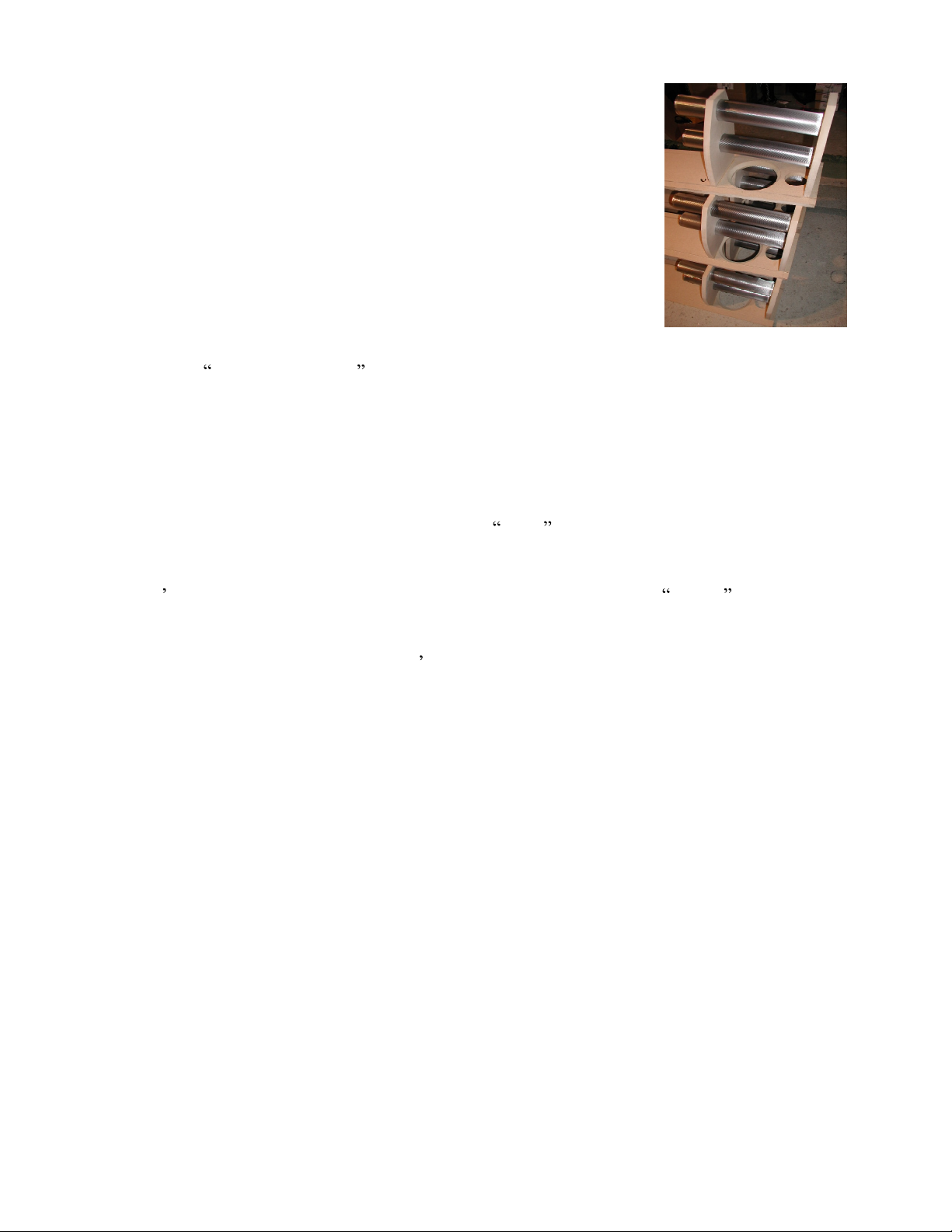
Stainless steel tubes dissipate
midrange energy.
Einstein postulates that energy cannot be created or destroyed (which leads us to ponder if he ever
drank coffee or had children...). Where does the unabsorbed energy go? Sadly, it comes back out
through the cone. Most cone materials are ineffective sound barriers. They are designed to
sound,
not block
it. How do we go about designing an enclosure with the proper design elements?
create
First we must pursue a practical application of the intended purpose. Much like a heat sink is designed
to draw heat away from an amplifier and dissipate it, our enclosure must be an
energy sink
, drawing
away the rear energy and dissipating it before it can reflect back to our drivers. Our enclosure must do
this while not adding its own sonic characteristics. No naturally occurring material possesses these
attributes. Our only answer is to create unique materials specifically designed to have properties that will
most effectively address these needs. It is here that the resources of Cerious Technologies come into
play.
To understand what must be designed we must know what actually occurs inside the enclosure.
NASA has long modeled solar and light energy as
energy plasma
, as it contains both particle and
wave characteristics. Sophisticated plasma modeling revealed how energy is transferred throughout our
enclosure, and how to best address its containment and dissipation.
Page 3
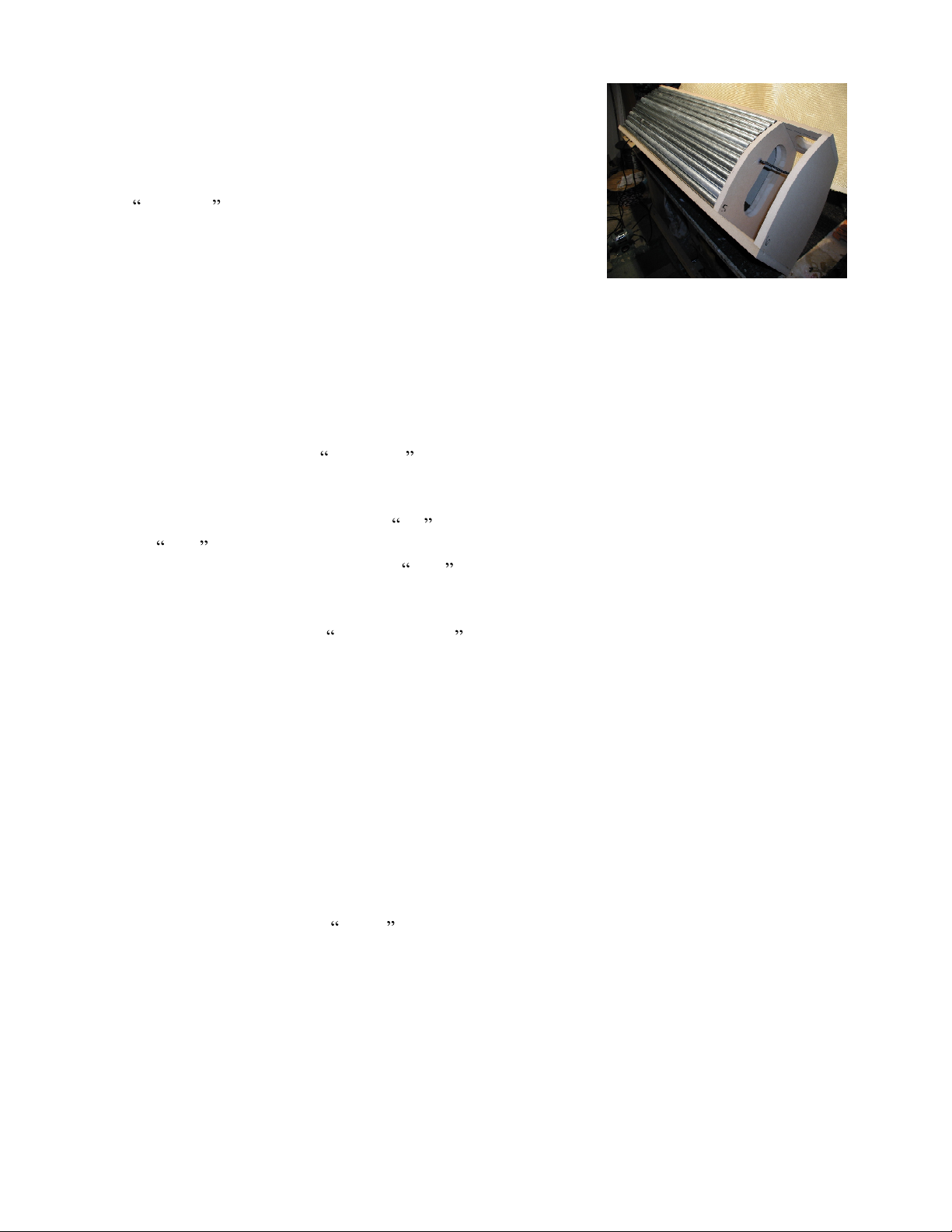
Energy analysis revealed that specific areas of the cabinet are
under differing stress, and stimuli of differing frequencies.
The main cabinet construction, therefore, needed to be broken
up into a matrix of energy specific quadrants, each with its
own unique criteria. A skeleton of steel tubes was designed as
a backbone for the main structure.
The secret is what goes
inside each of the tubes!
Each tube has a vertical and horizontal designation and is
unique to its place within the matrix. A specific tube may be
filled with CTG ballistic ceramic (rigid) for the bottom ten
A steel skeleton forms the
backbone of the cabinet structure.
inches and filled the remainder vertically with a reactive
ballistic ceramic fluid (also a proprietary CTG material) which reacts to actively eliminate
vibration. Indeed the density, rigidity, and energy loss characteristics of the CTG ceramics are
virtually infinitely variable, and can be controlled during the injection sequence. Each tube has
the ability to alter characteristics controlled in 10 mm increments. The focus of this design
strategy is a smoothing effect and the elimination of boundary interface distortions. In simple
terms the design goal is to spread out the energy dissipation surface area, maximizing total
energy capabilities.
Every audiophile has performed the rap test, where you tap on an enclosure to check to see
how dead it is. As you get closer to a supporting structure, such as where two panels are glued
together, the cabinet will sound more dead . As you move towards the center of an unsupported
panel, the panel will become unstable and will vibrate more easily. The matrix is designed to
create even vibration spectra across each span, so the energy per surface area is greatly diminished. This is known as the snowshoe effect , spreading out stress to larger surface areas thus
reducing resonance amplitudes.
The steel skeleton is covered with a proprietary combination of Kevlar, carbon fiber and CTG
ballistic ceramic. Four different adhesives are used, each with specific criteria of structural
rigidity versus damping. When the main composite sides are intact, the void around the steel
tubes is filled with a high loss CTG synthetic ceramic, a material so high in energy loss capabilities a 3/8 inch thick plate of this material will stop a 9 mm bullet fired from three feet with no
loss of integrity. Additionally steel rods are placed connecting the front and rear baffles, forcing
them into severe stress increasing their rigidity by a factor of 200%.
Next the solid hardwood faces, backs and tops are fastened to the main cabinet. You can think of
this as 1 inch thick wood veneer. This, however, creates a problem. A cabinet must never be
allowed to react as separate panels glued to each other. Other manufacturers of carbon fiber
enclosures mold separate panels of carbon fiber and glue them to wood panels. This interface
will never behave as an integral unit, because the impedance path of the glue joint will have
separate and unique energy transmission characteristics differing from the panels themselves. To
address this, another layer of carbon fiber is hand applied over the entire side panel covering the
steel tube structure and the hardwood to tie the entire enclosure to a continuous structural element. It also leaves a striking visual contrast between the natural beauty of the hardwood and the
deep finish of the carbon fiber.
Page 4
The Sound
Dynamics are the contrast of loud passages versus soft passages. All Cerious products specialize
in micro dynamics, the small inner details that make music sound more lifelike. Their design
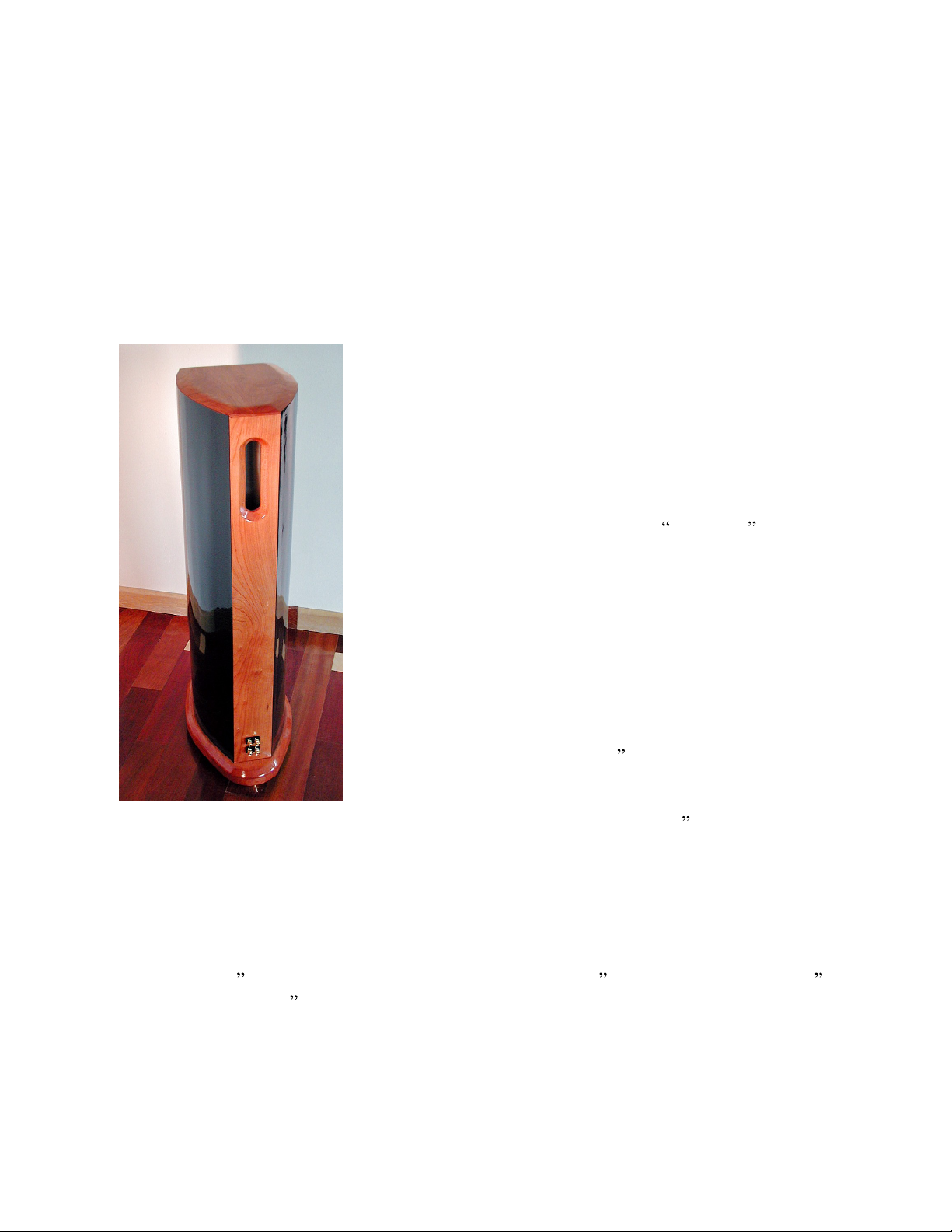
allows music to flow against a background of absolute dead silence. The acoustic venting of the
midrange avoids the pressure of any air mass that the cone must overcome, allowing startling
speed. The elimination of phantom reflections from cabinet induced energy means that when the
sound is meant to decay, it occurs in an absolutely linear manner. It is a revelation to experience
the natural decay of instruments within their acoustic space through the Cerious One Monitors.
The description that fits them best is
ultimate transparency
All Robert Grost designs are known for their integration and
imaging qualities. These new benchmark designs continue the
qualities of past designs, yet surpass them in
While the subject of
ing can prepare you for the
Cerious One. They simply get louder when asked while they
remain totally unfazed.
Great attention has been focused on the drivability of the
Cerious One. This is the Formula 1 car of loudspeakers. They
sound fast, nimble, and dynamic even at low volume levels.
Therefore, they will perform well with low power tube amps,
but as with a Formula 1 car, the more power the better.
.
every
micro
dynamics has been addressed, noth-
macro dynamic
capabilities of the
respect.
The Nuts and Bolts
The Cerious One Monitors are a three way design with a modified Vifa ring radiator tweeter, crossed over at 2.8 KHz, first
order slope. The midrange is a 6.5 cast basket driver with a
proprietary composite ceramic cone covering the range of 125
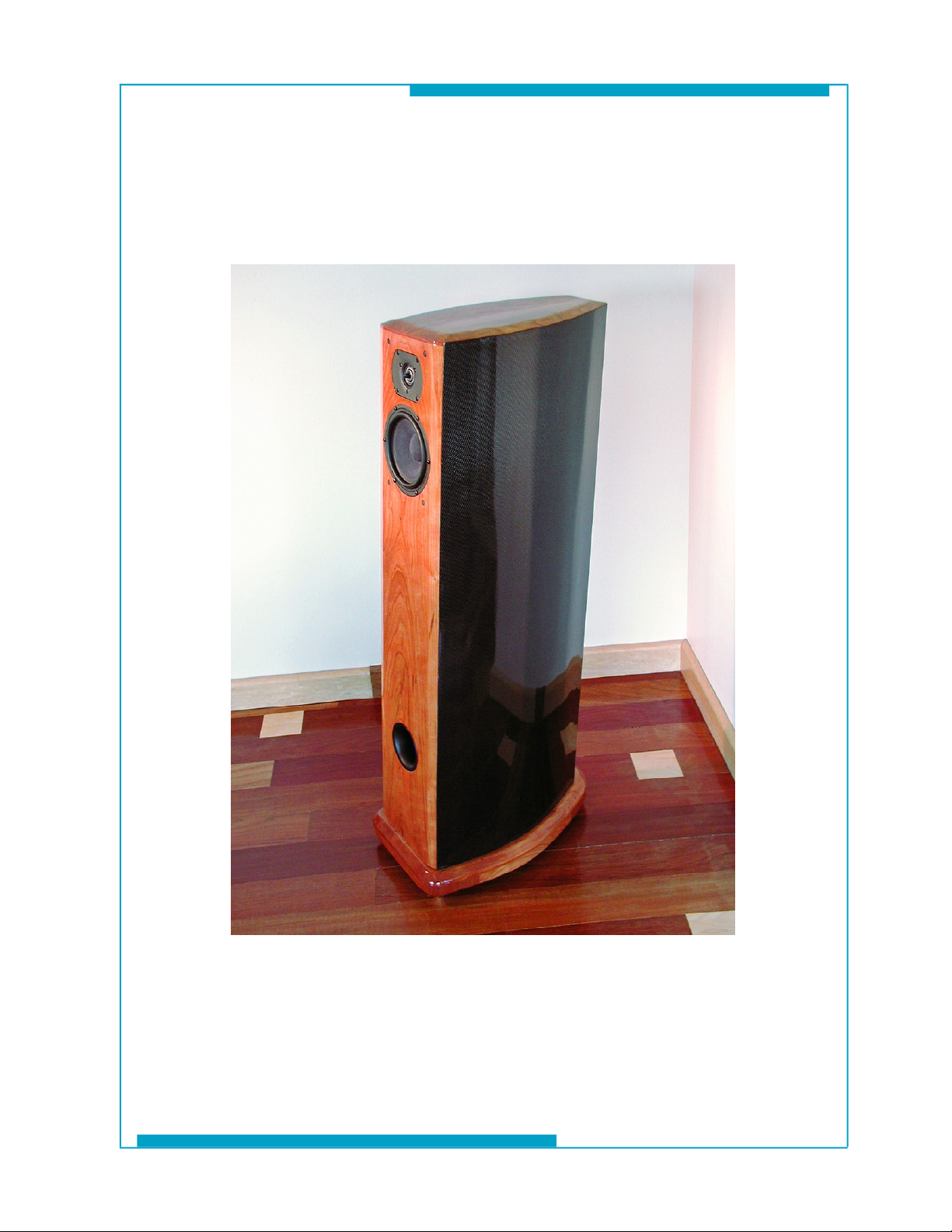
Flowing lines display
a quiet elegance.
travel with its ceramic/aluminum composite cone. These speakers fear nothing with regard to
dynamics making them ideal for a state of the art integrated audio/video system. The Cerious
One has a sensitivity of 90 db 1w/1m.
Dimensions: 11 wide in front reaching a maximum width of 13 and curving to a width of 6 in
the rear. The One is 45 tall and weigh 137 pounds each. Total lean is 5 degrees.
Specifications subject to change without notice. Reserved, Cerious Technologies Group.
Hz to 2.8 KHz. It has a very linear behavior and tremendous
travel capabilities. Speaking of travel, a 10 downward firing
woofer covers the range from 125 to 27 Hz (-3db). The woofer
will handle over 1000 watts and is capable of over one inch in
C
erious Technologies
6526 Conestoga Drive
Lansing, MI 48917
 Loading...