

Page 1
EN
Operating Manual
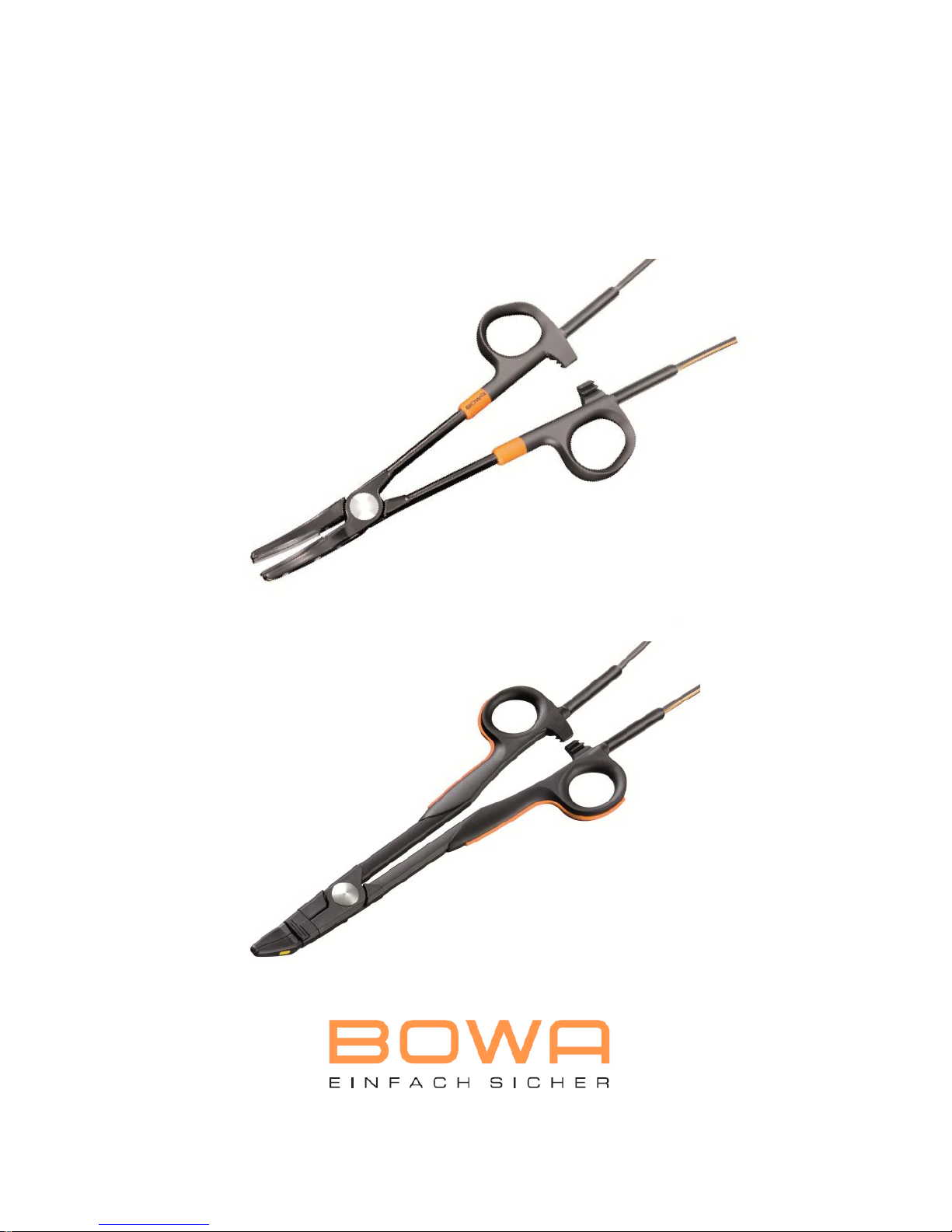
TissueSeal® PLUS COMFORT
TissueSeal® COMFORT
Page 2

Page 3

Legend
MN031-543-S0 EN TissueSeal / TissueSeal PLUS COMFORT 3
Page 4
4 TissueSeal / TissueSeal PLUS COMFORT MN031-543-S0 EN
Page 5
Legend
MN031-543-S0 EN TissueSeal / TissueSeal PLUS COMFORT 5
Legend
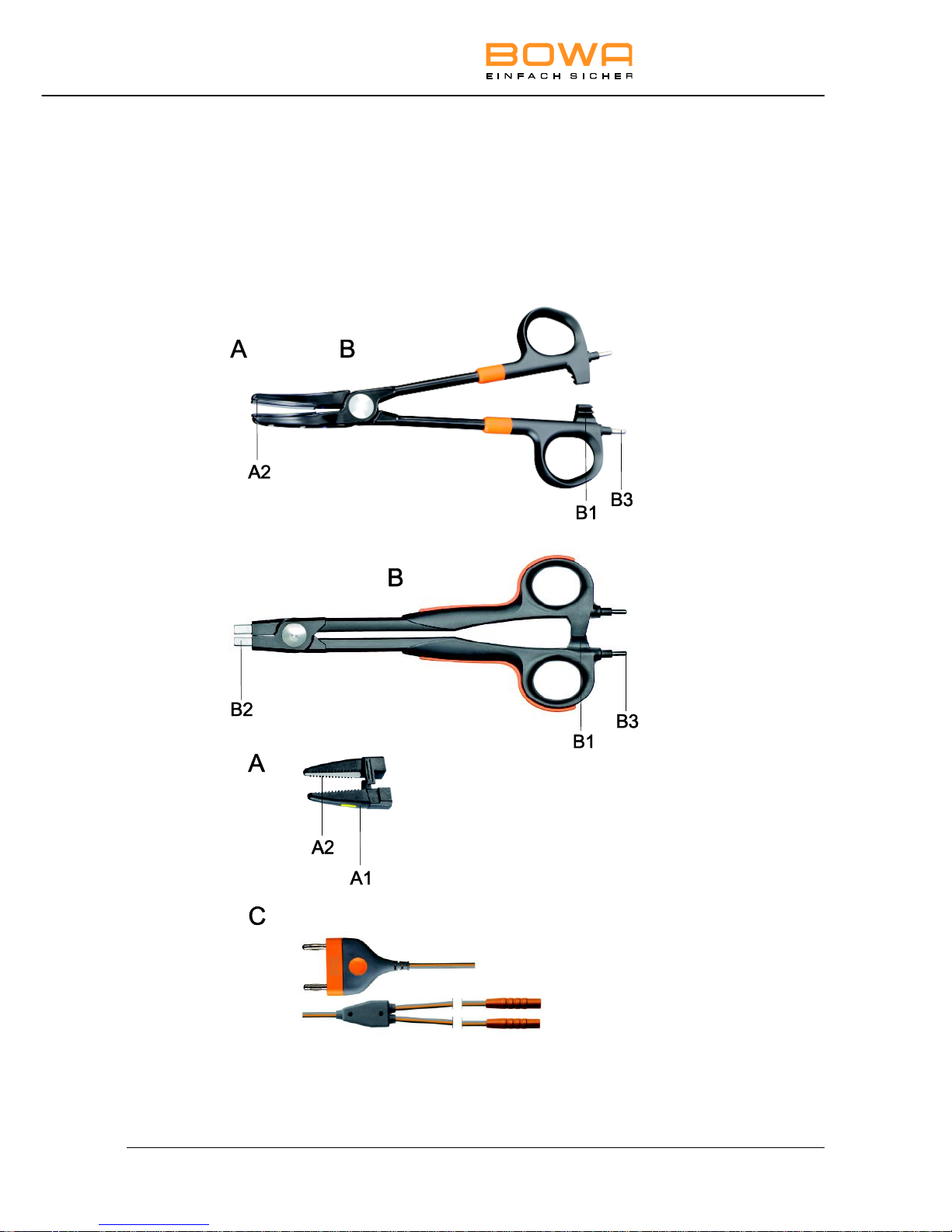
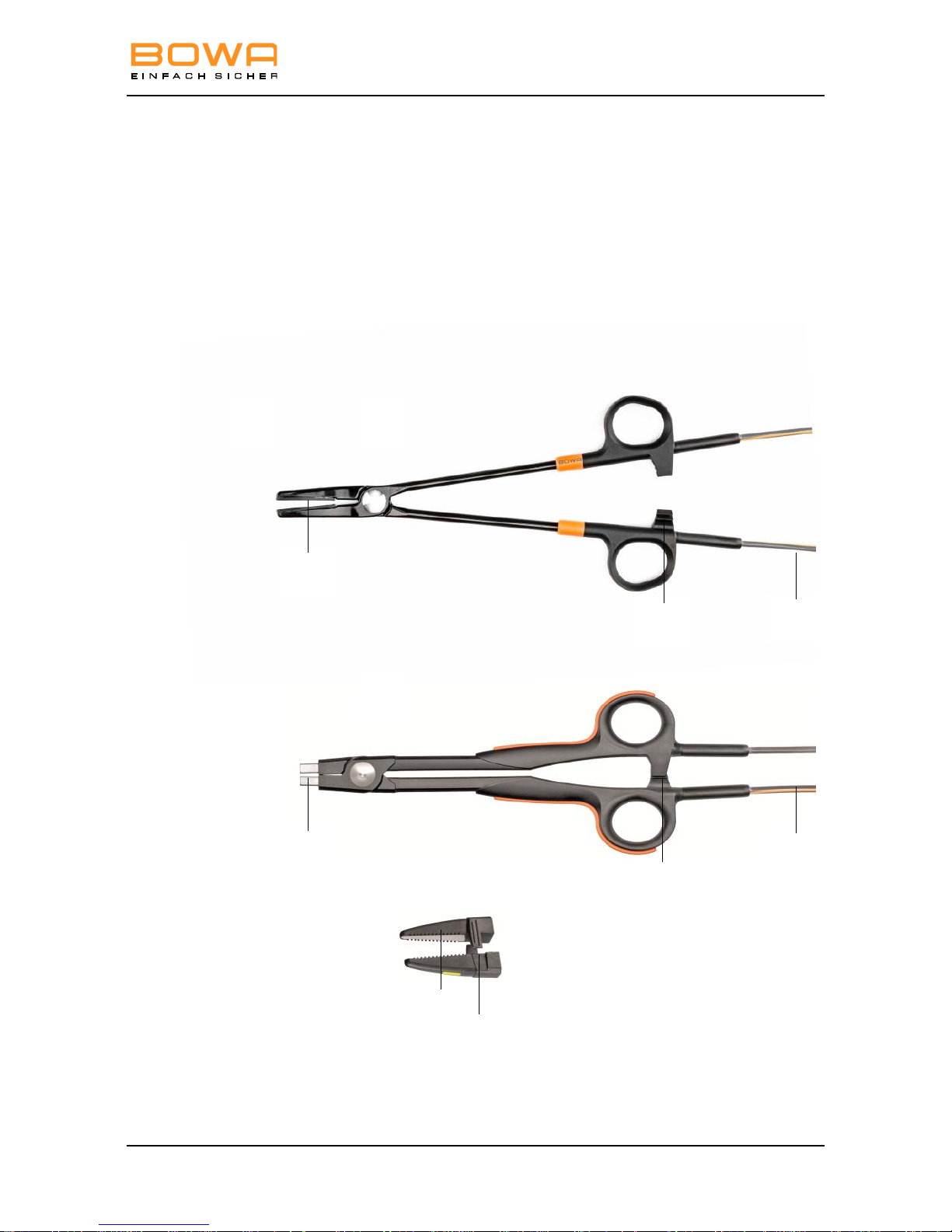
A Jaws B Handle
A1 Disposable electrode tip B1 Ratschet
A2 Electrode surfaces B2 Jaws holder
B3 HF cable
B3
B1
A
B
A2
B
A
B2
B1
B3
A2
A1
Page 6

Contents
6 TissueSeal / TissueSeal PLUS COMFORT MN031-543-S0 EN
Contents
Legend ......................................................................................................... 5
Contents ...................................................................................................... 6
1. Using this operating manual .............................................................. 8
1.1. Validity ...................................................................................... 8
1.2. Icons and labeling .................................................................... 9
1.2.1 Structure of warning instructions.................................... 9
1.2.2 Risk levels in the warning instructions ........................... 9
1.2.3 Tips ................................................................................ 9
1.2.4 Other icons and labeling ................................................... 10
1.2.5 Symbols on packaging ................................................. 10
2. Safety ................................................................................................. 11
2.1 Intended use ........................................................................... 11
2.2 General safety instructions ..................................................... 12
2.2.1. HF device ..................................................................... 13
2.2.2. HF cable ....................................................................... 13
2.2.3. Active electrodes ................................................................ 14
2.2.4. Repairs and servicing ........................................................ 14
2.3 Personal safety instructions ................................................... 15
2.3.1. Patients with pacemakers ............................................ 15
3. Functionality ...................................................................................... 16
4. Assembly ........................................................................................... 17
4.1. Assembling the ligation instrument ........................................ 17
5. Operation ........................................................................................... 17
5.1. Before use .............................................................................. 17
5.2. During the operation ............................................................... 18
5.3. Withdrawal .............................................................................. 20
5.4. After use ................................................................................. 21
Page 7

Contents
MN031-543-S0 EN TissueSeal / TissueSeal PLUS COMFORT 7
6. Dismantling ........................................................................................ 21
6.1. Dismantling the ligation instrument ........................................ 21
7. Preparation ........................................................................................ 22
7.1. Soaking .................................................................................. 23
7.2. Dismantling ............................................................................. 24
7.2.1. Pretreatment in an ultrasonic bath ............................... 24
7.3. Manual removal of contamination .......................................... 25
7.4. Automatic preparation in a CDM ............................................ 26
7.5. Inspection ............................................................................... 28
7.6. Packing ................................................................................... 29
7.7. Autoclaving ............................................................................. 30
7.8. Storage ................................................................................... 31
7.9. Transport ................................................................................ 32
7.10. Functional test in the operating room ..................................... 32
7.11. Recommended operating supplies ......................................... 32
8. Technical specifications .................................................................. 33
8.1. TissueSeal / TissueSeal PLUS COMFORT ........................... 33
9. Disposal ............................................................................................. 34
10. System overview ............................................................................... 35
10.1. TissueSeal COMFORT .......................................................... 35
10.2. TissueSeal PLUS COMFORT ................................................ 36
Page 8

1 Using this operating manual
8 TissueSeal / TissueSeal PLUS COMFORT MN031-543-S0 EN
1. Using this operating manual
This operating manual is part of the device.
BOWA-electronic GmbH & Co. KG assume no liability nor provide any
warranty whatsoever for any damage or consequential damage arising
from non-compliance with this operating manual.
Read the operating manual, in particular the safety instructions
(see section 2, page 9)carefully and thoroughly before use.
Store the operating manual in a safe place throughout the service
life of the device.
Keep the operating manual accessible to operating room
personnel.
Give the operating manual to each successive owner and/or user
of this device.
Always update the operating manual whenever you receive
additional information from the manufacturer.
1.1. Validity
This operating manual applies only to the devices designated on the
title page.
Page 9
1 Using this operating manual
MN031-543-S0 EN TissueSeal / TissueSeal PLUS COMFORT 9
1.2. Icons and labeling
1.2.1 Structure of warning instructions
SIGNAL WORD
"Risk type, source and consequences there of"
(Personal injury)!
Measure for risk prevention.
1.2.2 Risk levels in the warning instructions
Symbol
Risk level
Probability of
occurrence
Consequences of
non-compliance
DANGER
Immediate risk
Death or serious
injuries
WARNING
Possible risk
Death or serious
injuries
CAUTION
Possible risk
Minor injuries
NOTE
Possible risk
Property damage
1.2.3 Tips
Tips to make your work easier or supplementary explanatory
information for a procedure.
Page 10
1 Using this operating manual
10 TissueSeal / TissueSeal PLUS COMFORT MN031-543-S0 EN
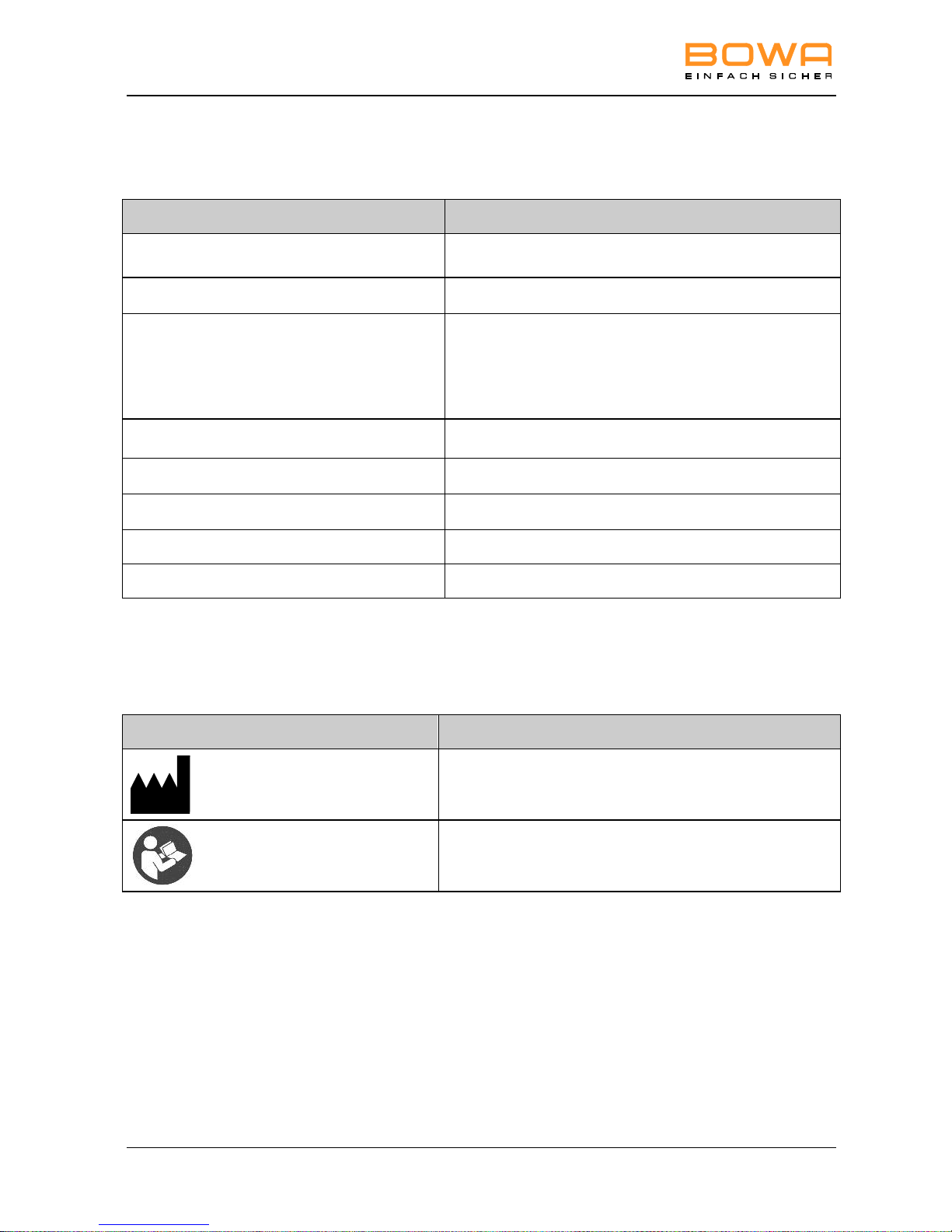
1.2.4 Other icons and labeling
Icon/Label
Meaning
Prerequisite for an activity
Activity with one step
1.
2.
3.
Activity with several steps in a binding
sequence
Result of preceding activity
List (first level)
List (second level)
Emphasis
Emphasis
..., see section xxx, page xxx
Cross reference
1.2.5 Symbols on packaging
Icon/ Labeling
Meaning
Manufacturer
Observe the operating instructions
Page 11

2 Safety
MN031-543-S0 EN TissueSeal / TissueSeal PLUS COMFORT 11
2. Safety
2.1 Intended use
The ligature instruments are intended to be used to seal arterial and
venous blood vessels and vascular tissue structures in open surgical
procedures in gynecology, urology, general surgery, and other
surgical disciplines with the aid of an HF current and mechanical
pressure.
In addition, the ligature instruments are suitable for conventional
bipolar coagulation.
The ligature instruments are intended to be used with the bipolar
“LIGATION” operating mode.
They are intended to be used in connection with the ligation program
of BOWA ARC generators.
Do not use the ligation instruments if, in the opinion of an experienced
physician or according to current professional literature, such use
would cause endangerment of the patient due, for example, to the
general condition of the patient, or if other contraindications are
present.
Do not use on the heart, the central circulation system or the central
nervous system.
The connection cable is permanently connected to the handle for
COMFORT items 760-216, 760-219, 760-223, 760-228, 760-319, 760323, 760-328.
Generators with Plug’Cut COMFORT detect BOWA COMFORT
instruments and automatically pre-select the respective parameters.
It is not necessary to use a neutral electrode with bipolar
ligation instruments.
Page 12

2 Safety
12 TissueSeal / TissueSeal PLUS COMFORT MN031-543-S0 EN
2.2 General safety instructions
The HF device may be used only by trained medical staff. The
surgeon and medical staff must be trained in the fundamental
principles, rules for use and risks of HF surgery and must be familiar
with them.
Read the operating manual carefully and thoroughly before using
the device!
In connection with your responsibility for the sterility of the ligation
instruments, observe the following when using them:
Clean and sterilize the ligation instrument before using it for the
first time. It is not sterile as delivered. With TissueSeal, the
disposable electrode tips are supplied in sterile condition.
Clean and sterilize the ligation instrument before each
subsequent use.
Use only cleaning, disinfection and sterilization methods that
have been adequately validated for the specific devices and
products concerned.
Comply with the validated parameters for each cycle.
Observe the applicable legal requirements in your country and
the hygiene regulations of the hospital.
In case of cleaning in an ultrasound bath or manual precleaning, there
is a risk of infection due to water spray and vapors:
Wear a face mask and protective clothing
Adequate ventilation is recommended.
Page 13

2 Safety
MN031-543-S0 EN TissueSeal / TissueSeal PLUS COMFORT 13
2.2.1. HF device
Use only approved HF devices and programs (see
section section 8, page 31).
Observe the operating instructions of the HF device and the
general instructions for electrosurgical operations!
Improper use of HF current can lead to endogenous and exogenous
burns and explosions:
Avoid direct skin contact with HF cables.
Avoid contact with flammable gases and liquids.
2.2.2. HF cable
Improper use of HF cables can lead to patient injuries:
Never lay the HF cable on the patient’s skin.
Connect the ligation instrument for coagulation before switching
on the HF generator.
When plugging or unplugging the HF cable, always grasp the
connector directly.
Use only HF cables that are in perfect condition. Never use a
defective HF cable.
The HF cable may cause interference to imagery on monitors:
Never route the HF cable alongside a camera cable.
Do not lay the HF cable in loops.
Consult the operating manuals of the BOWA HF generators for
additional information on interference with other devices.
Page 14

2 Safety
14 TissueSeal / TissueSeal PLUS COMFORT MN031-543-S0 EN
2.2.3. Active electrodes
Defective or worn electrodes can cause burns on patients:
Never use or repair worn or defective electrode surfaces.
Dispose of them.
Hot electrode surfaces may cause patient injuries:
Maintain sufficient distance between the tips of the instrument
and sensitive tissue structures, such as the pancreas or intestine.
Ensure that hot instruments are not used for preparation.
Inadvertent activation of the ligation instrument may cause patient
injuries:
Do not lay the ligation instrument on the patient.
Dirty electrodes may cause a short circuit, thereby resulting in
functional failure of the ligation instrument.
Clean the jaw electrodes regularly with a moist cloth.
2.2.4. Repairs and servicing
Do not repair or service defective devices:
Discard or replace defective devices.
Page 15

2 Safety
MN031-543-S0 EN TissueSeal / TissueSeal PLUS COMFORT 15
2.3 Personal safety instructions
Incorrect HF generator configuration settings and limited visibility can
lead to patient injuries:
Select the HF generator and the HF cable according to the
requirements of the ligation instrument.
Carry out operations only with adequate visibility.
Never use ligation instruments with the AUTOSTART function.
Use only the ligation program of Bowa ARC generators with
bipolar ligation current.
Prepare the tissue to be sealed so it is as free as possible in
order to avoid unintentional clamping.
2.3.1. Patients with pacemakers
Malfunctions or destruction of the pacemaker can endanger the life of
the patient or result in irreversible injuries to the patient:
Never perform ambulant operations on patients with pacemakers.
In cases of patients with pacemakers, consult the cardiologist
before carrying out HF surgery.
Set the demand pacemaker to a fixed frequency.
Ensure that the pacemaker does not come into contact with the
HF electrode.
Keep a fully operational defibrillator within reach
Carry out a postoperative pacemaker check.
Pos: 5 /679-BOWA/HF-Instrumente/Ligator "TissueSeal und TissueSeal
Plus"/03. Funktionsweise @ 5\mod_1291718350323_6.doc @ 46097 @ 1
Page 16
3 Functionality
16 TissueSeal / TissueSeal PLUS COMFORT MN031-543-S0 EN
3. Functionality
In bipolar HF surgery, tissue coagulation is achieved by applying a
high-frequency AC current, which generates heat.
The TissueSeal and TissueSeal PLUS ligation instruments are
invasive surgical instruments for use in open surgery.
The active electrodes (electrode surfaces) are the non-insulated areas
of the jaws.
The HF current flows from one electrode surface of the instrument
through the biological tissue to the other electrode surface and
produces the desired coagulation in a localized region.
With this method, sealing of a vessel or tissue segment carrying blood
is achieved by HF current in combination with supplementary
pressure.
The sealed location is hemostatically tight with respect to systolic
blood pressure and permanently closed.
760-216: Applies only to vessels up to 5 mm in diameter
760-219, 760-223, 760-228, 760-319, 760-323, 760-328:
Applies only to vessels up to 7 mm in diameter.
The jaws can be opened and closed by actuating the handle.
A ratchet mechanism in the handle provides reproducible mechanical
pressure on the electrode tips when the handle is closed.
Pos: 6 /679-BOWA/HF-Instrumente/Ligator "NightKNIFE"/04.Montage @
5\mod_1277985233074_6.doc @ 40636 @ 1
Page 17
4 Assembly
MN031-543-S0 EN TissueSeal / TissueSeal PLUS COMFORT 17
4. Assembly
WARNING
Risk of patient injury from non-sterile ligation
instruments!
The ligation instrument is not sterile as delivered. Clean
and sterilize the instrument before using it.
4.1. Assembling the ligation instrument
1. With TissueSeal: plug the disposable electrode tip A1 onto the
holder for jaw B2.
5. Operation
5.1. Before use
The ligation instrument is assembled (see section 4) and prepared (see
section 7, page 20).
WARNING
Risk of patient injury!
Use only approved BOWA ARC generators with ligation
capability (see section 8, page 31).
Use only suitable products and accessories as
described in the system overview.
Use only intact, sterilized products.
Page 18
5 Operation
18 TissueSeal / TissueSeal PLUS COMFORT MN031-543-S0 EN
WARNING
Risk of patient injuries from the combustion or
explosion of flammable liquids and gases!
Avoid contact with flammable gases and liquids, such
skin cleaners, disinfectants and anesthetic gases.
1. Connect the HF cable B3 to the HF device and switch on the HF
device.
2. Set the output power of the HF device.
3. Perform a thorough visual inspection and functional test each
time before using the ligation instrument (see section 7.5, page
26).
5.2. During the operation
WARNING
Risk of patient injury due to incorrect device settings
and limited visibility!
Set the output power of the HF device to the value
necessary for the operation.
Use only approved programs (see section 8, page 31).
Carry out operations only with adequate visibility.
Page 19
5 Operation
MN031-543-S0 EN TissueSeal / TissueSeal PLUS COMFORT 19
WARNING
Risk of patient injury due to hot electrode surfaces and
vapor emission!
Maintain sufficient distance between the tips of the
instrument and sensitive tissue structures, such as the
pancreas or intestine.
Ensure that hot ligation instruments are not used for
preparation.
Do not lay the ligation instrument on the patient.
Grasping, clamping and sealing tissue
WARNING
Risk of patient injury due to inadvertent activation of the
ligation instrument!
Never use the AUTOSTART function.
Do not switch on the HF current before the active
electrodes are in contact with the tissue to be
coagulated and the ratchet is closed.
1. Place the jaws A on the operating site.
2. Place the tissue to be sealed between the electrodes of the jaws
A.
3. Close the jaws A to grasp the tissue. Do not grasp too much
tissue.
The tissue is grasped.
4. Use the two-position ratchet of the handle B to adjust the
pressure on the tissue to best match the amount of grasped
tissue.
The tissue is clamped.
Page 20
5 Operation
20 TissueSeal / TissueSeal PLUS COMFORT MN031-543-S0 EN
5. Using the foot switch of the HF device, activate the HF current for
coagulation:
A continuous acoustic signal sounds during the entire
sealing process to indicate that power is being supplied.
An alternating acoustic signal indicates the end of the
sealing process.
6. Release the foot switch to stop the supply of power.
7. Using the handle B, open the jaws A.
The tissue is coagulated.
Changing the output power of the HF device
Before increasing the output power of the HF device, check:
all HF cables and connectors are properly connected;
the ligation instrument is properly connected (see the
operating instructions of the HF device);
the foot switch works properly;
the insulation of the HF cable,
the active electrodes of the jaws A are clean and not worn
out.
5.3. Withdrawal
WARNING
Risk of patient injury due to damaged or broken-off
parts!
Check the ligation instrument after each use. All parts
must be present.
Page 21
6 Dismantling
MN031-543-S0 EN TissueSeal / TissueSeal PLUS COMFORT 21
5.4. After use
WARNING
Dirty electrodes may lead to functional failure of the
ligation instrument!
Clean the electrodes of the jaws A regularly with a
moist cloth.
With TissueSeal: replace the disposable electrode
tip A1 if the electrodes are damaged.
With TissueSeal PLUS: replace the ligation instrument
if the electrodes are damaged.
Prepare the ligation instrument after use (see section 7, page
20).
Pos: 9 /679-BOWA/HF-Instrumente/Ligator "NightKNIFE"/06.Demontage @
5\mod_1277986204902_6.doc @ 40710 @ 1
6. Dismantling
6.1. Dismantling the ligation instrument
WARNING
Risk of burns from hot electrode surfaces!
Do not touch the electrode surfaces immediately after
use.
With TissueSeal: remove the disposable electrodes A1 from the
handle B.
Pos: 11 /679-BOWA/HF-Instrumente/Ligator "TissueSeal und TissueSeal
Plus"/07. Aufbereitung @ 5\mod_1291704309651_6.doc @ 46021 @
1223222222222
Page 22
7 Preparation
22 TissueSeal / TissueSeal PLUS COMFORT MN031-543-S0 EN
7. Preparation
Ligation instruments must always be cleaned, disinfected and
sterilized before use. Effective cleaning and disinfection are essential
for effective subsequent sterilization of the ligation instruments.
1. Ensure that only adequately validated device- and productspecific methods are used for cleaning, disinfection and
sterilization and that the validated parameters are complied with
in each cycle.
2. Observe the applicable national legal regulations and the hygiene
regulations of the hospital or clinic.
BOWA-electronic GmbH & Co. KG assumes no warranty for
malfunction of the ligation instruments in connection with disinfectants
or the method used, including the effectiveness of the disinfectant.
The following information on the possible number of
preparation cycles should be regarded as a guideline. The
actual number may vary depending on the stress level.
With a sterilization time of 20 minutes and a sterilization temperature
of 134 °C, the number of preparation cycles of the individual
instrument components is:
Handle B (TissueSeal PLUS): up to 50,
Handle B (TissueSeal): up to 100 cycles
Preparation of the ligation instrument comprises the following steps:
Soaking
Dismantling
Pretreatment in an ultrasonic bath
Manual removal of contamination
Automatic preparation in a CDM
Page 23
7 Preparation
MN031-543-S0 EN TissueSeal / TissueSeal PLUS COMFORT 23
Inspection
Packing
Autoclaving
Storage
Functional test in the operating room
7.1. Soaking
CAUTION
Risk of infection due to water spray and vapors from the
ultrasonic bath or with manual cleaning!
Wear a face mask and protective clothing.
Adequate ventilation is recommended.
NOTE
Risk of material damage to the ligation instrument from
scouring agents and metal brushes!
Never use scouring products to clean the ligation
instrument.
If necessary, first use a nonwoven cloth to remove residual dirt.
Soak the ligation instrument immediately after use, or no later
than 2 hours after use.
Use only aldehyde-free disinfectants suitable for disinfecting
ligation instruments, such DGHM- or FDA-approved products or
products with the CE mark.
The disinfectant used for soaking is intended solely for
personal protection and does not replace subsequent
disinfection.
Page 24
7 Preparation
24 TissueSeal / TissueSeal PLUS COMFORT MN031-543-S0 EN
7.2. Dismantling
Dismantle the ligation instrument (see section 6, page 19).
7.2.1. Pretreatment in an ultrasonic bath
CAUTION
Risk of infection due to water spray and vapors from the
ultrasonic bath!
Wear a face mask and protective clothing.
Adequate ventilation is recommended.
1. Place the ligation instrument in the ultrasonic bath for at least 5 minutes.
Position instrument parts with large surface areas in the ultrasonic bath
such that they will not be damaged by the ultrasonic energy.
2. Use suitable cleaning and disinfection products for ultrasonic cleaning
(see section 7.11, page 30).
3. Follow the manufacturer’s instructions with regard to the concentration
and exposure time of the cleaning and disinfection products.
Page 25
7 Preparation
MN031-543-S0 EN TissueSeal / TissueSeal PLUS COMFORT 25
7.3. Manual removal of contamination
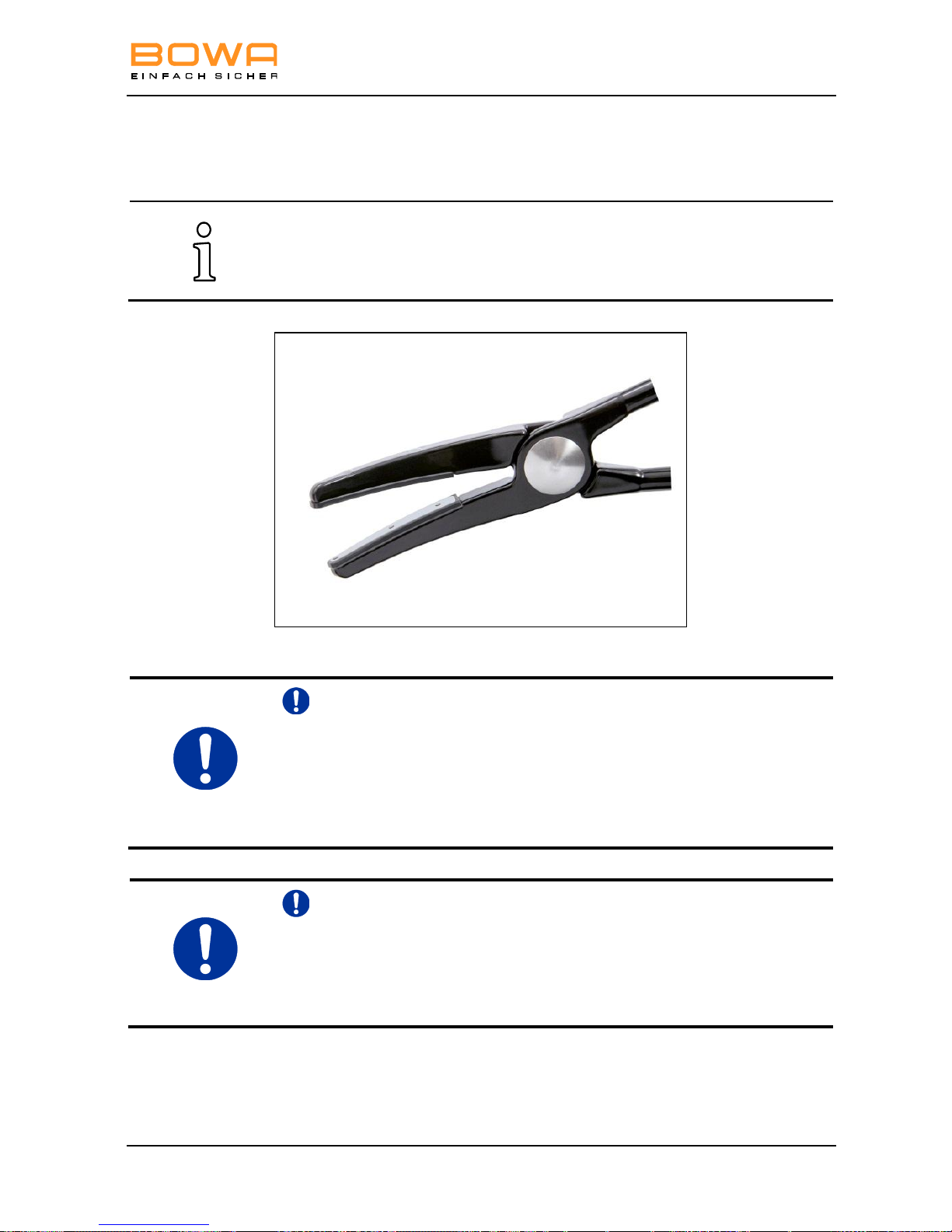
The TissueSeal PLUS ligation instrument is described as an
example in this section.
Open the jaw A.
NOTE
Risk of material damage to the ligation instrument from
metal brushes!
Always use a plastic brush to clean the ligation
instrument.
NOTE
Risk of material damage to the electrode surfaces from
brushes and scouring products!
Use a damp swab for cleaning.
Page 26
7 Preparation
26 TissueSeal / TissueSeal PLUS COMFORT MN031-543-S0 EN
Using a plastic brush and a steam jet cleaner, remove
contamination from the top and bottom outer surfaces of the
jaws A and the electrode surfaces A2.
Rinsing
After pre-cleaning, rinse all parts of the instrument thoroughly
with fully demineralized or distilled water.
7.4. Automatic preparation in a CDM
Suitable cleaning and disinfection methods
Use a cleaning and disinfection machine (CDM) to clean and
disinfect the ligation instruments.
Manual methods are not recommended due to their
significantly lower effectiveness.
Ensure that the selected CDM fulfils the following requirements:
(as shown by DGHM or FDA approval or a CE mark in
accordance with EN ISO 15883).
A proven program for thermal disinfection (at least 5
minutes at 90 °C or an A0 factor greater than 3000). With
chemical disinfection, there is a risk that disinfectant
residues may be present on the instrument components.
A program suitable for the instrument, with adequate rinse
cycles, is selected.
Sterile water or water with a low microorganism count
(max. 10 germs/ml) and low endotoxin count (max. 0.25
endotoxin units per ml) is used for rinsing.
Drying air is filtered.
The CDM is serviced and tested at regular intervals.
Page 27
7 Preparation
MN031-543-S0 EN TissueSeal / TissueSeal PLUS COMFORT 27
Suitable cleaning agents
Ensure that the selected cleaning agent system fulfils the
following requirements:
The cleaning agent is suitable for the ligation instrument.
If thermal disinfection is not used, a suitable disinfection
agent with proven effectiveness (e.g. DGHM or FDA
approval or CE mark) and compatible with the cleaning
agents is also used.
The chemicals that are used are compatible with the
instrument components (see section 7.11, page 30).
Follow the manufacturer’s instructions with regard to the
concentration and exposure time of the cleaning and disinfection
products.
Cleaning and disinfection
NOTE
Risk of damage to the HF cable due to incorrect
placement in the CDM!
Ensure that the HF cable is not kinked or pinched.
1. Place the instrument components in the CDM. Ensure that:
the instrument components are positioned to allow
exposure to the rinsing media;
clean the handle in the unlatched position,
the HF cable is located in a sieve tray with a cover.
2. Restart the program.
3. After the program is finished, remove the instrument components
from the CDM.
Page 28
7 Preparation
28 TissueSeal / TissueSeal PLUS COMFORT MN031-543-S0 EN
NOTE
Risk of handle damage due to compressed air!
Restrict compressed air pressure to 3 bar or less for
handle drying.
4. Use filtered compressed air to dry the instrument components.
7.5. Inspection
These products are subject to wear when used as intended,
depending on the intensity of use. This wear arises from the design
and construction of the instruments and is unavoidable.
Replace the product if it shows externally visible defects or does not
function as described in this manual. Please advise the manufacturer
or the manufacturer’s authorized representative in such cases.
After cleaning, visually inspect each of the instruments and test
them for proper operation.
Replace any damaged parts.
We recommend that instrument oil not be used on moving or pivoting
parts, such as the pliers handles. Instrument oil may cause a tendency
to swelling in certain plastics and impair the ease of motion of the
instruments.
DANGER
Risk of patient burns with brittle or defective insulation!
Replace instrument components with damaged
insulation.
Page 29

7 Preparation
MN031-543-S0 EN TissueSeal / TissueSeal PLUS COMFORT 29
Jaw insert
1. Check the ratchet B1 for ease of motion.
2. Check the jaw holder B2 for damage and corrosion.
Jaws
1. Check the electrode surfaces A2 for cleanliness.
2. Check the gap between the electrode surfaces A2 in the closed
position for uniformity.
3. Check the electrode surfaces A2 for damage.
HF cable
1. Check the connector for damage and corrosion.
2. Visually inspect the insulation for damage.
7.6. Packing
The packaging must meet the following requirements:
EN (ANSI AAMI) ISO 11607/ EN 868-2...10 (formerly EN
868/ANSI AAMI ISO 11607)
Suitable for steam sterilization (resistant to temperatures up to
137 °C, with sufficient steam permeability)
Serviced at regular intervals (sterilization container)
Pack the ligation instrument in a suitable disposable sterilization
package and/or a suitable sterilization container.
Sterilization in the transportation packaging is not allowed.
Page 30
7 Preparation
30 TissueSeal / TissueSeal PLUS COMFORT MN031-543-S0 EN
7.7. Autoclaving
Autoclave the handle only in the unlatched position.
NOTE
Risk of destruction of the ligation instrument from hotair sterilization
Use a suitable sterilization method.
Use only steam sterilization with the following specifications:
Fractional vacuum method (with adequate device drying)
Compliant with EN 13060 or EN 285
Validation in accordance with EN ISO / ANSI AAMI ISO 17665
(formerly EN 554 / ANSI AAMI ISO 11134) (with applicable
IQ/OQ (commissioning) and product-specific performance
assessment (PQ))
Maximum sterilization temperature 134 °C plus tolerance in
accordance with EN ISO / ANSI AAMI ISO 17665 (formerly EN
554 / ANSI AAMI ISO 11134)
Minimum sterilization time 20 minutes at 121 °C or 5 minutes at
132 or 134 °C
Using the less effective gravitation method must be secured
by means of additional validation (longer sterilization times
may be necessary).
The manufacturer accepts no responsibility whatsoever for the use of
other sterilization methods, such as sterilization using ethylene oxide,
formaldehyde, radiation or low-temperature plasma.
Page 31
7 Preparation
MN031-543-S0 EN TissueSeal / TissueSeal PLUS COMFORT 31
1. Observe the following if such methods are used:
EN ISO 14937 / ANSI AAMI ISO 14937;
standards relevant to the method.
2. Demonstrate the suitability and effectiveness of the method,
taking into account the specific product geometry in the context of
validation (including investigation of sterilization medium residues
if appropriate).
7.8. Storage
1. Store the ligation instrument in a location where it is protected
against:
strong mechanical stresses such as shocks, falling or
blows;
direct exposure to sunlight;
X-ray radiation.
2. Store the ligation instrument in a dry place at room temperature.
The storage life of the sterilized ligation instrument depends on
the type of packaging and the storage conditions.
The shipping box is not intended for storing the device.
Storage conditions:
Temperature: + 10 °C - + 40 °C
Relative humidity: 0 – 75%
Atmospheric pressure: 500–1600 hPa
Page 32

7 Preparation
32 TissueSeal / TissueSeal PLUS COMFORT MN031-543-S0 EN
7.9. Transport
Strictly observe the storage conditions when transporting the
ligation instrument.
Transport conditions:
Temperature: - 20 °C - + 50 °C
Relative humidity: 0 – 75%
Atmospheric pressure: 500 – 1600 hPa
7.10th Functional test in the operating room
1. Assemble the ligation instrument (see section 4.1, page 15).
2. Test the ligation instrument for proper operation (see section 7.5,
page 26.
7.11. Recommended operating supplies
BOWA recommends the use of neutral to slightly alkaline cleaning
agents or cleaning and disinfection agents free from potentially
harmful ingredients. Alcoholic and/or aldehydic ingredients may be
permissible, depending on the concentration.
Pretreatment in an ultrasonic bath
The suitability of the ligation instruments for effective pretreatment in
an ultrasonic bath (5 minutes) with the use of an aldehyde-free
combined cleaning and disinfection product (Gigasept Instru AF) has
been demonstrated by BOWA.
Automatic cleaning
The suitability of the ligation instruments for effective cleaning and/or
disinfection with an automated method (90 °C, 5 minutes) and an
alkali cleaning product with a surfactant additive (neodic MediCLean
forte) has been demonstrated by BOWA.
The manufacturer accepts no responsibility for the use of other
cleaning and disinfection products.
Page 33
8 Technical specifications
MN031-543-S0 EN TissueSeal / TissueSeal PLUS COMFORT 33
8. Technical specifications
8.1. TissueSeal / TissueSeal PLUS COMFORT
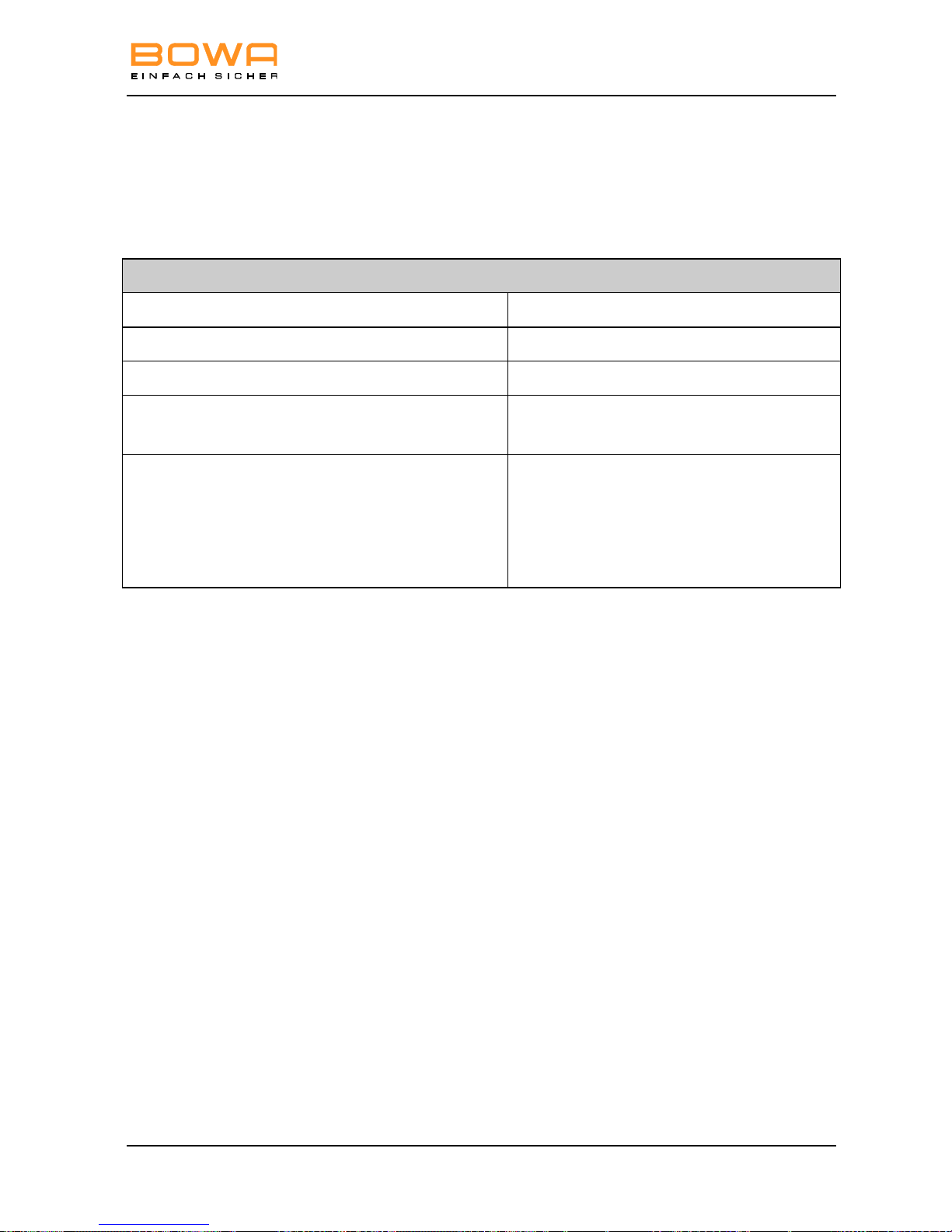
Technical specifications
HF current
4 A
AC voltage
> 330 kHz
Maximum voltage
200 Vp sinusoidal
Approved HF device
BOWA ARC generators with
LIGATION software
Approved programs
LIGATION
For BOWA ARC 350L (900-350):
LIGATION from software V2.6
Effect 2 to Effect 4
760-216: Effect 4
Page 34
9 Disposal
34 TissueSeal / TissueSeal PLUS COMFORT MN031-543-S0 EN
9. Disposal
DANGER
Infection hazard
To avoid spreading germs and infections, sterilize the
instrument before it leaves the hospital or surgical
practice.
Always dispose of medical products, packaging materials and
accessories in accordance with applicable national regulations and
statutes.
Page 35
10 System overview
MN031-543-S0 EN TissueSeal / TissueSeal PLUS COMFORT 35
10. System overview
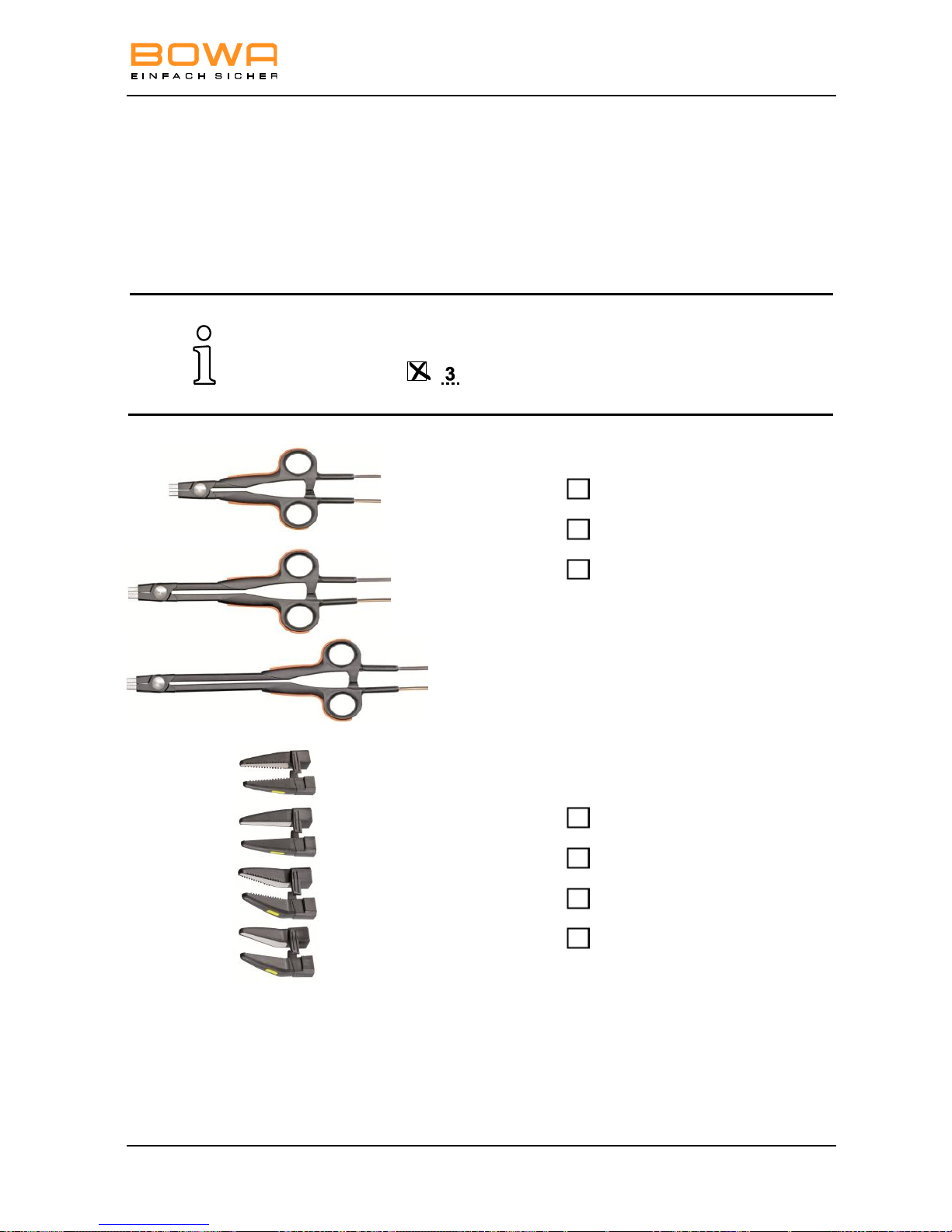
10.1. TissueSeal COMFORT
Order from your specialist dealer
830-001
Handle
760-319 ....
760-323 ....
760-328 ....
Disposable electrode tip
830-000 ....
830-001 ....
830-010 ....
830-011 ....
Page 36
10 System overview
36 TissueSeal / TissueSeal PLUS COMFORT MN031-543-S0 EN
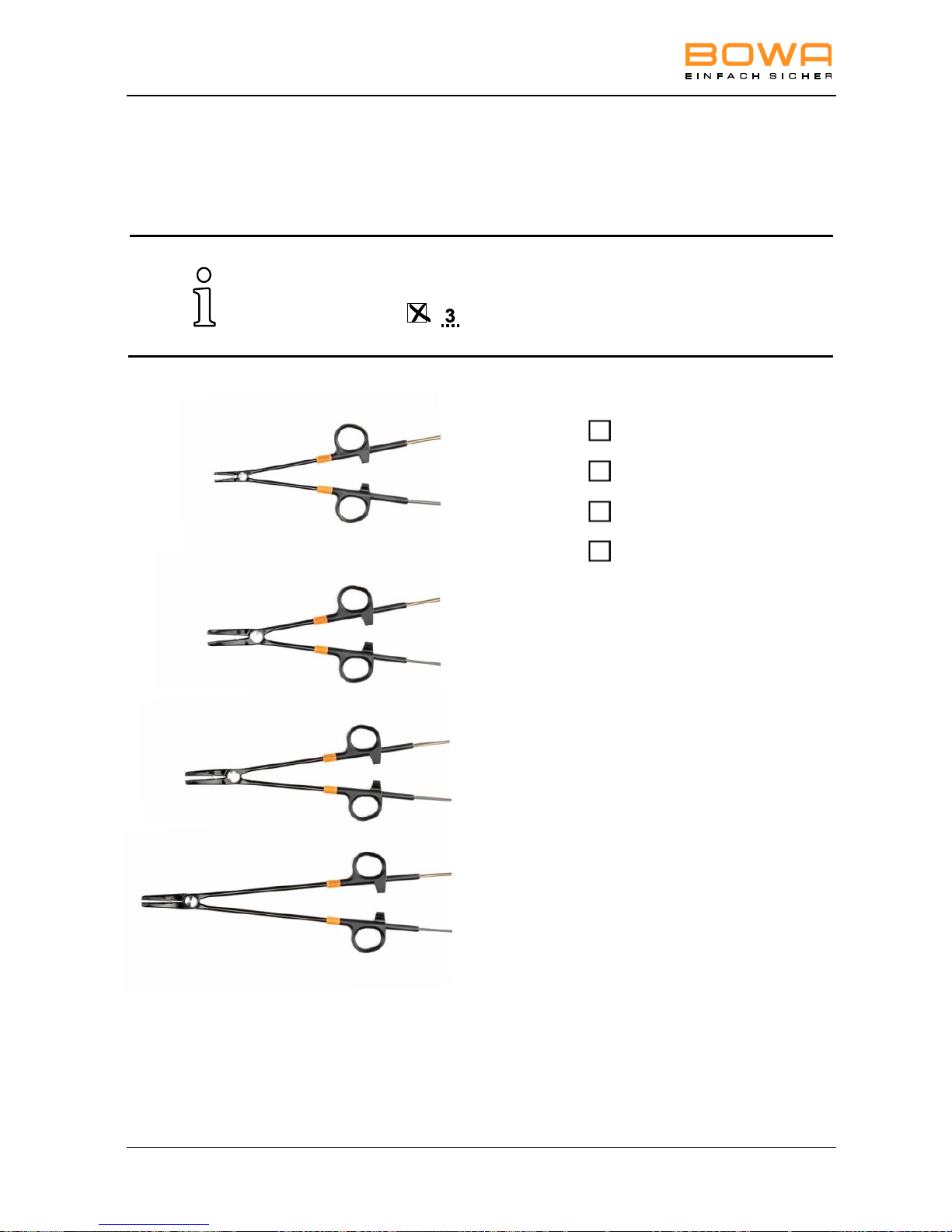
10.2. TissueSeal PLUS COMFORT
Order from your specialist dealer
760-223
Handle
760-216 ....
760-219 ....
760-223 ....
760-228 ....
=== Ende der Liste für Textmarke Inhalt ===
Page 37

Page 38
0123
MN031-543-S0 12/12 EN
Printed in Germany Subject to technical and design changes Copyright by BOWA
-electronic, Gomaringen │ Germany
BOWA-electronic GmbH & Co. KG
Heinrich-Hertz Strasse 4–10
D-72810 Gomaringen │ Germany
Phone: +49 (0) 7072-6002-0
Fax: +49 (0) 7072-6002-33
info@bowa-medical.com │
www.bowa-medical.com
CE marked according to
Medical Device 93/42/EWG
 Loading...