

Page 1
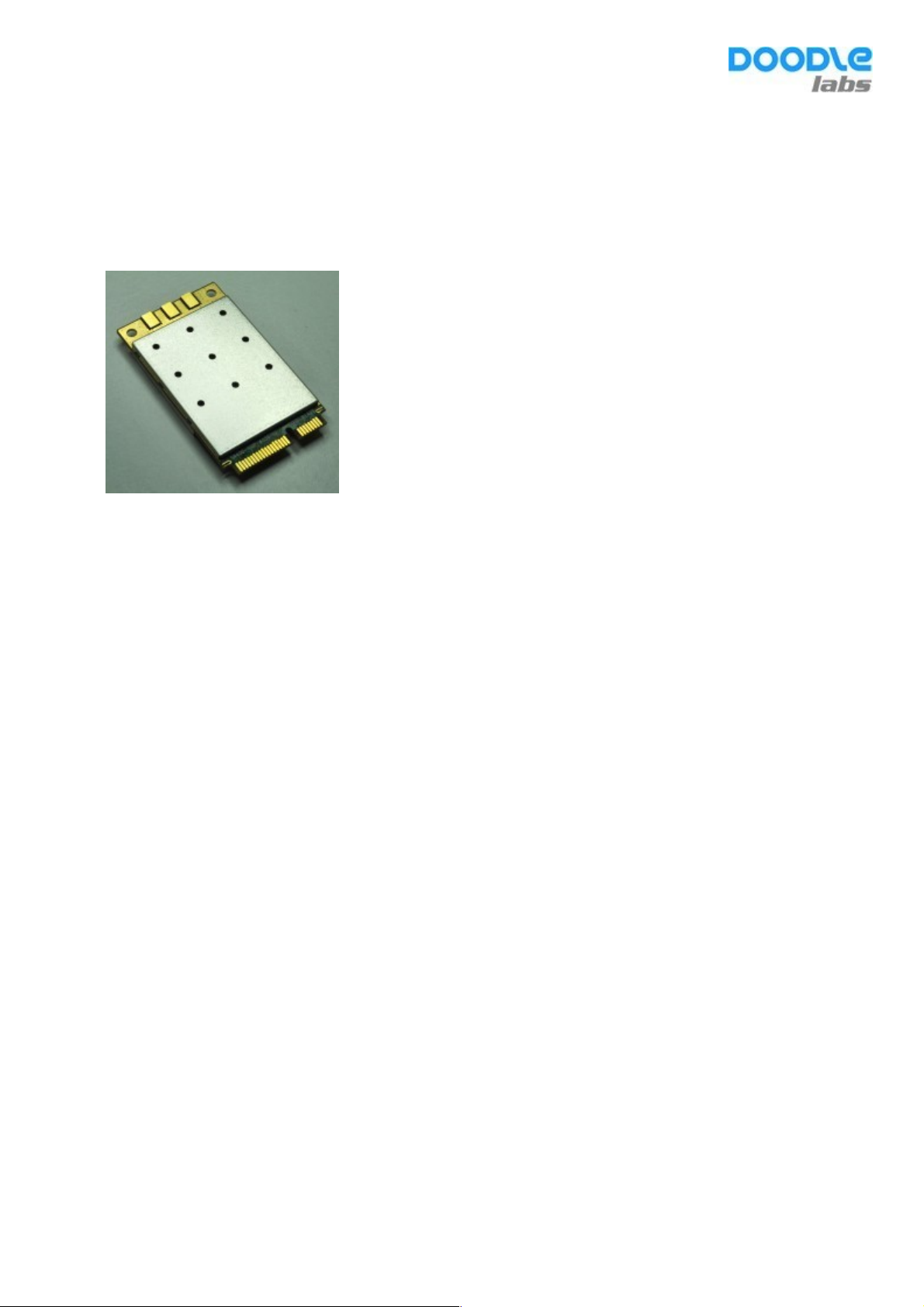
NM-DB-2
Rugged/Military grade 2.4GHz 2x2 MIMO Wi-Fi® Radio Transceivers
Features
Qualcomm-Atheros AR9590-AR1B Chipset with Extended Temperature Range
Up to 300 Mbps Throughput with 2x2 MIMO Technology
Calibrated High Power 2.4 GHz (27 dBm)
Supported Ath9k Linux Driver
MiniPCIE Interface
Page 2
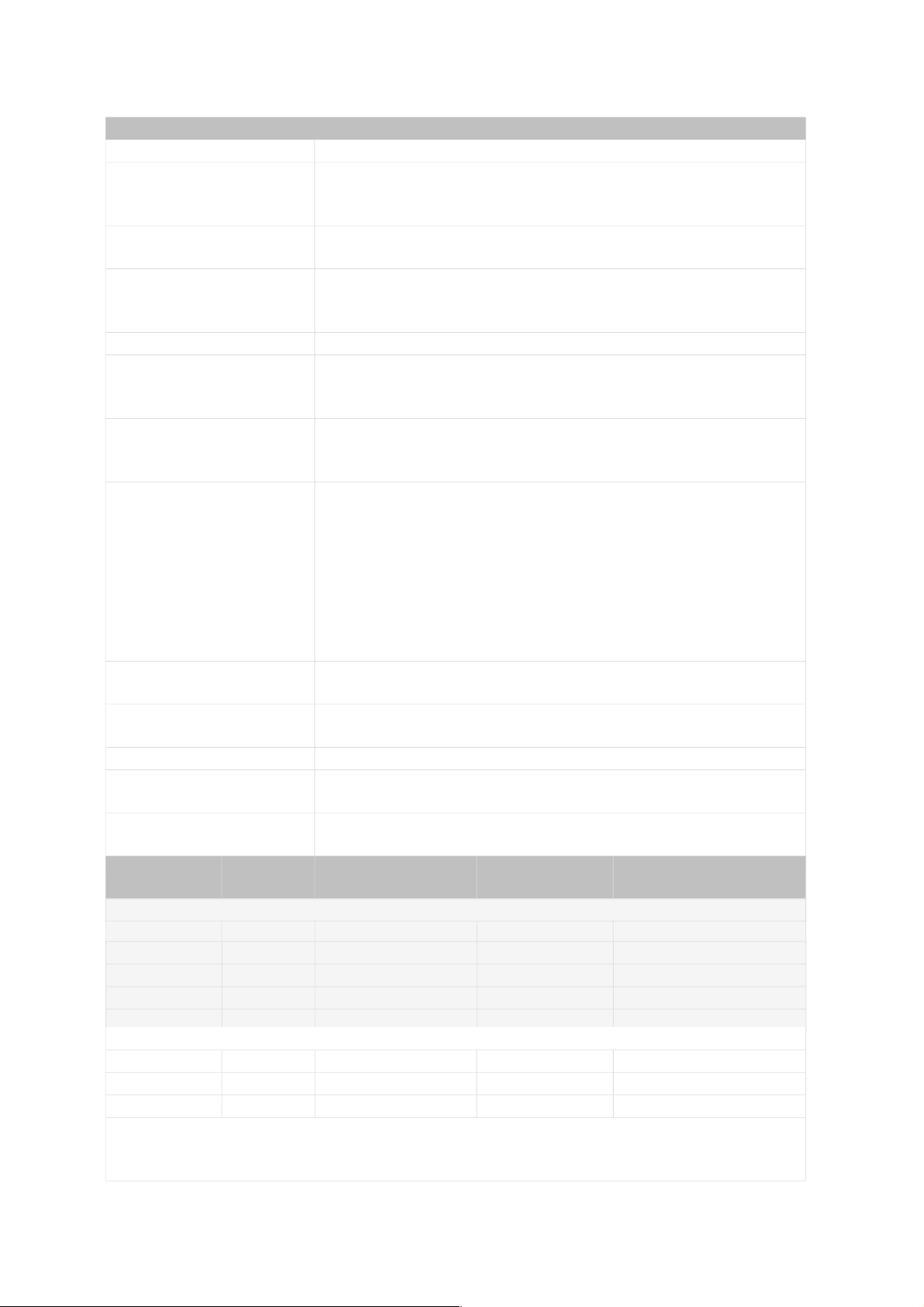
TECHNICAL SPECIFICATIONS
Model No. NM-DB-2
Qualcomm Atheros
MAC Chipset
QCA9590-AR1B with Extended Temperature range for Outdoor and
Rugged models)
Software Support
Linux Drivers
ath9k
Center Frequency Range 2.412 GHz ~ 2.462 GHz
This varies by the regulatory domain
Channel Bandwidth* 20, 40 MHz channels
Radio Modulation (Dynamic
Link Adaptation)
CCK, BPSK, QPSK, 16 QAM, and 64 QAM (2.4 GHz – 11n models)
Data Rates Supported 802.11n: MCS0-15 (2.4 GHz)
802.11b/g: 1, 2, 5.5, 6, 9, 11, 12, 18, 24, 36, 48 and 54 Mbps (2.4 GHz)
802.11 dynamic frequency selection as an AP and Client
802.11n and b/g Beam Forming
Packet aggregation: A-MPDU (Tx/Rx), A-MSDU (Tx/Rx), Maximal
802.11n version 2.0
Capabilities
ratio combining (MRC), Cyclic shift diversity (CSD), Frame
aggregation, block ACK,Spatial
multiplexing, cyclic-delay diversity (CDD), low-density parity check
(LDPC), Space Time Block Code (STBC)
Phy data rates up to 450 Mbps (40 MHz channel)
Operating Modes
MAC Protocol
Wireless Error Correction FEC, ARQ
Wireless Data Security
FIPS Certification
Tx/Rx
Specification
Radio
Modulation
2.4 GHz (20 MHz Channel)
802.11b, STBC 1 Mbps CCK 27 -100
802.11g, STBC 64 QAM 3/4 22 -80
802.11n, MIMO BPSK 1/2 27 -92
802.11n, MIMO 16 QAM 3/4 25 -82
802.11n, MIMO 64 QAM 5/6 22 -72
2.4 GHz (40 MHz Channel)
802.11n, MIMO BPSK 1/2 27 -90
802.11n, MIMO 16 QAM 3/4 25 -79
802.11n, MIMO 64 QAM 5/6 22 -70
Note 1 It is advantageous to use the smallest Channel Bandwidth that can support the Throughput
requirements. Smaller bandwidths provide more channels to choose and help avoid interference
issues. The system’s SNR is higher at smaller Channel Bandwidths and Range is longer.
Note 2 Max allowed Tx power depends on the regulatory domain
AP, STA and Adhoc modes to implement Point to Point, Point to multi
Point
TDD with Carrier Sense Multiple Access with Collision Avoidance
(CSMA/CA)
128 bit AES, WEP, TKIP and WAPI hardware encryption. Support for
802.11b, g, n and time stamp standards
Loop back mode to facilitate FIPS AES certification, Small packet size
(96 bytes) in AES encryption at full packet rate
Coding Rate
Tx Power
(±2dBm)
2
Rx Sensitivity
(Typ)
Page 3
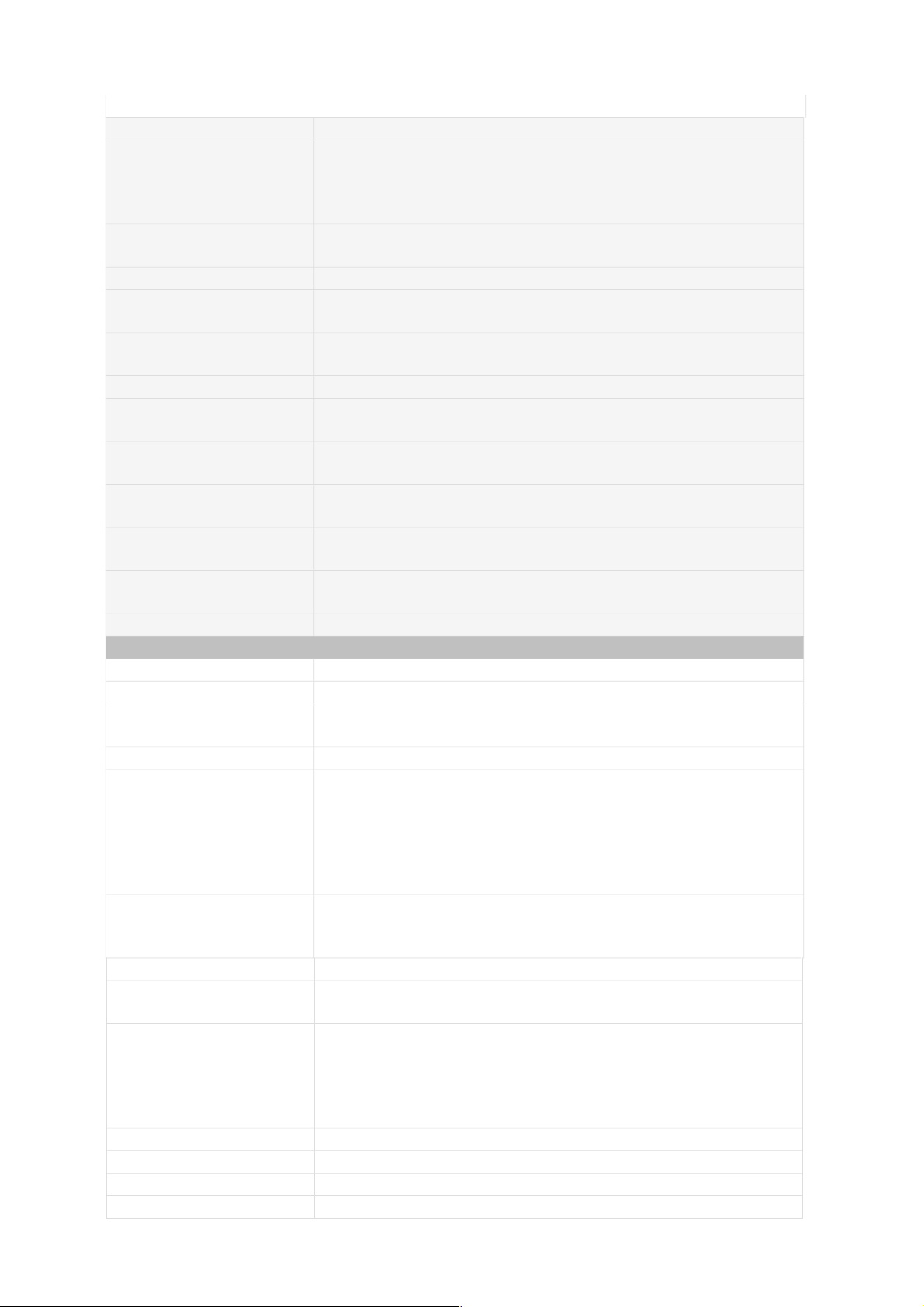
Antenna Signal Strength -35 to -85 dBm (Recommended), Absolute Maximum=+12 dBm
Antenna port isolation for
concurrent operation
Integrated Antenna Port
Protection
Up to +5 dBm signal strength for 2.4 GHz signal
>20 KV (Human Body Model)
Receiver LNA Gain >10 dB
Receiver Adjacent Channel
Rejection (ACR)
Receiver Alternate Channel
Rejection (ALCR)
>18 dB @ 11g, 6 Mbps (Typ)
>35 dB @ 11g, 6 Mbps (Typ)
Receive chain Noise Figure +6 dB
Transmitter Adjacent Channel
Leakage power Ratio (ACLR)
Transmitter Spurious
Emission Suppression
RF Power control
RF Hardware Disable (RF
Kill)
Control for External Power
Amp
45 dB (Fc ± ChBW)
-40 dBc
In 0.5 dBm steps. Accuracy of power calibration loop ±2 dBm. Each
transceiver individually calibrated and tested.
Pin 20 of miniPCI-E interface. (Required for FAA compliance)
Available as an optional configuration
Spectral Analysis 8 bit resolution spectral FFTs available for software analysis
PHYSICAL, ENVIRONMENTAL AND OTHER SPECIFICATIONS
Antenna Ports 2 Ports (50 Ohms) with MMCX connectors.
Host Interface miniPCI-Express 1.2 Standard
Host CPU Board
Any CPU board with Industry standard miniPCI-Express interface with
minimum 6 mm connector height
Operating Voltage 3.3 Volts from miniPCI-Express connector
4W @ Max power, in continuous data transfer mode on all chains
2.8W @ 25 dBm power, in continuous data transfer mode on all chains
Power Consumption
2W @ 20 dBm power (ETSI max), in continuous data transfer mode on
all chains
0.7W in continuous data receive mode
230 mW in Sleep mode
Shield case temperature
range (Operating)
-40°C to +80°C
The System’s thermal design should ensure that the transceiver’s case
temperature is maintained within these specifications.
Humidity (Operating) 0% – 95% (Non-condensing)
Dimensions
30 x 50 x 7 mm, 14 grams
Mechanical drawing and 3D-CAD files available upon request
Designed and Verified to meet various regulatory requirements.
Formal testing and approval is required based on the Integrator’s
Regulatory Requirements
particular host platform and antenna type. The Integrator is also
responsible for obtaining all required regulatory approvals in target
markets for the finished product.
FCC ID
2ATBY-NMDB-2
CE/ETSI Q3 2016
Industry Canada (IC) Q3 2016
RoHS/WEEE Compliance Yes. 100% Recyclable/Biodegradable packaging
Page 4
Singapore: USA:
Doodle Labs (SG) Pte. Ltd. Doodle Labs LLC
150 Kampong Ampat 2 Mattawang Drive
KA Center, Suite 05-03 Somerset, NJ 08873
Singapore 368324 Tel: +1 862 345 6781
Tel: +65 6253 0100 Fax: +65 6353 5564
 Loading...