

Page 1

SPECIFICATIONS
IEEE 802.11 b/g/n 2.4GHz 1T1R
W
IFI Module
RL-UM12BS-8188ETV
WIFI Module)
(
Page 2

Overview
RL-UM12BS-8188ETV is a WLAN 11n USB module,
which fully supports the features and
Functional compliance of IEEE 802.11n,e and i standards. It
supports up to
150Mbps high-speed wireless network connections.
It is designed to provide excellent performance with low power
Consumption and enhance the advantages of robust system and
cost-effective.
It is targeted at competitive superior performance, better power
Management applications.
Antenna is FPCB Antenna, antenna gain is 1dBi.
Features
*
Operates in 2.4 GHz frequency bands
*
1x1 MIMO technology improves effective throughput and range
existing 802.11 b/g products
*
Data rates: up to 150Mbps
*
802.11e-compatible bursting and I standards
*
BPSK, QPSK, 16 QAM, 64 QAM modulation schemes
*
WEP, TKIP, and AES, WPA, WPA2 hardware encryption schemes
Page 3

General Specification
Model
RL-UM12BS-8188ETV
Product Name WIFI module
Major Chipset Realtek RTL8188ETV
Standard 802.11b/g/n, 802.3, 802.3u
Data Transfer
Rate
Modulation
Method
Frequency Band
1,2,5.5,6,11,12,18,22,24,30,36,48,54,60,90,120 and
maximum of 150Mbps
BPSK/ QPSK/ 16-QAM/ 64-QAM
2.412~2.462 GHz
IEEE 802.11b: DSSS (Direct Sequence Spread Spectrum)
Spread Spectrum
IEEE 802.11g/n:OFDM (Orthogonal Frequency Division
Multiplexing)
RF Output Power < 13dBm@11n,< 18dBm@11b,< 14dBm@11g
Operation Mode Ad hoc, Infrastructure
Receiver
Sensitivity
11Mbps -86dBm@8%,54Mbps -73dBm@10%,130Mbps
-66dBm@10%
Operation Range Up to 180 meters in open space
11: (Ch. 1-11) – United States
Operating Channel
13: (Ch. 1-13) – Europe 14: (Ch. 1-14) – Japan
LED
OS Support
Windows 2000,XP32-64,Vista 32/64,Win7 32/64,Linux,Mac,
WIN CE
Security WEP, TKIP, AES, WPA, WPA2
Interface USB 2.0
Power
Consumption
Operating
Temperature
Storage
Temperature
DC3.3V
Maximum power dissipation in 150MA
-20 至 +60° C ambient temperature
-10 ~ 70°C ambient temperature
Humidity 5 to 90 % maximum (non-condensing)
Dimension 12.9032 x 12.1920 x 1.6mm (LxWxH) +-0.2MM
Android,
Page 4

Dimensions:
The PCB tolerances within + / -0.2 or so
PIN Definition
Page 5
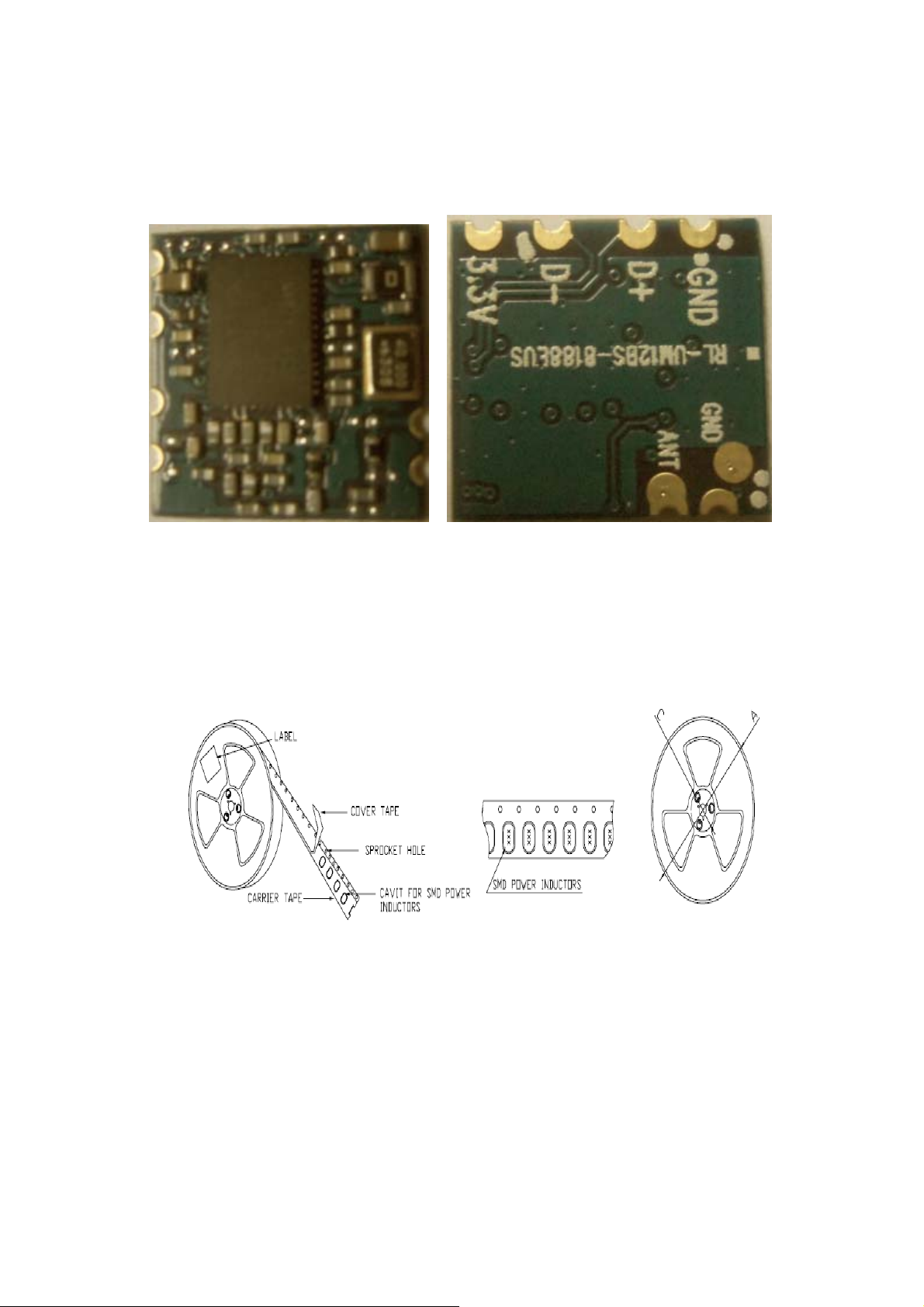
Physical map
Packaging Appearance Figure
Page 6

External antenna reference design
DC Characteristics
Symbol Parameter Minimum Typical Maximum Units
VD33A, VD33D 3.3V I/O Supply Voltage 3.1 3.3 3.5 V
VD15A, VD15D 1.5V Supply Voltage 1.4 1.5 1.6 V
IDD33 3.3V Rating Current - - 500 mA
Page 7

Power Consumption
Parameters Sym Conditions Min Typ Max Unit
3.3V Supply Voltage Vc33 3.1 3.3 3.5 V
1.5V Supply Voltage Vc15 1.4 1.5 1.6 V
Receiving Tests the biggest receive
3.3V Current Consumption Icc33rx H40MCS7 90 MA
3.3V Current Consumption Icc33rx
Transmission Biggest transmission
test
OFDM 54M
100 MA
3.3V Current Consumption Icc33tx H40 MCS7 140 MA
3.3V Current Consumption Icc33tx
The depth waits for an opportunity
Deep sleep
Icc33tx/rx 2MA
Ic33tx/rx 2 MA
OFDM 54M
170 MA
Page 8
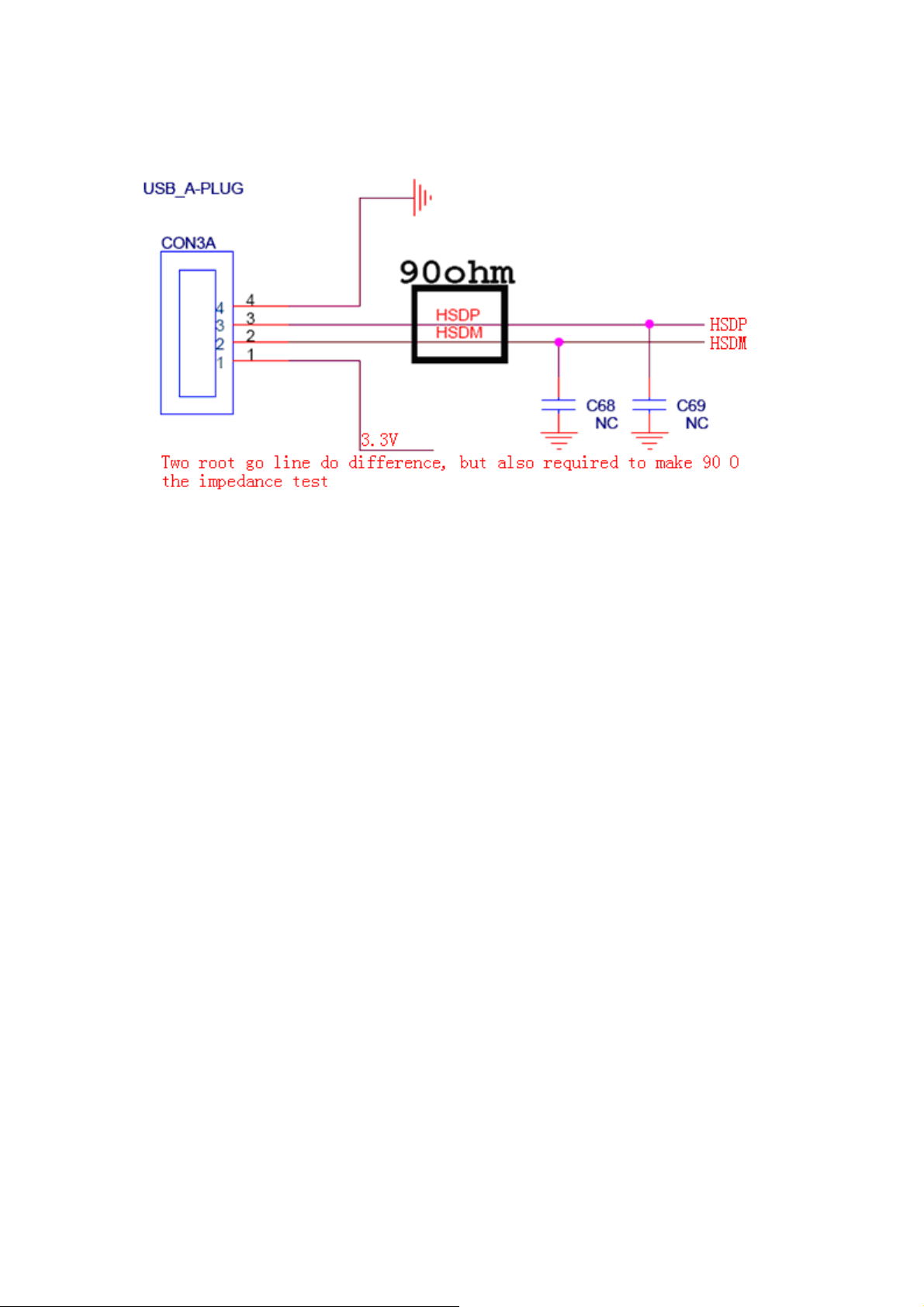
USB interface electrical characteristics
Page 9

FCC ID: 2AAH7UM12BS8188ETV
Model name: 802.11n 150M Ultra Wireless LAN Router
This device complies with Part 15 of the FCC Rules. Operation is
subject to the following two conditions: (1) this device may not cause
harmful interference, and (2) this device must accept any interference
received, including interference that may cause undesired operation.
Changes or modifications not expressly approved by the party responsible for
compliance could void the user's authority to operate the equipment.
RF exposure statement:
This equipment complies with FCC radiation exposure limits set forth for an u
ncontrolled environment. This equipment should be installed and operated wit
h minimum distance 20cm between the radiator & your body.
This device and its antenna(s) must not be co-located or operation in
conjunction with any other antenna or transmitter.
Note: This equipment has been tested and found to comply with the limits for a
Class B digital device, pursuant to part 15 of the FCC Rules. These limits are
designed to provide reasonable protection against harmful interference in a
residential installation. This equipment generates, uses and can radiate radio
frequency energy and, if not installed and used in accordance with the
instructions, may cause harmful interference to radio communications.
However, there is no guarantee that interference will not occur in a particular
installation. If this equipment does cause harmful interference to radio or
television reception, which can be determined by turning the equipment off and
on, the user is encouraged to try to correct the interference by one or more of
the following measures:
—Reorient or relocate the receiving antenna.
—Increase the separation between the equipment and receiver.
—Connect the equipment into an outlet on a circuit different from that to which
the receiver is connected.
—Consult the dealer or an experienced radio/TV technician for help.
The module must not be modified in any way. Coupling of external circuitry
must not bypass the provided connectors.
End product must be externally labeled with “Contains FCC ID:
2AAH7UM12BS8188ETV” The integrator must not provide any information to
the end-user on how to install or remove the module from the end-product.
 Loading...