

Page 1

Technical Note
BioFire Diagnostics, LLC
www.BioFireDX.com
QS-339B-01
TECHNICAL
::: NOTE
Protocols for Laboratory
Verification of Performance of the
FilmArray
®
Gastrointestinal (GI) Panel
Purpose
The Clinical Laboratory Improvement Amendments (CLIA), passed in 1988,
establishes quality standards for all laboratory testing to ensure the accuracy and
reliability of patient test results, regardless of where the test is performed. The
CLIA regulations include a requirement for verifying the performance specifications
of unmodified, moderate complexity tests cleared or approved by the FDA.
This document provides examples of verification procedures to assist your
laboratory in developing a protocol for the verification of the FilmArray GI Panel
performance on FilmArray® 1.5, 2.0 and Torch Systems as required by CLIA.
Several possible verification schemes, compatible with the FilmArray GI Panel,
have been designed. Each scheme provides positive and negative tests for each
organism detected by the FilmArray GI Panel using non-clinical specimens and
may be easily modified or expanded to meet specific criteria. Day-to-day variation
is evaluated by testing each sample on two separate days. To evaluate user-touser variation, multiple laboratory technicians may test the same sample. In
addition, testing patient samples for verification or to evaluate matrix effects on the
performance of the FilmArray GI Panel should be done under the guidance of the
Laboratory Director, but is not described here. As per the CLIA regulation, the
Laboratory Director is ultimately responsible for ensuring that verification
procedures meet the appropriate standards for CLIA and applicable laboratory
accrediting agencies.
FilmArray Intended Use
The FilmArray GI Panel is a multiplexed nucleic acid test intended for use with
FilmArray Systems for the simultaneous qualitative detection and identification of
multiple gastrointestinal viral, parasitic and bacterial nucleic acid targets in stool
samples in Cary Blair transport media obtained from individuals suspected of
gastrointestinal tract infections. The following organisms and subtypes are
identified using the FilmArray GI Panel:
Campylobacter spp. (C. jejuni, C. coli, and C. upsaliensis), Clostridium difficile
toxin A/B, Plesiomonas shigelloides, Salmonella spp., Vibrio spp. (V.
parahaemolyticus, V. vulnificus, and V. cholerae), Yersinia entercolitica,
Enteroaggregative E. coli (EAEC), Enteropathogenic E. coli (EPEC),
Enterotoxigenic E. coli (ETEC) lt/st, Shiga-like toxin-producing E. coli (STEC)
stx1/stx2, E. coli O157, Shigella/Enteroinvasive E. coli (EIEC), Cryptosporidium,
Cyclospora cayetanensis, Entamoeba histolytica, Giardia lamblia, adenovirus F
40/41, astrovirus, norovirus GI/GII, rotavirus A, and sapovirus (I, II, IV, and V).
The complete intended use statement and additional information about the use of
the FilmArray System can be found in the FilmArray GI Panel Instruction Booklet.
1 | P a g e FLM1-PRT-0151-04
Page 2
Technical Note
BioFire Diagnostics, LLC
www.BioFireDX.com
QS-339B-01
TECHNICAL
::: NOTE
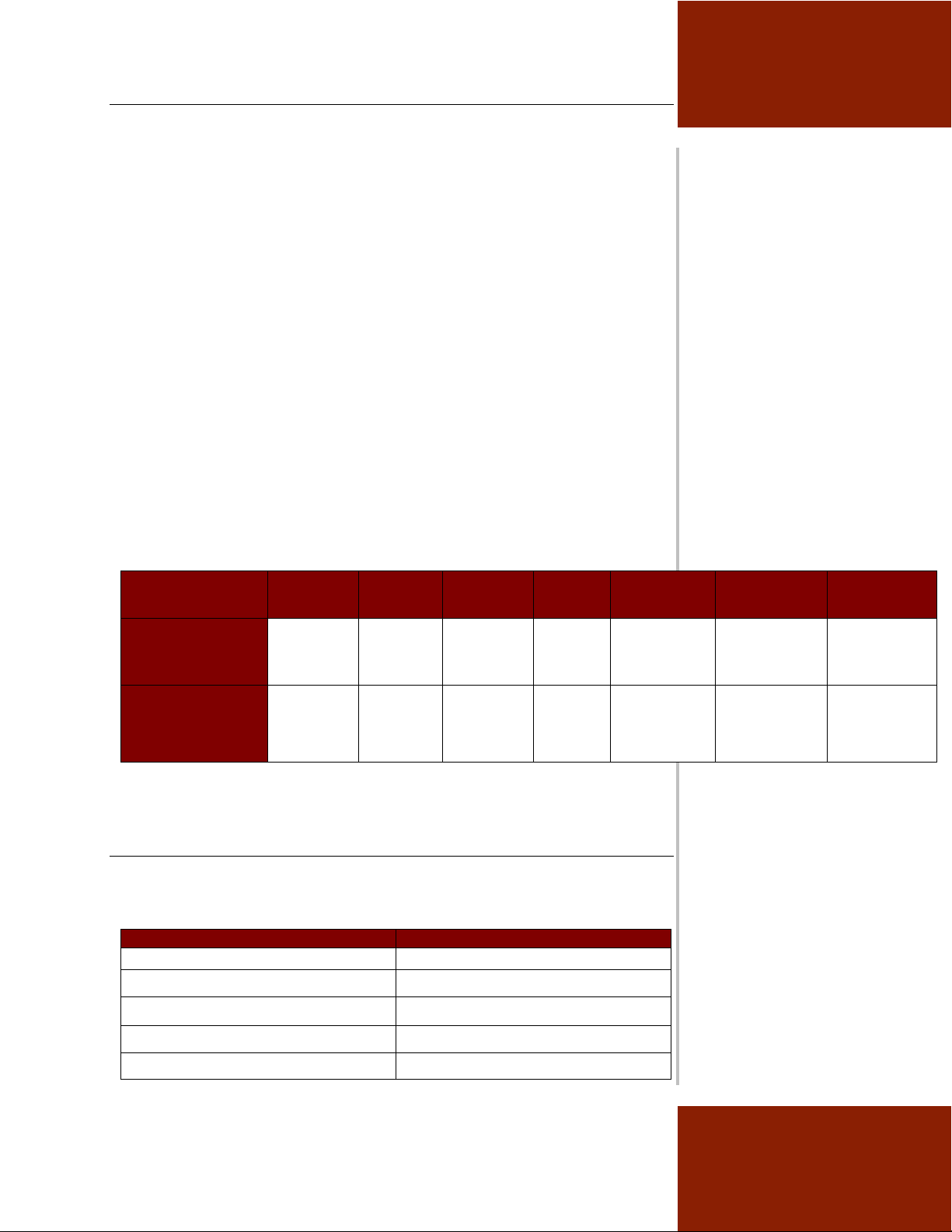
Verification Protocol
Organisms
per Poola
Number of
Sample
Pools
Replicates
per Sample
Pool
Pouches
Required
Expected
Positive
Results
Expected
Negative
Results
Approximate
Days of
Testingb
Example 1: Simple
protocol
5 or 6 4 4
16
4 per organism
12 per organism
4
Example 2: Stool in
Cary Blair protocol
5 or 6 4 4
16
4 per organism
12 per organism
4
Material
Part Number
FilmArray GI Panel Kit (30 tests)
Biofire Diagnostics, LLC RFIT-ASY-0116
Control Organism
ZeptoMetrix NATGIP-BIO
a
Cary Blair Transport Media
Thermo Scientific Part # 23-005-47 (or
equivalent)
5mL sample tubes
VWR Part # 89497-740 (or equivalent)
Transfer pipettes
VWR Part # 13-711-43 (or equivalent)
Performance Verification: Overview
Each procedure described below will generate multiple positive and negative
results for each of the organisms targeted by the FilmArray® Gastrointestinal (GI)
Panel. The procedures were developed using a NATtrol™ GI Panel available from
ZeptoMetrix Corporation, Buffalo, NY (part number NATGIP-BIO).
Two different examples of performance verification procedures are described: (1)
a simple protocol for the verification the GI Panel in a synthetic background
(Negative) provided with the ZeptoMetrix NATtrol™ Control Organism and (2) a
simple Cary Blair Media protocol that evaluates the performance of each assay on
the GI Panel with a stool in Cary Blair sample matrix.
A FilmArray® System is defined as all FilmArray® Instruments or modules that are
connected to and controlled by a single computer system. If the laboratory director
chooses not to verify the instruments individually, it is advised that test replicates
are evenly distributed among the instruments or modules.
The procedures have been designed to take advantage of the multiplex nature of
the FilmArray GI Panel. Verification testing efficiency is maximized by evaluating
multiple target organisms in a single test run.
Clinical/patient specimens may be used in place of or in addition to the verification
schemes described here in order to assess clinical sensitivity and sample matrix
effects in its performance verification of the FilmArray GI Panel.
Table 1. Overview of Verification Protocols
a
Depending on the material used for verification, pooling of organisms may not be appropriate and the
values in the table may need to be modified.
b
The approximate number of days for testing assumes a system configured with one instrument.
Performance Verification: Materials
The following materials may be used to perform verification procedures:
Table 2. Materials needed for recommended protocols
a
Any appropriate source of organism may be used for verification of any or all of the assays in the
FilmArray GI Panel. However, when alternate organism sources are used (i.e. not the ZeptoMetrix
material), the sample volumes or pooling schemes suggested in the examples below may need to be
adjusted.
2 | P a g e FLM1-PRT-0151-04
Page 3
Technical Note
BioFire Diagnostics, LLC
www.BioFireDX.com
QS-339B-01
TECHNICAL
::: NOTE
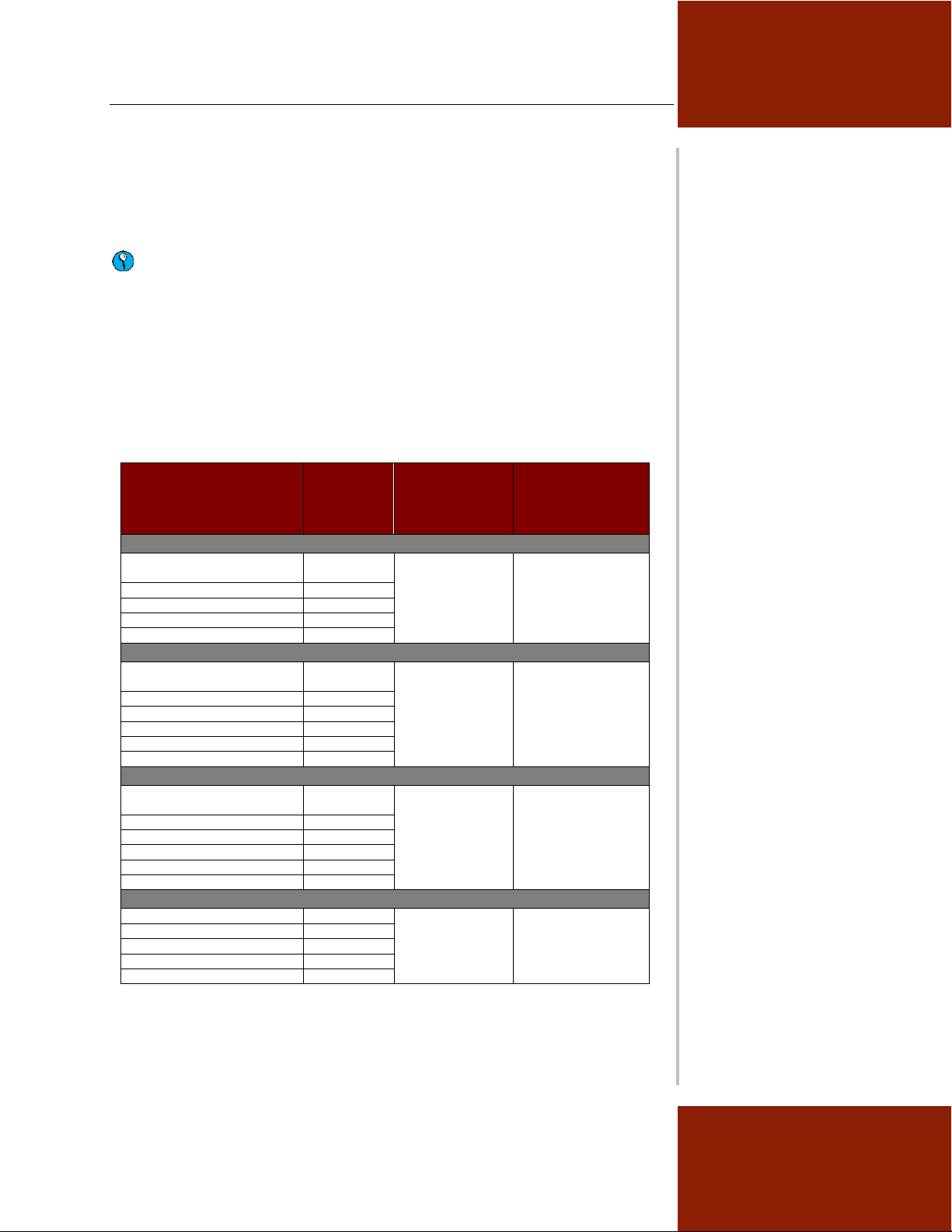
Organism
Organism
Volume
Negative
Or
Stool in Cary-
Blair Media
Approximate
Final Volume of
Pool
Pool 1
Enteraggregative E. coli
(EAEC)
0.25 mL
0.85mL
2.1mL
Adenovirus Type 41
0.25 mL
Cryptosporidium parvum
0.25 mL
Salmonella typhimurium
0.25 mL
Sapovirus
0.25 mL
Pool 2
Enteropathogenic E. coli
(EPEC)
0.25 mL
0.85mL
2.35mL
Norovirus GI
0.25 mL
Norovirus GII
0.25 mL
Cyclospora cayetanensis
0.25 mL
Shigella sonnei
0.25 mL
Astrovirus
0.25 mL
Pool 3
Entertoxigenic E. coli (ETEC)
lt/st
0.25 mL
0.85mL
2.35mL
Entamoeba histolytica
0.25 mL
Clostridium difficile
0.25 mL
Vibrio cholerae
0.25 mL
Campylobacter jejuni
0.25 mL
Campylobacter coli
0.25 mL
Pool 4
E. coli O157
0.25 mL
0.85mL
2.1mL
Rotavirus
0.25 mL
Giardia lamblia
0.25 mL
Plesiomonas shigelloides
0.25 mL
Yersinia entercolitica
0.25 mL
Performance Verification: Protocols
Simple Protocol
The simple protocol utilizes samples prepared by pooling together either 5 or 6
different organisms (ZeptoMetrix NATGIP-BIO control organism). The proposed
pooling scheme (Table 3) should be followed to obtain the expected positive and
negative results for each assay in a time and resource-efficient manner.
Note: Dilution of ZeptoMetrix GI Verification Panel organisms beyond levels
proposed in these guidelines may lead to inconsistent results and is not recommended.
The Simple Protocol can be followed to test a total of 16 pouches, providing 4
positive results and 12 negative results per organism. The number of samples
tested per day should be determined by the individual laboratory. This testing
scheme can be modified to run more samples per day based on the number of
instruments in the FilmArray® System.
Table 3. Recommended Organism Pooling Scheme
3 | P a g e FLM1-PRT-0151-04
Page 4
Technical Note
BioFire Diagnostics, LLC
www.BioFireDX.com
QS-339B-01
TECHNICAL
::: NOTE
Simple Protocol Example
The estimated total time to completion for this verification example is 4 days for
systems configured with one instrument.
Day 1
1. Prepare one sample pool (i.e. pool 1) from ZeptoMetrix NATGIP-BIO control
material. An example organism pooling scheme is presented in
Table 3.
Note: It is important to prepare only the number of organism sample pools that
will be tested within 3 days of preparation. The number of samples prepared may be
increased or decreased based on the laboratory’s work schedule and the number of
instruments connected within a FilmArray
a. Use a transfer pipette to remove entire contents of a vial of ZeptoMetrix
Negative (approximately 0.85mL) and transfer it to a tube large enough (at
least 3mL) to hold the entire organism pool volume.
b. Use a transfer pipette to remove the entire contents of the ZeptoMetrix
organism vial (approximately 0.25mL) and transfer to the larger tube
containing the Negative diluent.
c. Repeat step b. for each of the remaining organisms to combine the
appropriate organisms for each pool into a single vial or tube.
d. Ensure the pooled sample is effectively mixed by vortexing prior to
removing a sample for testing.
e. Refrigerate samples (2–8°C) for up to 3 days for the evaluation of day-to-
day variation.
2. Prepare and test 2 samples from a single sample pool (i.e. pool 1). The
duplicate samples should be tested in a single day by different users.
3.
Note: For each sample, follow instructions in the FilmArray
Panel Instruction Booklet or GI Panel Quick Guide for pouch preparation, pouch
hydration, sample loading, and sample testing.
4. Repeat steps 1 and 2 for the remaining sample pool (i.e. pool 2) to be tested
that day.
®
System.
®
Gastrointestinal (GI)
Day 2
To evaluate day-to-day variation, test the remaining samples (i.e. samples C and
D) from the same sample pools prepared on Day 1 by repeating Step 2 above.
Day 3
Prepare 2 new sample pools (i.e. pools 3 and 4) as described in Step 1. Test
samples according to Step 2 (i.e. samples A and B) for each pool.
Day 4
To evaluate day-to-day variation, test the samples prepared on Day 3 by repeating
Step 2 (i.e. samples 3 and 4).
4 | P a g e FLM1-PRT-0151-04
Page 5
Technical Note
BioFire Diagnostics, LLC
www.BioFireDX.com
QS-339B-01
TECHNICAL
::: NOTE
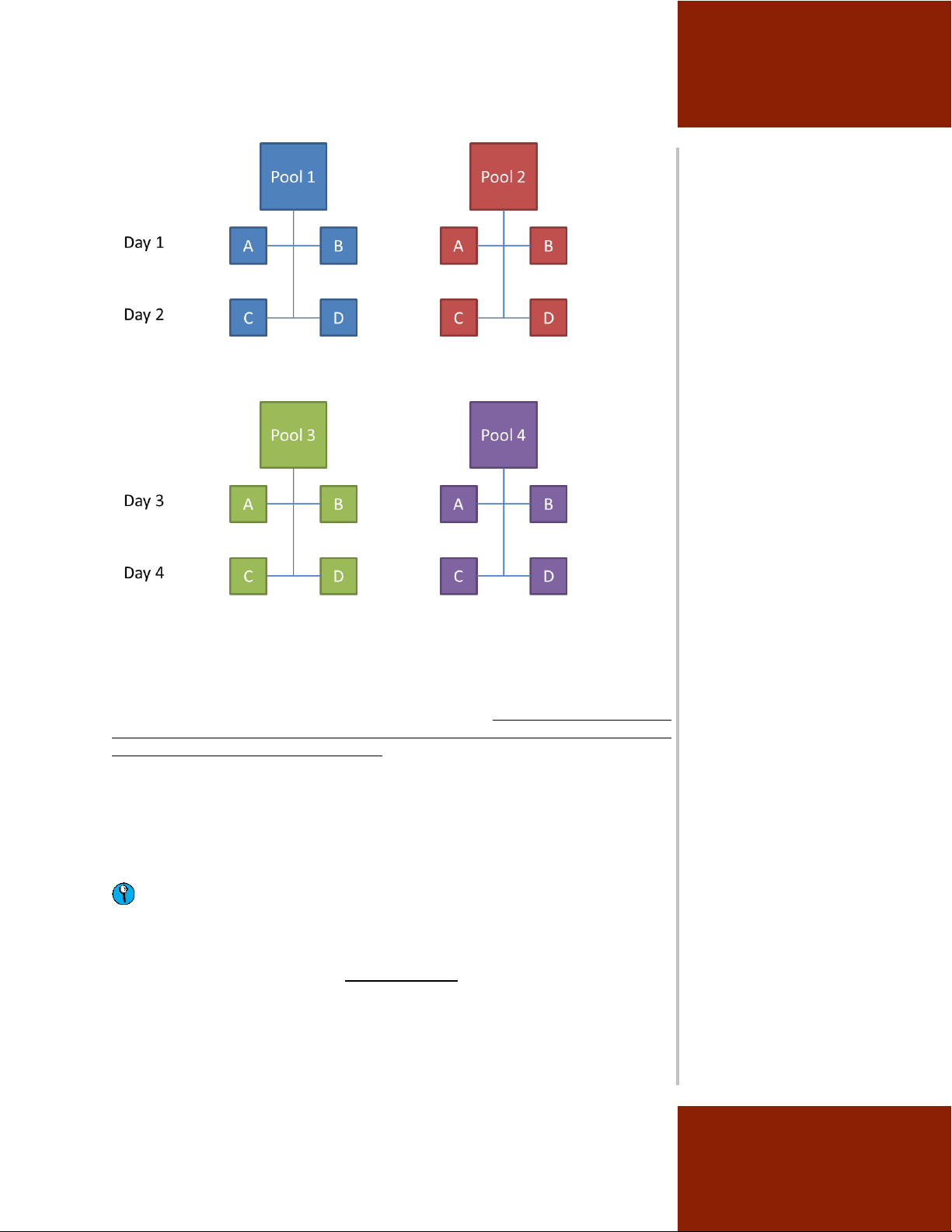
Figure 1. Simple protocol workflow
Stool in Cary Blair Protocol
An example organism pooling scheme is presented above in Table 3. For this
testing scheme, a stool sample in Cary Blair media will be used as the organism
pool background rather than synthetic stool (Negative). The laboratory will require
a stool sample in Carey Blair that is negative for all GI pathogens detected by the
FilmArray® Gastrointestinal (GI) Panel. Laboratories may screen stool samples in
Carey Blair with the FilmArray GI panel and select samples that yield all negative
results as an appropriate background matrix for the pooling scheme. Pooled
samples added to negative stool matrix can be stored overnight (or up to 3 days)
at refrigeration temperature (2–8°C) for subsequent testing to evaluate day-to-day
variation. Test replicates should be performed by different users to evaluate user
to user variation.
Note: Dilution of ZeptoMetrix GI Verification Panel organisms beyond levels
proposed in these guidelines may lead to inconsistent results and is not
recommended.
The Stool in Cary Blair Protocol can be followed to test a total of 16 pouches,
providing 4 positive results and 12 negative results per organism. The number of
samples tested per day should be determined by the individual laboratory. This
testing scheme can be modified to run more samples per day based on the number
of instruments in the FilmArray® System.
5 | P a g e FLM1-PRT-0151-04
Page 6
Technical Note
BioFire Diagnostics, LLC
www.BioFireDX.com
QS-339B-01
TECHNICAL
::: NOTE
Stool in Cary Blair Protocol Example
The estimated total time to completion for this verification example is 4 days for
systems configured with one instrument.
Day 1
1. Prepare one sample pool (i.e. pool 1) by mixing ZeptoMetrix NATGIP-BIO
control material with a freshly prepared stool sample in Cary Blair transport
media. An example organism pooling scheme is presented in Table 3.
Note: It is important to prepare only the number of organism sample pools that
will be tested within 3 days of preparation. The number of samples prepared may be
increased or decreased based on the laboratory’s work schedule and the number of
instruments connected within a FilmArray® System.
a. Use a transfer pipette to transfer approximately 0.85mL of a prepared stool
in Cary Blair sample to a tube large enough (at least 3mL) to hold the entire
organism pool volume.
b. Use a transfer pipette to remove the entire contents of the ZeptoMetrix
organism vial (approximately 0.25mL) and transfer to the larger tube
containing the stool sample.
c. Repeat with each of the remaining organisms to combine the appropriate
organisms for each pool into a single vial or tube.
d. Ensure the pooled sample is effectively mixed by vortexing prior to
removing a sample for testing.
e. Refrigerate samples (2–8°C) for up to 3 days for the evaluation of day-to-
day variation.
2. Prepare and test two samples from a single sample pool (i.e. pool 1). The
duplicate samples should be prepared consecutively and tested in a single
day. For each sample:
Note: Follow instructions in the FilmArray
Instruction Booklet or GI Panel Quick Guide for pouch preparation, pouch hydration,
sample loading, and sample testing.
3. Repeat Step 1 and 2 for the remaining sample pool (i.e. pool 2 to be tested
that day.
®
Gastrointestinal (GI) Panel
Day 2
To evaluate day-to-day variation, test the remaining samples (i.e. samples C and
D) from the same sample pools prepared on Day 1 by repeating Step 2 above.
Day 3
Prepare 2 new sample pools (i.e. pools 3 and 4) as described in Step 1. Test
samples according to Step 2 (i.e. samples A and B) for each pool.
Day 4
To evaluate day-to-day variation, test the samples prepared on Day 3 by repeating
Step 2 (i.e. samples C and D).
6 | P a g e FLM1-PRT-0151-04
Page 7
Technical Note
BioFire Diagnostics, LLC
www.BioFireDX.com
QS-339B-01
TECHNICAL
::: NOTE
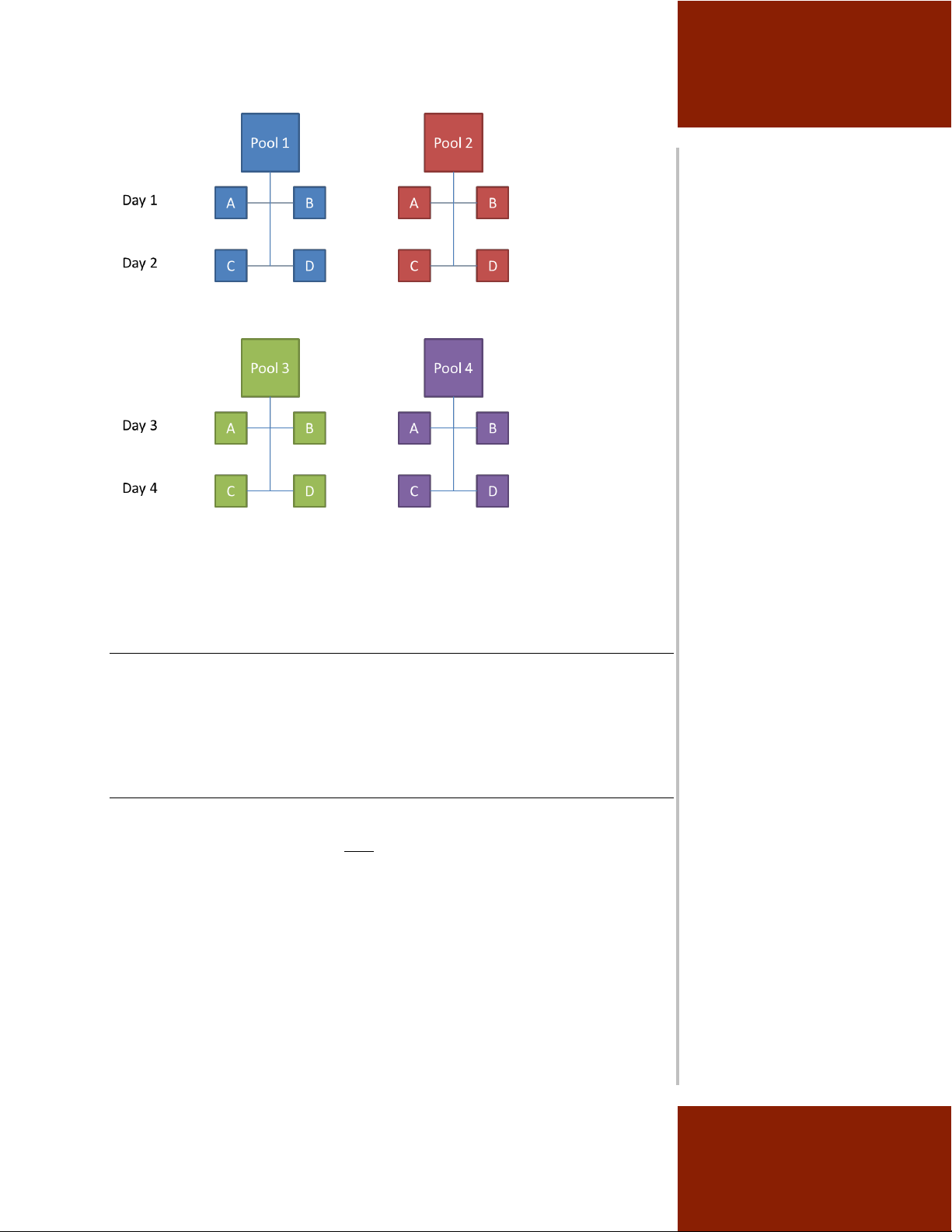
Figure 2. Stool in Cary Blair media protocol workflow
Expanding the protocols
The protocols described above can be expanded by increasing the number of tests
from each of the organism pools. Each organism pool contains enough material
to complete up to 8 tests for each pool, doubling the number of tests described in
the example protocols.
Verification of Loaner and Repaired Instruments
If it becomes necessary to verify the performance of a loaner or repaired
instrument, the following protocol may serve as a guideline but should be verified
by the Laboratory Director
1. Select a few specimens and/or proficiency samples (any combination of
positives and negatives) previously tested on the FilmArray® Gastrointestinal
(GI) Panel. The Laboratory Director should determine the appropriate number
of samples to test. Three to 6 samples may be sufficient. Proficiency samples
should not be pooled or diluted.
2. Test the selected samples on the loaner or repaired instrument and document
the results.
7 | P a g e FLM1-PRT-0151-04
Page 8

Technical Note
BioFire Diagnostics, LLC
www.BioFireDX.com
QS-339B-01
TECHNICAL
::: NOTE
Technical Support Contact Information
BioFire is dedicated to providing the best customer support available. If
you have any questions or concerns about this process, please contact
the FilmArray Technical Support team for assistance.
BioFire Technical Support
Email: [email protected]
Phone: +1-801-736-6354, select Option 5
8 | P a g e FLM1-PRT-0151-04
Page 9
Technical Note
BioFire Diagnostics, LLC
www.BioFireDX.com
QS-339B-01
TECHNICAL
::: NOTE
Organism
Instrument
Serial #
Was the
Organism
Detected?
No.
Positive
No.
Negative
No. Days
Tested
No.
Users
Patient
Samples
Tested?
Enteroaggregative E. coli
(EAEC)
Yes
No
Adenovirus F 40/41
Yes
No
Cryptosporidium
Yes
No
Salmonella
Yes
No
Sapovirus (I, II, IV, and V)
Yes
No
Enteropathogenic E. coli
(EPEC)
Yes
No
Norovirus GI/GII
Yes
No
Cyclospora cayetanensis
Yes
No
Shigella/ Enteroinvasive E. coli
(EIEC)
Yes
No
Astrovirus
Yes
No
Entertoxigenic E. coli (ETEC)
lt/st
Yes
No
Entamoeba histolytica
Yes
No
Clostridium difficile Toxin A/B
Yes
No
Vibrio (V. parahaemolyticus, V.
vulnificus, and V. cholerae)
Yes
No
Campylobacter (C. jejuni, C.
coli, and C. upsaliensis)
Yes
No
Shiga-like toxin-producing E.
coli (STEC) stx1/stx2
Yes
No
E. coli O157
Yes
No
Rotavirus A
Yes
No
Giardia lamblia
Yes
No
Plesiomonas shigelloides
Yes
No
Yersinia entercolitica
Yes
No
Computer System Serial #: ____________________
FilmArray GI Panel kit Part #: __________________ Lot #: __________
Organism/sample Source and Lot #: ____________________________________
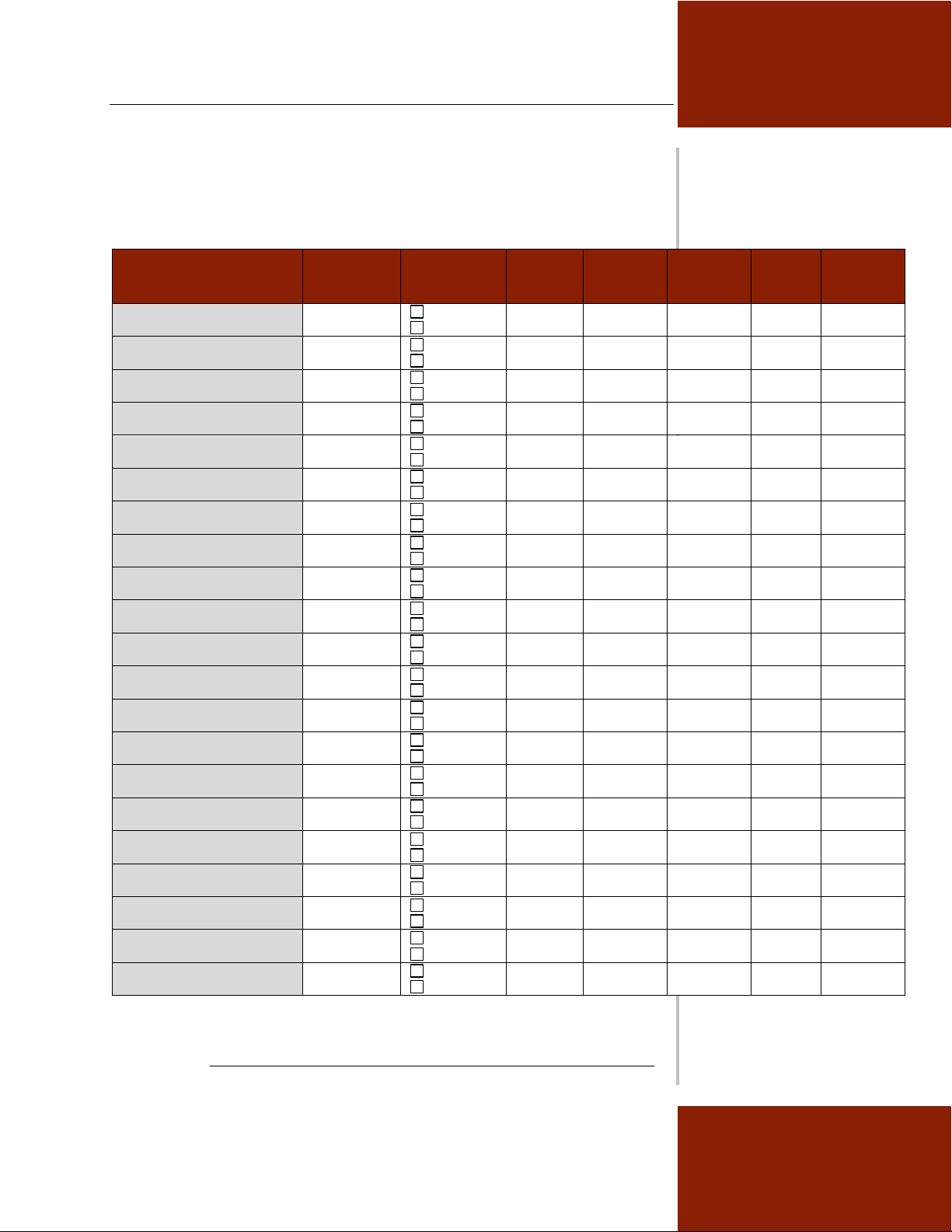
FilmArray® Gastrointestinal (GI) Panel Verification Record
Reviewed by:
Signature Date
9 | P a g e FLM1-PRT-0151-04
 Loading...