

Page 1
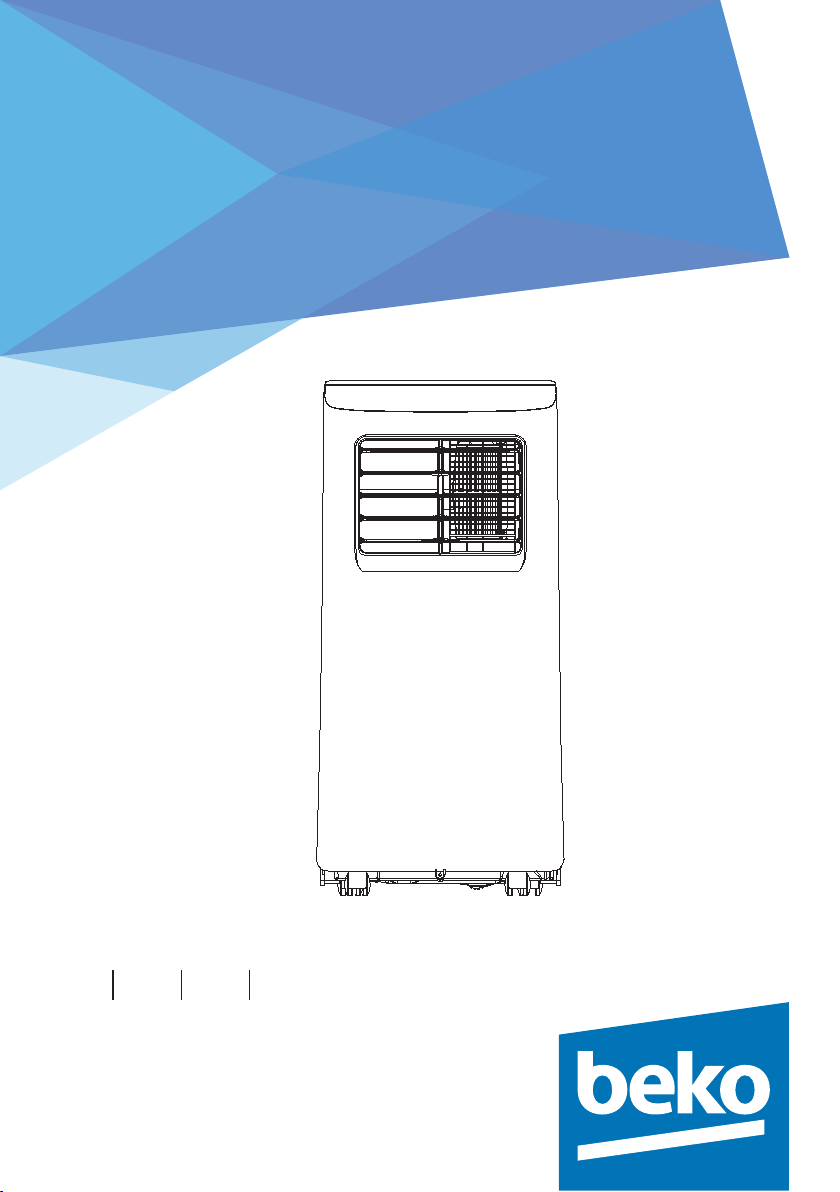
Local air
conditioner
User Manual
BS207C
EN FR NL DE
07M-8500143200-5220-02
Page 2
CONTENTS
ENGLISH 4-39
FRANÇAIS 41-78
NEDERLANDS
DEUTSCH 120-158
80-118
2 / 160 EN
Local air conditioner / User Manuel
Page 3
Please read this user manual rst!
Dear Customer,
Thank you for preferring a Beko product. We hope that you get the best results
from your product which has been manufactured with high quality and state-ofthe-art technology. Therefore, please read this entire user manual and all other
accompanying documents carefully before using the product and keep it as a
reference for future use. If you handover the product to someone else, give the user
manual as well. Follow all warnings and information in the user manual.
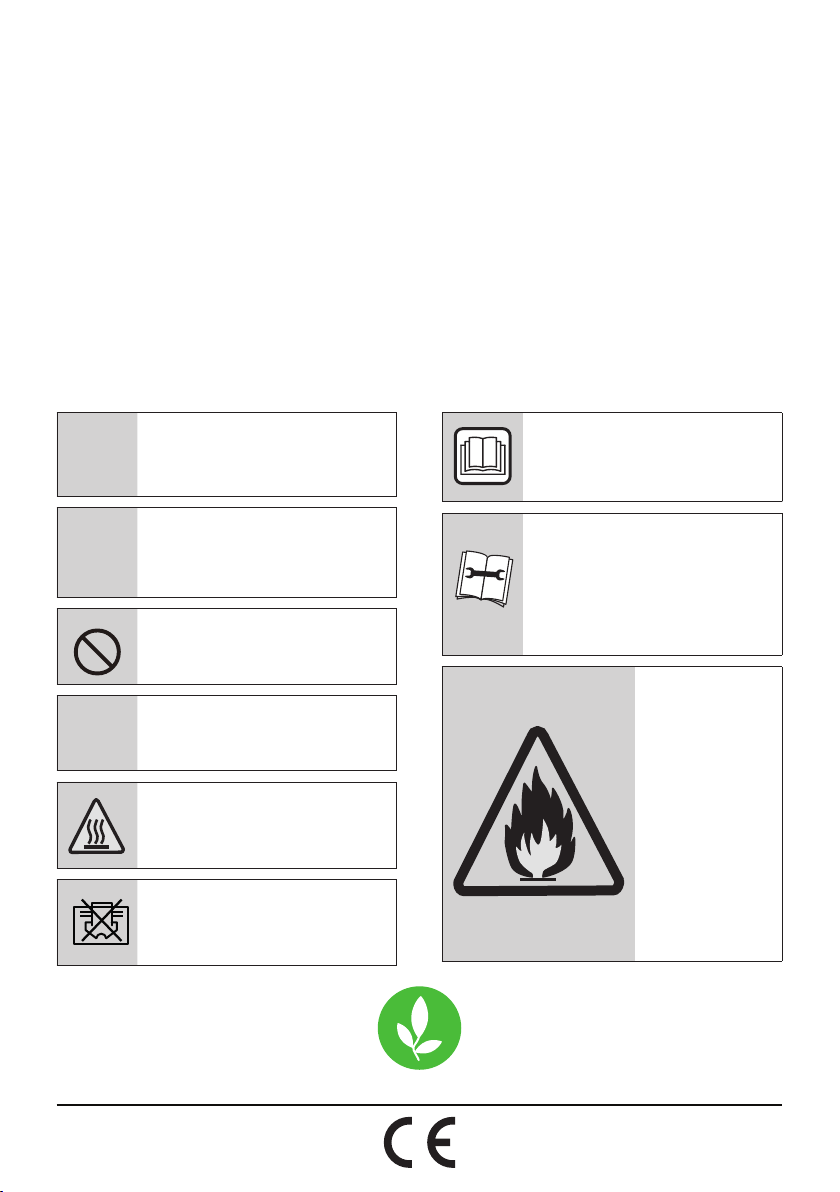
Meanings of the symbols
Following symbols are used in the various section of this manual:
C
A
B
Important information or
useful hints about usage.
Warning for hazardous
situations with regard to life
and property.
Warning to actions that must
never perform.
Warning for electric shock.
Warning for hot surfaces.
Do not cover it.
This symbol shows that the
operation manual should be
read carefully.
This symbol shows that a
service personnel should be
handling this equipment with
reference to the installation
manual.
This symbol
shows that this
appliance used
a flammable
refrigerant. If
the refrigerant
is leaked and
exposed to an
external ignition
source, there is
a risk of fire.
This product has been produced in environmentally friendly, modern facilities
Complies with the WEEE Regulation. Does not contain PCB.
Page 4
CONTENTS
1 Safety nstructons 5
2 Features and components 21
2.1 Features. . . . . . . . . . . . . . . . . . . . . . . . . . . . . . . . . . . . . . . . . . . . . . . . . . . . . . . . . . . . . . . . . . . . . . . . . . 21
2.2 Components . . . . . . . . . . . . . . . . . . . . . . . . . . . . . . . . . . . . . . . . . . . . . . . . . . . . . . . . . . . . . . . . . . . . . 21
3 Control settng 23
3.1 Control panel operation instructions. . . . . . . . . . . . . . . . . . . . . . . . . . . . . . . . . . . . . . . . . . . . . 23
3.2 Operation instructions of remote control . . . . . . . . . . . . . . . . . . . . . . . . . . . . . . . . . . . . . . . .24
4 Protecton functon 26
5 Installaton and adjustment 27
5.1 Installation . . . . . . . . . . . . . . . . . . . . . . . . . . . . . . . . . . . . . . . . . . . . . . . . . . . . . . . . . . . . . . . . . . . . . . . 27
6 Dranage nstructons 30
7 Mantenance 32
7.1 Clean the surface . . . . . . . . . . . . . . . . . . . . . . . . . . . . . . . . . . . . . . . . . . . . . . . . . . . . . . . . . . . . . . . . 32
7.2 Clean the lter screen. . . . . . . . . . . . . . . . . . . . . . . . . . . . . . . . . . . . . . . . . . . . . . . . . . . . . . . . . . . . 32
7.3 Clean the upper lter screen frame. . . . . . . . . . . . . . . . . . . . . . . . . . . . . . . . . . . . . . . . . . . . . . 32
8 Unt Storage 33
9 Troubleshootng 34
10 Addendum 36
11 Installaton nstructons 37
11.1 F-Gas instruction. . . . . . . . . . . . . . . . . . . . . . . . . . . . . . . . . . . . . . . . . . . . . . . . . . . . . . . . . . . . . . . . . 37
12 Specfcatons 38
The refrigerant used in mobile air conditioners is the environmentally friendly hydrocarbon R290.
This refrigerant is odorless, and compared to the alternative refrigerant, the R290 is an ozone-free
refrigerant, and its effect is very low.
Please read the instructions before use and repair.
The drawings provided in this manual may not be the same as the physical objects. Please refer to the
physical objects.
V2012007
4 / 160 EN
Local air conditioner / User Manuel
Page 5
1 Safety nstructons
Warnng matters:
•
Do not use means to accelerate the defrosting process or to clean,
other than those recommended by the manufacturer.
•
The appliance shall be stored in a room without continuously
operating ignition sources (for example: open flames, an operating
gas appliance or an operating electric heater.)
•
Do not pierce or burn.
•
Be aware that refrigerants may not contain an odour.
•
Appliance shall be installed, operated and stored in a room with a
floor area larger than 7 m
•
The appliance must be kept free from obstruction to ensure proper
2
function and mitigate safety hazards.
•
Servicing shall be performed only as recommended by the
manufacturer.
•
The appliance shall be stored in a well-ventilated area where the
room size corresponds to the room area as specified for operation.
•
Any person who is involved with working on or breaking into a
refrigerant circuit should hold a current valid certificate from an
industry-accredited assessment authority, which authorises their
competence to handle refrigerants safely in accordance with an
industry recognised assessment specification.
•
Servicing shall only be performed as recommended by the equipment
manufacturer. Maintenance and repair requiring the assistance of
other skilled personnel shall be carried out under the supervision of the
person competent in the use of flammable refrigerants.
Local air conditioner / User Manuel
5 / 160 EN
Page 6

1 Safety nstructons
•
All working procedure that affects safety means shall only be
carried by competent persons.
Note:
•
The air conditioning is only suitable for indoor use, and is
not suitable for other applications.
•
Follow local grid interconnection rules while installing the
air conditioning and ensure that it is properly grounded.
If you have any question on electrical installation, follow
the instructions of the manufacturer, and if necessary,
ask a professional electrician to install it.
•
Place the machine in a flat and dry place and keep a
distance of above 50cm between the machine and the
surrounding objects or walls.
•
After the air conditioning is installed, ensure that the
C
power plug is intact and firmly plugged into the power
6 / 160 EN
outlet, and place the power cord orderly to prevent
someone from being tripped or pulling out the plug.
•
Do not put any object into the air inlet and outlet of the
air conditioning. Keep the air inlet and outlet free from
obstructions.
•
When drainage pipes are installed, ensure that the
drainage pipes are properly connected, and are not
distorted or bended.
•
While adjusting the upper and lower wind-guide strips
of the air outlet, pluck it with hands gently to avoid
damaging wind-guide strips.
Local air conditioner / User Manuel
Page 7

1 Safety nstructons
Note:
•
When moving the machine, make sure that it is in an
upright position.
•
The machine should stay away from gasoline, flammable
gas, stoves and other heat sources.
•
Don’t disassemble, overhaul and modify the machine
arbitrarily, otherwise it will cause a machine malfunction
or even bring harm to persons and properties. To avoid
danger, if a machine failure occurs, ask the manufacturer
or professionals to repair it.
•
Do not install and use the air conditioning in the
C
bathroom or other humid environments.
•
Do not pull the plug to turn off the machine.
•
Do not place cups or other objects on the body to
prevent water or other liquids from spilling into the air
conditioning.
•
Do not use insecticide sprays or other flammable
substances near the air conditioning.
•
Do not wipe or wash the air conditioning with chemical
solvents such as gasoline and alcohol. When you need
to clean the air conditioning, you must disconnect the
power supply, and clean it with a half-wet soft cloth. If
the machine is really dirty, scrub with a mild detergent.
Local air conditioner / User Manuel
7 / 160 EN
Page 8

1 Safety nstructons
Note:
•
This appliance can be used by children aged from
8 years and above if they have been given supervision or
instruction concerning use of the appliance in a safe way
and understand the hazards involved. Cleaning and user
maintenance shall not be made by children unless they
are aged from 8 years and above and supervised. Keep
the appliance and its cord out of reach of children aged
less than 8 years.
•
If the supply cord is damaged, it must be replaced by
the manufacturer, its service agent or similarly qualified
persons in order to avoid a hazard.
C
8 / 160 EN
•
The appliance shall be installed in accordance with
national wiring regulations.
•
Do not operate your air conditioner in a wet room such as
a bathroom or laundry room.
•
This appliance is not intended for use by persons
(including children) with reduced physical, sensory or
mental capabilities, or lack of experience and knowledge,
unless they have been given supervision or instruction
concerning use of the appliance by a person responsible
for their safety.
•
Children should be supervised to ensure that they do not
play with the appliance.
Local air conditioner / User Manuel
Page 9

1 Safety nstructons
•
Warning Do not use manuals to accelerate the defrosting
process or to clean, other than those recommended by
the manufacturer. The appliance shall be stored in a
room without Continuously operation ignition sources
(for example: open flames, an operation gas appliance or
an operating electric heater.) Do not pierce or burn. Be
aware that refrigerants may not contain an odour.
•
The appliance shall state the insulation of a residual
current device (RCD) having rated residual operating
C
Transportaton, markng and storage for unts
•
Transport of equipment containing flammable refrigerants
Compliance with the transport regulations
•
Marking of equipment using signs
Compliance with local regulations
current not exceeding 30mA.
•
This appliance is intended to be used in household and
similar applications such as
-
Staff kitchen areas in shops, offices and other working
environments;
-
farm houses;
-
by clients in hotels, motels and other residential type
environments;
-
bed and breakfast type environments;
•
Disposal of equipment using flammable refrigerants
Compliance with national regulations
Local air conditioner / User Manuel
9 / 160 EN
Page 10
1 Safety nstructons
•
Storage of equipment/appliances
The storage of equipment should be in accordance with the
manufacturer’s instructions.
•
Storage of packed (unsold) equipment
Storage package protection should be constructed such that
mechanical damage to the equipment inside the package will not
cause a leak of the refrigerant charge.
The maximum number of pieces of equipment permitted to be
stored together will be determined by local regulations.
1. Information on servicing
1) Checks to the area
Prior to beginning work on systems containing flammable refrigerants,
safety checks are necessary to ensure that the risk of ignition is minimised.
For repair to the refrigerating system, the following precautions shall be
complied with prior to conducting work on the system.
2) Work procedure
Work shall be undertaken under a controlled procedure so as to
minimise the risk of a flammable gas or vapour being present while
the work is being performed.
3) General work area
All maintenance staff and others working in the local area shall be
instructed on the nature of work being carried out. Work in confined
spaces shall be avoided. The area around the workspace shall be
sectioned off. Ensure that the conditions within the area have been
made safe by control of flammable material.
10 / 160 EN
Local air conditioner / User Manuel
Page 11
1 Safety nstructons
4) Checking for presence of refrigerant
The area shall be checked with an appropriate refrigerant detector
prior to and during work, to ensure the technician is aware of
potentially flammable atmospheres. Ensure that the leak detection
equipment being used is suitable for use with flammable refrigerants,
i.e. non-sparking, adequately sealed or intrinsically safe.
5) Presence of fire extinguisher
If any hot work is to be conducted on the refrigeration equipment or
any associated parts, appropriate fire extinguishing equipment shall
be available to hand. Have a dry powder or CO2 fire extinguisher
adjacent to the charging area.
6) No ignition sources
No person carrying out work in relation to a refrigeration system
which involves exposing any pipe work that contains or has
contained flammable refrigerant shall use any sources of ignition
in such a manner that it may lead to the risk of fire or explosion. All
possible ignition sources, including cigarette smoking, should be
kept sufficiently far away from the site of installation, repairing,
removing and disposal, during which flammable refrigerant can
possibly be released to the surrounding space. Prior to work taking
place, the area around the equipment is to be surveyed to make
sure that there are no flammable hazards or ignition risks. “No
Smoking” signs shall be displayed.
7) Ventilated area
Ensure that the area is in the open or that it is adequately ventilated
before breaking into the system or conducting any hot work. A
Local air conditioner / User Manuel
11 / 160 EN
Page 12
1 Safety nstructons
degree of ventilation shall continue during the period that the work
is carried out. The ventilation should safely disperse any released
refrigerant and preferably expel it externally into the atmosphere.
8) Checks to the refrigeration equipment
Where electrical components are being changed, they shall be
fit for the purpose and to the correct specification. At all times
the manufacturer’s maintenance and service guidelines shall
be followed. If in doubt consult the manufacturer’s technical
department for assistance.
The following checks shall be applied to installations using
flammable refrigerants:
-
The charge size is in accordance with the room size within which
the refrigerant containing parts are installed;
-
The ventilation machinery and outlets are operating adequately
and are not obstructed;
-
If an indirect refrigerating circuit is being used, the secondary
circuit shall be checked for the presence of refrigerant;
-
Marking to the equipment continues to be visible and legible.
Markings and signs that are illegible shall be corrected;
-
Refrigeration pipe or components are installed in a position
where they are unlikely to be exposed to any substance which
may corrode refrigerant containing components, unless the
components are constructed of materials which are inherently
resistant to being corroded or are suitably protected against being
so corroded.
12 / 160 EN
Local air conditioner / User Manuel
Page 13
1 Safety nstructons
9) Checks to electrical devices
Repair and maintenance to electrical components shall include
initial safety checks and component inspection procedures. If a
fault exists that could compromise safety, then no electrical supply
shall be connected to the circuit until it is satisfactorily dealt with.
If the fault cannot be corrected immediately but it is necessary to
continue operation, an adequate temporary solution shall be used.
This shall be reported to the owner of the equipment so all parties
are advised.
Intal safety checks shall nclude:
•
That capacitors are discharged: this shall be done in a safe manner
to avoid possibility of sparking;
•
That there no live electrical components and wiring are exposed
while charging, recovering or purging the system;
•
That there is continuity of earth bonding.
2. Repairs to sealed components
1) During repairs to sealed components, all electrical supplies shall
be disconnected from the equipment being worked upon prior
to any removal of sealed covers, etc. If it is absolutely necessary
to have an electrical supply to equipment during servicing, then
a permanently operating form of leak detection shall be located
at the most critical point to warn of a potentially hazardous
situation.
2) Particular attention shall be paid to the following to ensure that
by working on electrical components, the casing is not altered in
such a way that the level of protection is affected.
Local air conditioner / User Manuel
13 / 160 EN
Page 14

1 Safety nstructons
This shall include damage to cables, excessive number of
connections, terminals not made to original specification, damage
to seals, incorrect fitting of glands, etc.
Ensure that apparatus is mounted securely.
Ensure that seals or sealing materials have not degraded such
that they no longer serve the purpose of preventing the ingress of
flammable atmospheres. Replacement parts shall be in accordance
with the manufacturer’s specifications.
Note: The use of silicon sealant may inhibit the
effectiveness of some types of leak detection equipment.
C
3. Repair to intrinsically safe components
Do not apply any permanent inductive or capacitance loads to the
circuit without ensuring that this will not exceed the permissible
voltage and current permitted for the equipment in use.
Intrinsically safe components are the only types that can be worked
on while live in the presence of a flammable atmosphere. The test
apparatus shall be at the correct rating.
Replace components only with parts specified by the manufacturer.
Other parts may result in the ignition of refrigerant in the
atmosphere from a leak.
4. Cabling
Check that cabling will not be subject to wear, corrosion, excessive
pressure, vibration, sharp edges or any other adverse environmental
Intrinsically safe components do not have to be isolated
prior to working on them.
14 / 160 EN
Local air conditioner / User Manuel
Page 15
1 Safety nstructons
effects. The check shall also take into account the effects of aging
or continual vibration from sources such as compressors or fans.
5. Detection of flammable refrigerants
Under no circumstances shall potential sources of ignition be used
in the searching for or detection of refrigerant leaks. A halide torch
(or any other detector using a naked flame) shall not be used.
6. Leak detection methods
The following leak detection methods are deemed acceptable for
systems containing flammable refrigerants.
Electronic leak detectors shall be used to detect flammable
refrigerants, but the sensitivity may not be adequate, or may
need re-calibration. (Detection equipment shall be calibrated in a
refrigerant-free area.) Ensure that the detector is not a potential
source of ignition and is suitable for the refrigerant used. Leak
detection equipment shall be set at a percentage of the LFL of the
refrigerant and shall be calibrated to the refrigerant employed and
the appropriate percentage of gas (25 % maximum) is confirmed.
Leak detection fluids are suitable for use with most refrigerants but
the use of detergents containing chlorine shall be avoided as the
chlorine may react with the refrigerant and corrode the copper pipework.
If a leak is suspected, all naked flames shall be removed/
extinguished. If a leakage of refrigerant is found which requires
brazing, all of the refrigerant shall be recovered from the system, or
isolated (by means of shut off valves) in a part of the system remote
Local air conditioner / User Manuel
15 / 160 EN
Page 16
1 Safety nstructons
from the leak. Oxygen free nitrogen (OFN) shall then be purged
through the system both before and during the brazing process.
7. Removal and evacuation
When breaking into the refrigerant circuit to make repairs – or
for any other purpose – conventional procedures shall be used.
However, it is important that best practice is followed since
flammability is a consideration. The following procedure shall be
adhered to:
•
Remove refrigerant;
•
Purge the circuit with inert gas;
•
Evacuate;
•
Purge again with inert gas;
•
Open the circuit by cutting or brazing.
The refrigerant charge shall be recovered into the correct recovery
cylinders. The system shall be “flushed” with OFN to render the
unit safe. This process may need to be repeated several times.
Compressed air or oxygen shall not be used for this task.
Flushing shall be achieved by breaking the vacuum in the system
with OFN and continuing to fill until the working pressure is
achieved, then venting to atmosphere, and finally pulling down to a
vacuum. This process shall be repeated until no refrigerant is within
the system. When the final OFN charge is used, the system shall be
vented down to atmospheric pressure to enable work to take place.
This operation is absolutely vital if brazing operations on the
pipe-work are to take place.
16 / 160 EN
Local air conditioner / User Manuel
Page 17
1 Safety nstructons
Ensure that the outlet for the vacuum pump is not close to any
ignition sources and there is ventilation available.
8. Charging procedures
In addition to conventional charging procedures, the following
requirements shall be followed.
-
Ensure that contamination of different refrigerants does not
occur when using charging equipment. Hoses or lines shall be as
short as possible to minimise the amount of refrigerant contained
in them.
-
Cylinders shall be kept upright.
-
Ensure that the refrigeration system is earthed prior to charging
the system with refrigerant.
-
Label the system when charging is complete (if not already).
-
Extreme care shall be taken not to overfill the refrigeration
system.
Prior to recharging the system it shall be pressure tested with OFN.
The system shall be leak tested on completion of charging but prior
to commissioning. A follow up leak test shall be carried out prior to
leaving the site.
9. Decommissioning
Before carrying out this procedure, it is essential that the technician
is completely familiar with the equipment and all its detail. It is
recommended good practice that all refrigerants are recovered
safely. Prior to the task being carried out, an oil and refrigerant
sample shall be taken in case analysis is required prior to re-use of
Local air conditioner / User Manuel
17 / 160 EN
Page 18
1 Safety nstructons
reclaimed refrigerant. It is essential that electrical power is available
before the task is commenced.
1) Become familiar with the equipment and its operation.
2) Isolate system electrically.
3) Before attempting the procedure ensure that:
•
Mechanical handling equipment is available, if required, for
handling refrigerant cylinders;
•
All personal protective equipment is available and being used
correctly;
•
The recovery process is supervised at all times by a competent
person;
•
Recovery equipment and cylinders conform to the appropriate
standards.
4) Pump down refrigerant system, if possible.
5) If a vacuum is not possible, make a manifold so that refrigerant
can be removed from various parts of the system.
6) Make sure that cylinder is situated on the scales before recovery
takes place.
7) Start the recovery machine and operate in accordance with
manufacturer’s instructions.
8) Do not overfill cylinders. (No more than 80 % volume liquid
charge).
9) Do not exceed the maximum working pressure of the cylinder,
even temporarily.
18 / 160 EN
Local air conditioner / User Manuel
Page 19
1 Safety nstructons
10) When the cylinders have been filled correctly and the process
completed, make sure that the cylinders and the equipment
are removed from site promptly and all isolation valves on the
equipment are closed off.
11) Recovered refrigerant shall not be charged into another
refrigeration system unless it has been cleaned and checked.
10. Labelling
Equipment shall be labelled stating that it has been decommissioned and emptied of refrigerant. The label shall be dated
and signed. Ensure that there are labels on the equipment stating
the equipment contains flammable refrigerant.
11. Recovery
When removing refrigerant from a system, either for servicing
or decommissioning, it is recommended good practice that all
refrigerants are removed safely.
When transferring refrigerant into cylinders, ensure that only
appropriate refrigerant recovery cylinders are employed. Ensure
that the correct number of cylinders for holding the total system
charge is available. All cylinders to be used are designated for the
recovered refrigerant and labelled for that refrigerant (i.e. special
cylinders for the recovery of refrigerant). Cylinders shall be
complete with pressure relief valve and associated shut-off valves
in good working order. Empty recovery cylinders are evacuated and,
if possible, cooled before recovery occurs.
Local air conditioner / User Manuel
19 / 160 EN
Page 20
1 Safety nstructons
The recovery equipment shall be in good working order with a set of
instructions concerning the equipment that is at hand and shall be
suitable for the recovery of flammable refrigerants. In addition, a set
of calibrated weighing scales shall be available and in good working
order. Hoses shall be complete with leak-free disconnect couplings
and in good condition. Before using the recovery machine, check
that it is in satisfactory working order, has been properly maintained
and that any associated electrical components are sealed to prevent
ignition in the event of a refrigerant release. Consult manufacturer
if in doubt.
The recovered refrigerant shall be returned to the refrigerant
supplier in the correct recovery cylinder, and the relevant Waste
Transfer Note arranged. Do not mix refrigerants in recovery units
and especially not in cylinders.
If compressors or compressor oils are to be removed, ensure that
they have been evacuated to an acceptable level to make certain
that flammable refrigerant does not remain within the lubricant.
The evacuation process shall be carried out prior to returning the
compressor to the suppliers. Only electric heating to the compressor
body shall be employed to accelerate this process. When oil is
drained from a system, it shall be carried out safely.
Fuse parameters of the machne
Type: 5ET or SMT Voltage: 250V Current: 3.15 A
20 / 160 EN
Local air conditioner / User Manuel
Page 21
2 Features and components
2.1 Features
Brand new appearance, compact structure, smooth line, simple and generous shape.
Functions of refrigeration, dehumidification, air supply and continuous drainage
Outdoor interface is set high to facility assembly and keep the smooth flow of the heat pipe.
LED displays the control panel, beautiful and fashionable, with high-quality remote control. It adopts a
user-friendly remote control design.
Air filtration capability.
Timing switch function.
Protection function of automatically restarting the compressor after three minutes, a variety of other
protection functions.
The Max operation temperature for the air conditioner Cooling: 35/24°C; Temperature operation
range: 7-35°C.
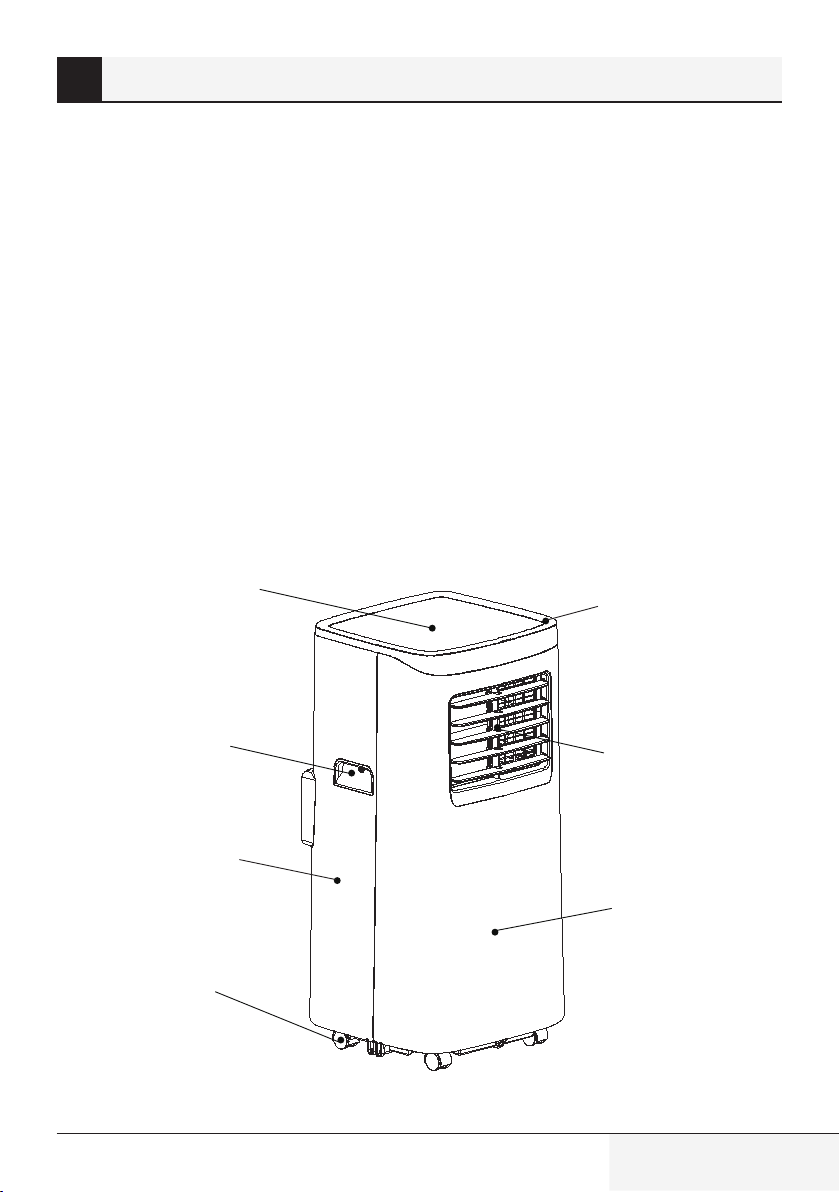
2.2 Components
Control panel
Top cover
Handle
Rear housing
Caster
Local air conditioner / User Manuel
Air outlet/Louver
Front housing
21 / 160 EN
Page 22
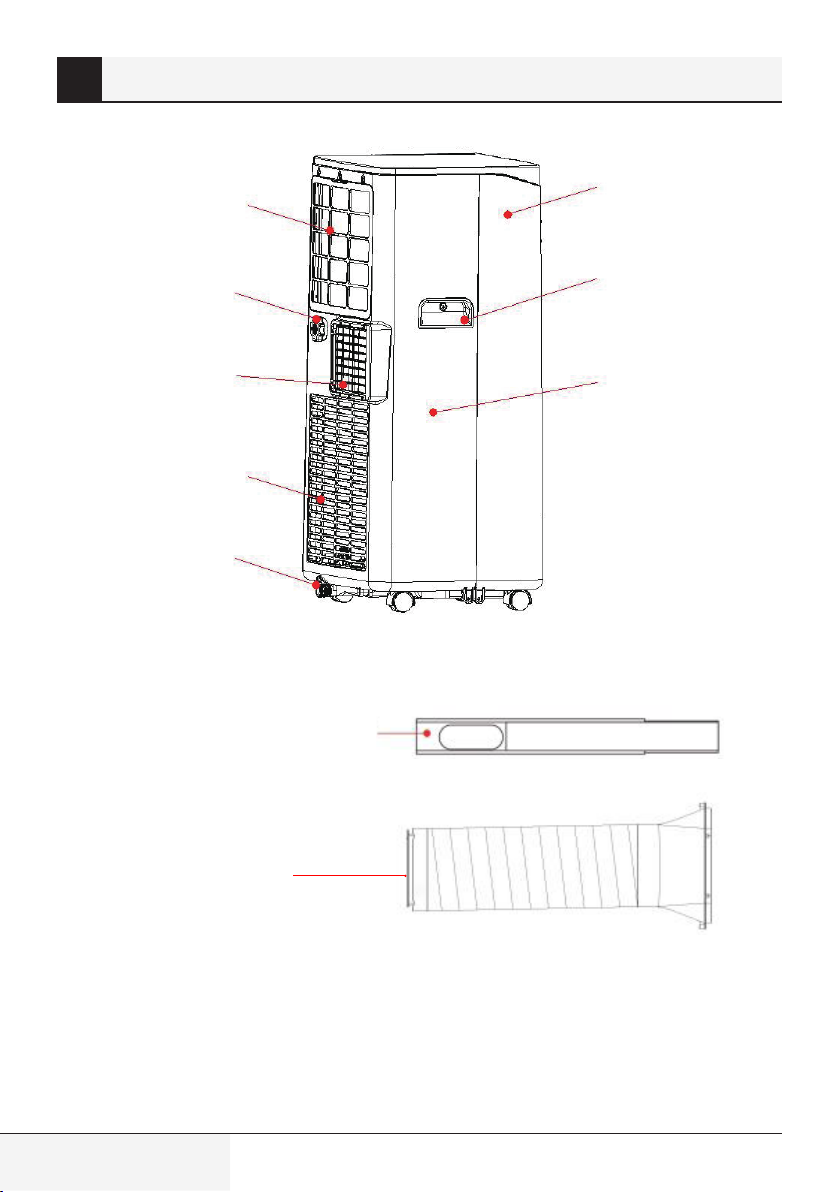
2 Features and components
Evaporator filter
Continuous
drainage hole
Air vent
Condenser filter
Drainage hole
Window sealing plate assembly
Front housing
Handle
Rear housing
Exhaust pipe assembly
22 / 160 EN
Local air conditioner / User Manuel
Page 23
3 Control settng
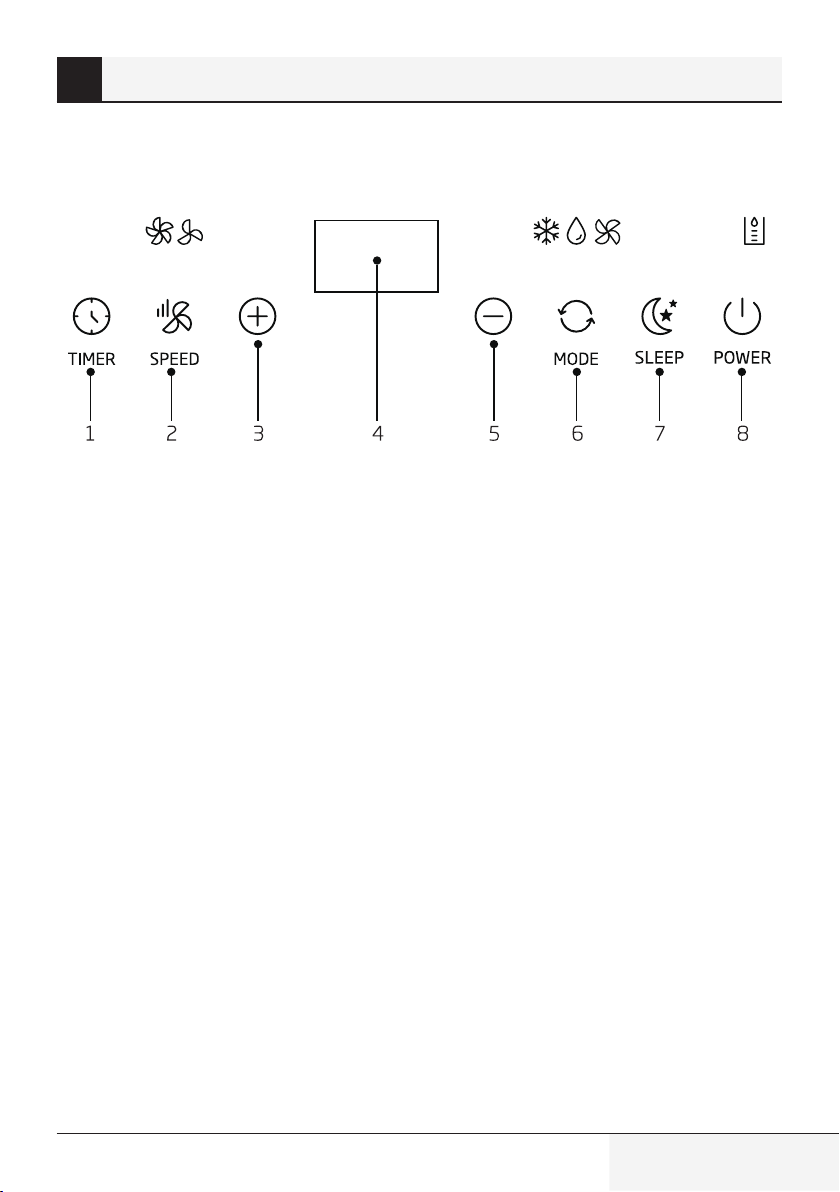
3.1 Control panel operaton nstructons
Operaton nterface
1. Timer key
2. Fan speed selection key
3. Up key
4. Display window
1. When the machine is powered on for the first time, the buzzer will play power-on music, and then
the machine will get into standby status.
2.
Power Key: press the key to turn on and turn off the machine. In the case of power on, press the
key to turn off the machine; in the case of power off, press the key to turn on the machine.
3.
Mode Selection Key: In the case of power on, press the key to switch between cooling
dehumidifying fan mode.
4.
Up Key and Down Key: press the two keys to change the setting temperature or setting time,
operate as follows:
While setting temperature, press up key or down key to select the required temperature (not
available in fan or dehumidifying mode).
While setting time, press up key or down key to select the required time.
5. Down key
6. Mode selection key
7. Sleep key
8. Power key
Local air conditioner / User Manuel
23 / 160 EN
Page 24
4
7
6
3 Control settng
5.
Wind Speed Selection Key:
In cooling and fan mode, press the key to select high,low wind speed operation. But limited by anticold conditions, under certain conditions, it may not run according to the set wind speed.
In dehumidifying mode, pressing the key is invalid, and the fan will forcibly choose low wind speed
operation.
6.
Timing Key:
In the case of power on, press the key to close timing; in the case of power off, press the key to
open timing.
Press the key, when the timing symbol flashes, press up and down key to select the required timing
value.
Timing values can be set in 1-24 hours and the timing value is adjusted up or down by one hour.
7.
Sleep Mode:
In the cooling Mode,Press the UP and Fan Key to turn on the sleep mode, then the unit will work on
Energy-Saving and quiet type.
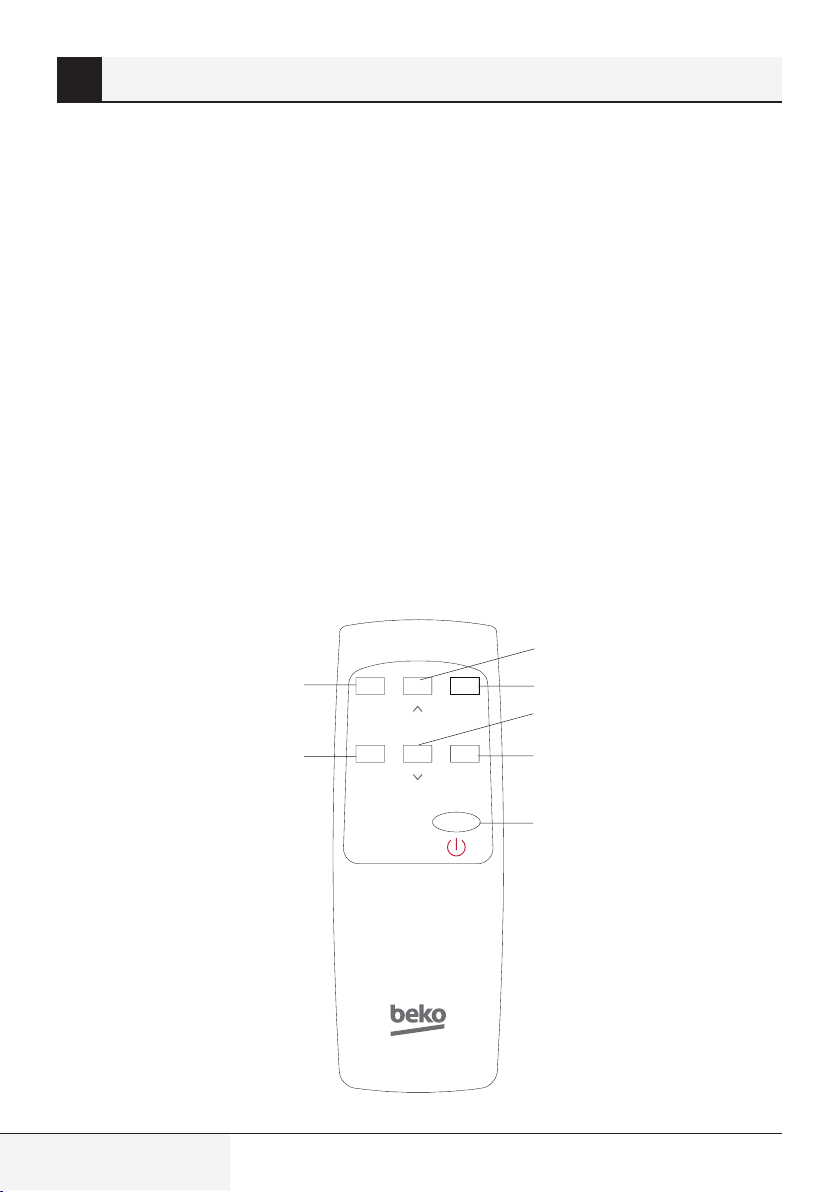
3.2 Operaton nstructons of remote control
The remote control Panel is as follows:
5
24 / 160 EN
ModeFan
3
2
Sleep Timer
1
Local air conditioner / User Manuel
Page 25
3 Control settng
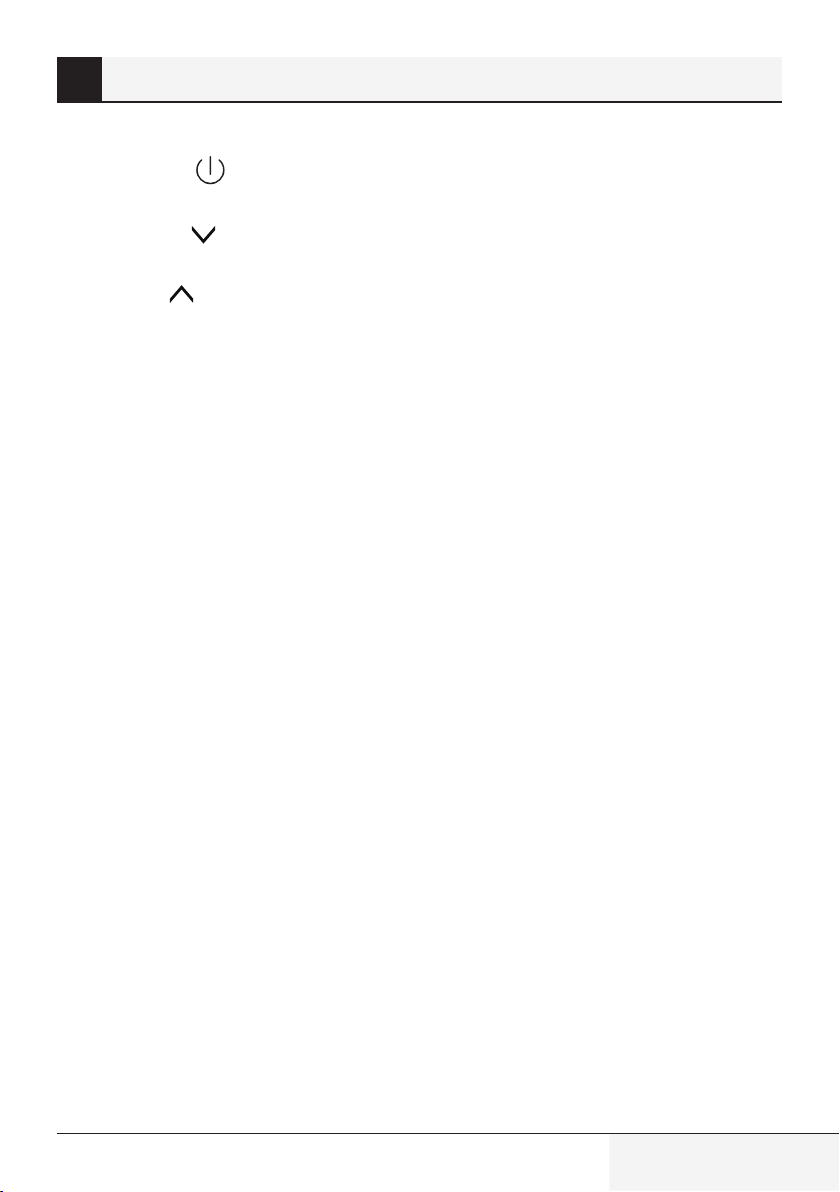
Instructions of key operation of the high-quality remote control are as follows:
1. Power: press the key to turn on or turn off the machine.
2. Timer: press the Timer key to set timing.
3. Down: press the key to reduce temperature and timing set value.
4. Mode: press the Mode key to switch between cooling, fan, dehumidifying mode.
5. Up: press the key to increase temperature and timing set value.
6. Fan: press the Fan key to select high, low wind speed.
7. Sleep mode: press the Sleep key to turn on the sleep mode.
Local air conditioner / User Manuel
25 / 160 EN
Page 26
4 Protecton functon
1. Frost Protecton Functon
In cooling, dehumidifying or economic power saving mode, if the temperature of the exhaust pipe is
too low, the machine will automatically enter protection status; if the temperature of the exhaust pipe
rises to a certain temperature, it can automatically revert to normal operation.
2. Overflow Protecton Functon
When water in the water pan exceeds the warning level, the machine will automatically sound
an alarm, and the “ ” indicator light will flash. At this point, you need to move the drainage pipe
connecting the machine or the water outlet to sewer or other drainage area to empty the water
(details see Drainage Instructions at the end of this chapter). After the water is emptied, the machine
will automatically return to the original state.
3. Protecton Functon of the Compressor
To increase the service life of the compressor, it has a 3-minute delay booting protection function
after the compressor is turned off.
26 / 160 EN
Local air conditioner / User Manuel
Page 27
5 Installaton and adjustment
5.1 Installaton
Warnng: before using the mobile air conditioning, keep it
A
The air conditioning can be easily moved in the room. In the moving process, ensure that the air
conditioning is in the upright position and the air conditioning should be placed on a flat surface. Do
not install and use the air conditioning in the bathroom or other humid environments.
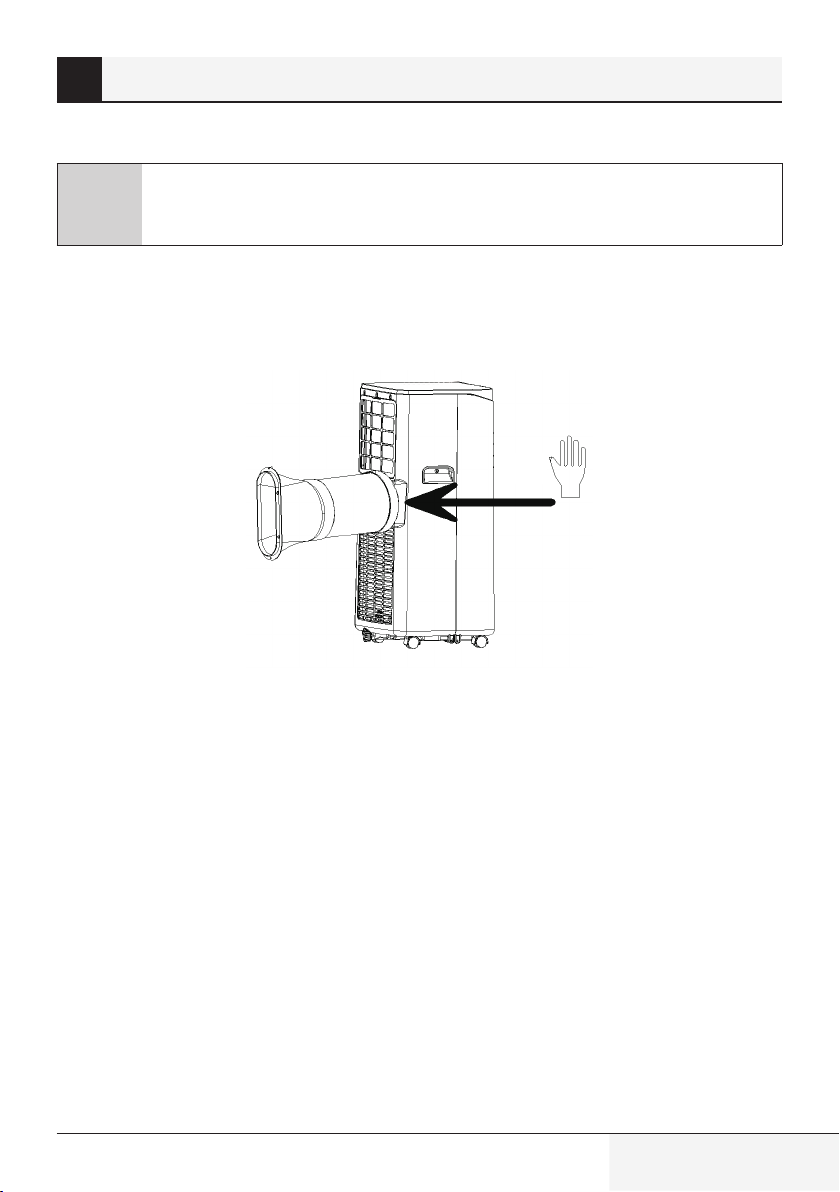
1. Install the heat pipe assembly (as shown in Fig. 1)
upright for at least two hours.
Push
Fig. 1
1) Take out the outer connector assembly and the exhaust pipe assembly, and remove the plastic
bags;
2) Insert the heat pipe assembly (the end of the exhaust joint) into the back panel vent slot (push to
the left) and complete the assembly (as shown in fig. 1).
2. Installation of window sealing plate components
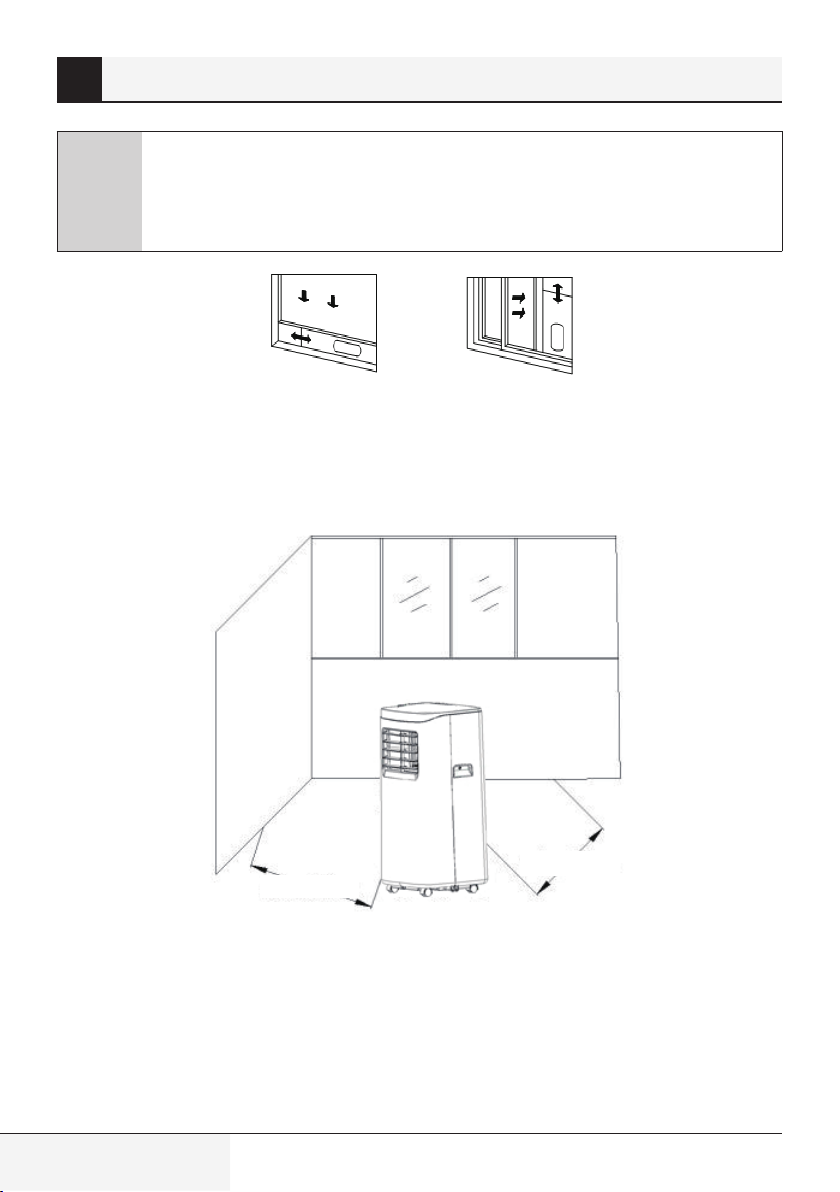
1) Half open the window, and mount the window sealing plate assembly to the window (as shown in
Fig. 2 and Fig. 3). Components can be placed in horizontal and vertical direction.
2) Pull various components of the window sealing plate assembly open, adjust their opening distance
to bring both ends of the assembly into contact with the window frame, and fix various components
of the assembly.
Local air conditioner / User Manuel
27 / 160 EN
Page 28
5 Installaton and adjustment
Note:
1. The flat end of the exhaust pipe joints must be snapped into place.
C
3. Install the body
1) Move the machine with installed heat pipe and fittings before the window, and the distance
between the body and walls or other objects shall be least 50 cm (as shown in Fig. 4).
2. The pipe cannot be distorted nor has substantial turning (greater than 45 °). Keep
the ventilation of the exhaust pipe not blocked.
Fig. 2 Fig. 3
Min: 50cm
Min: 50cm
Fig. 4
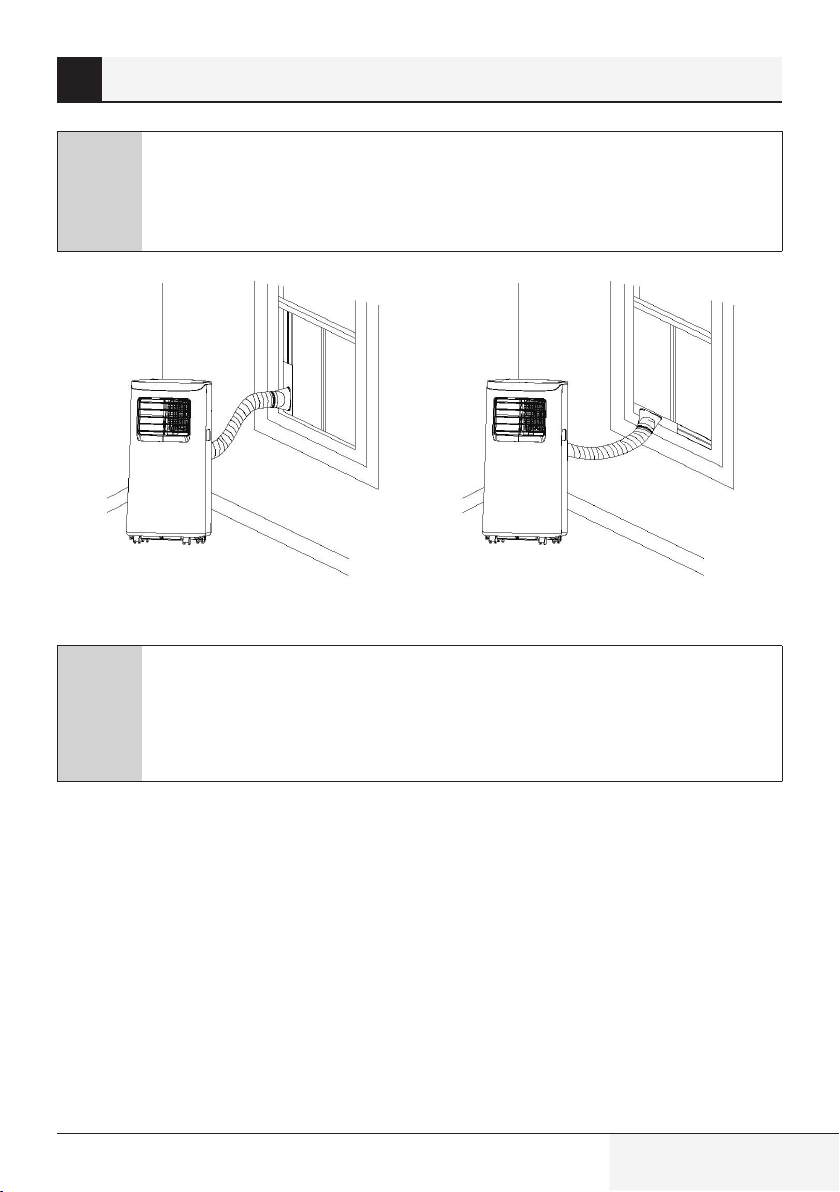
2) Elongate the exhaust pipe and snap the flat end of the exhaust pipe joints into the hole of the
window sealing plate assembly (as shown in Fig. 5 and Fig. 6) .
28 / 160 EN
Local air conditioner / User Manuel
Page 29
5 Installaton and adjustment
Note:
1. The flat end of the exhaust pipe joints must be snapped into place.
C
C
2. The pipe cannot be distorted nor has substantial turning (greater than 45 °). Keep
the ventilation of the exhaust pipe not blocked.
Fig. 5 Fig. 6
Important notce:
The length of the exhaust hose shall be 280~1,500mm, and this length is based on
the specifications of the air conditioning. Do not use extension tubes or replace it
with other different hoses, or this may cause a malfunction. Exhaust host must be not
blocked; otherwise it may cause overheating.
Local air conditioner / User Manuel
29 / 160 EN
Page 30
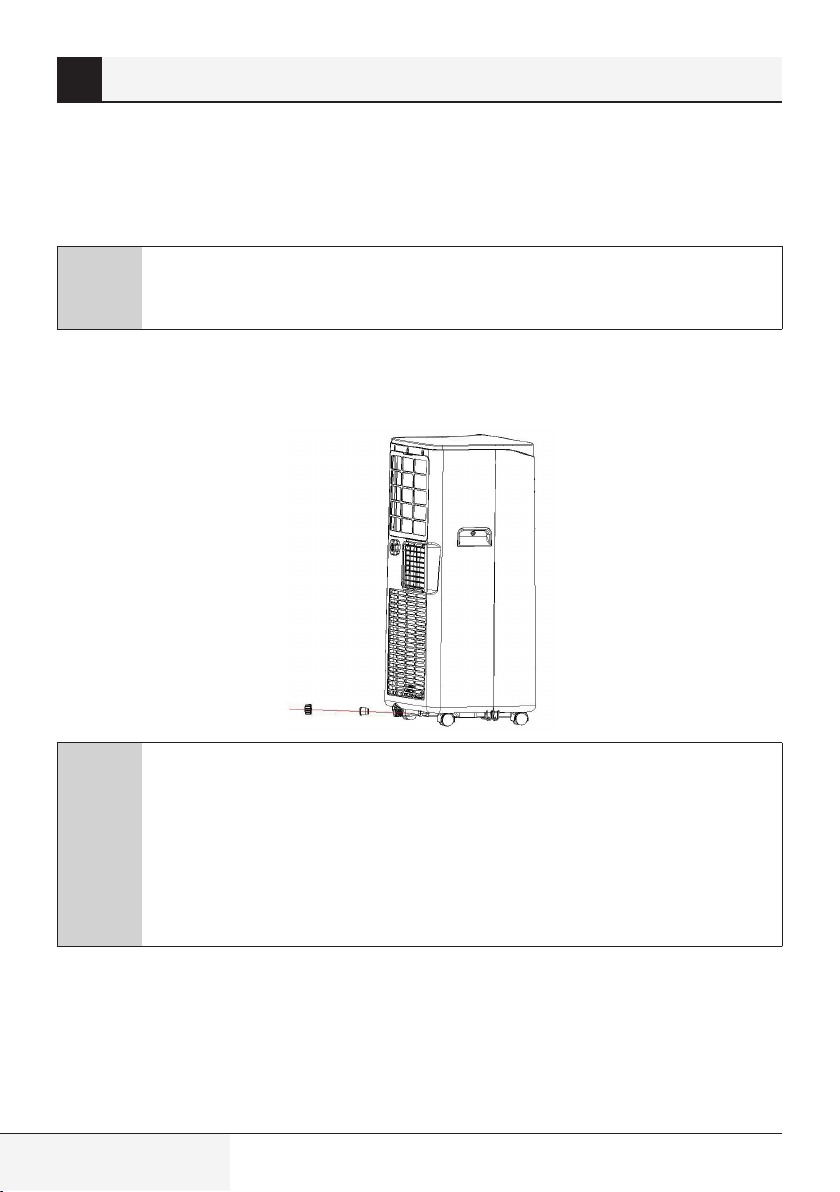
6 Dranage nstructons
This machine has two drainage methods: manual drainage and continuous drainage.
1. Manual drainage:
1) When the machine stops after the water is full, turn off the machine power and unplug the power
plug.
Note: Please move the machine carefully, so as not to spill the water in the water pan
C
2) Place the water container below the side water outlet behind the body.
3) Unscrew the drainage cover and unplug the water plug, the water will automatically flow into the
water container.
at the bottom of the body.
Note:
1. Keep the drainage cover and the water plug properly.
2. During drainage, the body can be tilted slightly backwards.
C
30 / 160 EN
3. If the water container cannot hold all the water, before the water container is full,
4. When the water is discharged, stuff the water plug, and tighten the drainage cover.
stuff the water outlet with the water plug as soon as possible to prevent water from
flowing to the floor or the carpet.
Local air conditioner / User Manuel
Page 31
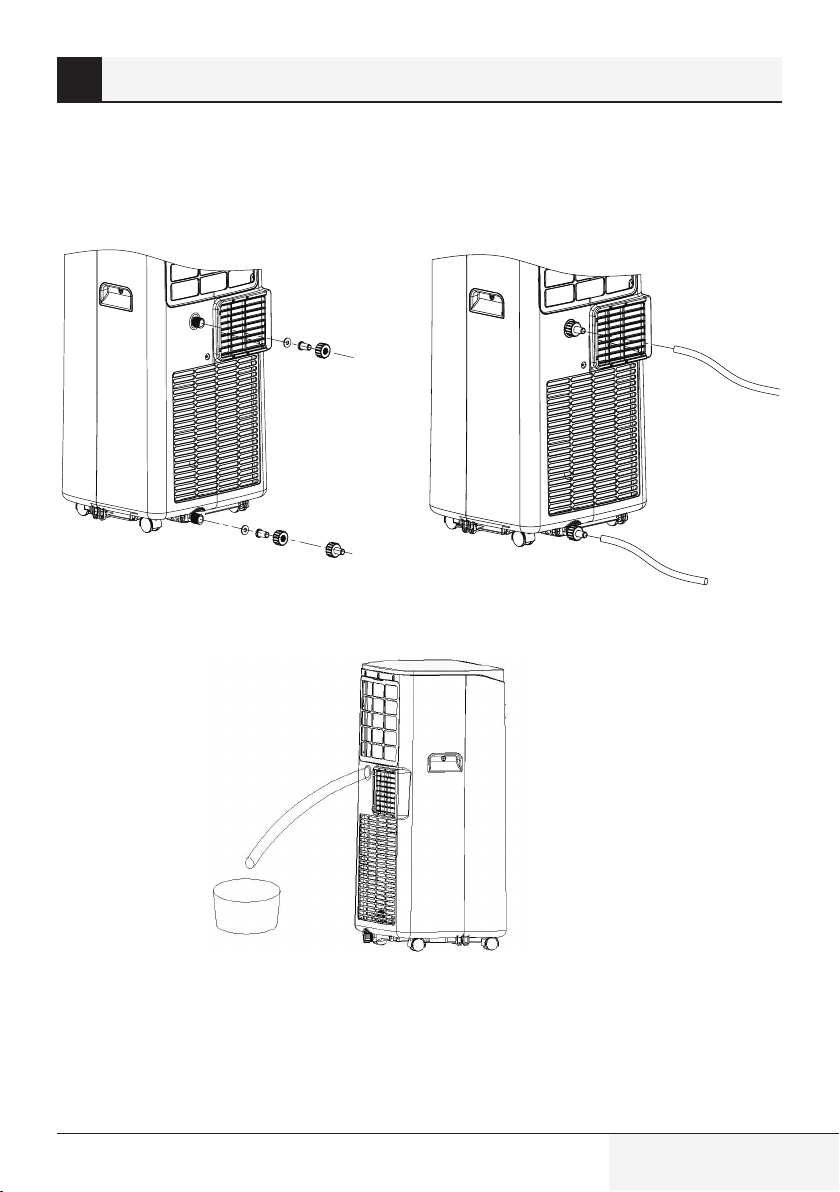
6 Dranage nstructons
2. Continuous drainage, as shown in figure:
1) Unscrew the drainage cover, and unplug the water plug.
2) Set the drainage pipe into the water outlet.
3) Connect the drainage pipe to the bucket.
Fig. 1
Local air conditioner / User Manuel
Fig. 2
Fig. 3
31 / 160 EN
Page 32
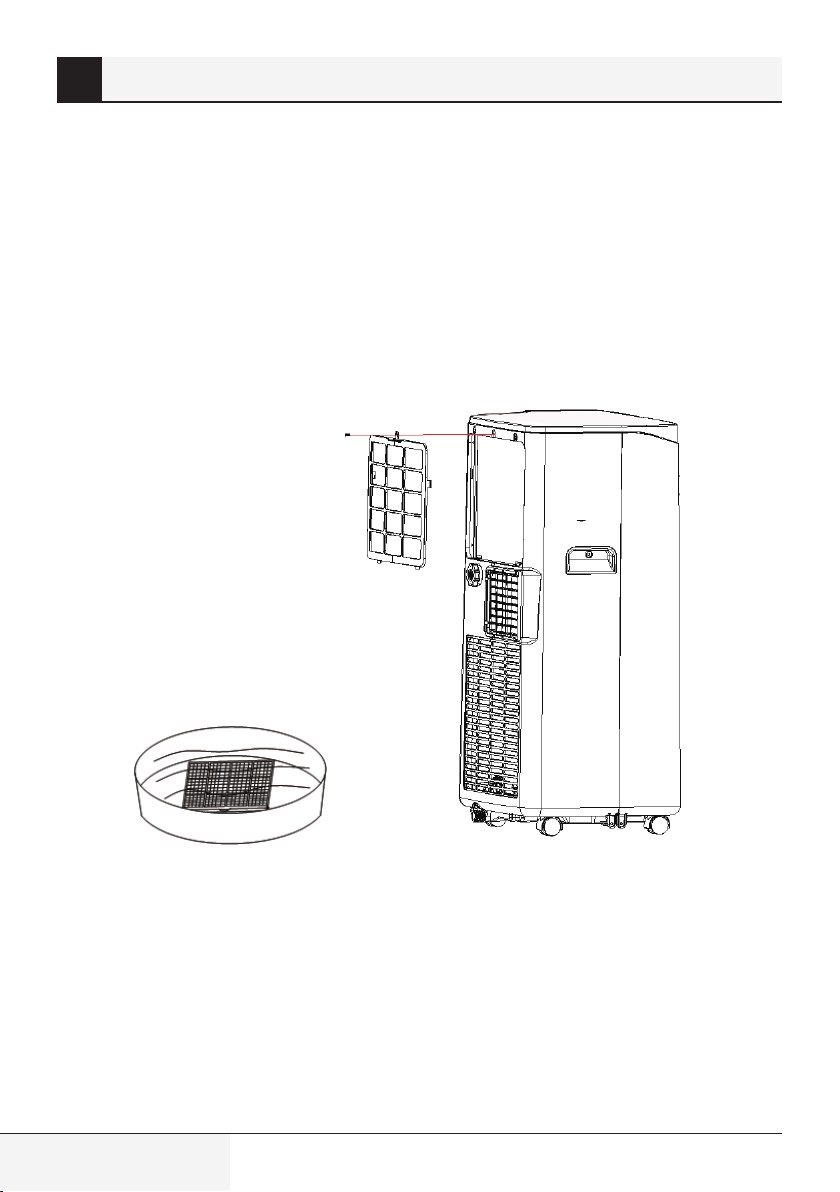
7 Mantenance
Cleanng: before cleanng and mantenance, turn off the machne and unplug the plug.
7.1 Clean the surface
Clean with surface of machine with a wet soft cloth. Don’t use chemicals, such as benzene, alcohol,
gasoline, etc; otherwise, the surface of the air conditioning will be damaged or even the whole
machine will bedamaged.
7.2 Clean the flter screen
If the filter screen is clogged with dust, and the effectiveness of the air conditioning is reduced, be
sure to clean the filter screen once every two weeks.
Remove screws
7.3 Clean the upper flter screen frame
1. Unscrew one screw fixed by evaporator filter net and back shell with screwdriver, and take out
evaporator filter net.
2. Put the evaporator filter screen into warm water with neutral detergent (about 40°C / 104°F) and
dry it in the shade after rinsing clean.
32 / 160 EN
Local air conditioner / User Manuel
Page 33
8 Unt Storage
1. Unscrew the drainage cover, unplug the water plug, and discharge the water in the water pan into
other water containers or directly tilt the body to discharge the water into other containers.
2. Turn on the machine, adjust it to low-wind ventilation mode, and maintain this state until the
drainage pipe becomes dry, so as to keep the inside of the body in a dry state and prevent it from
mildewing.
3. Turn off the machine, unplug the power plug, and wrap the power cord around the wrapping post;
install the water plug and the drainage cover.
4. Remove the exhaust pipe and keep it properly.
5. Cover the air conditioning with a plastic bag. Put the air conditioning in a dry place, keep it out of the
reach of children, and take dust control measures.
6. Remove batteries of the remote control and keep them properly.
Note: Ensure that the body is placed in a dry place and keep all machine components
C
properly.
Local air conditioner / User Manuel
33 / 160 EN
Page 34
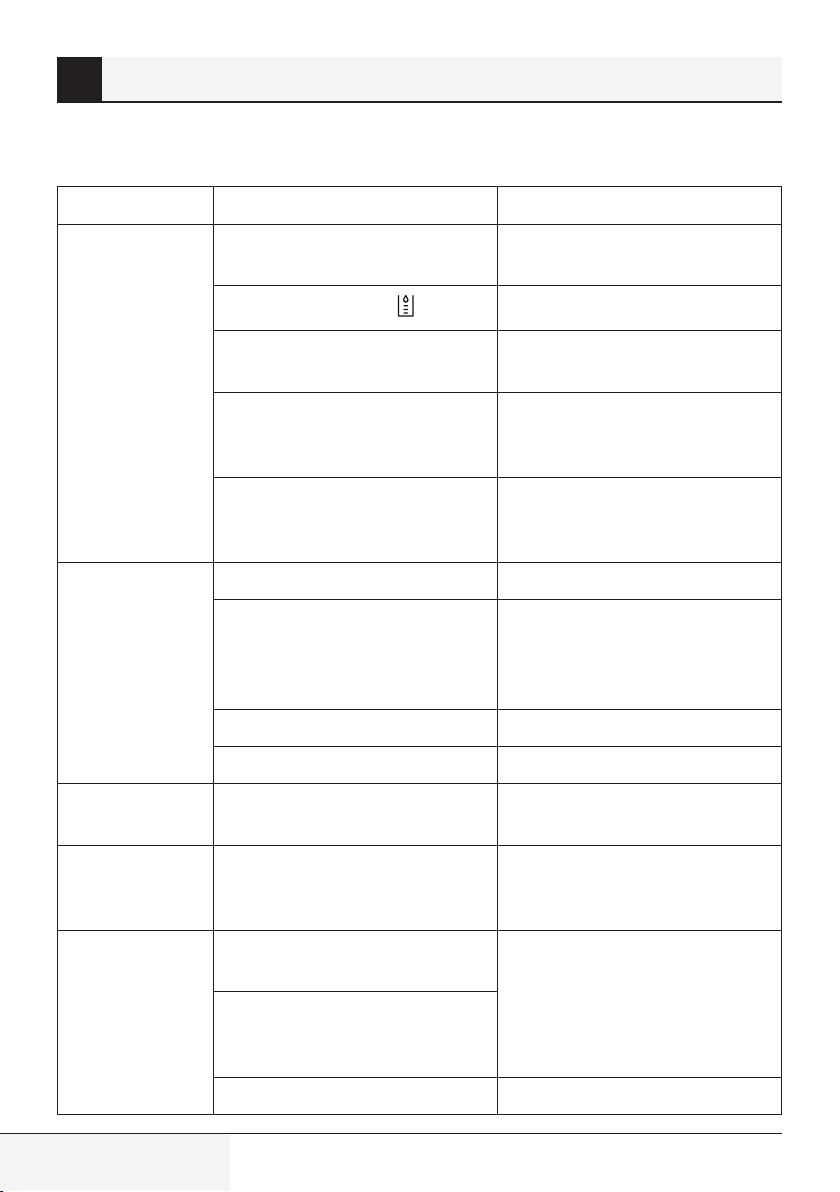
9 Troubleshootng
Do not repair or disassemble the air conditioning by yourself. Unqualified repair will lead to failure of
the warranty card, and may cause damage to users or their properties.
Problems Reasons Solutons
The air
conditioning does
not work.
The cooling effect
is not good
Big noise
There is no electricity.
The overflow indicator “ ” light up.
The ambient temperature is too low
or too high
In cooling mode, the room
temperature is lower than the set
temperature;
In dehumidification mode, the
ambient temperature is low.
There is direct sunlight. Pull the Curtain.
Doors or windows are open; there
are a lot of people; or in cooling
mode, there are other sources of
heat.
The filter screen is dirty. Clean or replace the filter screen.
The air inlet or outlet is blocked. Clear obstructions.
The air conditioning is not placed on
a flat surface.
Turn it on after connecting it to a
socket with electricity.
Discharge the water inside.
Recommend to use the machine in at
the temperature of 7-35°C (44-95°F).
Change the set temperature.
The machine is placed in a room with
an ambient temperature of greater
than 17°C (62°F).
Close doors and windows, and add
new air conditioning.
Put the air conditioning on a flat and
hard place (to reduce noise).
Compressor does
not work.
The remote
control does not
work.
34 / 160 EN
Wait for 3 minutes until the
Overheat protection starts.
The distance between the machine
and the remote control is too far.
The remote control is not aligned
with the direction of the remote
control receiver.
Batteries are dead. Replace batteries.
temperature is lowered, and then
restart the machine.
Let the remote control get close to
the air conditioning, and make sure
that the remote control directly
faces to the direction of the remote
control receiver.
Local air conditioner / User Manuel
Page 35
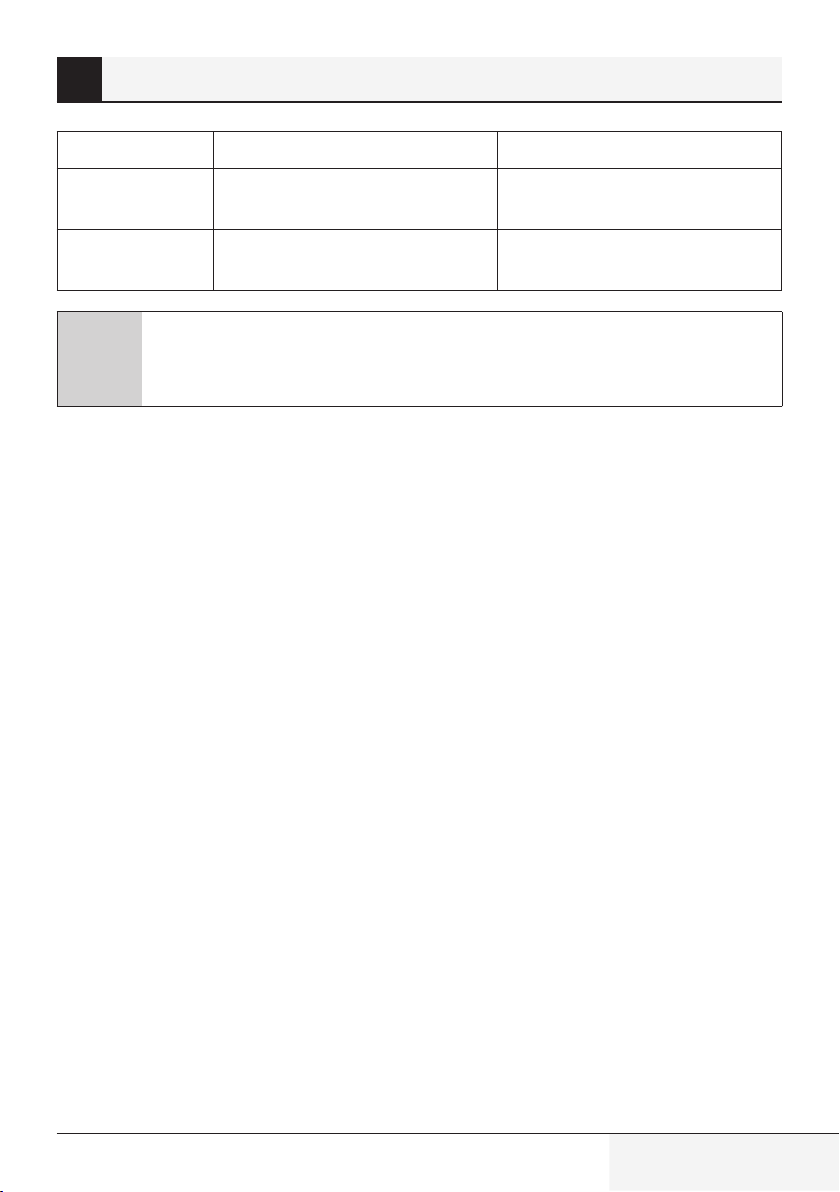
9 Troubleshootng
Problems Reasons Solutons
Displays ‘E1’.
Displays ‘E2’
Note: If problems not listed in the table occur or recommended solutions do not work,
C
please contact the professional service organization.
The room temperature sensor is
abnormal.
The pipe temperature sensor is
abnormal.
Check the room temperature sensor
and related circuitry.
Check the pipe temperature sensor
and related circuitry.
Local air conditioner / User Manuel
35 / 160 EN
Page 36
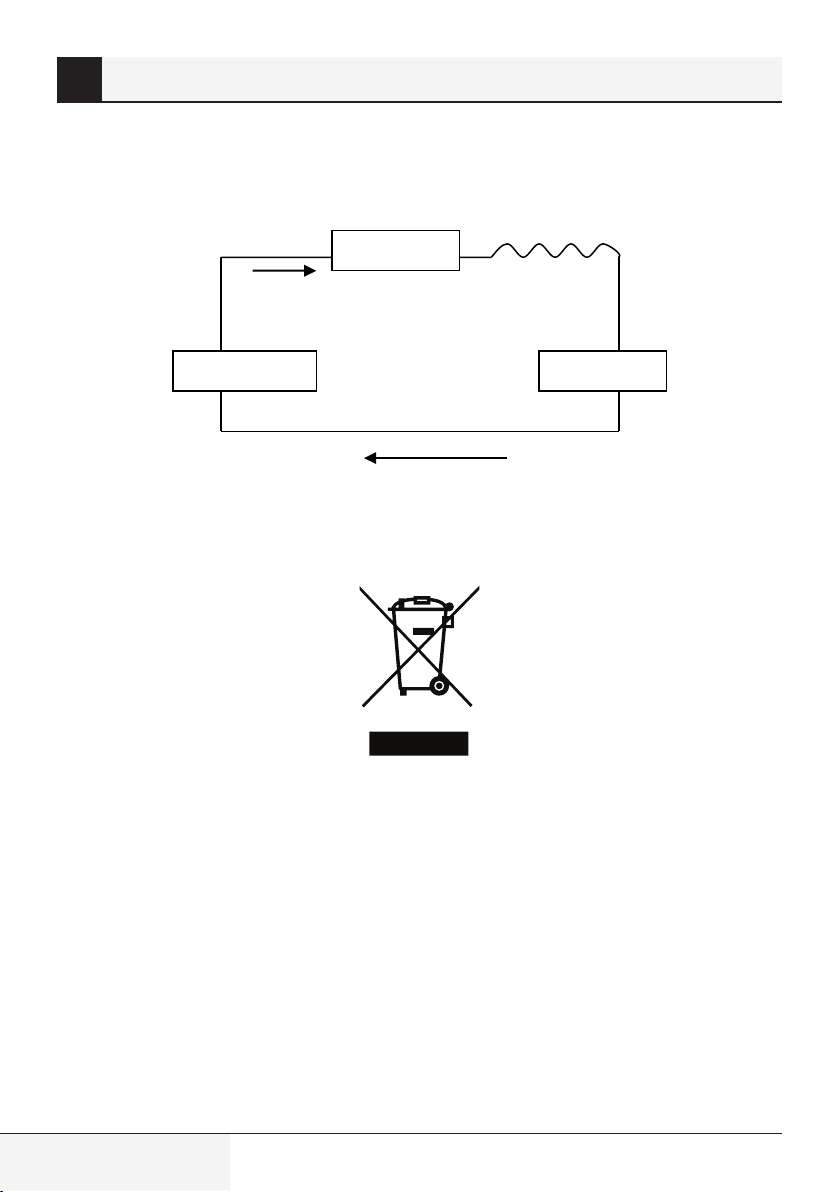
10 Addendum
Schematc dagram for ar condtonng
(The specific technical parameters of the machine shall be subject to the nameplate on the product)
Capillary
Condenser
Compressor Evaporator
Treatment: Don’t put the abandoned machine with other unsorted waste together. Such waste shall
be placed separately for other special use.
This product complies with EU WEEE Directive (2012/19/EU). This product bears a classification
symbol for waste electrical and electronic equipment (WEEE).
This symbol indicates that this product shall not be disposed with other household wastes at the end
of its service life. Used device must be returned to official collection point for recycling of electrical
and electronic devices. To find these collection systems please contact to your local authorities or
retailer where the product was purchased. Each household performs important role in recovering and
recycling of old appliance. Appropriate disposal of used appliance helps prevent potential negative
consequences for the environment and human health.
36 / 160 EN
Local air conditioner / User Manuel
Page 37
11 Installaton nstructons
11.1 F-Gas nstructon
This product contains fluorinated greenhouse gases.
The fluorinated greehouse gases are contained in hermetically sealed equipment.
Installs, services, maintains, repairs, checks for leaks or decommissions equipment and product
recycling should be carried out by natural persons that hold relevant certificates.
If the system has a leakage detection system installed, leakage checks should be performed at least
every 12 months, make sure system operate properly.
If product must be performed leakage checks, it should specify Inspection cycle, establish and save
records of leakage checks.
Note: For hermetically sealed equipment, local air conditioner, window air
C
conditioner and dehumidifier, if CO
is less than 10 tonnes, it should not perform leakage checks.
equivalent of fluorinated greenhouse gases
2
Local air conditioner / User Manuel
37 / 160 EN
Page 38
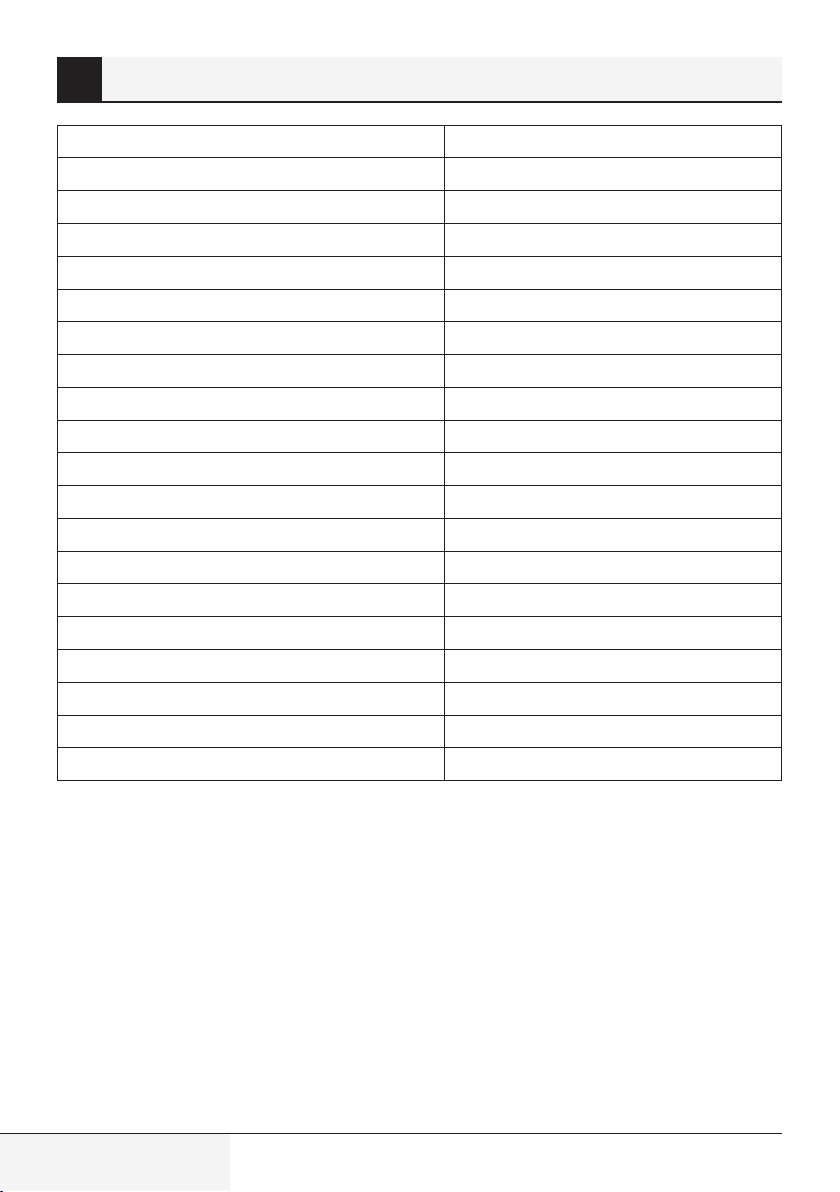
12 Specfcatons
Beko Model Name BS207C
Brand Beko
Refrigerant R290
Total Refrigerant Amount (g) 130
Climate Class T1
Heating Type Control Type Remote Control
Cooling Capacity (Btu/h) 6500
Cooling Capacity (W) 1905
Energy Efficiency Cooling (W/W) 2.6
Energy Level-Cooling A
Cooling Power Input (W) 732
Voltage/Frequency (V/Hz) 220-240V~50Hz
Cooling Running Current (A) 3.2
Noise Power Level (dBA) (Sound Power) 65/-/Air flow volume ( m3/h ) 300
Moisture removal (lt/h) 0.8
Working Temperature Range at Cooling (°C) 16-35
Unit Size (WxHxD) mm 305×678×328
Net Weight (kg) 19
1. Specification are standard values calculate based on rated operation conditions. They will vary in
difference work condition.
2. Our company has quick technical improvements. There will be no prior notice for any change of
technical data. Please read nameplate on the air-conditioner.
3. Rated value is tested under 35/24(In.)35/24(Out).
38 / 160 EN
Local air conditioner / User Manuel
Page 39

Manufactured by Arcelik A.S. Karaagac Cd. No:2-6 34445 Sutluce, Beyoglu, Istanbul, Turkey.
Page 40
Veuillez d’abord lire ce manuel d’utilisation !
Chère cliente, cher client,
Nous vous remercions d’avoir acheté un produit Beko. Nous espérons que ce produit
vous apportera entière satisfaction. Tous nos produits sont fabriqués dans une
usine moderne et font l’objet d’un contrôle de qualité minutieux. À cet effet, veuillez
lire en intégralité le présent manuel avant d’utiliser cet appareil et conservez-le
soigneusement pour une utilisation ultérieure. Si vous remettez le produit à un autre
utilisateur, remettez-le-lui avec le manuel de l’utilisateur. Veillez à bien respecter les
consignes et les instructions figurants dans le manuel d’utilisation.
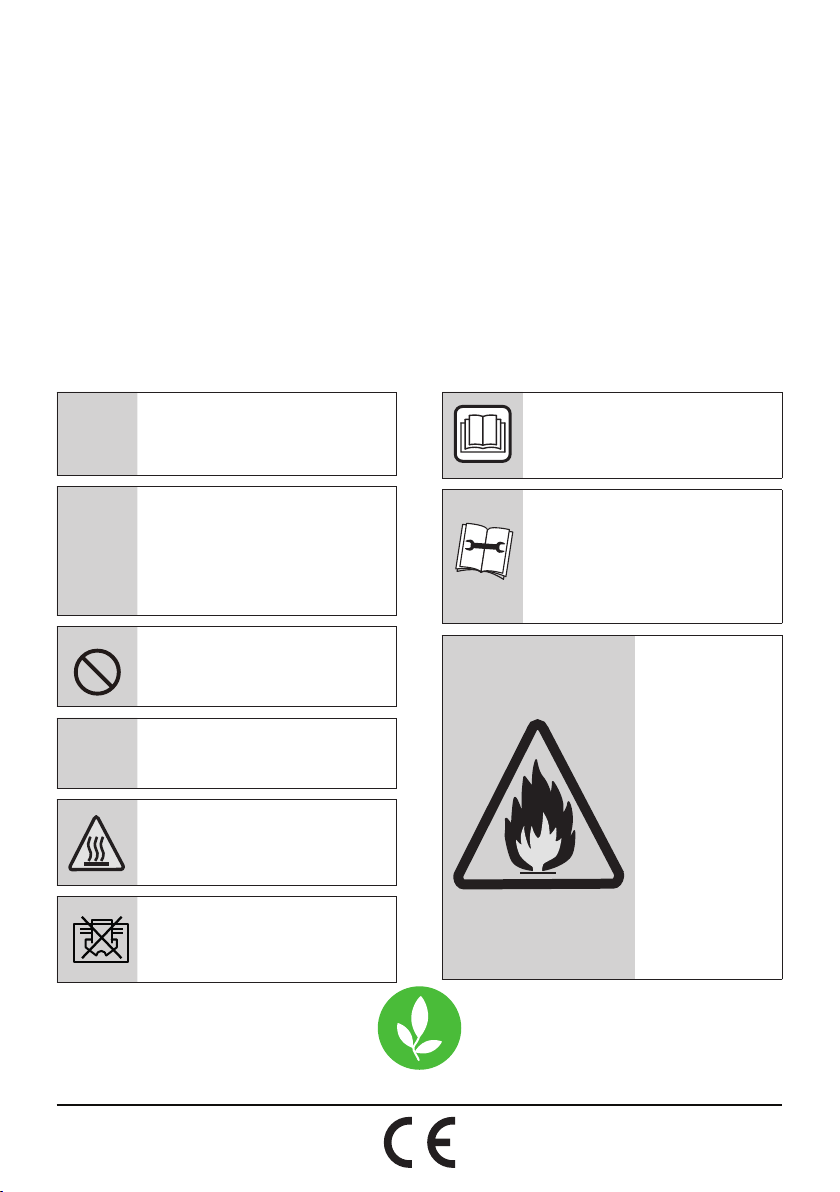
Signication des pictogrammes
Vous trouverez les symboles suivants dans ce manuel d’utilisation :
C
A
B
Informations importantes et
conseils utiles concernant
l’utilisation de l’appareil.
DANGER : Avertissement
à propos des situations
dangereuses qui pourraient
entraîner des blessures ou
des dégâts matériels.
Avertissement relatif
aux actions à ne jamais
effectuer.
Risque d’électrocution.
Attention ! Surfaces
chaudes !
Ne pas couvrir.
Ce symbole indique qu’il
faut lire attentivement le
manuel d’utilisation.
Ce symbole indique qu’un
technicien doit manipuler
cet équipement en suivant
les instructions du manuel
d’installation.
Ce symbole
indique que
cet appareil
utilise un
réfrigérant
inflammable. Si
le réfrigérant
a fui et est
exposé à
une source
d’allumage
externe, il y
a un risque
d’incendie.
Ce produit a été fabriqué dans le respect de l’environnement et dans des installations modernes.
Ce produit est conforme à la réglementation
DEEE (Déchets d’équipements électriques et
électroniques) en vigueur.
Ce produit ne contient pas de PCB.
Page 41
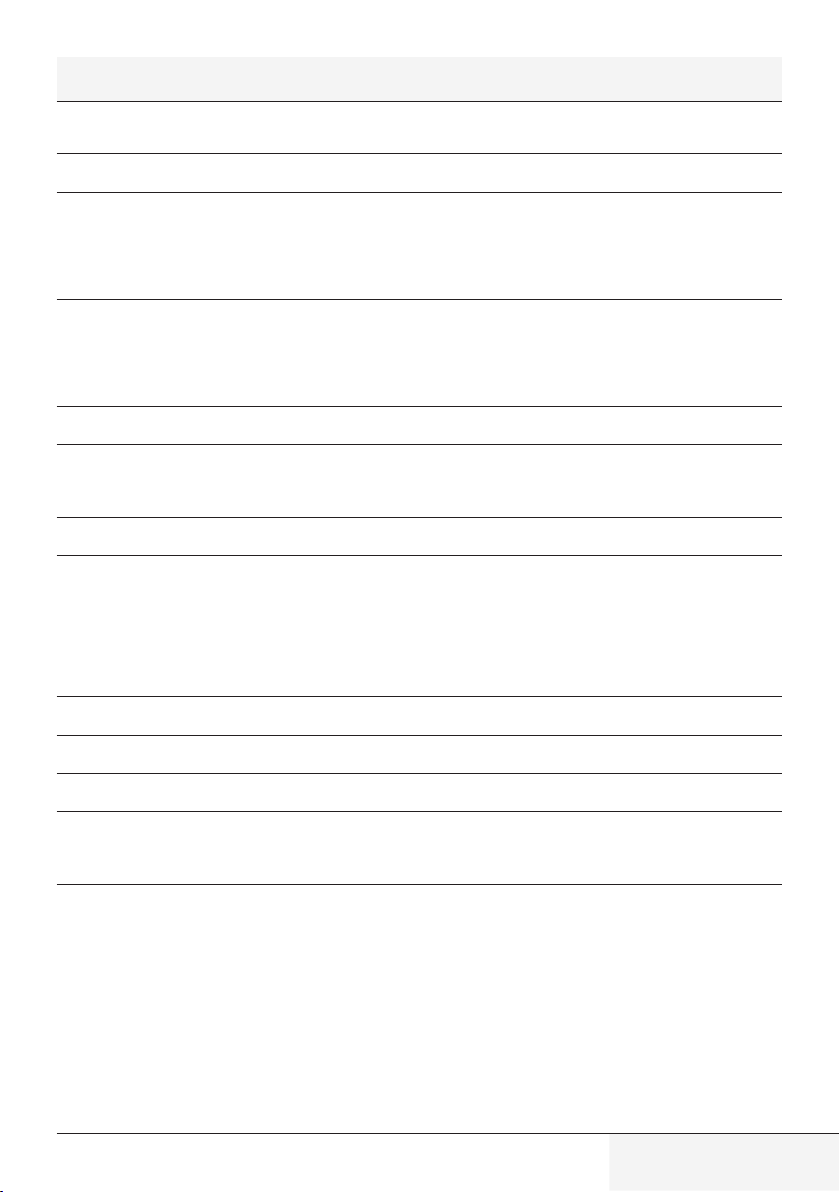
Tables des matières
1 Consgnes de sécurté 42
2 Caractérstques et composants 60
2.1 Caractéristiques . . . . . . . . . . . . . . . . . . . . . . . . . . . . . . . . . . . . . . . . . . . . . . . . . . . . . . . . . . . . . . . . .60
2.2 Composants. . . . . . . . . . . . . . . . . . . . . . . . . . . . . . . . . . . . . . . . . . . . . . . . . . . . . . . . . . . . . . . . . . . . . .60
3 Réglage des paramètres 62
3.1 Instructions de fonctionnement du panneau de commande . . . . . . . . . . . . . . . . . . . . 62
3.2 Instructions de la télécommande . . . . . . . . . . . . . . . . . . . . . . . . . . . . . . . . . . . . . . . . . . . . . . . . 63
4 Foncton de protecton 65
5 Installaton et mse en place 66
5.1 Installation . . . . . . . . . . . . . . . . . . . . . . . . . . . . . . . . . . . . . . . . . . . . . . . . . . . . . . . . . . . . . . . . . . . . . . . 66
6 Instructons de vdange 69
7 Entreten 71
7.1 Nettoyage de la surface . . . . . . . . . . . . . . . . . . . . . . . . . . . . . . . . . . . . . . . . . . . . . . . . . . . . . . . . . 71
7.2 Nettoyage du ltre. . . . . . . . . . . . . . . . . . . . . . . . . . . . . . . . . . . . . . . . . . . . . . . . . . . . . . . . . . . . . . . 71
7.3 Nettoyage du châssis du ltre supérieur . . . . . . . . . . . . . . . . . . . . . . . . . . . . . . . . . . . . . . . . 71
8 Rangement de l’apparel 72
9 Dépannage 73
10 Annexe 75
11 Instructons d’nstallaton 76
11.1 Consignes de la F-Gaz. . . . . . . . . . . . . . . . . . . . . . . . . . . . . . . . . . . . . . . . . . . . . . . . . . . . . . . . . . . . 76
12 Spécfcatons 77
Le réfrigérant utilisé dans les climatiseurs mobiles est le R290, un gaz respectueux de
l’environnement. Ce réfrigérant est inodore, et contrairement à d’autres réfrigérants, le R290 est sans
ozone et a un effet très faible sur la couche d’ozone.
Veuillez lire les instructions avant d’utiliser ou de réparer l’appareil.
Les schémas fournis dans ce manuel ne sont pas forcément identiques au produit réel. Reportez-vous
aux produits réels.
Climatiseur mobile / Manuel d’utilisation
41 / 160 FR
Page 42
1 Consgnes de sécurté
Avertssements :
•
N’utilisez aucun moyen pour accélérer le processus de dégivrage ou
pour nettoyer l’appareil autres que ceux recommandés par le fabricant.
•
L'appareil doit être entreposé dans une salle sans sources
d'allumage fonctionnant en continu (par exemple : des flammes
nues, un appareil à gaz ou un appareil de chauffage électrique).
•
Ne pas percer ni brûler.
•
Sachez que les réfrigérants peuvent être inodores.
•
L’appareil doit être installé, utilisé et entreposé dans une salle
dont la surface est supérieure à 7 m².
•
Il faut dégager l’appareil de tout obstacle afin d’assurer son bon
fonctionnement et d’atténuer les risques pour la sécurité.
•
L’entretien doit être réalisé conformément aux recommandations
du fabricant.
•
L’appareil doit être entreposé dans une salle bien aérée dont la
taille correspond à la taille spécifiée pour son fonctionnement.
•
Toute personne qui travaille sur un circuit de refroidissement ou
l’ouvre doit être titulaire d’un certificat valable et en cours de validité
délivré par une autorité d’évaluation agréée par l’industrie, attestant
de sa compétence à manipuler les réfrigérants en toute sécurité,
conformément à une norme d’évaluation reconnue par l’industrie.
•
L’entretien doit être effectué selon les recommandations du
fabricant de l’équipement. La maintenance et la réparation
nécessitant l’assistance d’autres techniciens qualifiés doivent
être réalisées sous la supervision de la personne compétente en
utilisation de réfrigérants inflammables.
•
Toute procédure opérationnelle ayant trait aux mesures
de sécurité de l’appareil doit être réalisée par une personne
compétente exclusivement.
42 / 160 FR
Climatiseur mobile / Manuel d’utilisation
Page 43

1 Consgnes de sécurté
Remarque :
•
Le climatiseur est exclusivement destiné à un usage
intérieur, il n’est pas adapté à d’autres applications.
•
Respectez les règles d’interconnexion de votre réseau
local lors de l’installation du climatiseur et assurez-vous
que l’appareil soit correctement mis à la terre. Pour
toute question à propos de l’installation électrique,
suivez les instructions du fabricant, et si nécessaire,
demandez à un électricien qualifié d’installer l’appareil.
•
Placez l’appareil sur une surface plate et sèche en
respectant une distance minimum de 50 cm entre
l’appareil et les objets ou les parois environnants.
•
Après avoir installé le climatiseur, assurez-vous que
C
la prise d’alimentation est intacte et fermement
branchée dans la prise murale, puis disposez le cordon
d’alimentation de manière à éviter qu’une personne
trébuche ou le débranche par inadvertance.
•
Ne placez aucun objet dans l’entrée ou la sortie d’air
du climatiseur. Gardez l’entrée et la sortie d’air libre de
toute obstruction.
•
Lorsque les tuyaux de vidange sont installés, assurezvous qu’ils soient correctement branchés et qu’ils ne
sont pas tordus ou pliés.
•
Pour ajuster et retirer les évents supérieurs et inférieurs
de la sortie d’air, saisissez-les délicatement pour éviter
de les endommager.
Climatiseur mobile / Manuel d’utilisation
43 / 160 FR
Page 44

1 Consgnes de sécurté
Remarque :
•
Lors du déplacement de l’appareil, veillez à ce qu’il reste
debout.
•
L’appareil doit être maintenu à distance de tout carburant,
gaz inflammable, four et autres sources de chaleur.
•
Ne tentez pas de démonter, rénover ou modifier l’appareil
de manière hasardeuse, car cela pourrait causer un
dysfonctionnement de l’appareil, voire mettre en danger
les biens matériels ou les personnes. Pour éviter tout
danger, en cas de défaillance de l’appareil, sollicitez l’aide
du fabricant ou d’un professionnel pour le réparer.
•
Ne pas installer ou utiliser le climatiseur dans une salle
de bains ou dans un autre endroit humide.
C
44 / 160 FR
•
Ne débranchez pas la prise pour éteindre l’appareil.
•
Pour éviter tout déversement d’eau ou d’un autre liquide
dans le climatiseur, veillez à ne placer aucun verre ou
autre contenant sur l’appareil.
•
N’utilisez pas d’insecticide en aérosol ou d’autres
substances inflammables à proximité du climatiseur.
•
Ne tentez pas d’essuyer ou de laver le climatiseur à
l’aide de solvants chimiques tels que de l’essence ou de
l’alcool. Lorsque vous souhaitez nettoyer le climatiseur,
débranchez l’alimentation puis nettoyez l’appareil
avec un chiffon doux semi-humide. Si l’appareil est
particulièrement sale, frottez-le à l’aide d’un détergent
doux.
Climatiseur mobile / Manuel d’utilisation
Page 45

1 Consgnes de sécurté
Remarque :
•
Cet appareil peut être utilisé par des enfants âgés d’au
moins 8 ans et par des personnes ayant des capacités
physiques, sensorielles ou mentales réduites ou dénuées
d’expérience ou de connaissance, s’ils (si elles) sont
correctement surveillé (es) ou si des instructions relatives
à l’utilisation de l’appareil en toute sécurité leur ont été
données et si les risques encourus ont été appréhendés.
Les enfants ne doivent pas jouer avec l’appareil. Le
nettoyage et l’entretien par l’usager de doivent pas être
effectués pardes enfants sans surveillance.
C
•
Si le cordon d’alimentation est endommagé, il doit être
remplacé par le constructeur, une personne mandatée
pour faire le SAV ou toute autre personne qualifiée afin
d’éviter toute mise en danger.
•
Cet appareil doit être installé conformément aux
réglementations nationales en matière de câblage.
•
Ne faites pas fonctionner votre climatiseur dans un local
humide tel qu’une salle de bain ou une buanderie.
•
Il faut surveiller les enfants afin que ces derniers ne
jouent pas avec l’appareil.
Climatiseur mobile / Manuel d’utilisation
45 / 160 FR
Page 46

1 Consgnes de sécurté
•
Avertissement : N’utilisez aucun moyen pour accélérer
le processus de dégivrage ou pour nettoyer l’appareil
autres que ceux recommandés par le fabricant.
L’appareil doit être conservé dans une pièce sans
sources d’allumage en fonctionnement continu (par
exemple : flammes nues, appareil à gaz ou radiateur
électrique en fonctionnement.) Ne pas percer ni brûler.
Sachez que les réfrigérants peuvent être inodores.
•
L’appareil indiquera l’isolement d’un disjoncteur
différentiel à courant résiduel nominal ne dépassant pas
C
30 mA.
•
Cet appareil est destiné à un usage domestique et n’est
pas destiné aux utilisations suivantes :
-
coin cuisine dédié aux employés dans une boutique, un
bureau et tout autre environnement de travail ;
-
fermes ;
-
clients d’hôtels, motels et autres environnements de
type résidentiel ;
-
environnements de type bed-and-breakfast ;
Transport, marquage et entreposage des untés
•
Transport d’équipements contenant des réfrigérants
inflammables
Conformité avec la réglementation de transport
•
Marquage de l'équipement avec des panneaux
Conformité avec la réglementation nationale
46 / 160 FR
Climatiseur mobile / Manuel d’utilisation
Page 47
1 Consgnes de sécurté
•
Mise au rebut d’un équipement utilisant des réfrigérants
inflammables
Conformité avec la réglementation nationale
•
Entreposage d’équipements/appareils
L’entreposage d’équipements doit être conforme aux indications
du constructeur.
•
Entreposage d’équipements emballés (non vendus)
Une protection de l’emballage d’entreposage doit être réalisée de
façon à ce que des dommages mécaniques à l'équipement situé
à l’intérieur de l'emballage ne cause pas une fuite de la charge de
réfrigérant.
Le nombre de pièces maximum de l'équipement autorisé à être
entreposé ensemble sera déterminé par la réglementation locale.
1. Informations sur l’entretien
1) Vérifications dans la zone
Avant de commencer un travail sur des systèmes contenant des
réfrigérants inflammables, il faut faire des vérifications de sécurité
afin de s’assurer que le risque d’allumage est réduit au minimum.
Pour une réparation du système de réfrigérant, il faut prendre les
précautions suivantes avant de procéder à un travail sur le système.
2) Procédure de travail
Les travaux doivent être entrepris dans le cadre d’une procédure
contrôlée afin de réduire au minimum le risque que des gaz ou des
vapeurs inflammables soient encore présents pendant que le travail est
effectué.
Climatiseur mobile / Manuel d’utilisation
47 / 160 FR
Page 48
1 Consgnes de sécurté
3) Zone de travail générale
Tout le personnel de maintenance et les autres personnes
travaillant dans la zone locale doivent avoir reçu des instructions
sur la nature du travail réalisé. Évitez de travailler dans des espaces
confinés. La zone autour de l’espace de travail doit être délimitée.
Vérifiez que les conditions à l’intérieur de cette zone ont été
sécurisées par contrôle de matériaux inflammables.
4) Vérification de la présence de réfrigérant
La zone doit être vérifiée avec un détecteur de réfrigérant approprié
avant et pendant le travail, afin que le technicien soit assuré d’être
conscient d’atmosphères potentiellement inflammables. Assurez-vous
que le matériel utilisé pour détecter les fuites convient à une utilisation
avec des réfrigérants inflammables, c’est-à-dire sans étincelles,
étanchéifié de façon adéquate ou intrinsèquement sûr.
5) Présence d’un extincteur d’incendie
Si un travail à chaud est mené sur l’équipement de réfrigération
ou des pièces associées, un équipement d’extinction d’incendie
approprié doit être à portée de main. Vous devez avoir un un
extincteur à poudre ou à CO2 adjacent à la zone de chargement.
6) Pas de sources d’allumage
Personne n’effectuant un travail lié à un système de réfrigération
impliquant l’exposition de tuyauterie contenant ou ayant contenu
un réfrigérant inflammable ne doit utiliser de sources d’allumage
de façon à ce que cela puisse provoquer un risque d’incendie ou
d’explosion. Toutes les sources d’allumage possibles, y compris la
fumée de cigarette, doivent rester à une distance suffisante du
48 / 160 FR
Climatiseur mobile / Manuel d’utilisation
Page 49
1 Consgnes de sécurté
site d’installation, de réparation, d’enlèvement et de mise au rebut,
durant lesquels un réfrigérant inflammable peut potentiellement
être libéré dans l’espace environnant. Avant le début du travail, la
zone autour de l’équipement doit être étudiée pour s’assurer qu’il n’y
a pas de danger inflammable ni de risque d’allumage. Des pancartes
« Interdiction de fumer » doivent être installées.
7) Zone aérée
Vérifiez que la zone est en plein air ou aérée correctement avant
d’ouvrir le système ou d’effectuer un travail à chaud. Un certain
niveau d’aération doit se poursuivre pendant la réalisation du travail.
La ventilation doit disperser en toute sécurité tout réfrigérant libéré
et de préférence l’expulser de façon externe dans l’atmosphère.
8) Vérifications sur l’équipement de réfrigération
Si des composants électriques sont en cours de changement,
ils doivent convenir à cet usage et à la bonne spécification. Les
instructions de maintenance et d’entretien du fabricant doivent
toujours être suivies. En cas de doute, adressez-vous au service
technique du fabricant.
Les vérifications suivantes doivent être appliquées aux installations
utilisant des réfrigérants inflammables :
-
La taille de charge dépend de la taille de la salle dans laquelle les
pièces contenant du réfrigérant sont installées ;
-
La machinerie et les sorties de ventilation fonctionnent de façon
adéquate et ne sont pas obstruées ;
-
Si un circuit de refroidissement indirect est utilisé, la présence de
réfrigérant sera recherchée au niveau du circuit secondaire ;
Climatiseur mobile / Manuel d’utilisation
49 / 160 FR
Page 50
1 Consgnes de sécurté
-
Le marquage apposé sur l’équipement doit rester visible et lisible.
Corrigez le marquage et les panneaux illisibles ;
-
Le tuyau de réfrigération ou les composants du système sont
installés dans une position où ils sont susceptibles d’être
exposés à des substances pouvant corroder les composants qui
contiennent du réfrigérant, sauf si les composants sont constitués
de matériaux résistants à la corrosion ou correctement protégés
contre la corrosion.
9) Vérifications sur les dispositifs électriques
Les réparations et la maintenance des composants électriques
doivent inclure des vérifications de sécurité initiales et des
procédures d’inspection des composants. S’il y a une défaillance
pouvant compromettre la sécurité, alors aucune alimentation
électrique ne doit être raccordée au circuit tant que ce problème
n’est pas résolu de façon satisfaisante. Si le défaut ne peut pas être
corrigé dans l’immédiat mais qu’il faut continuer les opérations, une
solution adaptée sera utilisée provisoirement. Cela doit être signalé
au propriétaire de l’équipement de façon à ce que toutes les parties
soient informées.
Intalement, l faut vérfer pour des rasons de sécurté :
•
que les condensateurs sont déchargés : cela doit être fait de
manière sûre afin d’éviter la possibilité d’étincelles
•
qu’aucun composant ou câble électriques sous tension ne sont
exposés pendant la charge, la récupération ou la purge du
système ;
•
qu’il n’y a pas de continuité de la liaison à la terre.
50 / 160 FR
Climatiseur mobile / Manuel d’utilisation
Page 51
1 Consgnes de sécurté
2. Réparations sur les composants hermétiques
1) Lors des réparations de composants hermétiques, toutes
les alimentations électriques doivent être déconnectées de
l’équipement sur lequel les techniciens travaillent avant le
démontage de couvercles hermétiques, etc. Étant donné
qu’il faut absolument avoir une alimentation électrique sur
l’équipement durant l’entretien, une forme opérationnelle
permanente de détection de fuite doit être située au point le plus
critique pour signaler une situation potentiellement dangereuse.
2) Soyez particulièrement attentif à ce qui suit pour s’assurer qu’un
travail sur des composants électriques n’altérerait pas le boîtier
d’une façon qui affecterait le niveau de protection.
Cela doit inclure des dommages aux câbles, un nombre excessif de
connexions, des bornes qui ne sont pas faites selon la spécification
d’origine, des dommages aux joints, une fixation incorrecte des
presse-étoupes, etc.
Vérifiez que cet appareillage est monté fermement.
Vérifiez que les joints ou les matériaux isolants ne se sont pas
dégradés à un tel point qu’ils ne servent plus à empêcher la
pénétration d’atmosphères inflammables. Les pièces de rechange
doivent être conformes aux spécifications du fabricant.
Climatiseur mobile / Manuel d’utilisation
51 / 160 FR
Page 52
1 Consgnes de sécurté
Remarque : L'utilisation de produit d'étanchéité en
silicone peut inhiber l’efficacité de certains types de
C
matériel de détection des fuites. Les composants
intrinsèquement sûrs n’ont pas besoin d’être isolés avant
que quelqu'un travaille dessus.
3. Réparation des composants de sécurité intrinsèque
N’appliquez pas de charges inductives ou capacitives permanentes
au circuit sans vous assurer que cela ne dépassera pas la tension
permise et l’intensité permise pour l’équipement en utilisation.
Les composants intrinsèquement sûrs sont les seuls types sur
lesquels quelqu’un peut travailler quand ils sont sous tension en
présence d’une atmosphère inflammable. L’appareillage d’essai doit
avoir les bonnes caractéristiques nominales.
Remplacez les composants uniquement par des pièces spécifiées
par le fabricant. D’autres pièces peuvent provoquer l’allumage du
réfrigérant dans l’atmosphère à partir d’une fuite.
4. Câblage
Vérifiez que le câblage ne sera pas sujet à l’usure, la corrosion, une
pression excessive, des vibrations, des bords coupants ou d’autres
intempéries. La vérification doit également prendre en compte les
effets du vieillissement ou des vibrations constantes de sources telles
que des compresseurs ou des ventilateurs.
5. Détection de réfrigérants inflammables
Sous aucun prétexte, des sources d’allumage potentielles ne
doivent être utilisées dans la recherche ou pour la détection de
52 / 160 FR
Climatiseur mobile / Manuel d’utilisation
Page 53
1 Consgnes de sécurté
fuites de réfrigérant. N’utilisez pas une lampe haloïde (ou un autre
détecteur utilisant une flamme nue).
6. Méthodes de détection des fuites
Les méthodes de détection de fuite suivantes sont jugées
acceptables pour des systèmes contenant des réfrigérants
inflammables.
Des dispositifs électroniques de détection de fuite seront
utilisés pour détecter les réfrigérants inflammables, toutefois la
sensibilité de l’appareil pourrait ne pas être adaptée, ou il faudrait
éventuellement réétalonner l’appareil. (L’équipement de détection
sera étalonné dans une zone exempte de réfrigérant.) Assurez-vous
que le détecteur n’est pas une source potentielle d’inflammation
et qu’il est adapté au type de réfrigérant utilisé. Le matériel de
détection de fuite doit être réglé à un pourcentage du LFL du
réfrigérant et doit être étalonné selon le réfrigérant employé et le
pourcentage approprié de gaz (25 % maximum) est confirmé.
Des liquides de détection de fuite conviennent à une utilisation avec
la plupart des réfrigérants, mais il faut éviter d’utiliser de détergents
contenant du chlorure, car le chlorure peut réagir avec le réfrigérant
et corroder la tuyauterie en cuivre.
En cas de suspicion de fuite, toutes les flammes nues doivent être
éliminées/éteintes. Si une fuite de réfrigérant est décelée et nécessite
un brasage, tout le réfrigérant doit être récupéré hors du système,
ou isolé (par des vannes d’arrêt) dans une partie du système loin de la
fuite. De l’azote exempt d’oxygène (OFN) doit ensuite être utilisé pour
purger le système avant et pendant le procédé de brasage.
Climatiseur mobile / Manuel d’utilisation
53 / 160 FR
Page 54
1 Consgnes de sécurté
7. Enlèvement et évacuation
Lorsque vous ouvrez le circuit de réfrigérant pour effectuer
des réparations – ou pour toute autre raison – les procédures
conventionnelles doivent être appliquées. Il est néanmoins important
de suivre les bonnes pratiques étant donné que l’inflammabilité est à
prendre en compte. Observez la procédure suivante :
•
enlever le réfrigérant ;
•
purger le circuit avec du gaz inerte ;
•
évacuer ;
•
purger à nouveau avec du gaz inerte ;
•
ouvrir le circuit par coupe ou brasage.
La charge de réfrigérant doit être recouverte dans les bonnes
bouteilles de récupération. Le système doit être rincé avec de
l’azote exempt d’oxygène pour rendre l’unité sûre. Ce procédé devra
peut-être être répété plusieurs fois. N’utilisez pas d’oxygène ni d’air
comprimé pour cette tâche.
Le rinçage doit être accompli en rompant le vide dans le système
avec de l’azote exempt d’oxygène et en continuant de remplir
jusqu’à atteindre la pression opérationnelle, puis en éventant à
l’atmosphère, et enfin en créant un vide. Ce procédé doit être répété
jusqu’à ce qu’il ne reste plus de réfrigérant dans le système. Quand
la charge finale d’azote exempt d’oxygène est utilisée, le système
doit être aéré à la pression atmosphérique pour permettre la
réalisation du travail. Cette opération est absolument vitale s’il faut
effectuer des opérations de brasage de la tuyauterie.
54 / 160 FR
Climatiseur mobile / Manuel d’utilisation
Page 55
1 Consgnes de sécurté
Vérifiez que la sortie pour la pompe à vide n’est pas fermée
pour aucune source d’allumage et vérifiez si une ventilation est
disponible.
8. Procédure de chargement
En plus des procédures de chargement conventionnelles, les
exigences suivantes doivent être suivies :
-
Vérifiez que la contamination des différents réfrigérants ne se
produit pas lors de l’utilisation d’équipement de chargement.
Les tuyaux ou les lignes doivent être aussi courtes que possible
afin de réduire au minimum la quantité de réfrigérant qu’elles
contiennent.
-
Les bouteilles doivent rester debout.
-
Vérifiez que le système de réfrigération est mis à la terre avant de
charger le système avec du réfrigérant.
-
Étiquetez le système lorsque le chargement est terminé
(si ce n’est pas déjà fait).
-
Soyez extrêmement prudent pour que le système de réfrigération
ne déborde pas.
Avant de recharger le système, testez sa pression avec de l’azote
exempt d’oxygène. Faites un essai d’étanchéité sur le système à la
fin du chargement et avant la mise en service. Un essai d’étanchéité
de suivi doit être effectué avant de quitter le site.
Climatiseur mobile / Manuel d’utilisation
55 / 160 FR
Page 56
1 Consgnes de sécurté
9. Mise hors service
Avant d’effectuer cette procédure, il est essentiel que le technicien
soit complètement familiarisé avec l’équipement et tous ses
détails. Il est recommandé et de bonne pratique de récupérer tous
les réfrigérants en toute sécurité. Avant de réaliser l’opération, un
échantillon d’huile et de réfrigérant sera prélevé lorsqu’une analyse
est requise avant de réutiliser le réfrigérant récupéré. Il est essentiel
qu’une alimentation électrique soit disponible avant de commencer
la tâche.
1) Familiarisez-vous avec l’équipement et son fonctionnement.
2) Isolez le système électriquement
3) Avant d’entreprendre la procédure, vérifiez que :
•
Un matériel de manutention mécanique est disponible, si
nécessaire, pour manipuler les bouteilles de réfrigérant ;
•
Tous les équipements de protection individuelle sont disponibles
et utilisés correctement ;
•
Le procédé de récupération est supervisé en permanence par une
personne compétente ;
•
Le matériel de récupération et les bouteilles sont conformes aux
normes appropriées.
4) Videz le réfrigérant du système par pompage, si possible.
5) Si une aspiration n’est pas possible, faites un collecteur afin de
pouvoir enlever le réfrigérant de diverses pièces du système.
56 / 160 FR
Climatiseur mobile / Manuel d’utilisation
Page 57
1 Consgnes de sécurté
6) Vérifiez que la bouteille se situe sur la balance avant de
commencer la récupération.
7) Démarrez la machine de récupération et utilisez-la conformément
aux instructions du fabricant.
8) Ne remplissez pas excessivement les bouteilles. (Pas plus de 80 %
du volume de chargement de liquide).
9) Ne dépassez pas la pression opérationnelle maximale de la
bouteille, même temporairement.
10) Une fois que les bouteilles sont remplies correctement et que le
procédé est terminé, vérifiez que les bouteilles et l’équipement
sont enlevés du site rapidement et que toutes les vannes
d’isolement sur l’équipement sont fermées.
11) Le réfrigérant récupéré ne doit pas être chargé dans un autre
système de réfrigération, à moins qu’il n’ait été nettoyé et
inspecté.
10. Étiquetage
L’équipement doit être étiqueté en énonçant qu’il a été mis hors
service et vidé de son réfrigérant. L’étiquette doit être datée
et signée. Vérifiez qu’il y a des étiquettes sur l’équipement qui
énoncent que l’équipement contient un réfrigérant inflammable.
11. Récupération
En enlevant le réfrigérant d’un système, soit pour l’entretien soit
pour la mise hors service, il est recommandé et de bonne pratique
que tous les réfrigérants soient enlevés en toute sécurité.
Climatiseur mobile / Manuel d’utilisation
57 / 160 FR
Page 58
1 Consgnes de sécurté
En transférant du réfrigérant dans des bouteilles, vérifiez que
seules des bouteilles de récupération de réfrigérant appropriées
sont employées. Vérifiez que le bon nombre de bouteilles pour
contenir la charge totale du système sont disponibles. Toutes les
bouteilles à utiliser sont conçues pour le réfrigérant récupéré et
étiquetées pour ce réfrigérant (c’est-à-dire des bouteilles spéciales
pour la récupération de réfrigérant). Les bouteilles doivent être
complètes avec un clapet de décharge et des vannes d’isolement
associées en bon état de marche. Les bouteilles de récupération
vides sont évacuées et, si possible, refroidies avant une opération
de récupération.
Le matériel de récupération doit être en bon état de marche avec
un ensemble d’instructions concernant l’équipement qui est à
portée de main et doit convenir à la récupération de réfrigérants
inflammables. De plus, un ensemble de balances étalonnées doit
être disponible et en bon état de marche. Les tuyaux doivent être
complets avec des raccords sans fuite et en bon état. Avant d’utiliser
la machine de récupération, vérifiez qu’elle est dans un état de
marche satisfaisant, qu’elle a été correctement entretenue et que
tous les composants électriques associés sont étanchéifiés afin de
prévenir l’allumage en cas de libération du réfrigérant. Consultez le
fabricant en cas de doute.
Le réfrigérant récupéré doit être retourné au fournisseur de
réfrigérant dans la bonne bouteille de récupération, et le bordereau
de transfert des déchets approprié arrangé. Ne mélangez pas des
réfrigérants dans des unités de récupération et surtout pas dans
des bouteilles.
58 / 160 FR
Climatiseur mobile / Manuel d’utilisation
Page 59
1 Consgnes de sécurté
Si des compresseurs ou des huiles de compresseur doivent être
enlevés, assurez-vous qu’ils ont été évacués à un niveau acceptable
pour être certain qu’un réfrigérant inflammable ne reste pas dans
le lubrifiant. Le procédé d’évacuation doit être effectué avant de
retourner le compresseur aux fournisseurs. Seul un chauffage
électrique pour le compresseur doit être employé pour accélérer le
procédé. Quand de l’huile est drainée hors d’un système, cela doit
être réalisé en toute sécurité.
Paramètres des fusbles de l’apparel
Type : 5ET ou SMT Tension : 250 V Courant : 3,15 A
Climatiseur mobile / Manuel d’utilisation
59 / 160 FR
Page 60
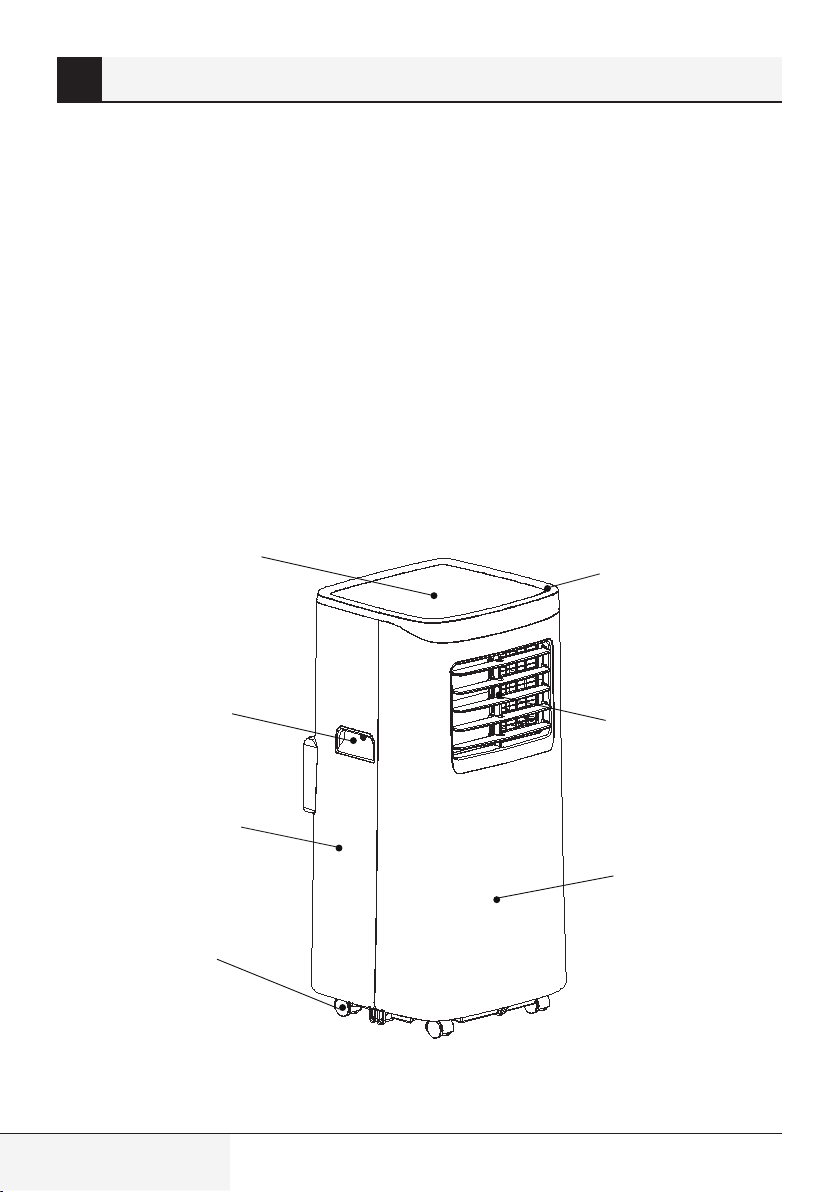
2 Caractérstques et composants
2.1 Caractérstques
Apparence totalement nouvelle, structure compacte, ligne épurée.
Offre les fonctions de climatisation, ventilation et fonction déshumidificateur.
L’interface extérieure est disposée en hauteur pour faciliter le montage et préserver un flux
homogène dans le tuyau de chauffe.
Superbe panneau d’affichage avec voyants lumineux et télécommande facile à utiliser.
Capacité de filtration de l’air.
Fonction de minuterie.
Fonction de protection qui redémarre automatiquement le compresseur après trois minutes, d’autres
fonctions de protection sont disponibles.
Température de fonctionnement maximale pour la fonction climatisation : 35/24 °C ; plage de
température en fonctionnement : 7-35 °C.
2.2 Composants
Couvercle supérieur
Panneau de
commande
Capot arrière
Roulette
60 / 160 FR
Sortie d’air/Volet
Poignée
Capot avant
Climatiseur mobile / Manuel d’utilisation
Page 61
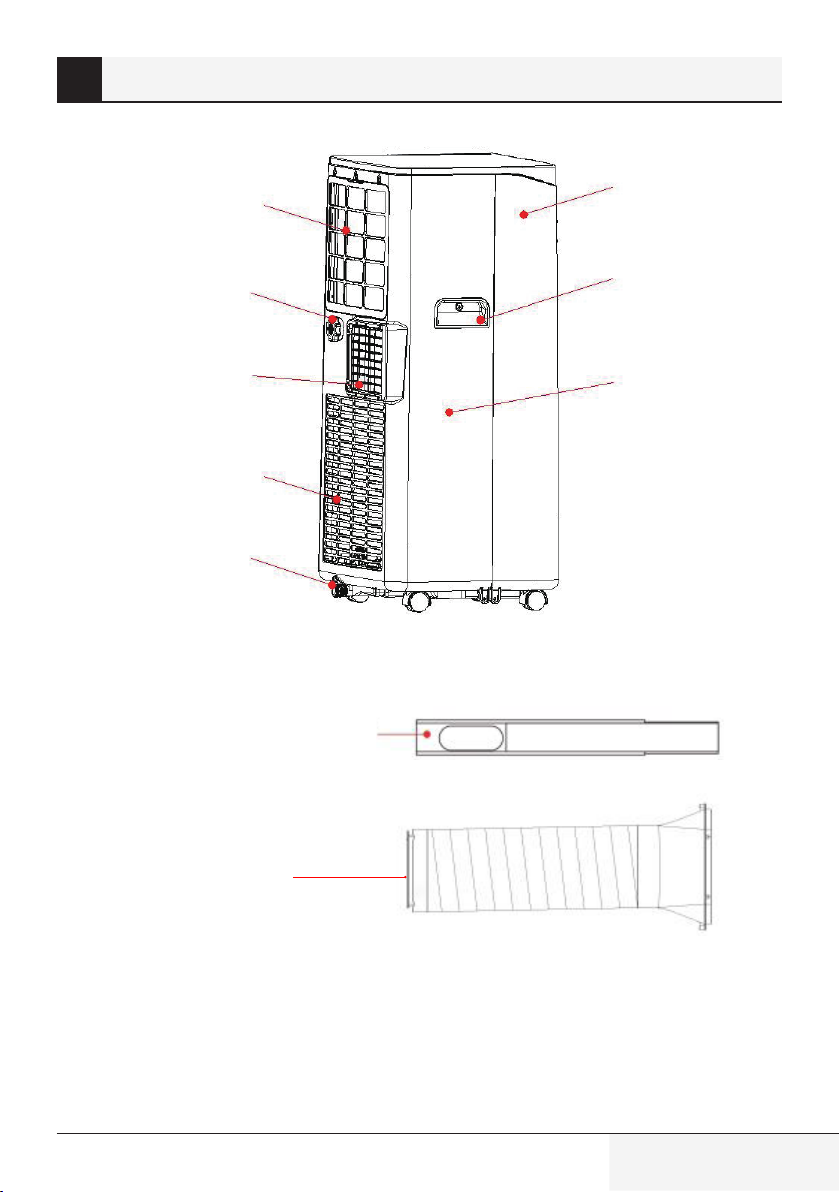
2 Caractérstques et composants
Filtre évaporateur
Orifice d’évacuation
en continu
Évacuation de l’air
Filtre condensateur
Orifice de
vidange
Kit pour fenêtre coulissante
Capot avant
Poignée
Capot arrière
Tuyau d’évacuation
Climatiseur mobile / Manuel d’utilisation
61 / 160 FR
Page 62
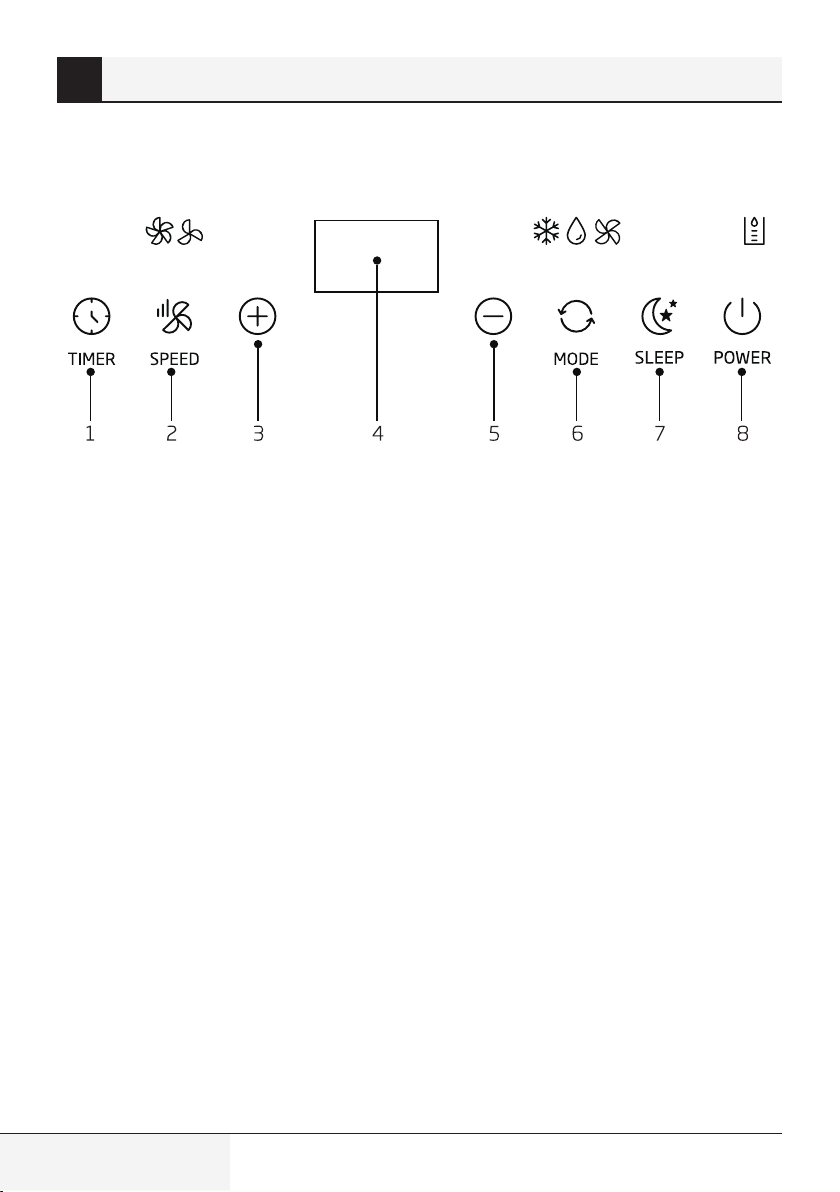
3 Réglage des paramètres
3.1 Instructons de fonctonnement du panneau de commande
Interface de fonctonnement
1. Touche Timer (Minuteur)
2. Touche de sélection de la vitesse de
ventilateur
3. Touche Up (Haut)
4. Fenêtre d’affichage
1. Lorsque l’appareil est allumé pour la première fois, vous entendrez la tonalité de démarrage, puis
l’appareil se mettra en veille.
2.
Touche Marche/Arrêt : appuyez sur cette touche pour allumer et éteindre l’appareil. Lorsque
l’appareil est allumé, appuyez sur cette touche pour éteindre l’appareil ; si l’appareil est éteint,
appuyez sur cette touche pour allumer l’appareil.
3.
Touche de Sélection du mode : Lorsque l’appareil est allumé, appuyez sur cette touche pour
commuter entre les modes Cooling (Refroidissement) Fan (Ventilation) Dehumidifiying
(Déshumidification).
4.
Touche Haut et touche Bas : appuyez sur ces deux touches pour modifier le réglage de la
température ou de la minuterie en procédant comme suit :
Pour régler la température, appuyez sur la touche Haut ou Bas afin de sélectionner la température
souhaitée (cette fonction n’est pas disponible dans les modes ventilation ou déshumidification).
Pour régler la minuterie, appuyez sur la touche Haut ou Bas afin de sélectionner la durée souhaitée.
5.
Touche de Sélection de la vitesse de ventilation :
En mode refroidissement et ventilation, appuyez sur cette touche pour sélectionner une vitesse de
ventilation élevée ou faible. Dans certaines conditions, il est possible que l’appareil ne fonctionne
pas de manière conforme à la vitesse de ventilation réglée.
En mode déshumidification, cette touche est invalide, le ventilateur fonctionnera
automatiquement à la vitesse de ventilation faible.
5. Touche Down (Bas)
6. Touche de sélection du mode
7. Touche Sommeil
8. Touche Power (Marche/Arrêt)
62 / 160 FR
Climatiseur mobile / Manuel d’utilisation
Page 63
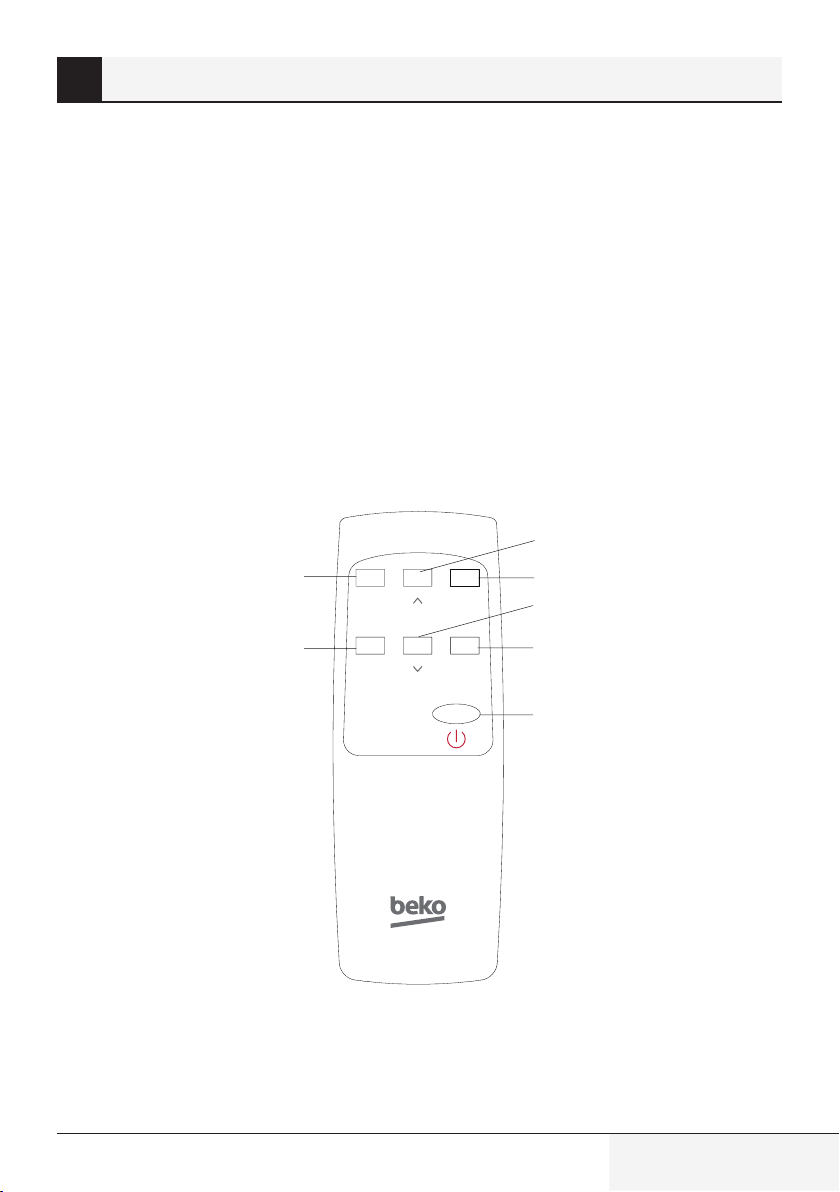
4
7
6
3 Réglage des paramètres
6.
Touche de Minuterie :
Lorsque l’appareil est allumé, appuyez sur cette touche pour désactiver la minuterie ; si l’appareil
est éteint, appuyez sur cette touche pour activer la minuterie.
Appuyez sur la touche, puis lorsque le symbole de minuterie clignote, appuyez sur les touches Haut
et Bas afin de sélectionner la durée désirée.
La durée peut être réglée entre 1 et 24 heures, la valeur de la minuterie est ajustée à la hausse ou à
la baisse par incréments d’une heure.
7.
Mode Sleep (sommeil) :
En mode refroidissement, appuyez sur la touche Haut et Ventilation pour activer le mode Sommeil,
l’appareil fonctionnera alors de manière silencieuse en mode Économie d’énergie.
3.2 Instructons de la télécommande
La télécommande se présente ainsi :
5
Climatiseur mobile / Manuel d’utilisation
ModeFan
Sleep Timer
3
2
1
63 / 160 FR
Page 64
3 Réglage des paramètres
Instructions de fonctionnement de la télécommande :
1. Touche Power (Marche/Arrêt) : Appuyez sur la touche pour allumer ou éteindre l’appareil.
2. Minuterie : appuyez sur la touche pour régler la minuterie.
3. Bas : appuyez sur la touche pour réduire la température et la durée souhaitée.
4. Mode : appuyez sur la touche pour commuter entre les modes refroidissement, ventilation et
déshumidification.
5. Haut : appuyez sur la touche pour augmenter la température et la durée souhaitée.
6. Ventilation : appuyez sur la touche pour sélectionner la vitesse de ventilation élevée ou faible.
7. Mode Sleep (Sommeil) : Appuyez sur la touche pour activer le mode Sommeil.
64 / 160 FR
Climatiseur mobile / Manuel d’utilisation
Page 65
4 Foncton de protecton
1. Foncton de protecton contre le gel
En mode refroidissement, déshumidification ou économie d’énergie, si la température du tuyau
d’évacuation est trop basse, l’appareil sera automatiquement dans un état de protection ; si la
température du tuyau d’évacuation augmente jusqu’à une certaine température, l’appareil pourra
automatiquement reprendre son fonctionnement normal.
2. Foncton de protecton ant-débordement
Lorsque le niveau d’eau du réservoir dépasse le seuil d’avertissement, l’appareil émet
automatiquement une alarme, et le voyant « Plein » clignote. Dans ce cas, vous devez déplacer le
tuyau de vidange reliant l’appareil ou la sortie d’eau à l’égout ou à toute autre évacuation afin de vider
l’eau (pour les détails, consultez les instructions de vidange à la fin de ce chapitre). Une fois l’eau vidée,
l’appareil revient automatiquement à son état d’origine.
3. Dégvrage automatque (les modèles avec pompe à chaleur dsposent de cette foncton).
L’appareil est doté d’une fonction de dégivrage automatique. Le dégivrage peut être actionné en
inversant la vanne à quatre voies.
4. Foncton de protecton du compresseur
Pour augmenter la durée de vie utile du compresseur, celui-ci est doté d’une fonction de protection au
démarrage avec un délai de 3 minutes après l’arrêt du compresseur.
Climatiseur mobile / Manuel d’utilisation
65 / 160 FR
Page 66
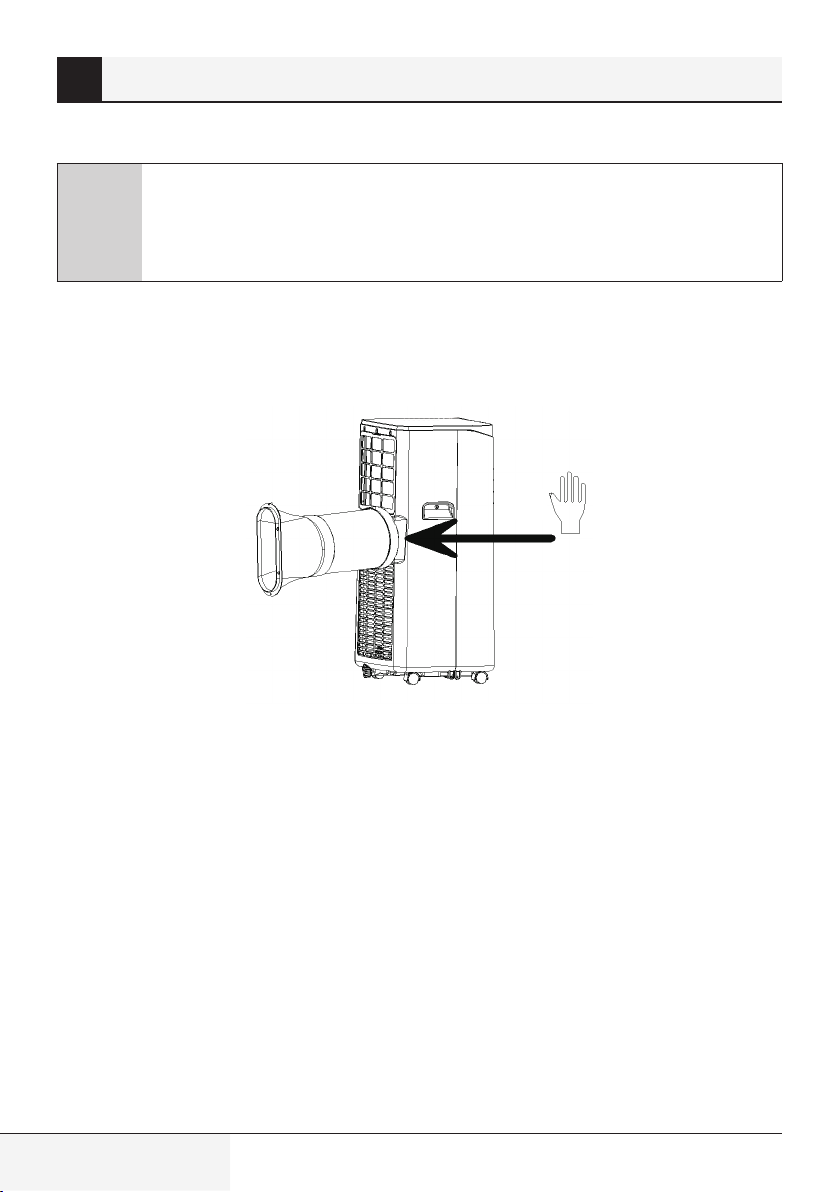
5 Installaton et mse en place
5.1 Installaton
Avertssement : avant d’utiliser le climatiseur mobile,
A
laissez-le reposer en position verticale pendant au moins
deux heures.
Le climatiseur est facile à déplacer dans une pièce. Pendant le déplacement de l’appareil, assurez-vous
qu’il reste parfaitement à la verticale, il doit être placé sur une surface plane. Ne pas installer ou utiliser
le climatiseur dans une salle de bains ou dans un autre endroit humide.
1. Installez le tuyau d’évacuation (comme illustré dans la Fig. 1)
Pousser
Fig. 1
1) Retirez l’ensemble du connecteur extérieur et l’ensemble du tuyau d’évacuation, ainsi que les
sachets en plastique ;
2) Insérez l’ensemble du tuyau d’évacuation (l’extrémité du joint d’évacuation) dans la fente de l’évent
sur la paroi arrière (poussez vers la gauche) et terminez le montage (comme illustré dans la Fig. 1).
2. Installation des différents éléments de l’ensemble de plaque pour fenêtre coulissante
1) Entrouvrez la fenêtre et installez l’ensemble de plaque pour fenêtre sur la fenêtre coulissante
(comme illustré dans les Fig. 2 et Fig. 3). Les éléments peuvent être positionnés à l’horizontale ou à
la verticale.
2) Déployez les différents éléments de l’ensemble de plaque sur la fenêtre coulissante, ajustez le
niveau d’ouverture du dispositif de sorte que les deux extrémités de l’ensemble soient au contact de
l’encadrement de la fenêtre, et fixez les différents éléments de l’ensemble.
66 / 160 FR
Climatiseur mobile / Manuel d’utilisation
Page 67
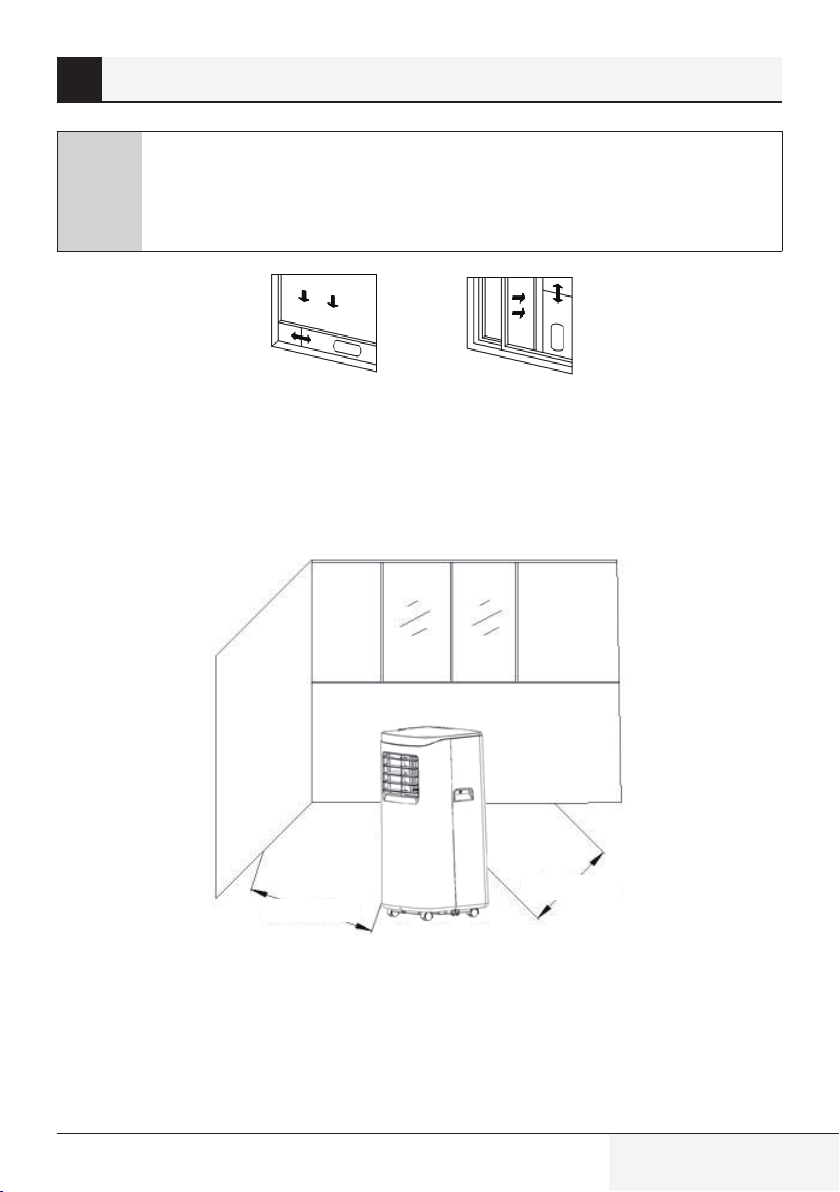
5 Installaton et mse en place
Remarque :
1. L’extrémité plate des raccords du tuyau d’évacuation doit être emboîtée.
C
3. Installez l’appareil
1) Déplacez l’appareil, muni de son tuyau d’évacuation et des raccords, pour l’installer devant la
fenêtre, en respectant une distance d’au moins 50 cm entre l’appareil et les murs ou tout autre objet
(comme illustré dans la Fig. 4).
2. Le tuyau ne doit pas être tordu ou présenter un rayon de courbure excessif
(supérieur à 45°). Veillez à ne jamais obstruer le tuyau d’évacuation.
Fig. 2 Fig. 3
Min : 50 cm
Min : 50 cm
Fig. 4
2) Déployez le tuyau d’évacuation et emboîtez l’extrémité plate des raccords du tuyau d’évacuation
dans l’orifice de l’ensemble de plaque sur la fenêtre coulissante (comme illustré dans la Fig. 5 et la
Fig. 6).
Climatiseur mobile / Manuel d’utilisation
67 / 160 FR
Page 68
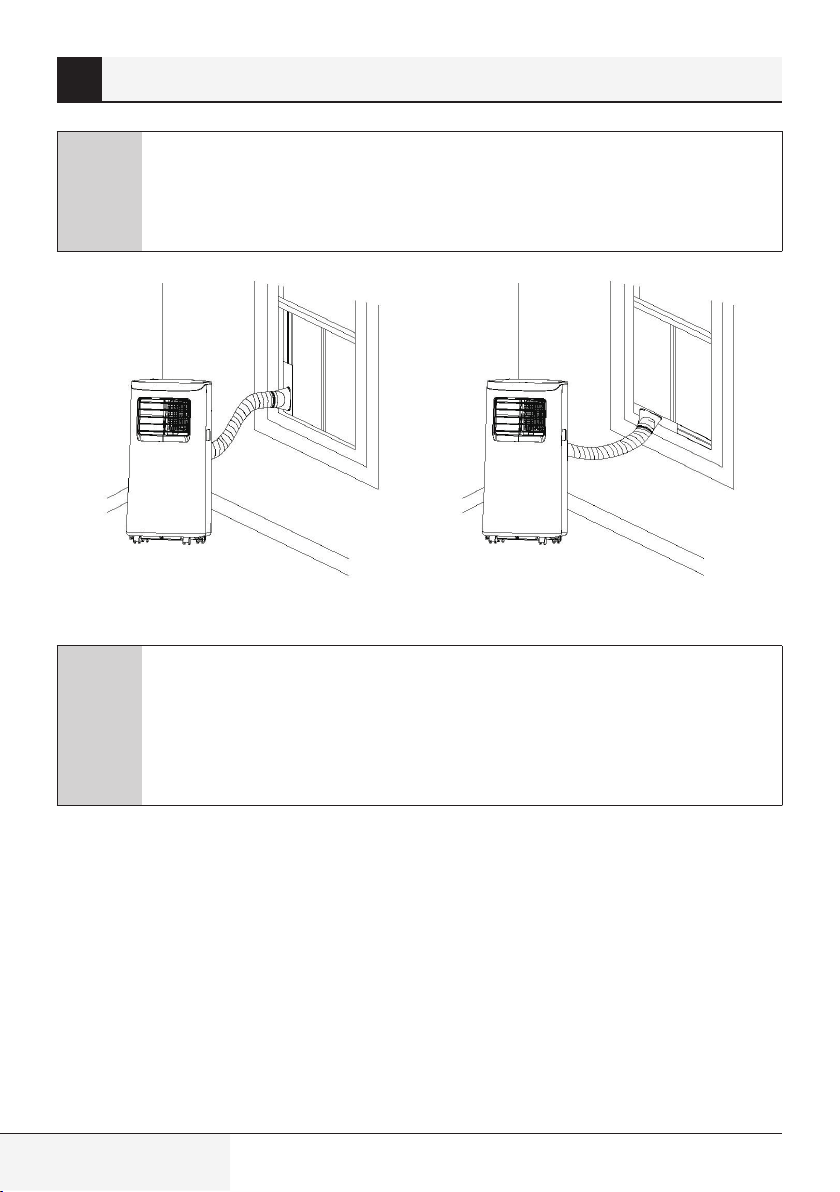
5 Installaton et mse en place
Remarque :
1. L’extrémité plate des raccords du tuyau d’évacuation doit être emboîtée.
C
C
2. Le tuyau ne doit pas être tordu ou présenter un rayon de courbure excessif
(supérieur à 45°). Veillez à ne jamais obstruer le tuyau d’évacuation.
Fig. 5 Fig. 6
Remarques mportantes :
La longueur du tuyau d’évacuation doit être comprise entre 28 et 150 cm, en
fonction des spécifications du climatiseur. N’utilisez pas de tuyaux de rallonge et ne
remplacez pas le tuyau d’origine par d’autres tuyaux, car cela pourrait entraîner un
dysfonctionnement de l’appareil. Le tuyau d’évacuation ne doit pas être obstrué, car
cela pourrait provoquer une surchauffe.
68 / 160 FR
Climatiseur mobile / Manuel d’utilisation
Page 69
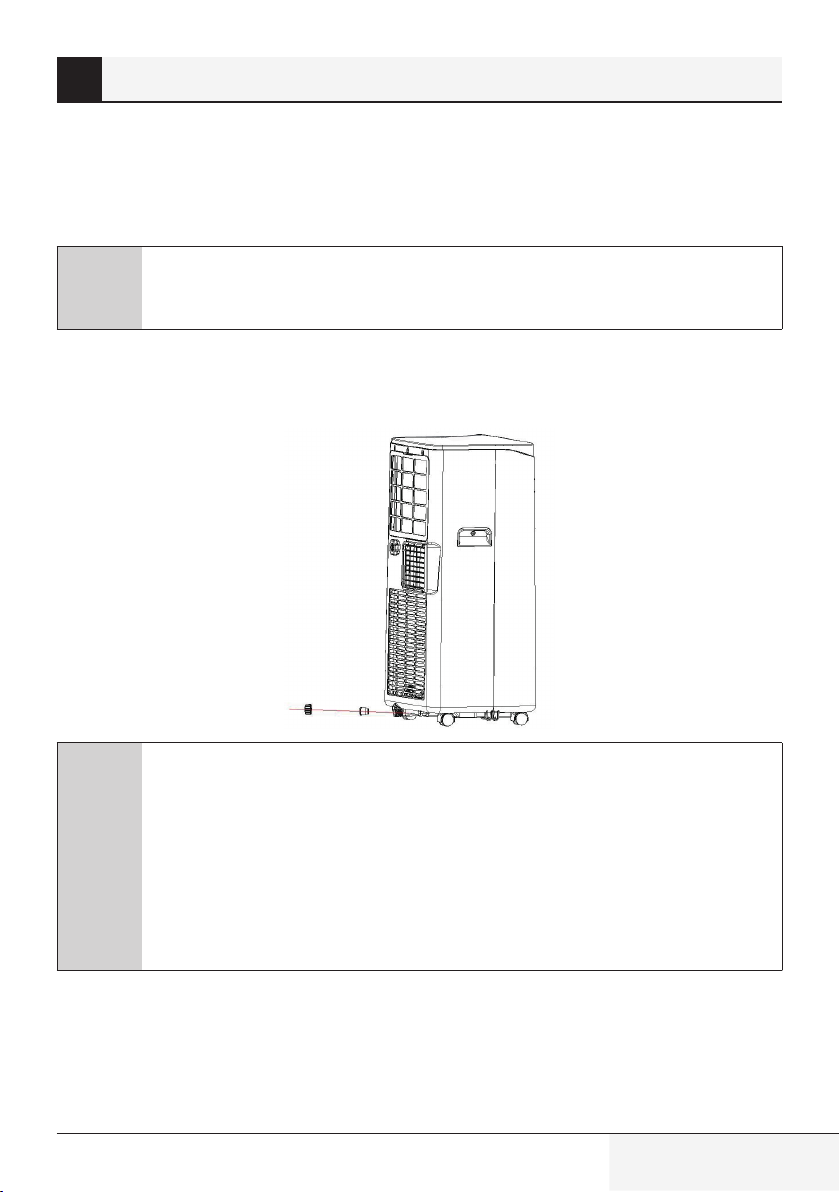
6 Instructons de vdange
Cet appareil offre deux méthodes d’évacuation : évacuation manuelle et évacuation continue.
1. Vidange manuelle :
1) Lorsque l’appareil s’arrête car le réservoir contient trop d’eau, éteignez l’appareil et débranchez la
prise d’alimentation.
Remarque : Déplacez l’appareil avec précaution, de manière à ne pas renverser l’eau
C
2) Placez un récipient d’eau sous la sortie d’eau latérale, derrière l’appareil.
3) Dévissez le cache de vidange et retirez le bouchon d’eau, l’eau s’écoule automatiquement dans le
récipient d’eau.
contenue dans le réservoir au fond de l’appareil.
Remarque :
1. Conservez en lieu sûr le cache de l’orifice de vidange et le bouchon d’eau.
2. Pour faciliter la vidange, il est possible de légèrement incliner l’appareil en arrière.
3. Si le récipient d’eau ne suffit pas à recueillir toute l’eau, bouchez la sortie d’eau à
C
Climatiseur mobile / Manuel d’utilisation
l’aide du bouchon d’eau dès que possible avant que l’eau déborde du récipient et se
déverse sur le sol ou sur la moquette.
4. Lorsque l’eau a été évacuée, réinstallez le bouchon d’eau et serrez le cache sur
l’orifice de vidange.
69 / 160 FR
Page 70
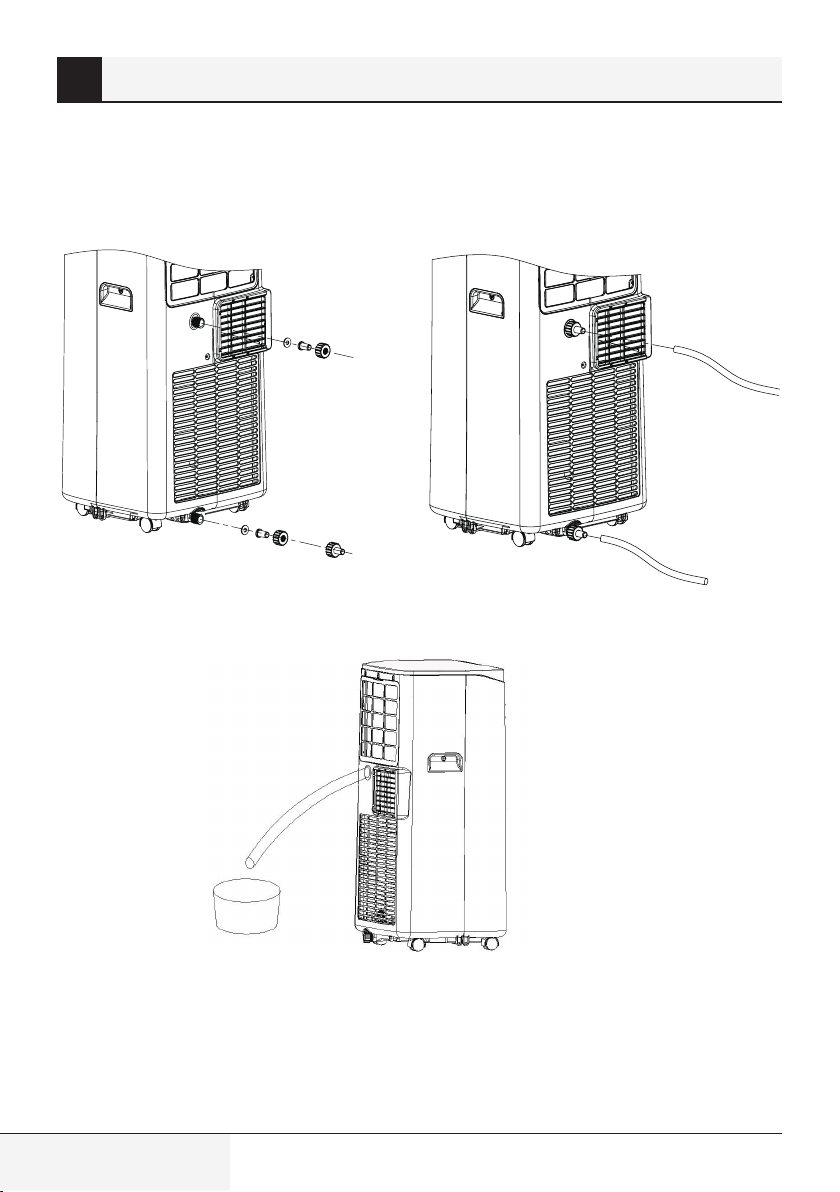
6 Instructons de vdange
2. Vidange continue, comme illustré dans la figure :
1) Dévissez le cache de vidange et retirez le bouchon d’eau.
2) Installez le tuyau de vidange dans la sortie d’eau.
3) Installez l’autre extrémité du tuyau de vidange au-dessus du seau.
70 / 160 FR
Fig. 1
Fig. 2
Fig. 3
Climatiseur mobile / Manuel d’utilisation
Page 71
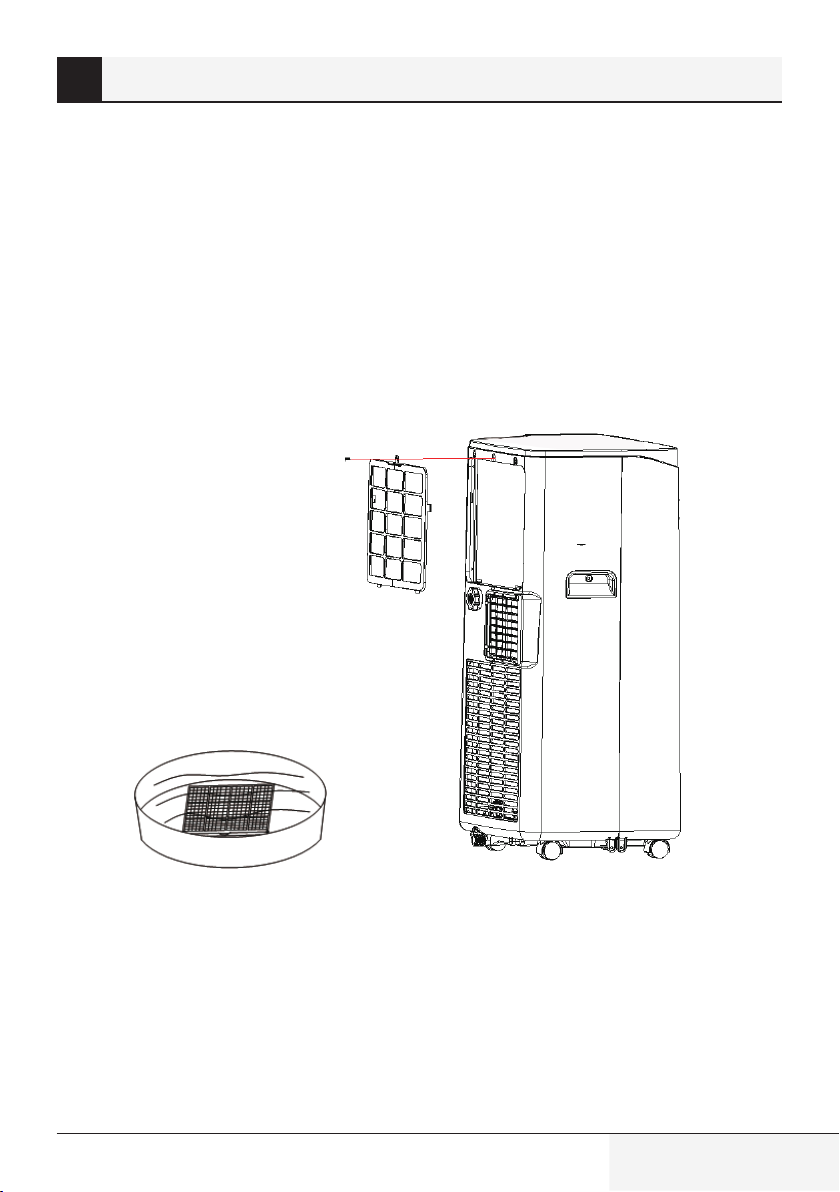
7 Entreten
Nettoyage : avant toute opératon de nettoyage et d’entreten, étegnez l’apparel et
débranchez la prse.
7.1 Nettoyage de la surface
Nettoyez la surface de l’appareil à l’aide d’un chiffon doux et humide. N’utilisez pas de produits
chimiques, comme du benzène, de l’alcool, de l’essence, etc. ; cela risquerait d’endommager la surface
extérieure de l’appareil, voire l’ensemble du climatiseur.
7.2 Nettoyage du fltre
Si le filtre est obstrué par de la poussière, et que l’efficacité du climatiseur s’en trouve réduite, pensez
à nettoyer le filtre toutes les deux semaines.
Dévisser la vis
7.3 Nettoyage du châsss du fltre supéreur
1. Dévissez une vis fixant le filtre évaporateur sur la paroi arrière à l’aide d’un tournevis, et retirez le
filtre évaporateur.
2. Immergez le filtre évaporateur dans de l’eau chaude avec un détergent neutre
(environ 40 °C / 104 °F) puis rincez-le et laissez-le sécher à l’ombre.
Climatiseur mobile / Manuel d’utilisation
71 / 160 FR
Page 72
8 Rangement de l’apparel
1. Dévissez le cache de vidange, retirez le bouchon d’eau et vidangez l’eau du réservoir dans un
récipient ou inclinez directement l’appareil pour évacuer l’eau dans une autre évacuation.
2. Allumez l’appareil, réglez-le sur le mode ventilation à vitesse faible, et laissez l’appareil fonctionner
dans cet état jusqu’à ce que le tuyau de vidange soit sec, de manière à garder sec l’intérieur de
l’appareil, évitant ainsi la formation de moisissures.
3. Éteignez l’appareil, retirez le bouchon d’eau et enroulez le cordon d’alimentation autour de la patte
prévue à cet effet ; mettez en place le bouchon d’eau et le cache de vidange.
4. Retirez le tuyau d’évacuation et rangez-le dans un endroit adapté.
5. Recouvrez le climatiseur d’un sac en plastique. Placez le climatiseur dans un endroit sec, hors de
portée des enfants et prenez des mesures pour le protéger contre la poussière.
6. Retirez les piles de la télécommande et gardez-les en lieu sûr.
Remarque : Assurez-vous que l’appareil est placé dans un endroit sec et rangez tous
C
ses composants en lieu sûr.
72 / 160 FR
Climatiseur mobile / Manuel d’utilisation
Page 73
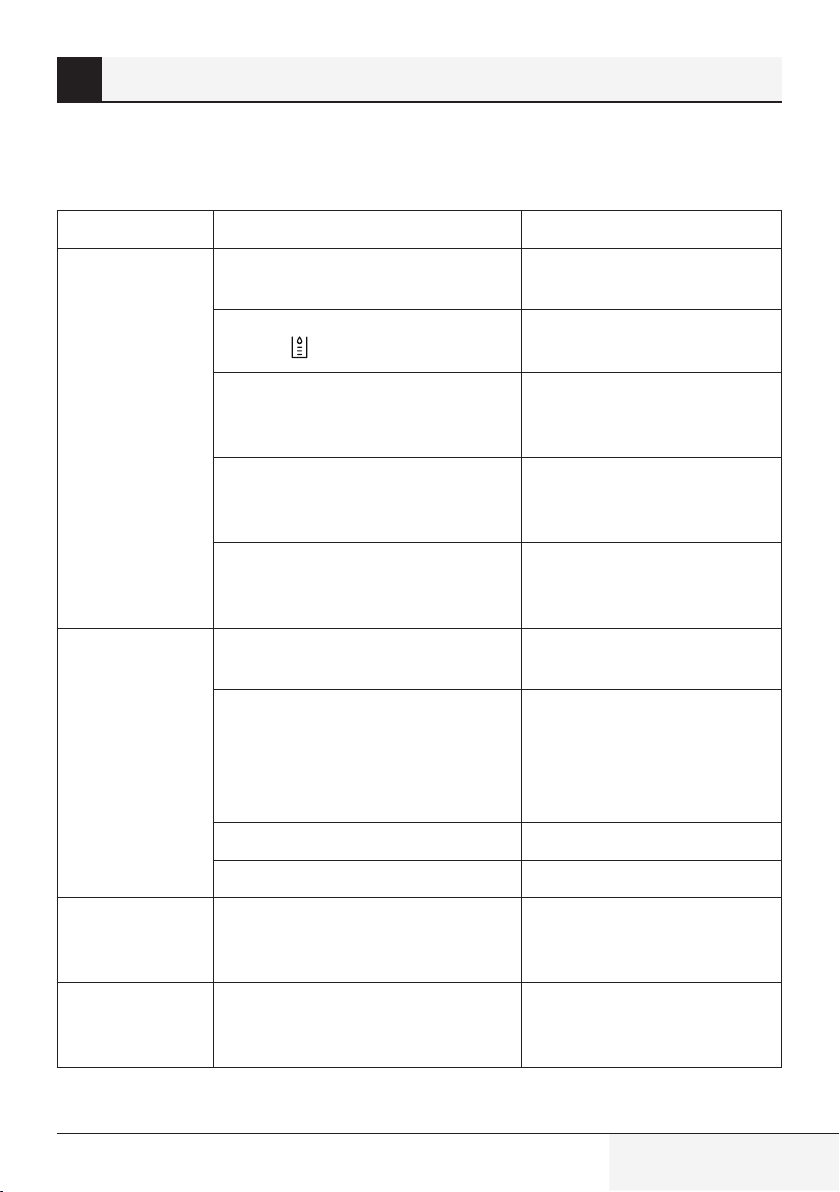
9 Dépannage
Ne tentez pas de réparer ou de démonter le climatiseur vous-même. Une réparation effectuée par
une personne non qualifiée rendra caduque la garantie, et pourrait occasionner des blessures aux
utilisateurs ou endommager des biens matériels.
Problèmes Explcatons Solutons
Le climatiseur ne
fonctionne pas.
L’effet de
refroidissement
est insuffisant
Il n’y a pas d’électricité.
L’indicateur de débordement
affiche « ».
La température ambiante est trop
basse ou trop élevée
En mode refroidissement, la température
ambiante est inférieure à la température
de consigne ;
En mode déshumidification, la
température ambiante est faible.
L’appareil est exposé à la lumière
directe du soleil.
Des portes ou des fenêtres sont
ouvertes, il y a de nombreuses
personnes dans la pièce ; ou en mode
refroidissement, d’autres sources de
chaleur sont présentes.
Le filtre est sale. Nettoyez ou remplacez le filtre.
Branchez l’appareil sur une prise
électrique et allumez-le.
Évacuez l’eau qui se trouve à
l’intérieur.
Il est conseillé d’utiliser l’appareil
à une température comprise
entre 7 et 35 °C (44-95 °F).
Modifiez la température de
consigne.
L’appareil se trouve dans une pièce
dont la température ambiante est
supérieure à 17 °C (62 °F).
Fermez les rideaux.
Fermez les portes et les
fenêtres, et ajoutez un nouveau
climatiseur.
L’entrée ou la sortie d’air est obstruée. Retirez les obstructions.
L’appareil est très
bruyant
Le compresseur
ne fonctionne pas
Le climatiseur ne se trouve pas sur une
surface plate.
Activation du dispositif de protection
anti-surchauffe.
Climatiseur mobile / Manuel d’utilisation
Placez le climatiseur sur une
surface plate et rigide (pour
réduire le bruit).
Patientez 3 minutes jusqu’à ce
que la température ait diminué,
puis redémarrez l’appareil.
73 / 160 FR
Page 74
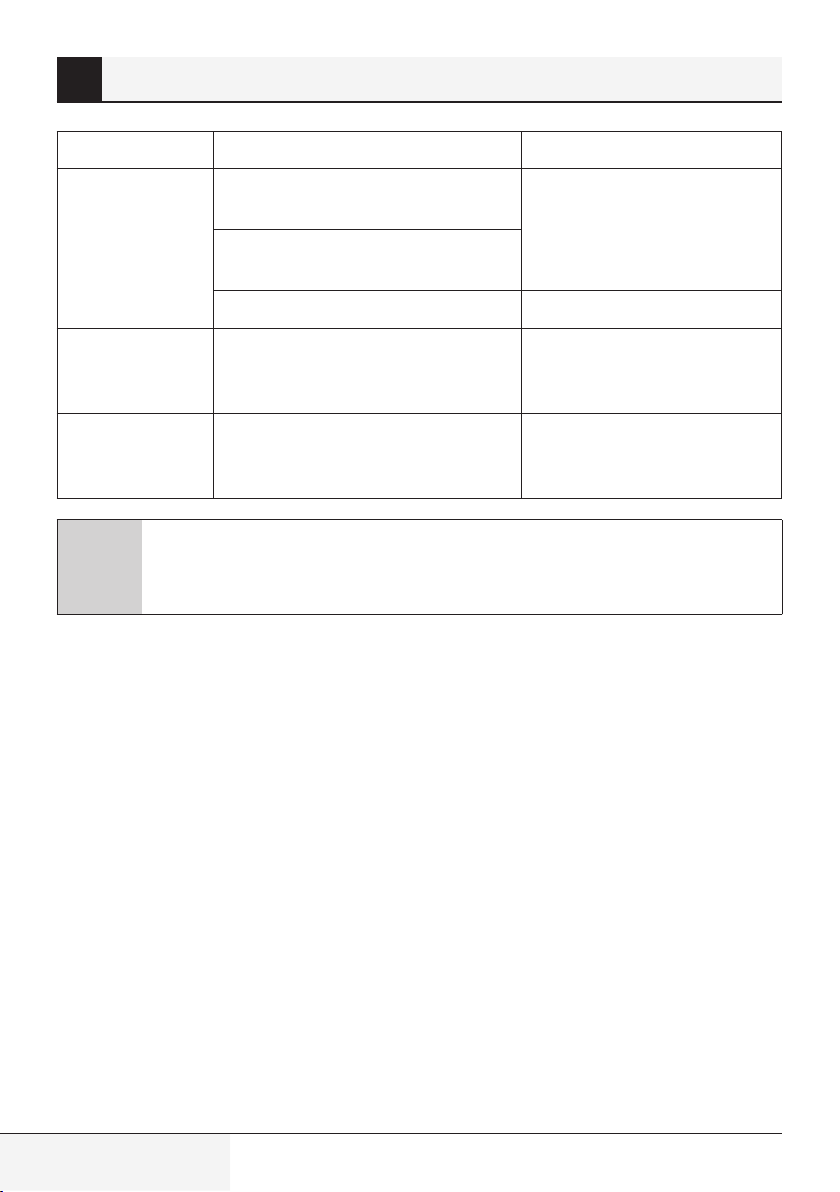
9 Dépannage
Problèmes Explcatons Solutons
La télécommande
ne fonctionne pas.
Affiche « E1 ».
Affiche « E2 ».
Remarque : Si vous rencontrez un problème qui ne figure pas dans le tableau, ou si les
C
solutions conseillées ne fonctionnent pas, veuillez contacter un réparateur professionnel.
La télécommande est trop éloignée
de l’appareil.
La télécommande n’est pas orientée
vers le récepteur.
Les piles sont déchargées. Remplacez les piles.
Le capteur de température ambiante
présente un dysfonctionnement.
Le capteur de température du tuyau
présente un dysfonctionnement.
Approchez la télécommande
du climatiseur, et assurezvous que la télécommande fait
directement face au récepteur.
Vérifiez le capteur de
température ambiante et le
circuit connexe.
Vérifiez le capteur de
température du tuyau et le
circuit connexe.
74 / 160 FR
Climatiseur mobile / Manuel d’utilisation
Page 75
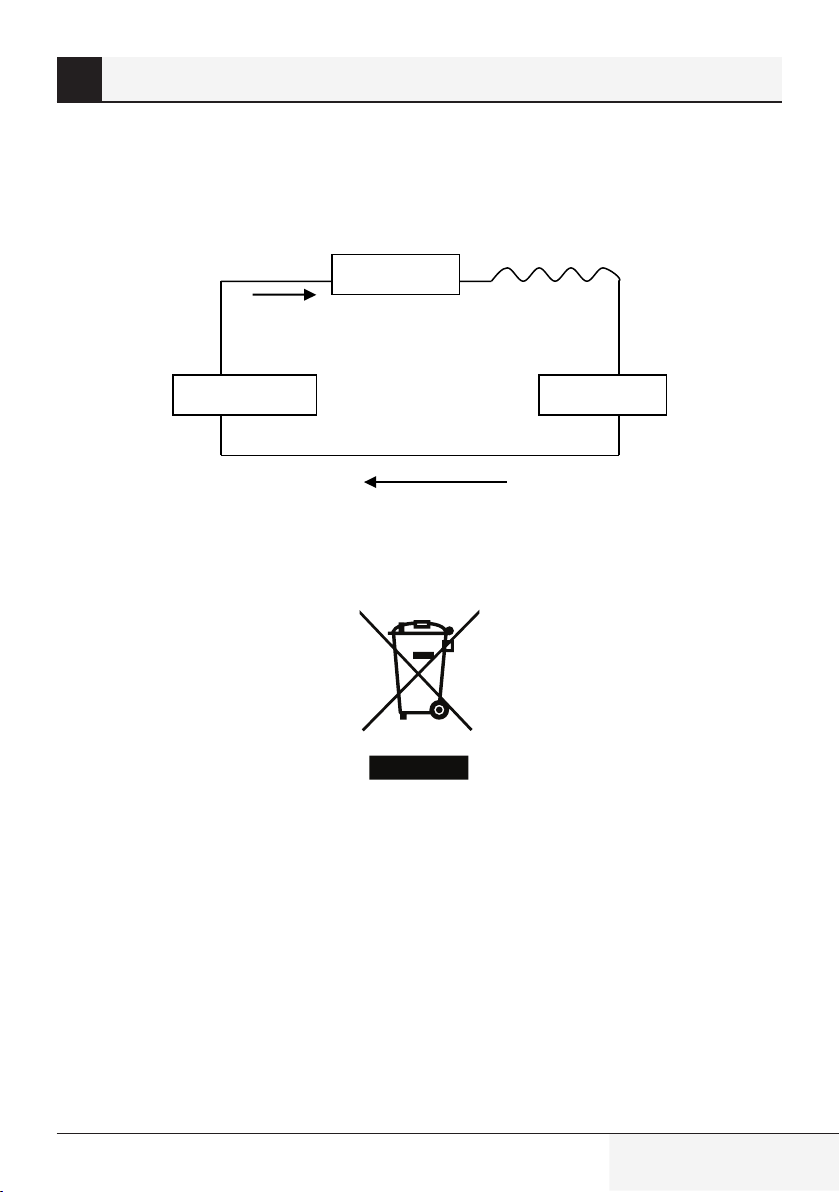
10 Annexe
Dagramme schématque du clmatseur
(Les caractéristiques techniques spécifiques de l’appareil sont indiquées sur la plaque signalétique
apposée sur le produit)
Capillaire
Condensateur
Compresseur Évaporateur
Traitement : Ne jetez pas l’appareil dans les ordures ménagères non triées. Ce type de déchet doit être
séparé pour un autre usage particulier.
Ce produit est conforme à la directive DEEE (2012/19/UE) de l’Union européenne). Ce produit porte un
symbole de classification pour la mise au rebut des équipements électriques et électroniques (DEEE).
Ce symbole indique que ce produit ne doit pas être jeté avec les déchets ménagers à la fin de sa vie
utile. Les appareils usagés doivent être retournés au point de collecte officiel destiné au recyclage
des appareils électriques et électroniques. Pour trouver ces systèmes de collecte, veuillez contacter
les autorités locales ou le détaillant auprès duquel vous avez acheté le produit. Chaque ménage joue
un rôle important dans la récupération et le recyclage des appareils ménagers usagés. L’élimination
appropriée des appareils usagés aide à prévenir les conséquences négatives potentielles pour
l’environnement et la santé humaine.
Climatiseur mobile / Manuel d’utilisation
75 / 160 FR
Page 76
11 Instructons d’nstallaton
11.1 Consgnes de la F-Gaz
Ce produit contient des gaz à effet de serre fluorés.
Les gaz à effet de serre fluorés sont contenus dans un dispositif hermétiquement scellé.
Les opérations d’installation, d’entretien, de maintenance, de réparation, de vérifications de fuites
éventuelles, de mise hors service des équipements obsolètes ainsi que de recyclage des produits
doivent être effectuées par une personne physique certifiée.
Si le système est doté d’un dispositif de détection des fuites, des vérifications de fuites éventuelles doivent
être effectuées au moins une fois par an, afin de s’assurer que le système fonctionne correctement.
Si le produit doit faire l’objet de vérifications de fuites éventuelles, il est recommandé de mentionner
le cycle d’inspection, et d’établir et sauvegarder les comptes rendus des vérifications effectuées.
Remarque : Si l’équivalent en CO2 des gaz à effet de serre fluorés contenus
dans les équipements hermétiquement scellés, les climatiseurs mobiles, les
C
climatiseurs fixes ainsi que les déshumidificateurs, est inférieur à 10 tonnes, nul
besoin d’effectuer des vérifications de fuites éventuelles.
76 / 160 FR
Climatiseur mobile / Manuel d’utilisation
Page 77
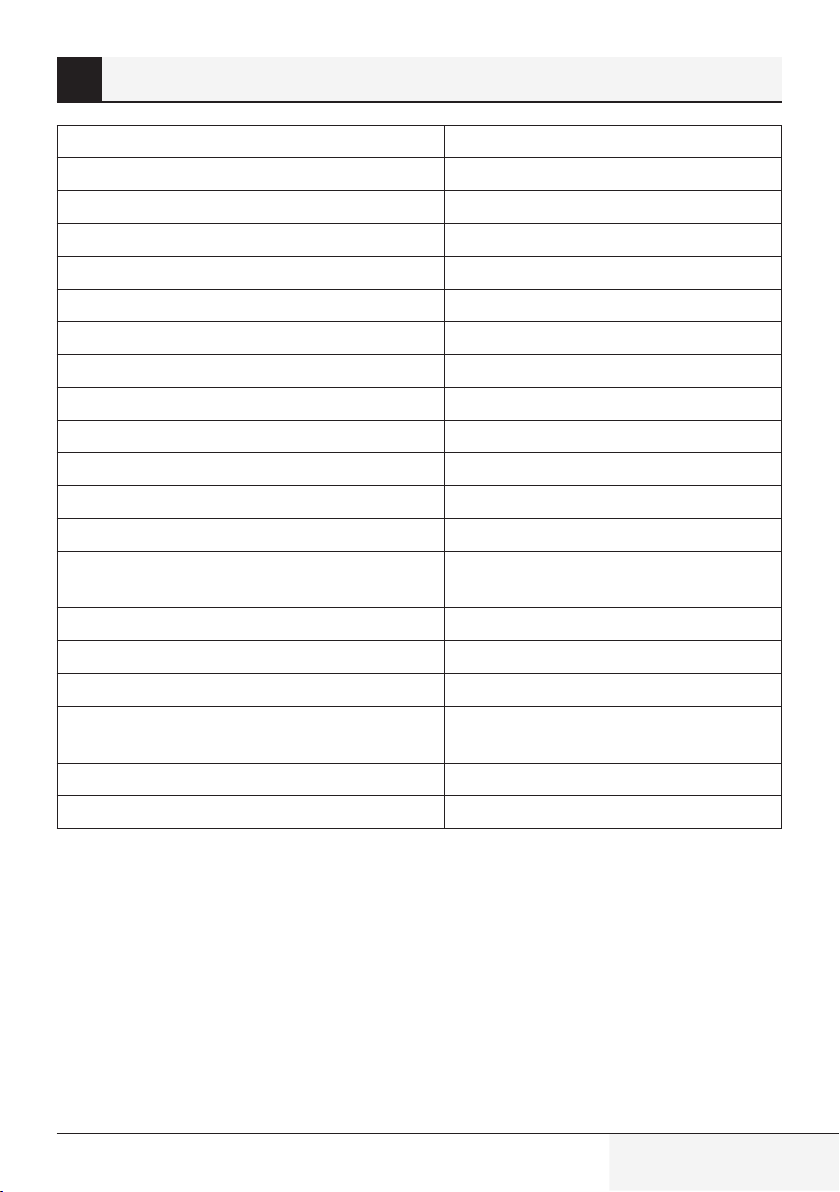
12 Spécfcatons
Nom de modèle Beko BS207C
Marque Beko
Gaz réfrigérant R290
Quantité totale de gaz réfrigérant (g) 130
Classe climatique T1
Type de chauffage Type de commande Télécommande
Capacité de refroidissement (Btu/h) 6500
Capacité de refroidissement (W) 1905
Efficacité énergétique de refroidissement (W/W) 2,6
Consommation d’énergie-refroidissement A
Alimentation en mode refroidissement (W) 732
Tension/Fréquence (V/Hz) 220-240V~50Hz
Courant de fonctionnement en mode
refroidissement (A)
Niveau sonore (dBA) (Puissance sonore) 65/-/Volume de débit d’air (m3/h) 300
Élimination d’humidité (lt/h) 0,8
Plage de températures de fonctionnement en
refroidissement (°C)
Taille de l’unité (LxHxP) mm 305×678×328
Poids net (kg) 19
3,2
16-35
1. Les spécifications sont des valeurs standard calculées sur la base des conditions de fonctionnement
nominales. Elles varient selon les différentes conditions de fonctionnement.
2. Notre entreprise développe rapidement de nouvelles améliorations techniques. Les modifications
des données techniques ne feront pas l’objet d’un préavis. Veuillez vous reporter à la plaque
signalétique apposée sur le climatiseur.
3. La valeur nominale est testée sous 35/24 (entrée) et 35/24 (sortie).
Climatiseur mobile / Manuel d’utilisation
77 / 160 FR
Page 78

Fabriqué par Arcelik A.S. Karaağaç Cd. N° 2-6 Sütlüce, 34445 Beyoğlu, Istanbul, Turquie
Page 79
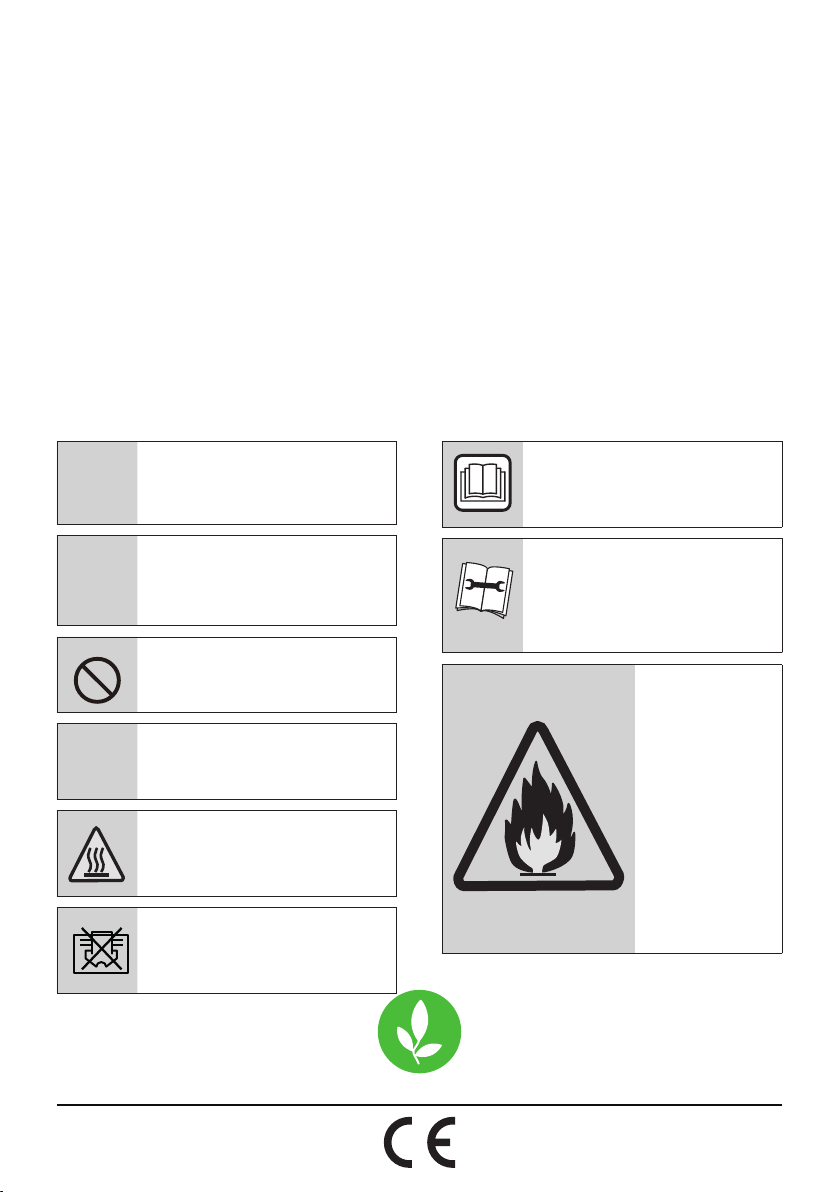
Lees deze gebruikershandleiding voorafgaand aan
het gebruik!
Geachte klant,
Hartelijk bedankt voor het aanschaffen van een Beko-product. Dit kwaliteitsproduct
is gefabriceerd volgens de nieuwste technologische standaarden en wij hopen dat
u er optimaal van zult genieten. Lees daarom deze gebruikershandleiding en alle
andere bijgesloten documentatie volledig door voordat u het product in gebruik
neemt en bewaar de instructies als eventueel naslagwerk. Mocht u het product
aan een ander geven, overhandig dan ook de gebruikershandleiding. Volg alle
waarschuwingen en informatie in de gebruikershandleiding.
Betekenis van de symbolen
De volgende symbolen worden in de verschillende secties van deze
gebruikershandleiding gebruikt:
C
A
B
Belangrijke informatie of nuttige
tips m.b.t. het gebruik.
Waarschuwing op gevaarlijke
situaties m.b.t. fataal letsel en
eigendommen.
Waarschuwingen op acties die
nooit mogen worden uitgevoerd.
Waarschuwing voor elektrische
schokken.
Waarschuwing voor hete
oppervlaktes.
Dek het apparaat niet af.
Dit symbool geeft aan dat de
gebruikershandleiding zorgvuldig
moet worden gelezen.
Dit symbool geeft aan dat
onderhoudspersoneel deze
apparatuur met raadpleging van
de installatiehandleiding moet
behandelen.
Dit symbool
geeft aan dat
dit apparaat
een brandbaar
koelmiddel
gebruikt. Als
het koelmiddel
weglekt en aan
een externe
ontstekingsbron
wordt
blootgesteld, dan
bestaat er een
risico op brand.
Dit product is gefabriceerd in milieuvriendelijke, moderne faciliteiten
In overeenstemming met WEEE richtlijnen. Bevat geen PCB.
Page 80
INHOUD
1 Velghedsnstructes 81
2 Egenschappen en componenten 100
2.1 Eigenschappen. . . . . . . . . . . . . . . . . . . . . . . . . . . . . . . . . . . . . . . . . . . . . . . . . . . . . . . . . . . . . . . . . .100
2.2 Onderdelen . . . . . . . . . . . . . . . . . . . . . . . . . . . . . . . . . . . . . . . . . . . . . . . . . . . . . . . . . . . . . . . . . . . . .100
3 Instellng bedenng 102
3.1 Gebruiksaanwijzing voor het bedieningspaneel . . . . . . . . . . . . . . . . . . . . . . . . . . . . . . . .102
3.2 Gebruiksaanwijzing voor de afstandsbediening . . . . . . . . . . . . . . . . . . . . . . . . . . . . . . . .104
4 Bevelgngsfuncte 105
5 Installate en afstellng 106
5.1 Installatie . . . . . . . . . . . . . . . . . . . . . . . . . . . . . . . . . . . . . . . . . . . . . . . . . . . . . . . . . . . . . . . . . . . . . . .106
6 Instructes voor afvoer 109
7 Onderhoud 111
7.1 Reinig het oppervlak . . . . . . . . . . . . . . . . . . . . . . . . . . . . . . . . . . . . . . . . . . . . . . . . . . . . . . . . . . . . 111
7.2 Reinig het lterscherm. . . . . . . . . . . . . . . . . . . . . . . . . . . . . . . . . . . . . . . . . . . . . . . . . . . . . . . . . . 111
7.3 Reinig het bovenste frame van het lterscherm . . . . . . . . . . . . . . . . . . . . . . . . . . . . . . . 111
8 Opslag van het apparaat 112
9 Problemen oplossen 113
10 Bjvoegsel 115
11 Installate-nstructes 116
11.1 F-Gas instructie . . . . . . . . . . . . . . . . . . . . . . . . . . . . . . . . . . . . . . . . . . . . . . . . . . . . . . . . . . . . . . . . .116
12 Specfcates 117
Het koelmiddel dat wordt gebruikt in mobiele airconditioners is het milieuvriendelijke koolwaterstof
R290. Dit koelmiddel is reukloos en R290 is in vergelijking met alternatieve koelmiddelen een ozonvrij
koelmiddel en het effect is zeer laag.
Lees de instructies vóór gebruik en reparaties.
De in deze gebruiksaanwijzing opgenomen tekeningen zijn mogelijk niet hetzelfde als de
daadwerkelijke voorwerpen. Bekijk de daadwerkelijke voorwerpen.
80 / 160 NL
Mobiele airconditioner / Gebruikershandleiding
Page 81
1 Velghedsnstructes
Waarschuwngen:
•
Gebruik het apparaat niet om producten sneller te ontdooien of
schoon te maken, gebruik het alleen voor de door de fabrikant
aanbevolen doeleinden.
•
Het apparaat moet worden opgeslagen in een ruimte zonder
voortdurend werkende ontstekingsbronnen (bijvoorbeeld: open
vuur, een werkend gasapparaat of een werkende elektrische
verwarmingsapparaat).
•
Niet doorboren of verbranden.
•
Wees u ervan bewust dat koelmiddelen mogelijk geen geur
hebben.
•
Het apparaat moet worden geïnstalleerd, gebruikt en opgeslagen
in een ruimte met een vloeroppervlak van meer dan 7 m
•
Het apparaat moet vrij van belemmeringen worden gehouden
2
om de juiste werking te verzekeren en veiligheidsrisico's te
verminderen.
•
Onderhoud mag uitsluitend worden uitgevoerd zoals door de
fabrikant is aanbevolen.
•
Het apparaat moeten worden opgeslagen in een goed
geventileerde ruimte, waarbij de maat van de ruimte
overeenkomst met de omvang van de ruimte die voor werking is
gespecificeerd.
Mobiele airconditioner / Gebruikershandleiding
81 / 160 NL
Page 82
1 Velghedsnstructes
•
Enige persoon die is betrokken bij het werken met of het
inbreken in een koelcircuit, moet in het bezit zijn van een
actueel geldig certificaat van een door de bedrijfstak erkende
beoordelingsautoriteit, die hun vakbekwaamheid autoriseert voor
het veilig omgaan met koelmiddelen in overeenstemming met een
door de bedrijfstak erkende beoordelingsspecificatie.
•
Onderhoud mag alleen worden uitgevoerd zoals door de fabrikant
van de apparatuur wordt aanbevolen. Onderhoud en reparaties die
assistentie van andere vakbekwaam personeel vereisen, moeten
worden uitgevoerd onder toezicht van een persoon die deskundig
is in het gebruik van brandbare koelmiddelen.
•
Alle procedures die de veiligheidsvoorzieningen aantasten, mogen
alleen door bevoegde personen worden uitgevoerd.
82 / 160 NL
Mobiele airconditioner / Gebruikershandleiding
Page 83

1 Velghedsnstructes
Opmerkng:
•
De airconditioner is alleen geschikt voor gebruik
binnenshuis en is niet geschikt voor andere
toepassingen.
•
Volg lokale regels voor aansluitingen op het lichtnet
bij het installeren van de airconditioner en verzeker
dat deze goed is geaard. Als u vragen hebt over de
elektrische installatie, volg dan de instructies van de
fabrikant en vraag indien nodig een professionele
elektricien om deze te installeren.
•
Plaats het apparaat op een vlakke en droge plaats en
houd een afstand aan van meer dan 50 cm tussen het
apparaat en de objecten of wanden eromheen.
•
Verzeker na de installatie van de airconditioner dat
C
de netstekker intact is en stevig in het stopcontact
is gestoken en leg het netsnoer zodanig neer dat er
niemand over kan struikelen of de stekker eruit kan
trekken.
•
Zet geen voorwerpen in de luchtinlaat en -afvoer van
de airconditioner. Houd de luchtinlaat en -afvoer vrij van
belemmeringen.
•
Als er afvoerbuizen worden geïnstalleerd, verzeker dan
dat de afvoerbuizen goed zijn aangesloten en niet zijn
vervormd of gebogen.
•
Pas de bovenste en onderste luchtgeleidingsstrips
van de luchtuitlaat voorzichtig aan met de hand om
te voorkomen dat de luchtgeleidingsstrips worden
beschadigd.
Mobiele airconditioner / Gebruikershandleiding
83 / 160 NL
Page 84

1 Velghedsnstructes
Opmerkng:
•
Zorg er bij het verplaatsen van het apparaat voor dat het
rechtop staat.
•
Het apparaat moet uit de buurt worden gehouden
van benzine, brandbare gassen, fornuizen en andere
warmtebronnen.
•
Het apparaat mag niet willekeurig worden
gedemonteerd, gereviseerd of gemodificeerd,
omdat het anders een storing van het apparaat
kan veroorzaken of zelfs letsel kan toebrengen aan
personen of schade aan eigendommen. Als er zich
een storing van het apparaat voordoet, vraag dan de
fabrikant of een vakman om het te repareren, om gevaar
te vermijden.
•
C
De airconditioner mag niet worden geïnstalleerde en
gebruikt in badkamers of andere vochtige omgevingen.
84 / 160 NL
•
Trek de stekker niet uit het stopcontact om het
apparaat uit te schakelen.
•
Plaats geen bekers of andere voorwerpen op de
behuizing, om te voorkomen dat er water of andere
vloeistoffen in de airconditioner terechtkomen.
•
Gebruik geen spuitbussen met insecticiden of andere
brandbare stoffen in de buurt van de airconditioner.
•
Veeg of was de airconditioner niet af met chemische
oplosmiddelen, zoals benzine en alcohol. Als u de
airconditioner wilt reinigen, haal dan de stekker uit het
stopcontact en reinig het apparaat met een zachte,
vochtige doek. Als het apparaat echt vuil is, boen het
dan met een zacht reinigingsmiddel.
Mobiele airconditioner / Gebruikershandleiding
Page 85

1 Velghedsnstructes
Opmerkng:
•
Dit apparaat kan worden gebruikt door kinderen met
een leeftijd vanaf 8 jaar, als zij onder toezicht staan of
aanwijzingen hebben gekregen met betrekking tot het
veilige gebruik van het apparaat en de bijbehorende
gevaren begrijpen. Reiniging en gebruikersonderhoud
mogen niet door kinderen worden uitgevoerd, tenzij
zij 8 jaar of ouder zijn en onder toezicht staan. Houd
het apparaat en het netsnoer buiten het bereik van
kinderen van minder dan 8 jaar.
•
Als de voedingskabel is beschadigd, moet deze door de
fabrikant, een onderhoudsvertegenwoordiger of een
vergelijkbaar gekwalificeerd persoon worden vervangen
C
Mobiele airconditioner / Gebruikershandleiding
om gevaar te voorkomen.
•
Het product moet worden geïnstalleerd in naleving van
de nationale regelgeving die geldt voor bekabeling.
•
Gebruik de airconditioner niet in een vochtige ruimte,
zoals een badkamer of wasruimte.
•
Dit apparaat mag niet worden gebruikt door personen
(met inbegrip van kinderen) met beperkte fysieke,
zintuiglijke of mentale mogelijkheden, of door personen
met gebrek aan ervaring en kennis, tenzij deze onder
toezicht staan of instructies hebben gekregen van een
voor hun veiligheid verantwoordelijke persoon.
•
Kinderen moeten onder toezicht staan om er zeker van
te zijn dat ze niet spelen met het apparaat.
85 / 160 NL
Page 86

1 Velghedsnstructes
•
Waarschuwing: gebruik geen hulpmiddelen om het
ontdooiproces te versnellen of het apparaat te reinigen,
anders dan die door de fabrikant worden aanbevolen.
Het apparaat moeten worden opgeslagen in een ruimte
zonder voortdurend werkende ontstekingsbronnen
(bijvoorbeeld: open vuur, een werkend gasapparaat of
een werkende elektrische verwarming.) Niet doorboren
of verbranden. Wees u ervan bewust dat koelmiddelen
mogelijk geen geur hebben.
•
Het apparaat moet de isolatie van een aardlekschakelaar
C
Transport, markerng en opslag van het apparaat
•
Transport van apparatuur met brandbare koelmiddelen
Naleving van transportvoorschriften
•
Markering van de apparatuur met symbolen
Naleving van lokale voorschriften
(RCD) vermelden, waarbij de opgegeven lekstroom niet
groter is dan 30 mA.
•
Dit apparaat is bestemd om te worden gebruikt in
huishoudens en vergelijkbare toepassingen, zoals
-
Ruimtes voor personeelskeukens in winkels, kantoren
en andere werkomgevingen;
-
boerderijen;
-
door gasten in hotels, motels en andere
woonomgevingen;
-
omgevingen zoals logies en ontbijt;
86 / 160 NL
Mobiele airconditioner / Gebruikershandleiding
Page 87
1 Velghedsnstructes
•
Weggooien van apparatuur met brandbare koelmiddelen
Naleving van landelijke voorschriften
•
Opslag van apparatuur/apparaten
De opslag van apparatuur moet in overeenstemming zijn met de
instructies van de fabrikant.
•
Opslag van verpakte (nog niet verkochte) apparatuur
Er moet worden voldaan aan de verpakkingsbescherming voor
opslag, zodat mechanische schade aan het apparaat in de
verpakking geen lekkageg van het koelmiddel kan veroorzaken.
Het maximale aantal apparaten dat is toegestaan om samen
te kunnen worden opgeslagen wordt bepaald door de lokale
regelgeving.
1. Informatie over het onderhoud
1) Controles voor de ruimte
Voordat u met systemen met brandbare koelmiddelen aan de slag
gaat, moeten er een aantal veiligheidscontroles worden uitgevoerd
om ervoor te zorgen dat het risico op ontsteking geminimaliseerd
wordt. Voor reparaties aan het koelsysteem moeten de volgende
voorzorgsmaatregelen in acht worden genomen voordat er aan het
systeem wordt gewerkt.
2) Werkprocedure
De werkzaamheden moeten worden uitgevoerd volgens een
gecontroleerde procedure om het risico op ontsteking van
ontvlambaar gas of ontvlambare damp te minimaliseren.
Mobiele airconditioner / Gebruikershandleiding
87 / 160 NL
Page 88
1 Velghedsnstructes
3) Algemeen werkgebied
Al het onderhoudspersoneel en anderen die in de directe omgeving
werkzaam zijn, moeten worden geïnstrueerd over de aard van
de uitgevoerde werkzaamheden. Werk in besloten ruimtes moet
worden vermeden. Het gebied rondom de werkplek moet worden
afgezet. Zorg ervoor dat de omstandigheden binnen het gebied
veilig zijn gesteld door controle op brandbare materialen.
4) Controle op aanwezigheid van koelmiddel
Het gebied moet worden gecontroleerd met een geschikte
koelmiddeldetector vóór en tijdens de werkzaamheden om te
garanderen dat de technicus zich bewust is van een mogelijk
brandbare atmosfeer. Verzeker dat de gebruikte apparatuur voor
het detecteren van lekkages geschikt is voor gebruik met brandbare
koelmiddelen, d.w.z. vonkvrij, voldoende afgedicht en intrinsiek
veilig.
5) Aanwezigheid van brandblussers
Als er enige hete werkzaamheden op de koelapparatuur of enige
bijbehorende onderdelen moeten worden uitgevoerd, moet er
geschikte brandblusapparatuur binnen handbereik beschikbaar
zijn. Houd een poeder- of CO2-brandblusser in de buurt van het
vulgebied.
6) Geen ontstekingsbronnen
Niemand die werk uitvoert aan het koelsysteem dat betrekking
heeft tot het leidingsysteem dat brandbaar koelmiddel bevat
of heeft bevat mag ontstekingsbronnen gebruiken omdat
hierdoor kans op brand of explosie ontstaat. Alle mogelijke
88 / 160 NL
Mobiele airconditioner / Gebruikershandleiding
Page 89
1 Velghedsnstructes
ontstekingsbronnen, waaronder sigaretten roken, moeten op
gepaste afstand van de installatie-, reparatie-, verwijderings- en
afvoerlocatie worden gehouden op momenten dat ontvlambaar
koelmiddel mogelijk kan vrijkomen in de omgeving. Het gebied
rondom de apparatuur moet voorafgaand aan het uitvoeren van de
werkzaamheden worden geïnspecteerd om te verzekeren dat er
zich geen brandgevaar of risico op ontsteking voordoet. Er moeten
borden met “Niet roken” worden weergegeven.
7) Geventileerd gebied
Zorg ervoor dat het gebied open is of dat deze voldoende is
geventileerd voordat u inbreekt in het systeem of enige hete
werkzaamheden uitvoert. Er moet een bepaalde mate van ventilatie
in stand blijven, tijdens de periode dat de werkzaamheden worden
uitgevoerd. De ventilatie moet enige vrijkomend koelmiddel op
veilige wijze verspreiden en het bij voorkeur extern in de atmosfeer
uitstoten.
8) Controles van de koelapparatuur
Wanneer elektrische onderdelen worden vervangen, moeten deze
geschikt zijn voor het doel en aan de juiste specificaties voldoen.
De richtlijnen voor onderhoud en reparaties van de fabrikant
moeten te allen tijde worden opgevolgd. Raadpleeg bij twijfel de
technische afdeling van de fabrikant voor assistentie.
De volgende controles moeten worden uitgevoerd bij installaties die
gebruikmaken van brandbare koelmiddelen:
Mobiele airconditioner / Gebruikershandleiding
89 / 160 NL
Page 90
1 Velghedsnstructes
-
De koelmiddelvulling is in overeenstemming met afmetingen van
de ruimte waarin de onderdelen die koelmiddel bevatten worden
geïnstalleerd.
-
De machinerie en uitlaten van de ventilatie werken voldoende en
worden niet belemmerd.
-
Als er een indirect koelcircuit wordt gebruikt, moet het secondaire
circuit worden gecontroleerd op de aanwezigheid van koelmiddel.
-
Markeringen op de apparatuur blijven zichtbaar en leesbaar.
Markeringen en tekens die onleesbaar zijn moeten worden
hersteld;
-
Koelbuizen of componenten worden geïnstalleerd in een positie
waar het onwaarschijnlijk is dat deze worden blootgesteld
aan enige stoffen die componenten die koelmiddel bevatten
kunnen corroderen, tenzij de componenten zijn vervaardigd van
materialen die inherent bestand zijn tegen corrosie of die goed
tegen corrosie zijn beschermd.
9) Controles van elektrische apparaten
Reparaties en onderhoud aan elektrische componenten moeten
procedures voor initiële veiligheidscontroles en controles van
onderdelen inhouden. Als er zich een storing voordoet die
de veiligheid in gevaar kan brengen, mag er geen elektrische
stroomvoorziening op het circuit worden aangesloten totdat de
storing bevredigend is opgelost. Als de storing niet onmiddellijk
kan worden opgelosst, maar het noodzakelijk is om het gebruik
voort te zetten, moet er een geschikte tijdelijke oplossing worden
90 / 160 NL
Mobiele airconditioner / Gebruikershandleiding
Page 91
1 Velghedsnstructes
toegepast. Dit moet aan de eigenaar van de apparatuur worden
gerapporteerd, zodat alle partijen worden geïnformeerd.
Intële velghedscontroles moeten omvatten:
•
Dat condensators worden ontladen: dit moet op een veilige manier
worden gedaan om de mogelijkheid op vonken te vermijden.
•
Zorg dat er geen spanningvoerende elektrische componenten en
bedrading worden blootgesteld tijdens het vullen, aftappen of
doorspoelen van het systeem;
•
Zorg de het apparaat constant goed is geaard.
2. Reparaties van verzegelde onderdelen
1) Tijdens reparaties van verzegelde onderdelen moeten alle
elektrische onderdelen losgekoppeld zijn van het apparaat
waaraan gewerkt wordt voordat de verzegelde afdekkingen, etc.
verwijderd worden. Als het absoluut nodig is om elektriciteit te
hebben tijdens het onderhoud, moet er een permanent werkende
vorm van lekdetectie worden geplaatst op het meest kritieke punt
voor het geval van een mogelijk gevaarlijke situatie.
2) Er moet met name aandacht worden besteed aan het volgende
om te zorgen dat de behuizing tijdens de werkzaamheden aan
de elektrische onderdelen niet zodanig wordt aangepast dat het
beschermingsniveau wordt beïnvloed.
Dit omvat schade aan kabels, teveel aansluitingen, aansluitklemmen
die afwijken van de originele specificaties, schade aan pakkingen,
onjuiste montage van doorvoeren enz.
Verzeker dat het apparaat goed is gemonteerd.
Mobiele airconditioner / Gebruikershandleiding
91 / 160 NL
Page 92
1 Velghedsnstructes
Zorg dat de verzegelingen of het afdichtingsmateriaal niet zodanig
aangetast is dat het niet meer in staat is om bescherming te bieden
tegen de binnendringing van brandbare atmosferen. Vervangende
onderdelen moeten voldoen aan de specificaties van de fabrikant.
Opmerkng: Het gebruik van een silicone
afdichting kan de effectiviteit van sommige soorten
C
lekdetectieapparatuur belemmeren. Intrinsiek veilige
onderdelen hoeven niet geïsoleerd te worden voordat u
ermee aan de slag gaat.
3. Reparaties van de intrinsiek veilige onderdelen.
Pas geen permanente inductieve of capacitieve ladingen toe op
het circuit zonder te controleren of deze de toegestane voltage en
stroomsterkte voor het apparaat niet overschrijden.
Intrinsiek veilige onderdelen zijn de enige types waaraan gewerkt
kan worden in een brandbare atmosfeer. Het testapparaat moet de
correcte rating hebben.
Vervang onderdelen alleen door onderdelen die zijn gespecificeerd
door de fabrikant. Andere onderdelen kunnen leiden tot ontsteking
van het koelmiddel in de atmosfeer door een lek.
4. Bekabeling
Controleer of de bekabeling niet onderhevig is aan slijtage,
aantasting, overmatige druk, vibraties, scherpe randen en andere
nadelige omgevingseffecten. Tijdens de controle moet u ook kijken
of de bekabeling niet versleten is en dat er geen ononderbroken
92 / 160 NL
Mobiele airconditioner / Gebruikershandleiding
Page 93
1 Velghedsnstructes
vibraties afkomstig van bronnen zoals compressors of ventilatoren
aanwezig zijn.
5. Detectie van brandbare koelmiddelen
Er mogen onder geen enkele omstandigheden mogelijke
ontstekingsbronnen worden gebruikt tijdens het zoeken naar of de
detectie van koelmiddellekken. Een halogeen zaklamp
(of een andere detector met open vuur) mag niet worden gebruikt.
6. Lekdetectiemethodes
De volgende lekdetectiemethodes zijn acceptabel voor systemen
met brandbare koelmiddelen.
Elektronische lekdetectoren kunnen worden gebruikt om brandbare
koelmiddelen te detecteren, maar de gevoeligheid is mogelijk
niet nauwkeurig of vereist kalibratie. (Detectieapparatuur moet
worden gekalibreerd in een koelmiddelvrije ruimte.) Zorg dat de
detector geen mogelijke ontstekingsbron is en geschikt is voor het
koelmiddel dat wordt gebruikt. Lekdetectieapparatuur moet worden
ingesteld op een percentage van de LFL van het koelmiddel en moet
worden gekalibreerd voor het koelmiddel dat wordt gebruikt en
wanneer het correcte gaspercentage (25% maximaal) is bevestigd.
Lekdetectievloeistoffen zijn geschikt voor gebruik met de
meeste koelmiddelen, maar het gebruik van chloorhoudende
reinigingmiddelen moet worden vermeden omdat chloor kan
reageren op het koelmiddel en de koperen leidingen kan aantasten.
Als u denkt dat er een lek is, moeten alle vlammen worden
verwijderd/gedoofd. Als er een koelmiddellek wordt gevonden dat
gesoldeerd moet worden, moet al het koelmiddel uit het systeem
Mobiele airconditioner / Gebruikershandleiding
93 / 160 NL
Page 94
1 Velghedsnstructes
worden gehaald of worden geïsoleerd (door de kleppen te sluiten)
in een deel van het systeem, uit de buurt van het lek. Het systeem
moet worden gereinigd met zuurstofvrije stikstof (OFN), zowel vóór
als tijdens het soldeerproces.
7. Verwijdering en lediging
Bij het openen van het koelmiddelcircuit voor het uitvoeren van
reparatie – of voor enig ander doel – moeten de toepasselijke
procedures worden gevolgd. Het is echter belangrijk dat de beste
praktijk wordt gevolgd, omdat brandbaarheid in overweging
moet worden genomen. De volgende procedure moet worden
aangehouden:
•
Verwijder het koelmiddel;
•
Spoel het circuit met inert gas;
•
Leegmaken;
•
Spoel nogmaals met inert gas;
•
Open het circuit door knippen of lossolderen.
De koelmiddelvulling moet worden afgetapt in geschikte
opvangcilinders. Het systeem moet worden 'gespoeld’ met OFN
zodat het apparaat weer als veilig kan worden beschouwd. Deze
procedure moet mogelijk verschillende keren worden herhaald.
Er mogen voor deze taak geen perslucht of zuurstof worden
gebruikt.
Het spoelen doet u door het vacuüm in het systeem met OFN te
breken en het te blijven vullen tot de werkdruk is bereikt, waarna
het wordt vrijgelaten in de afmosfeer en het systeem gevacumeerd
94 / 160 NL
Mobiele airconditioner / Gebruikershandleiding
Page 95
1 Velghedsnstructes
wordt. Dit proces moet worden herhaald tot er geen koelmiddel
meer in het systeem zit. Als de uiteindelijke OFN-vulling wordt
gebruikt, moet het systeem worden ontlucht tot de atmosferische
druk, om het mogelijk te maken om er werkzaamheden aan uit te
voeren. Deze handeling is essentieel, omdat er aan het leidingwerk
moet worden gewerkt.
Zorg dat de uitgang van de vacuümpomp zich niet te dicht bij een
ontstekingsbron bevindt en dat er geventileerd wordt.
8. Vulprocedures
Naast de normale vulprocedures, moeten de volgende vereisten
worden gevolgd.
-
Zorg dat er geen verontreiniging optreedt door verschillende
koelmiddelen bij het gebruik van vulapparatuur. Slangen of
leidingen moeten zo kort mogelijk worden gehouden om
de hoeveelheid koelmiddel in de slangen of leidingen te
minimaliseren.
-
Cilinders moeten rechtop worden gehouden.
-
Zorg dat het koelsysteem geaard is vóór u het systeem vult met
koelmiddel.
-
Markeer het systeem wanneer het vullen is voltooid (als dat niet al
is gebeurd).
-
Let goed op dat u het koelsysteem niet overvult.
Voor u het systeem opnieuw vult, moet de druk worden beproefd
met OFN. Het systeem moet op lekkage worden getest na voltooiing
van het vullen maar vóór inbedrijfstelling. Er moet een tweede
lektest worden uitgevoerd voordat u de locatie verlaat.
Mobiele airconditioner / Gebruikershandleiding
95 / 160 NL
Page 96
1 Velghedsnstructes
9. Buitengebruikstelling
Voor u deze procedure uitvoert, is het essentieel dat de monteur
volledig bekend is met de apparatuur en alle details. Het wordt
als een goede werkwijze gezien dat al het koelmiddel veilig wordt
teruggewonnen. Voordat deze taak wordt uitgevoerd, moet er
een monster van de olie en het koelmiddel worden afgenomen
voor het geval een analyse vereist is voor het hergebruik van
teruggewonnen koelmiddel. Het is essentieel dat er stroom
beschikbaar is vóór de taak wordt gestart.
1) Leer de apparatuur en de bediening kennen.
2) Isoleer het systeem elektrisch.
3) Verzeker voordat u de procedure probeert dat:
•
Er indien nodig apparatuur voor mechanische behandeling
beschikbaar is voor de behandeling van koelmiddelcilinders;
•
Alle persoonlijke beschermingsmiddelen beschikbaar zijn en juist
worden gebruikt;
•
De aftapprocedure moet te allen tijde onder toezicht staan van
een bevoegde persoon;
•
Apparatuur en cilinders voor het aftappen moeten voldoen aan de
gepaste normen.
4) Pomp zo mogelijk het koelsysteem leeg.
5) Als een vacuüm niet mogelijk is, maak dan een spruitstuk zodat
het koelmiddel uit verschillende onderdelen van het systeem kan
worden verwijderd.
6) Zorg dat de cilinder gewogen is vóór de terugwinning plaatsvindt.
96 / 160 NL
Mobiele airconditioner / Gebruikershandleiding
Page 97
1 Velghedsnstructes
7) Start de terugwinningsmachine en bedien deze in
overeenstemming met de instructies van de fabrikant.
8) Overvul de cilinders niet. (Niet meer dan 80% vloeibare vulling).
9) Overschrijd de maximale werkdruk van de cilinder niet, zelfs niet
tijdelijk.
10) Wanneer de cilinders correct gevuld zijn en het proces voltooid
is, verwijder de cilinders en de apparatuur dan snel en zorg dat
alle isolatiekleppen op het apparaat zijn gesloten.
11) Teruggewonnen koelmiddel mag niet in een ander koelsysteem
worden gevuld, tenzij het is gereinigd en gecontroleerd.
10. Markeringen
Apparatuur moet worden gelabeld met de vermelding dat deze
buiten bedrijf is gesteld en dat het koelmiddel is afgetapt. Het label
moet worden gedateerd en ondertekend. Zorg dat alle labels op het
apparaat vermelden dat het apparaat brandbaar koelmiddel bevat.
11. Terugwinning
Wanneer u koelmiddel uit een systeem verwijdert, voor onderhoud
of buitengebruikstelling, wordt het aanbevolen dat al het
koelmiddel veilig wordt verwijderd.
Mobiele airconditioner / Gebruikershandleiding
97 / 160 NL
Page 98
1 Velghedsnstructes
Wanneer u koelmiddel in cilinders plaatst, zorg dan dat alleen
geschikte cilinders voor koelmiddelterugwinning worden gebruikt.
Verzeker dat het juist aantal cilinders beschikbaar is om de vulling
van het hele systeem te kunnen bevatten. Alle cilinders die worden
gebruikt zijn bestemd voor het teruggewonnen koelmiddel en
gemarkeerd voor dat koelmiddel (d.w.z. speciale cilinders voor de
terugwinning van koelmiddel). Cilinders moeten een overdrukventiel
en bijbehorende afsluitklep hebben voor een goede werking. Lege
terugwinningscilinders moeten worden geëvacueerd en, indien
mogelijk, afgekoeld voordat terugwinning plaatsvindt.
De aftapapparatuur moet in goede staat verkeren, geschikt zijn voor
het aftappen van brandbare koelmiddelen en zijn voorzien van een
set instructies betreffende de apparatuur. Daarnaast moet een set
gekalibreerde weegschalen beschikbaar en in goed toestand zijn.
Slangen moeten een lekvrije loskoppelingen hebben en in goede
staat zijn. Voordat u het terugwinningapparaat gebruikt, controleert
u of deze goed werkt, goed onderhouden is en dat bijbehorende
elektrische onderdelen verzegeld zijn om ontsteking te voorkomen
in het geval dat er koelmiddel vrijkomt. Raadpleeg bij twijfel de
fabrikant.
98 / 160 NL
Mobiele airconditioner / Gebruikershandleiding
Page 99
1 Velghedsnstructes
Het afgetapte koelmiddel moet worden geretourneerd aan de
leverancier van het koelmiddel in een geschikte opvangcilinder en
worden vergezeld van de relevante notitie voor afvaloverdracht.
Meng geen koelmiddelen in terugwinningseenheden, vooral niet in
cilinders.
Als compressoren of compressoroliën verwijderd moeten worden,
zorg dan dat ze geleegd zijn naar een acceptabel niveau om er
zeker van te zijn dat er geen brandbaar koelmiddel meer in het
smeermiddel zit. Het ledigingsproces moet worden uitgevoerd
vóór u de compressor naar de leveranciers retourneert. Er mag
uitsluitende elektrische verwarming worden toegepast op de
behuizing van de compressor, om deze procedure te versnellen.
Als er olie van een systeem wordt afgetapt, dan moet dit veilig
worden uitgevoerd.
Parameters van de zekerngen van het apparaat
Type: 5ET of SMT Spanning: 250 V Stroom: 3,15 A
Mobiele airconditioner / Gebruikershandleiding
99 / 160 NL
Page 100
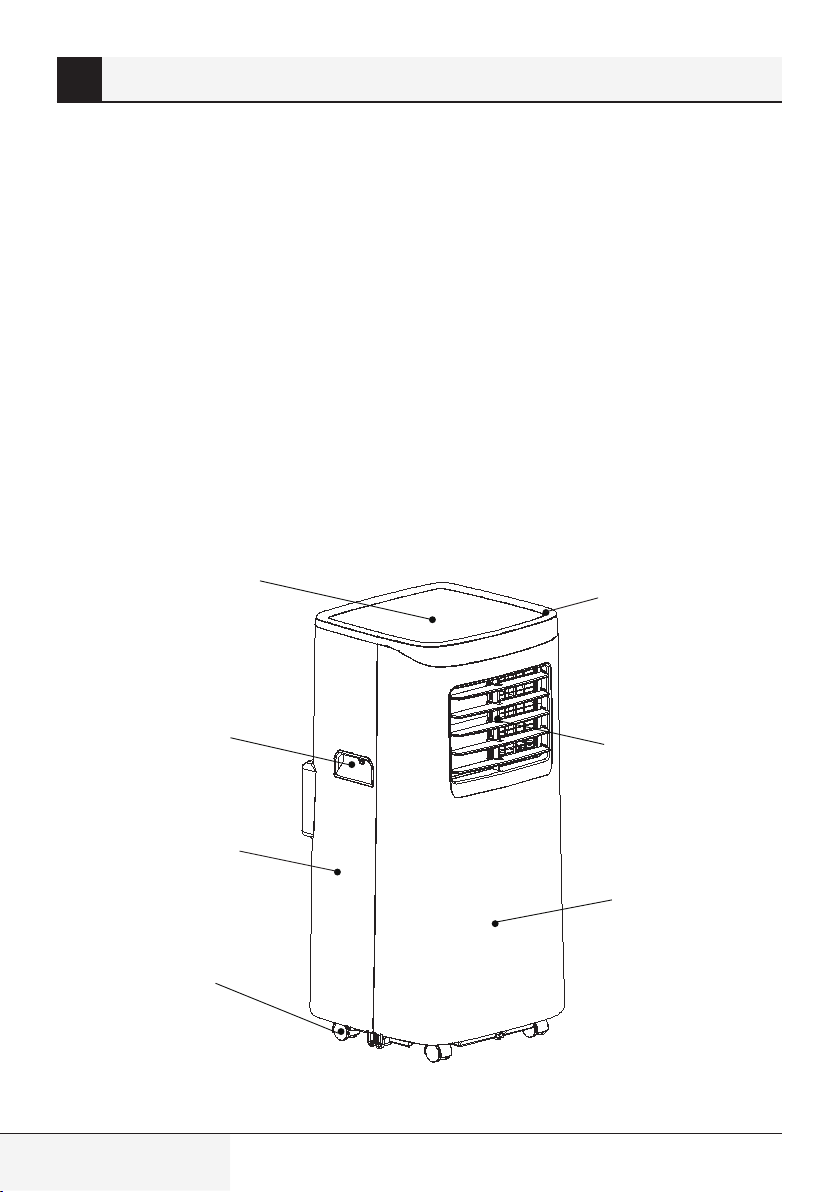
2 Egenschappen en componenten
2.1 Egenschappen
Gloednieuw uiterlijk, compacte structuur, soepele lijn, eenvoudige en royale vormgeving.
Functies voor koelen, ontvochtigen, luchttoevoer en constante afvoer
De buitenaansluiting is hoog geplaatst om de montage te faciliteren en de stroom van de warmtebuis
soepel te houden.
Het bedieningspaneel bevat mooie en modieuze led-schermen. Hoogwaardige afstandsbediening.
Het ontwerp van afstandsbediening is gebruikersvriendelijk.
Vermogen voor luchtfiltering.
Functie met timingschakelaar.
Beveiligingsfunctie om de compressor pas na drie minuten automatisch opnieuw te starten; een
variatie op andere beschermingsfuncties.
De maximale bedrijfstemperatuur voor de airconditioner bij koelen: 35/24 °C; werkbereik temperatuur:
7 - 35 °C.
2.2 Onderdelen
Bedieningspaneel
Bovenste afdekking
Handgreep
Achterzijde
behuizing
Zwenkwiel
100 / 160 NL
Luchtafvoer/jaloezie
Voorzijde
behuizing
Mobiele airconditioner / Gebruikershandleiding
 Loading...