

Page 1

SAFETY DATA SHEET
BBJ MMR II
Disinfectant/Cleaner
BBJ Environmental Solutions
"The standard of care for indoor air"
SECTION 1 - PRODUCT AND COMPANY IDENTIFICATION
1.1 Product identifier
Product Name: BBJ MMR II
Product Codes(s):
EPA Registration No.:
Synonym(s):
REACH Registration Number:
620-XX; 611-XX; 650-XX; 655-XX
1839-83-67212
Aqueous disinfecting solution
No data available
1.2 Relevant identified uses of the substance or mixture and uses advised against
General use:
Uses advised against:
Industrial disinfectant/cleaner
No uses advised against
1.3 Details of the supplier and of the safety data sheet
Distributor
Atlantic Chemical & Equipment
3471 Atlanta Industrial Parkway, Suite 200
Atlanta, GA 30331 USA
Toll free: +1-800-929-2436
1.4 Emergency telephone number: Chemtrec (24 hours) +1-800-424-9300
SECTION 2 - HAZARDS IDENTIFICATION
2.1 Classification of substance or mixture
Product definition:
Classification in accordance with 28 CFR 1910 (OSHA HCS) and Regulation (EC) No 1272/2008
Acute Toxicity, Oral - Category 4 [H302]
Eye Irritation - Category 2A [H319]
2.2 Label Elements
Hazard Symbol(s):
Mixture
GHS07
Signal Word:
Hazard Statement(s):
Precautionary Statements:
[Prevention]
[Response]
[Disposal]
Warning
H302 - Harmful if swallowed
H319 - Causes serious eye irritation
P264 - Wash hands and other skin areas exposed to material thoroughly after handling.
P270 - Do not eat, drink or smoke when using this product.
P280 - Wear protective gloves, protective clothing and eye protection.
P301 + P330 + P312 - IF SWALLOWED: Rinse mouth. Do not induce vomiting. Call a POISON CENTER or doctor
if you feel unwell.
P305 + P351 + P338 - IF IN EYES: Rinse cautiously with water for several minutes. Remove contact lenses, if
present and easy to do. Continue rinsing.
P337 + P313 - If eye irritation persists: Get medical attention.
P501 - Dispose of contents and containers in accordance with national/local regulations.
SECTION 3 - COMPOSITION/INFORMATION ON INGREDIENTS
3.1 Substances
Not applicable
3.2 Mixtures
% by Weight
8.000
1.726
0.151
0.105
0.105
There are no additional ingredients present which, within the current knowledge of the supplier and in the concentrations applicable, are classified
as hazardous to health or the environment and hence require reporting in this section.
Diethylene glycol monobutyl ether
Tetrasodium ethylenediamine tetraacetate
Sodium metasilicate 6834-92-0 201-069-1
Alkyl (C12 - C14) dimethyl benzyl
ammonium chloride
Alkyl (C12 - C18) dimethyl ethylbenzyl
ammonium chloride
Ingredient
CAS Number
112-34-5
64-02-8 200-573-9
68391-01-5 269-919-4
85409-23-0
EC Number GHS Classification
203-961-6
287-090-7
Index Number
603-096-00-8
607-428-00-2
014-010-00-8
---------------
---------------
H319
H302, H318
H314, H335
H302, H314, H400
H302, H314, H400
BBJ MMR II (Ace)
Page 1 of 6
Page 2

SECTION 4 - FIRST AID MEASURES
4.1 Description of first aid measures
Inhalation:
difficult or irregular, administer oxygen; if respiratory arrest occurs, start artificial respiration by trained personnel. Loosen tight clothing such as
a collar, tie, belt or waistband. If symptoms persist, seek medical attention.
Eyes: Immediately flush eyes with large amounts of water for 15 minutes, occasionally lifting the upper and lower lids. Remove contact lenses, if
present and easy to do, after the first 5 minutes and continue rinsing. Seek immediate medical attention, preferably from an ophthalmologist.
Skin:
contaminated clothing and shoes thoroughly before reuse. If irritation occurs or persists, seek medical attention.
Ingestion:
Do not induce vomiting unless directed to do so by medical personnel. Never give anything by mouth to an unconscious person. Obtain medical
attention immediately.
If product vapor or mist causes respiratory irritation or distress, move the exposed person to fresh air immediately. If breathing is
Flush skin with large amounts of water while removing contaminated clothing and continue rinsing for at least 15 minutes. Wash
Rinse mouth with water. Remove dentures if present. If swallowed, give 2 - 3 glasses of water to drink if victim is conscious and alert.
4.2 Most important symptoms and effects, both acute and delayed
Potential health symptoms and effects
Eyes:
Causes serious eye irritation. Symptoms may include redness, swelling, pain and tearing. The degree of injury depends on the product
concentration and duration of contact.
Skin:
May cause skin irritation with redness, itching, swelling and discomfort.
Inhalation:
and throat and coughing.
Ingestion:
Chronic:
4.3 Indication of any immediate medical attention and special treatment needed
Advice to Doctor/Physician and Hospital Personnel
Possible mucosal damage may contraindicate the use of gastric lavage.
Inhalation of vapor or mist may cause irritation of the nose and upper respiratory tract. Symptoms may include irritation of the nose
Causes irritation of the gastrointestinal tract. Symptoms may include sore throat, nausea, vomiting and diarrhea.
Prolonged or repeated contact with mist or vapor may result in serious eye irritation, defatting of skin and dermatitis.
SECTION 5 - FIRE FIGHTING MEASURES
5.1 Extinguishable media
Suitable methods of extinction:
Unsuitable methods of extinction:
Use extinguishing media suitable for surrounding fire.
None known
5.2 Special hazards arising from the substance or mixture
Approach fire from upwind to avoid hazardous vapors and toxic decomposition products. Closed containers may explode due to buildup of
pressure when exposed to extreme heat. During emergency conditions overexposure to decomposition products may cause a health hazard.
Symptoms may not be immediately apparent. Obtain immediate medical attention.
Explosion hazards:
5.3 Advice for firefighters
Full protective equipment including self-contained breathing apparatus should be used. Water may be used to cool closed containers to prevent
pressure buildup and possible autoignition or explosion when exposed to extreme heat. If possible, firefighters should control runoff water to
prevent environmental contamination.
None known
SECTION 6 - ACCIDENTAL RELEASE MEASURES
6.1 Personal precautions, protective equipment and emergency procedures
Avoid breathing mist or vapor. Avoid contact with skin and eyes. Wear appropriate protective clothing designated in Section 8. Ventilate the area.
Remove all sources of ignition. Evacuate non-essential personnel. Spill presents a slip hazard.
6.2 Environmental precautions
Avoid dispersal of spilled material or runoff and prevent contact with soil and entry into drains, sewers or waterways.
6.3 Methods and materials for containment and cleaning up
Cover drains and contain spill. Cover with a large quantity of non-combustible, inert absorbent (e.g. sand, vermiculite, diatomaceous earth). Do
not use combustible materials such as sawdust. Sweep or shovel up product and place material into an approved container for disposal as
hazardous waste. Observe possible material restrictions (Sections 7.2 and 10.5). Clean contaminated area with water.
6.4 Reference to other sections
For indications about waste treatment, see section 13.
SECTION 7 - HANDLING AND STORAGE
7.1 Precautions for safe handling
Wear all appropriate personal protective equipment specified in Section 8. Do not get in eyes or on skin or clothing. Do not breathe vapor or
mist. Do not ingest. If normal use of material presents a respiratory hazard, use only adequate ventilation or wear an appropriate respirator.
Advice on protection against fire and explosion
Keep away from heat and incompatible materials.
7.2 Conditions for safe storage, including any incompatibilities
Store in a dry, cool and well-ventilated area, away from incompatible materials (see Section 10.5), food and drink. Transfer only to approved
containers having correct labeling. Protect container against physical damage. Containers that have been opened must be carefully resealed and
kept upright to prevent leakage. Containers of this material may be hazardous when empty as they contain product residues. Use appropriate
containment to avoid environmental contamination. Ventilate closed areas. Do not take internally. Keep out of reach of children.
BBJ MMR II (Ace)
Page 2 of 6
Page 3

7.3 Specific end uses
Apart from the uses mentioned in section 1.2, no other specific uses are stipulated.
SECTION 8 - EXPOSURE CONTROLS / PERSONAL PROTECTION
8.1 Control parameters
Occupational Exposure Limits
CAS Number
64-17-5 Ethanol
Ingredient
OSHA PEL - TWA
1,000 ppm; 1,900 mg/m
3
ACGIH TLV
1,000 ppm TWA
1,000 ppm; 1,900 mg/m3 TWA;
8.2 Exposure controls
Engineering Measures:
equipment. Use adequate ventilation. Local exhaust is preferable. Refer to See Section 7.1.
Individual protection measures:
selected specifically for the workplace, depending on concentrations and quantities of hazardous substances handled. The chemical resistance
of the protective equipment should be enquired at the representative supplier.
Hygiene measures:
clothing. Preventive skin protection is recommended. Wash hands thoroughly after use, before eating, drinking or using the lavatory.
Eye/face protection:
or European Standard EN 166.
Hand Protection:
chemicals and oil. Breakthrough time of selected gloves must be greater than the intended use period.
Other protective equipment:
Respiratory Protection:
respirators are appropriate use a full-faced respirator with multi-purpose combination (US) or type ABEK (EN 14387) respirator cartridges as a
backup to engineering controls. If the respirator is the sole means of protection, use a full-face supplied air respirator. Use respirators and
components tested and approved under appropriate government standards such as NIOSH (US) or CEN (EU).
Environmental exposure controls:
Technical measures and appropriate working operations should be given priority over the use of personal protective
Wear protective clothing to prevent repeated or prolonged contact with product. Protective clothing needs to be
Facilities storing or using this material should be equipped with an eyewash station and safety shower. Change contaminated
Wear protective goggles or safety glasses with unperforated side shields during use. Refer to 29 CFR 1910.133, ANSI Z87.1
Wear gloves recommended by glove supplier for protection against materials in section 3. Gloves should be impermeable to
Protective clothing. Wear protective boots if the situation requires.
Always use an approved respirator when vapor/aerosols are generated. Where risk assessment shows air-purifying
Do not empty into drains.
NIOSH
3,300 ppm IDLH
SECTION 9 - PHYSICAL AND CHEMICAL PROPERTIES
9.1 Information on basic physical and chemical properties
Appearance Clear, colorless liquid
Odor Scented (Lemon/citrus)
Odor Threshold Not determined
Molecular Weight Not applicable
Chemical Formula Not applicable
pH
Freezing/Melting Point
Initial Boiling Point
Evaporation Rate ~0.3 (n-BuAc = 1)
Flammability (solid, gas) Not applicable
Flash Point >93.9 °C (>201 °F) PMCC
Autoignition Temperature Not determined
Decomposition Temperature Not determined
Lower Explosive Limit (LEL) Not determined
Upper Explosive Limit (UEL) Not determined
Vapor Pressure
Vapor Density Not determined
Specific Gravity
Viscosity Not determined
Solubility in Water Dispersible
Partition Coefficient: n-octanol/water Not determined
Volatiles by Volume @ 21 ºC >90%
9.2 Other data
No data available
11.7 @ 20 °C (68 °F)
>0 °C (32 °F)
>100 °C (>212 °F)
Not determined
1.002 - 1.012
10.1 Reactivity
No special reactivity has been reported.
10.2 Chemical stability
Stable under recommended storage conditions.
10.3 Possibility of hazardous reactions
Hazardous polymerization will not occur.
10.5 Incompatible materials
Strong oxidizing agents, acids, alkalis
BBJ MMR II (Ace)
SECTION 10 - STABILITY AND REACTIVITY
Page 3 of 6
Page 4

10.6 Hazardous decomposition products
Thermal decomposition products include carbon oxides, nitrogen oxides, ammonia, low molecular weight hydrocarbons.
SECTION 11 - TOXICOLOGICAL INFORMATION
11.1 Information on toxicological effects
Acute Oral Toxicity
Product is expected to have low oral toxicity.
Acute inhalation toxicity
Product is expected to have low inhalation toxicity.
Acute dermal toxicity
Product is expected to have low dermal toxicity.
Skin irritation
May cause skin
Eye irritation
Causes serious eye irritation
Sensitization
No data available
Genotoxicity in vitro
No data available
Mutagenicity
No data available
Specific organ toxicity - single exposure
No data available
Specific organ toxicity - repeated exposure
No data available
Aspiration hazard
No data available
11.2 Further information
None of the components of this product are listed as carcinogens by ACGIH, IARC, NTP or OSHA. No data is available regarding the mutagenicity
or teratogenicity of this product in humans, nor is there any available data that indicates it causes adverse developmental or fertility effects.
This product contains trace amounts (<0.1%) of Nitriloacetic Acid (NTA). NTA and its salts were classified as carcinogens by IARC (Group 2 -
possibly carcinogenic to humans), by NTP (may be reasonably anticipated to be a carcinogen) and by OSHA (select carcinogen).
Reproductive effects have been reported for EDTA and its sodium salts. In some studies birth defects in laboratory animals were reported only at
exaggerated doses that were toxic to the mother. These effects are likely associated with zinc deficiency due to chelation. Exposures having no
effect on the mother should have no effect on the fetus.
Handle in accordance with good industrial hygiene and safety practice.
SECTION 12 - ECOLOGICAL INFORMATION
12.1 Toxicity
Contains substances that are very toxic to aquatic organisms and may cause long term effects in the aquatic environment. Quaternary ammonium
compounds are highly toxic to fish and aquatic organisms. May be harmful to the environment if released in large quantities.
12.2 Persistence and degradability
Organic substances in this product are expected to biodegrade.
12.3 Bioaccumulation potential
Not expected to bioaccumulate
12.4 Mobility
Product is expected to have high mobility is soil.
12.5 Results of PBT and vPvB assessment
No data available
12.6 Other adverse effects
Additional ecological information
Do not allow material to run into surface waters, wastewater or soil.
An environmental hazard cannot be excluded in the event of unprofessional handling or disposal.
SECTION 13 - DISPOSAL CONSIDERATIONS
13.1 Waste treatment methods
Methods of disposal:
product residues. This material and its container must be disposed of in a safe way. Dispose of surplus and non-recyclable products via a
licensed waste disposal contractor. Disposal of this product, solutions and any by-products should at all times comply with the requirements of
environmental protection and waste disposal legislation and any regional local authority requirements. Avoid dispersal of spilt material and runoff
and contact with soil, waterways, drains and sewers.
The generation of waste should be avoided or minimized whenever possible. Empty containers or liners may retain some
BBJ MMR II (Ace)
Page 4 of 6
Page 5
Hazardous waste:
The classification of this product may meet the criteria for a hazardous waste.
SECTION 14 - TRANSPORT INFORMATION
Note:
Transportation information provided is for reference only. Customer is urged to consult 49 CFR 100 - 177, IMDG, IATA, EC, United Nations
TDG and WHMIS (Canada) TDG information manuals for detailed regulations and exceptions covering specific container sizes, packaging materials
and methods of shipping.
NOT REGULATED FOR TRANSPORT
SECTION 15 - REGULATORY INFORMATION
15.1 Safety, health and environmental regulations/legislation specific for substance or mixture
U. S. Federal Regulations
OSHA Hazard Communication Standard:
OSHA Process Safety Management Standard:
EPA Risk Management Planning Standard:
TSCA Status:
Superfund Amendments and Reauthorization Act (SARA)
SARA Section 311/312 Hazard Categories:
SARA 313 Information:
the Emergency Planning and Community Right-to Know Act of 1986.
SARA 302/304 Extremely Hazardous Substance
No components of the product exceed the threshold (de minimis) reporting levels established by of these sections of Title III of SARA.
SARA 302/304 Emergency Planning & Notification:
No components of the product exceed the threshold (de minimis) reporting levels established by of these sections of Title III of SARA.
Comprehensive Response Compensation and Liability Act (CERCLA):
Clean Air Act (CAA)
Diethylene Glycol Monobutyl Ether (CAS #112-34-5) is listed as Hazardous Air Pollutants (HAPs) designated in CAA Section 112 (b).
This product does not contain any Class 1 Ozone depletors.
This product does not contain any Class 2 Ozone depletors.
Clean Water Act (CWA)
None of the chemicals in this product are listed as Hazardous Substances under the CWA.
None of the chemicals in this product are listed as Priority Pollutants under the CWA.
None of the chemicals in this product are listed as Toxic Pollutants under the CWA.
U.S. State Regulations
California Prop 65, Safe Drinking Water and Toxic Enforcement Act of 1986
This product contains no chemical(s) exceeding the de minimis (0.1%) that are known to the State of California to cause cancer or other
reproductive harm. Contains trace amounts of Ethanol.
Other U.S. State Inventories
Diethylene Glycol Monobutyl Ether (CAS #112-34-5) is listed on the following State Hazardous Substance Inventories, Right-to-Know lists and/or
Air Quality/Air Pollutants lists: PA (as Glycol Ethers)
Ethanol (CAS #64-17-5), contained in trace quantities, is listed on the following State Hazardous Substance Inventories, Right-to-Know lists and/
or Air Quality/ Air Pollutants lists: CA, ID, MA, MN, NJ, PA, WA.
2-Butoxyethanol (CAS #111-76-2), contained in trace quantities, is listed on the following State Hazardous Substance Inventories, Right-to-Know
lists and/or Air Quality/Air Pollutants lists: CA, ID, MA, MN, NJ, PA, WA, WI.
Canada
WHMIS Hazard Symbol and Classification:
Canadian National Pollutant Release Inventory (NPRI):
European Economic Community
Labeling (67/548/EEC to 1999/45/EC)
All components of this product are listed on the TSCA Inventory. This product is not subject to TSCA 12(b) Export Notification.
None of the chemicals in this product exceed the threshold (de minimis) reporting levels established by Section 313 of
This material is classified as hazardous in accordance with OSHA 29 CFR 1910.1200.
Components of this product are not regulated under OSHA PSM Standard 29 CFR 1910.119.
Components of this product are not regulated under EPA RMP Standard (RMP) 40 CFR Part 68.
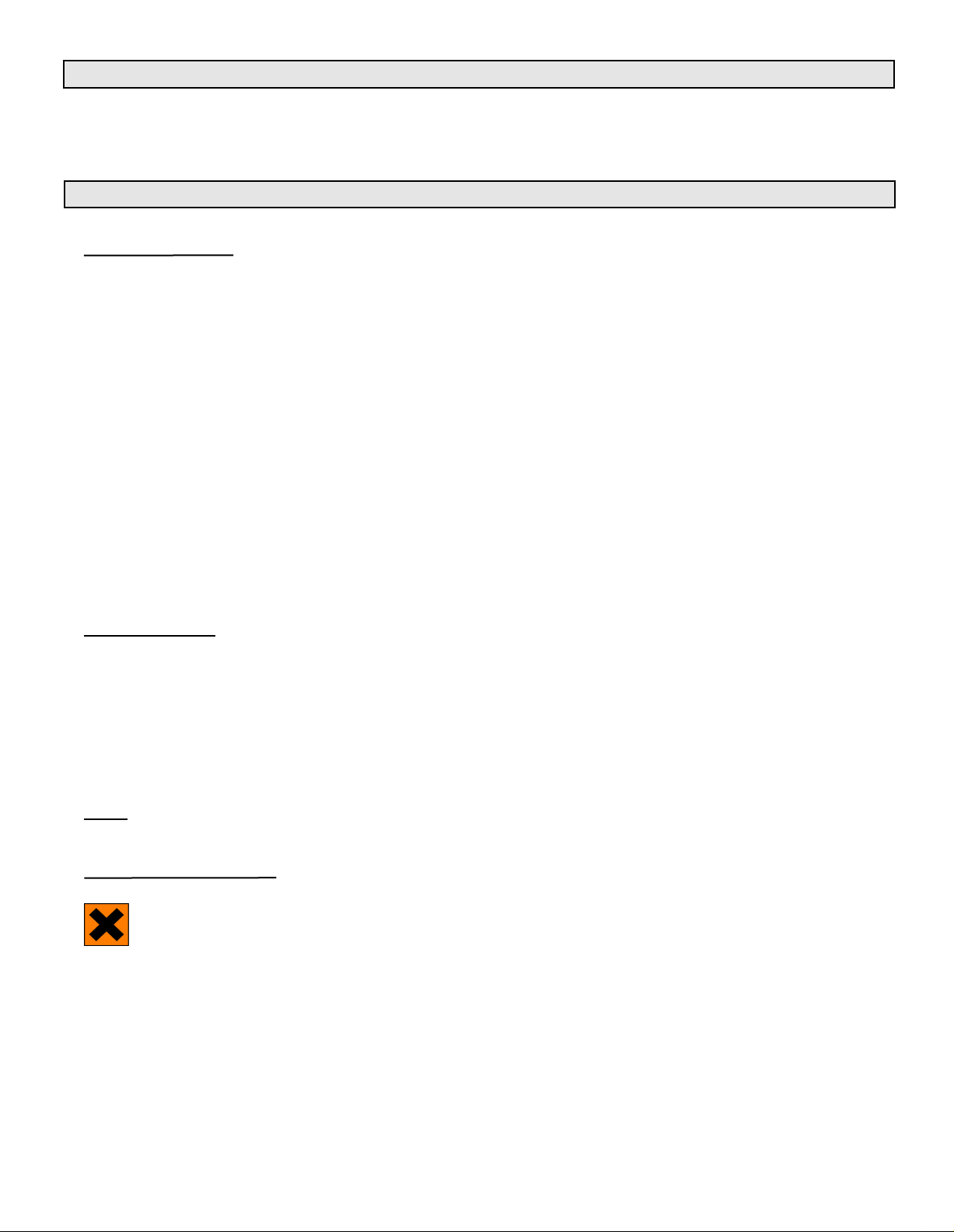
Acute Health Hazard
Contains no chemicals regulated under CERCLA.
None allocated
Ethanol is listed on the NPRI.
Xn - Harmful
Risk Phrases:
Safety Phrases:
WGK, Germany (Water danger/protection):
BBJ MMR II (Ace)
R22 - Harmful if swallowed.
R36 - Irritating to eyes.
S2 - Keep out of the reach of children.
S26 - In case of contact with eyes, rinse immediately with plenty of water and seek medical advice.
S36/37/39 - Wear suitable protective clothing, gloves and eye/face protection.
2
Page 5 of 6
Page 6
Global Chemical Inventory Lists
Country
Canada:
Canada:
Europe:
United States:
Australia:
New Zealand:
China:
Japan:
Korea:
Philippines:
*Yes - All components of this product are in compliance with the inventory requirements administered by the governing country.
No - one or more components of this product are not on the inventory and are not exempt from listing.
Inventory Name
Domestic Substance List (DSL).
Non-Domestic Substance List (NDSL).
Inventory of New and Existing Chemicals (EINECS)
Toxic Substance Control Act (TSCA)
Australian Inventory of Chemical Substances (AICS)
New Zealand Inventory of Chemicals (NZIoC)
Inventory of Existing Chemical Substances in China (IECSC)
Inventory of Existing and New Chemical Substances (ENCS)
Existing Chemicals List (ECL)
Philippines Inventory of Chemicals and Chemical Substances (PICCS)
15.2 Chemical safety assessment
For this product a chemical safety assessment was not carried out.
SECTION 16 - OTHER INFORMATION
Inventory Listing*
Yes
No
No
Yes
No
Yes
Yes
No
No
Yes
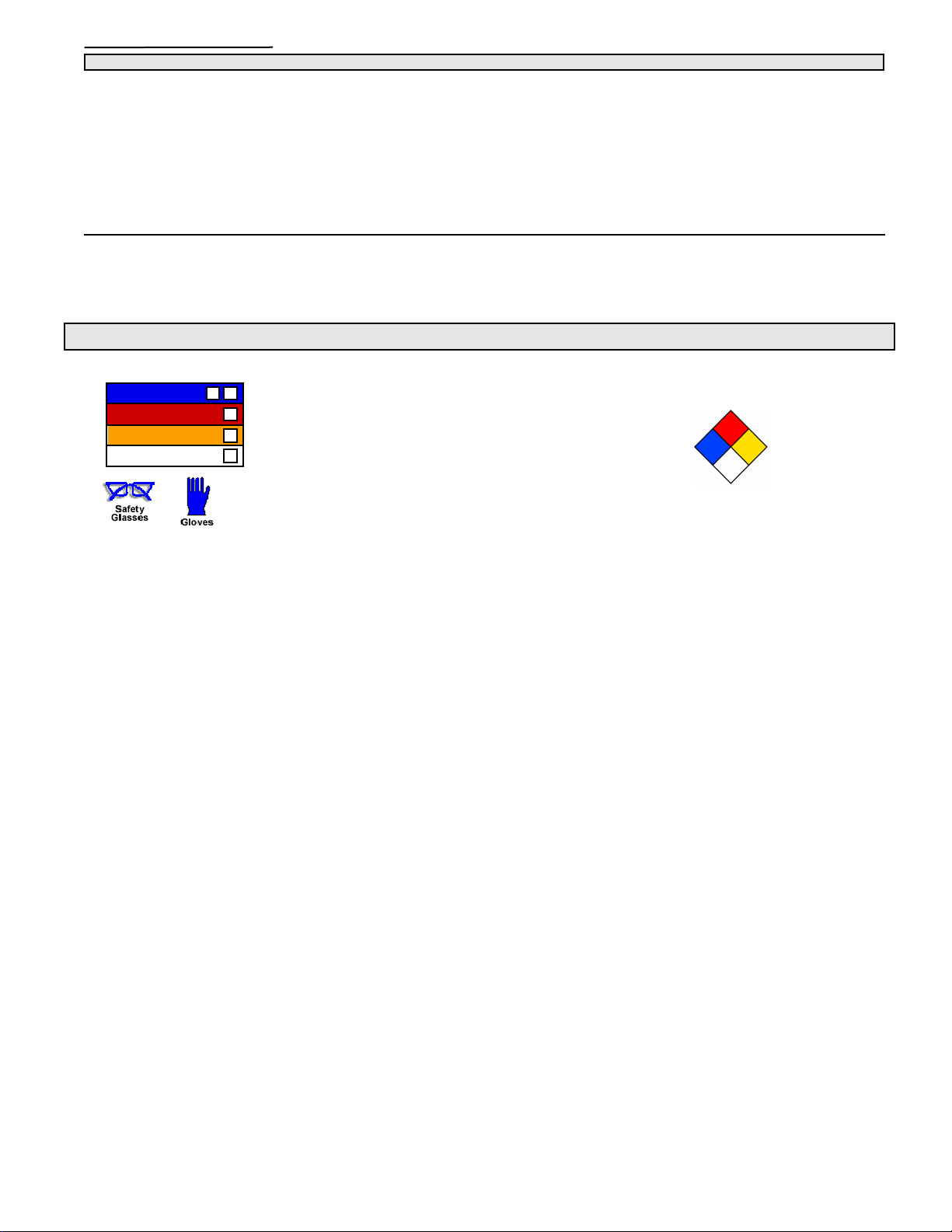
Hazardous Material Information System (HMIS)
Health
Flammability
Physical Hazard
Personal Protection
1
1
0
B
HMIS and NFPA Hazard Rating Legend
* = Chronic Health Hazard
0 = INSIGN IFICANT
1 = S LIGHT
2 = MODERATE
3 = HIGH
4 = EXTREME
National Fire Protection Association (NFPA)
Flammability
1
Health
1
Instability
0
Special
Full text of GHS Hazard Phrases referenced in Section 3 (not covered in Section 2)
H314 - Causes severe skin burns and eye damage
H318 - Causes serious eye damage
H335 - May cause respiratory irritation
H400 - Very toxic to aquatic life
Atlantic Chemical & Equipment assumes no legal responsibility or liability form the described product's use. All chemicals possess unknown potential hazards. The information
herein should be used only to supplement the end user's existing knowledge. Read directions for proper use. This SDS was written for the product as packaged. Product may turn
yellow, orange or brown if pH becomes alkaline; however, this should not affect the product's effectiveness. If frozen, crystals may remain in the container after thawing. Shake until
dissolved before using. Cleaning Contractors shall comply with all applicable OSHA regulations.
Preparation Date: 26 May 2016
BBJ MMR II (Ace)
Page 6 of 6
 Loading...