

Page 1
PROFESSIONAL AUDIO EQUIPMENT
User Manual
© AUDAC
http://www.audac.eu
AUDAC
Microphone
M66/M67
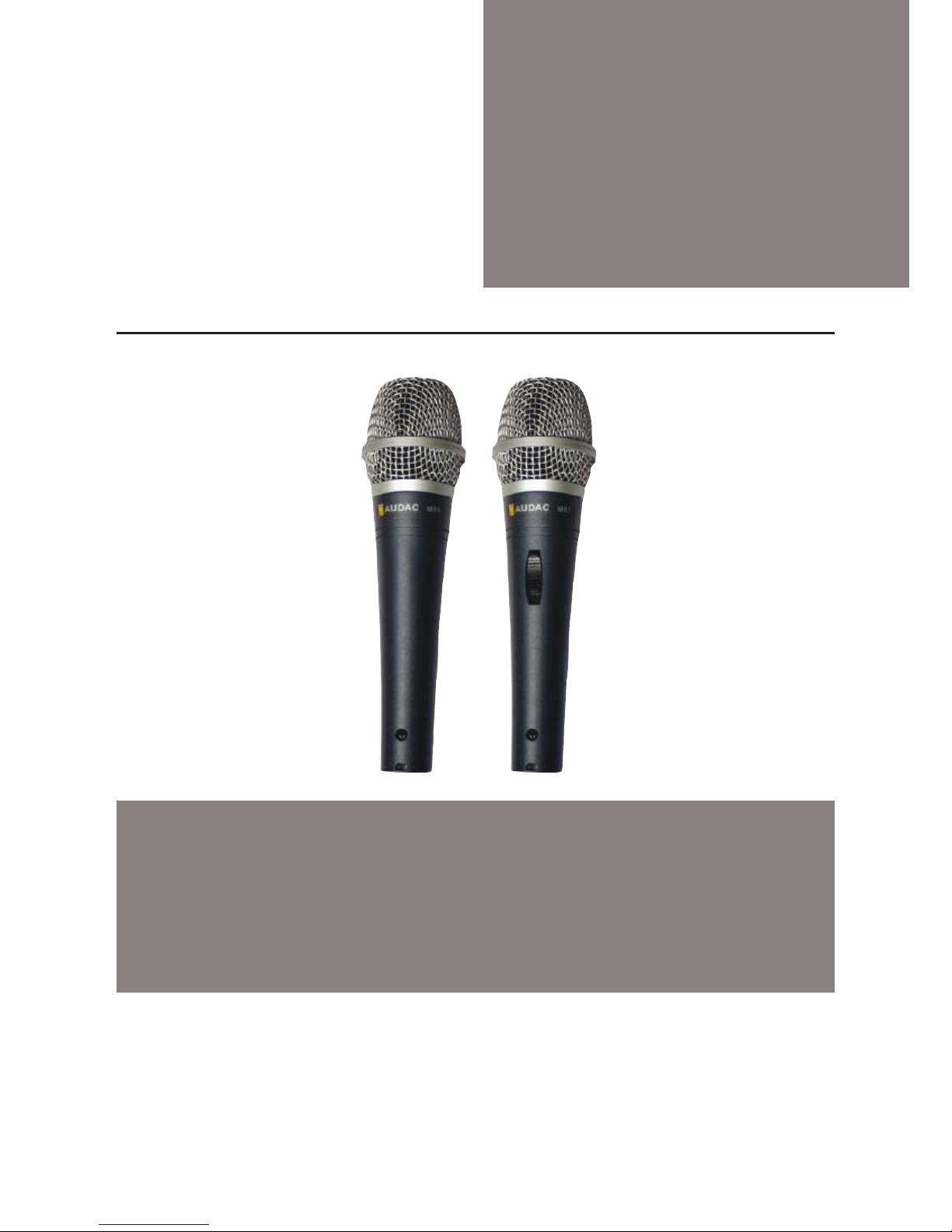
M66/M67 Dynamic Microphone
Page 2
General
Features
General rules for use
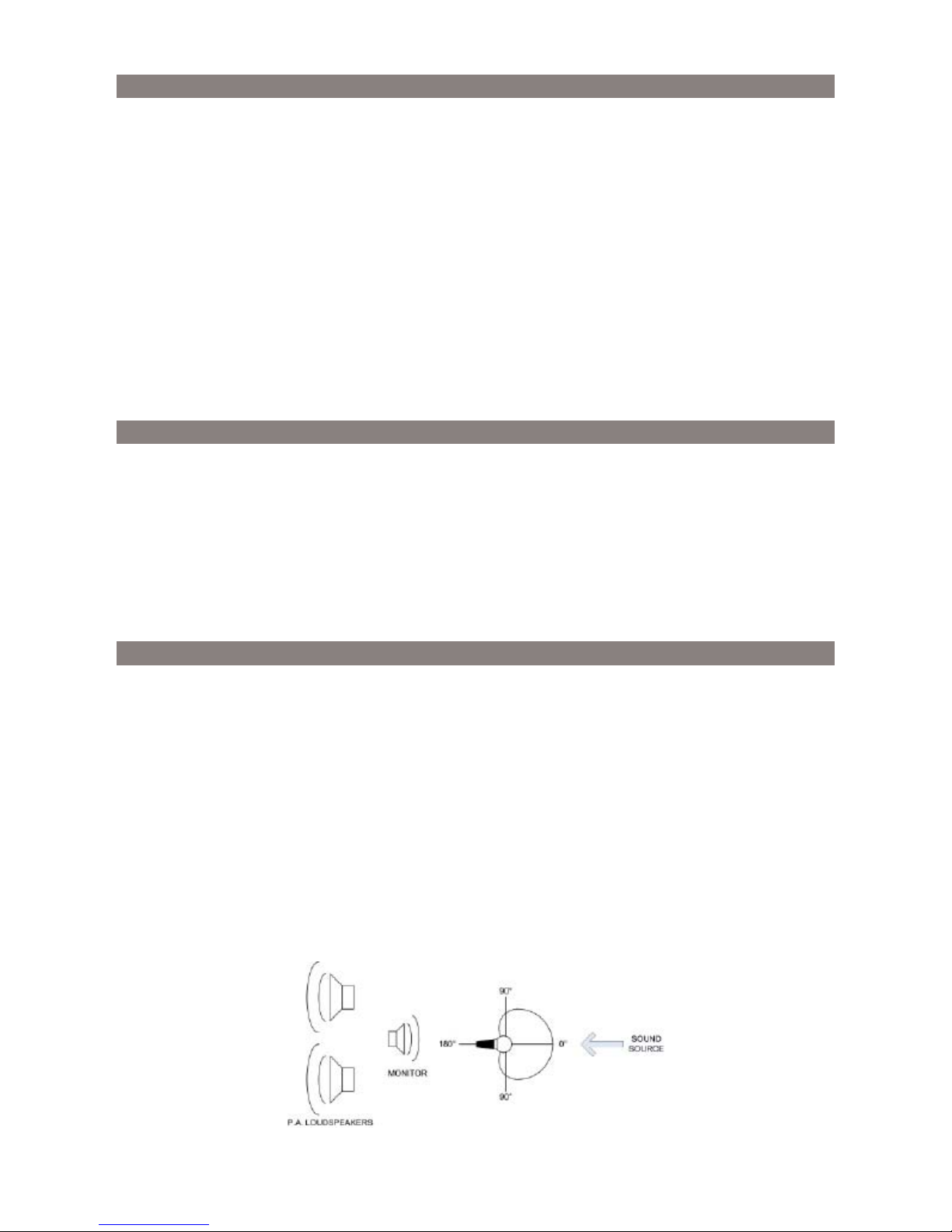
• Aim the microphone toward the desired sound source (talker, singer, instru
ment) and away from unwanted sources.
• Place the microphone as close as practical and hold it on a constant distance
to the desired sound source.
• Work close to the microphone for extra bass response.
• Use only one microphone to pick up a single sound source.
• Use the fewest number of microphones as practical
• Keep the distance between microphones at least three times the distance
from each microphone to it’s source.
• Place microphones as far as possible from refl ective surfaces.
• Add a windscreen when using the microphone outdoors (MC50)
The M66 and M67 are fully featured, dynamic general purpose microphones
for the budget conscious performer who wants style, audio quality and a product that works hard.
They are solid constructed, with a robust grill to protect the diafragm against
rough handling and are suited for indoor as well as outdoor use.
The high sensitive neodymium element makes them the perfect microphones
for presentations and singers.
Due to the unidirectional (supercardioid) polar pattern, the feedback is reduced to a strict minimum.
The M66 and M67 are both exactly the same microphones with the same specifi cations, except the on/off switch which is only provided on the M67.
• Rugged vocal/speech/general purpose microphone
• High quality dynamic microphone capsule
• Super cardioid pick-up pattern with excellent rejection of off-axis sound
• Advanced shock mount system that minimizes transmission of mechanical
noise and vibration
• Sturdy metal grill and body
• On/Off switch (M67 only)
Recommended loudspeaker locations
Page 3
Specifi cations
Microphone type Dynamic
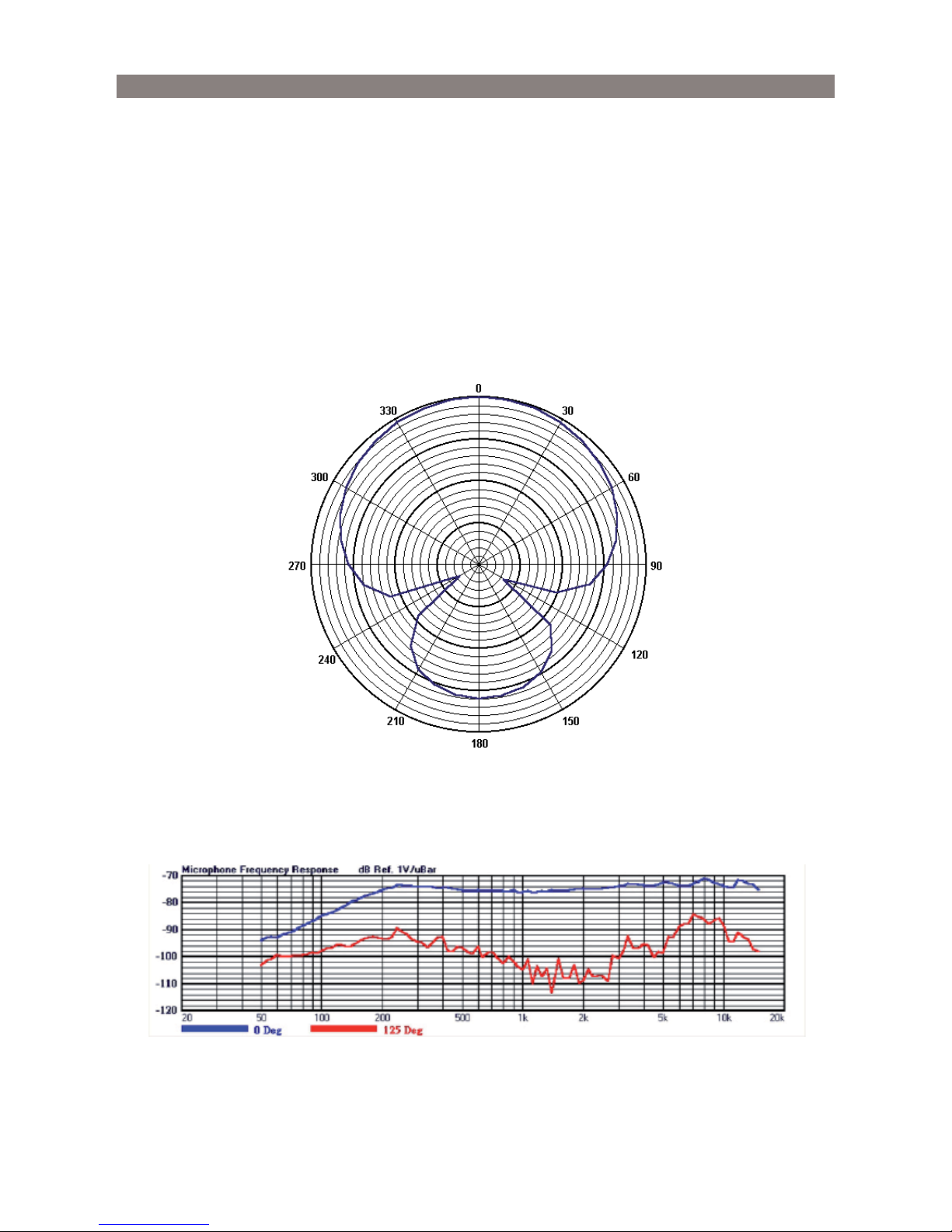
Polar pattern Super Cardioid
Frequency response 50 Hz - 18 kHz
Sensitivity (1 kHz, SPL: 74 dB) -75 dB ± 3 dB
Impedance 300 Ohm
Magnet Neodymium
Output connector 3-pin XLR
Dimensions Ø 49 x 182mm
Weight 270g
Measured at 1000 Hz
Figure 1: Polar pattern
Figure 2: Frequency response
Page 4

Eligible to bear CE marking. Conforms to European EMC Directive 89/336/
EEC. Meets applicable tests and performance criteria in European standard
EN 55103 (1996) parts 1 and 2, for residential (E1) and light industrial (E2)
environments.
 Loading...