

Page 1

Owner’s Guide
Atlantis AT210
Page 2

1 How does it work?
Regeneration is the process of restoring the
softening ability of the resin. During
regeneration some of the salt in the salt
storage tank is turned into brine. This brine is
then sucked up and flushed through the
resin. When the brine comes into contact
with the resin the calcium and magnesium
that has been collected is released and
flushed away down the drain. After this, the
resin is flushed out to remove any excess
brine. The resin is then ready to soften mor
e
water.
2 What is regeneration?
Under normal use the resin is expected to last ten to fifteen years.
3 How long will the resin last?
Water softeners work by passing hard water
through a bed of ion exchange resin. As the
hard water comes into contact with the resin
the calcium and magnesium (hardness) is
exchanged for sodium. This means that the
water produced by the softener is soft i.e. it
contains no hardness. The resin can only
keep softening the water until it runs out of
sodium
ions. Th
is is why we need to
regenerate the resin.
A flow meter inside the control valve
monitors the water flow. The electronics then
compare the remaining softening capacity of
the machine with the expected water use.
The softener is programmed to monitor the
flow of water, and builds up a pattern of
your family's typical usage. When appropriate
the softener will regenerate.
4 How does it know when to regenerate?
Softened water is higher in sodium content
than mains water. To p
ut this into
perspective, one pint of softened water
contains less that an quarter of the sodium
found in one pint of milk! The Department of
Health advises that water from a domestic
softener should not be used for cooking and
drinking.
It is most important that softened water is
not used for making up babies feed. If you
were to consume very large quantities of
softened water you would increase the
amount of sodium in your body.
5 What will happen if I drink softened water?
Softened water feels slippery when you wash
your hands; this is how most people can tell.
Alternatively, you can use the test kit
provided with the softener.
6 How can I be sure it’s working?
Page 3
This depends on how much water you use. But on
average, a family of four will use around 25kg per month.
7 How much salt does it use?
Very little. The cost of electricity for a year is virtually
insignificant. Much of the power for regeneration is
drawn from the kinetic energy of the water supply.
8 How much power does it use?
The salt is used during regeneration. (See question 2).
9 Why does the softener need salt?
It is best to check the salt level every two weeks. If it is
less than a quarter fu
ll, it needs topping up.
10 When will the salt need topping up?
Usually the shop where you bought the softener, or any
local builder’s merchant will sell tablet salt.
11 Where should I get the salt from?
The best sort of salt for your softener is tablet salt. You
can use granular, but it is not recommended (see label
under salt lid). Don’t use block salt, as it dissolves
too slowly.
12 What sort of salt should I use?
Yes, but only a couple of inches (50mm). Normally you
won’t see it b
ecause the salt covers it. During
regeneration, the water level gets higher for a time.
13 Should there be water in with
the salt?
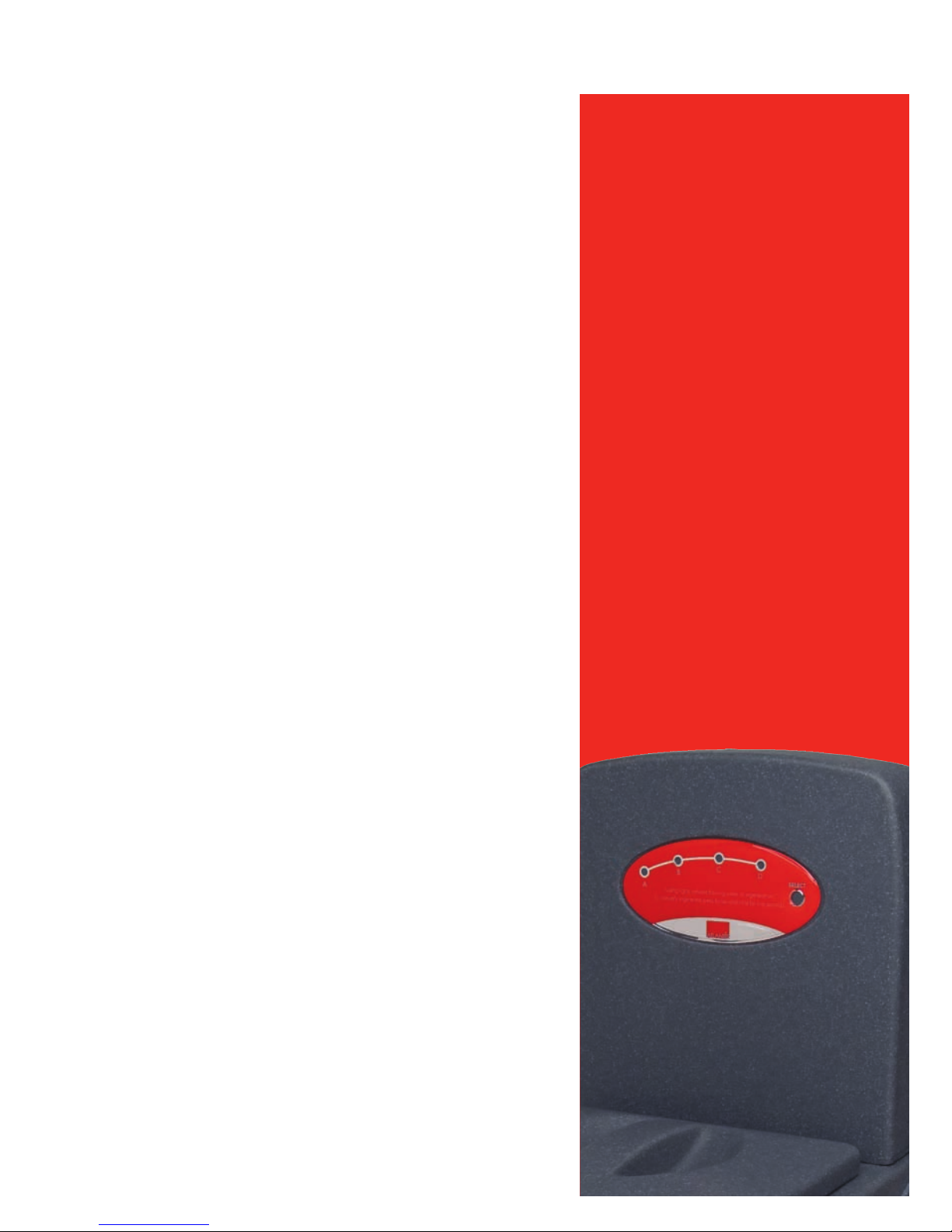
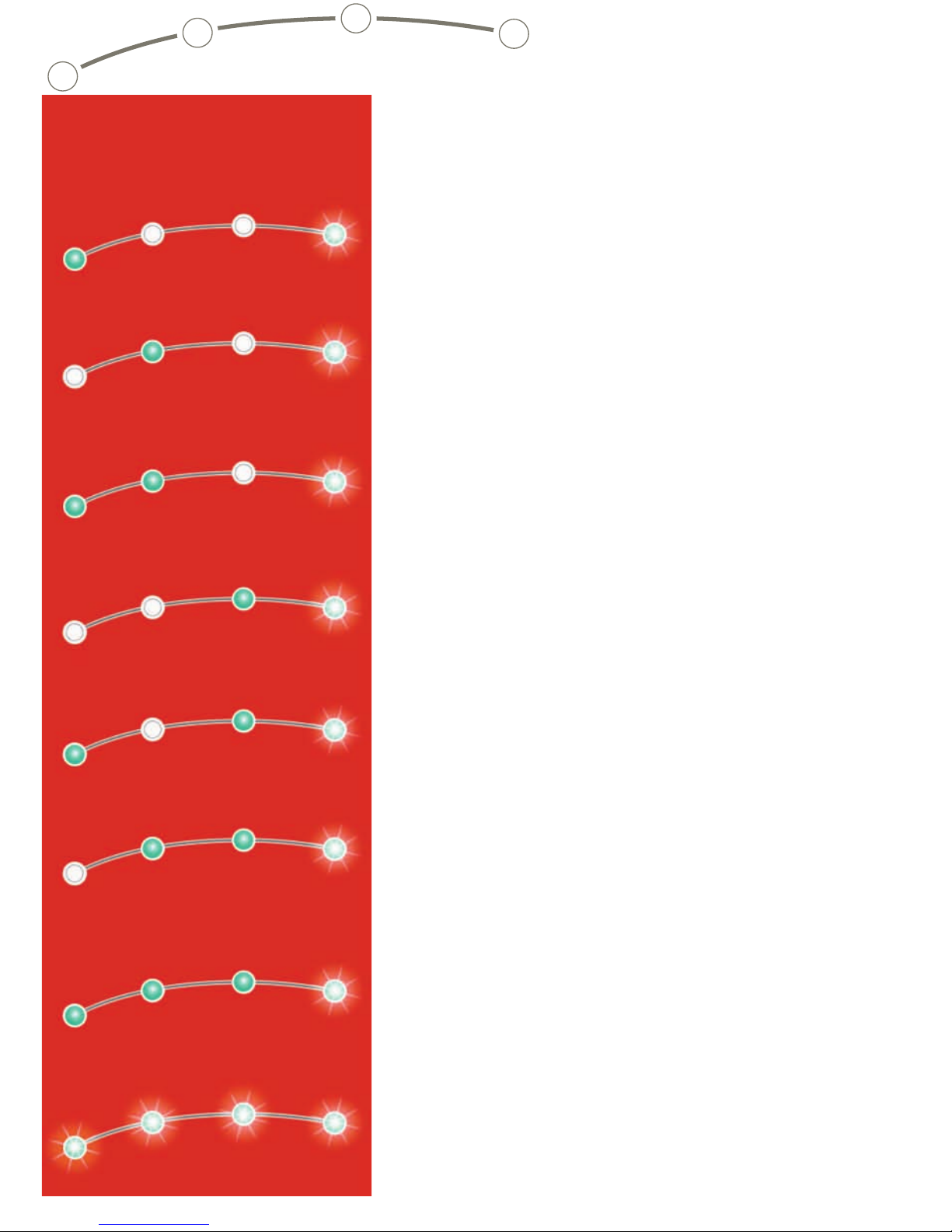
What do the lights mean?
NORMAL OPERATION:
The softener has one light
illuminated. This tells you the
hardness setting for your
incoming water. To change it,
press the button on the fascia
panel repeatedly until the
required setting is reached
WATER FLOWING:
The lights flash from left to
right. This tells you that the
softener is measuring the flow
of water through the softener.
REGENERATING:
The right hand ‘D’ light flashes
constantly and the other lights
come on in a sequence. This
lasts for about
one hour.
FA
ULT:
All lights flashing on and off
together. See the Trouble
Shooting Guide, in this manual.
Page 4
Salt is only used during regeneration. Any excess is
flushed away down the drain.
14 Where does the salt go?
Most likely the softener is in regeneration. If it is, then the
right hand “D” light will be flashing. Leave the softener
to finish the cycle.
15 It's making a noise?
Softeners only really appear to do something when they
regenerate. You can tell if the softener is working by
running off some water; after a time, the lights on the
fascia will start to flash.
16 It's not making any noise?
Nothing. (See question 13 and 16).
17 There’s no water in the salt
cabinet; what’s wrong?
Most dishwashers contain a water softener built in, so
you can feed the dishwasher with hard water if you
want to. However, if you feed the dishwasher with
softened water, there is no need to put salt in.
18 Can I use softened water in a
dishwasher?
It is difficult to be specific, but once every two years is
normally adequate. Call us on 01440 761500 if required.
19 How often does it need servicing?
It is possible to isolate the softener using the three valves
that connect to your pipework. Full details of this, together
with a diagram of the valves, are shown on the label under
the salt lid.
20 How do I turn it off?
Under the salt lid.
21 Where is the serial number?
Regeneration light cycles
Cycle 1 – Fill
Cycle 2 – Soak
Cycle 3 – Backwash
Cycle 4 – Pickup
Cycle 5 – Rapid rinse
Cycle 6 – Mini fill
Cycle 7 – Looking for home
position
FAULT all lights flashing –
Call for service
Page 5

Trouble Shooting Guide
Hard water
Make sure that the power is connected (one light
on the fascia panel should be on).
If no lights are on, then the power is turned off,
the power connector at the back of the softener
has been unplugged, or the transformer is faulty.
If the plug-in transformer is warm, it is probably
working.
Check that the inlet/outlet hoses are connected
the right way around.
Check that the bypass valve is shut and the inlet /
outlet valves are open.
Check that there is salt in the salt container. Ch
ec
k
also, that the salt hasn't built up a 'crust' inside
the container – if it has, break it up and rinse it
away.
If you have a tank in the loft ensure that the float
valve is not blocked or filling very slowly.
Check the hardness setting on the fascia panel is
correct (instructions are on the hardness test kit
supplied).
Use the hardness test kit to confirm your
suspicion that the water is hard.
Make sure that the lights flash from left to right
across the fascia panel when water flows
th
rough
the softener.
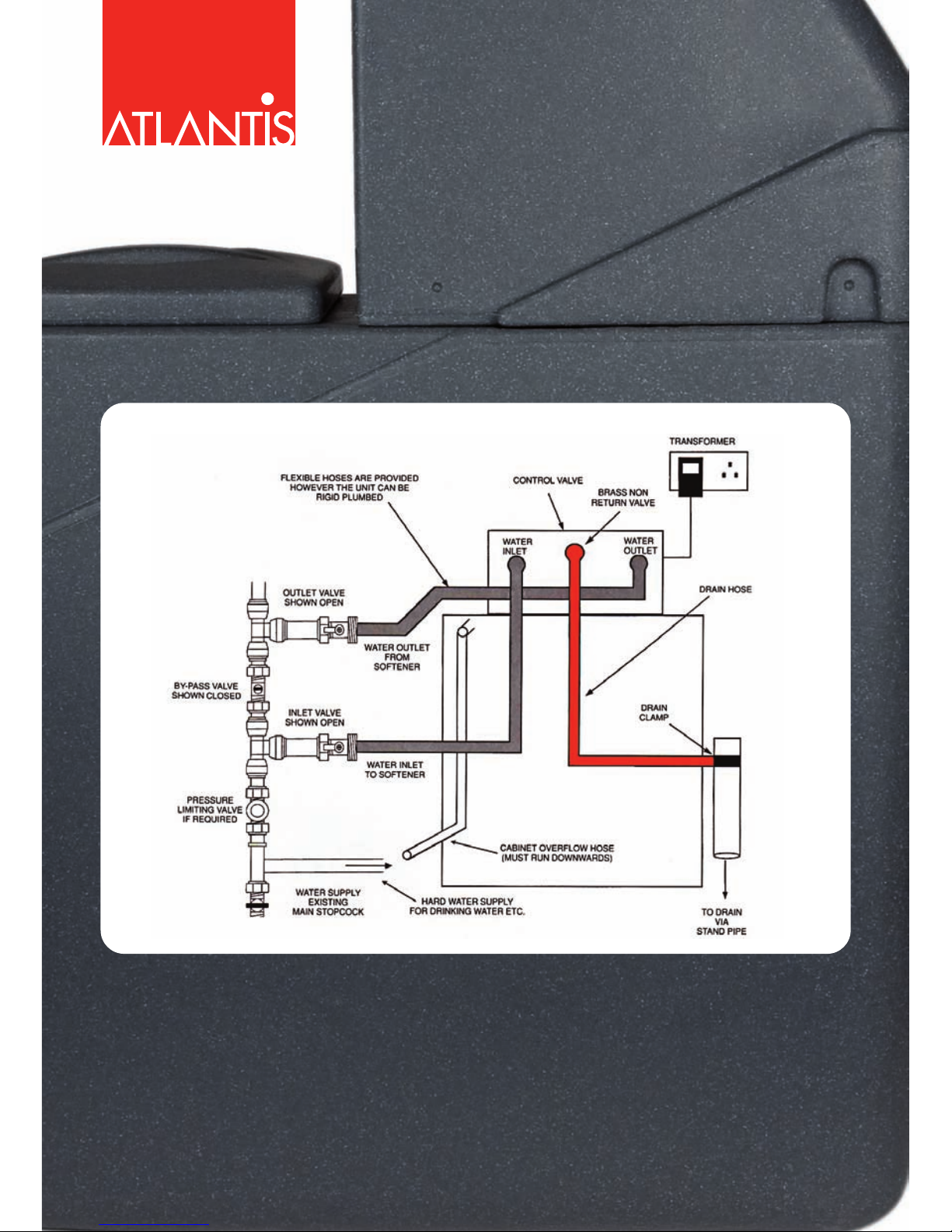
See the back cover of this manual for a diagram of the rear
view of the water softener.
Page 6

All four lights
flashing on and
off together
Try turning the power off for ten seconds and
then back on. This will cause the softener to
reset and return to the “home” position.
If this does not solve the problem, please call our
service department.
Overflowing/
full of water
Make sure that the drain hose is not frozen.
Make sure that the inlet/outlet hoses are not
leaking at the back of the softener.
Make sure that the drain hose is not blocked.
Make sure that granular salt is not being used.
Leaking
To find the leak, first dry up any water with
cloths etc.
Then check that none of the hoses that connect
to the back of the softener are leaking.
Then manually regenerate the softener. (Press
and hold the “Select” button on the fascia for 5
seconds).
Regeneration takes about one hour.
After regeneration, check again for leaks.
Using too much salt
Ensure that the water softener is not feeding an
outside tap.
Check the water level inside the cabinet. (If it is
more than half full, then see ‘Overflowing’
section).
Check that the correct hardness has been set on
the fascia panel.
(A rough guide to salt usage for a family of four,
is 1 x 25kg bag of salt per month.)
Trouble Shooting Guide
Page 7

Loss of water
pressure/reduced
flow
Make sure that the softener is plumbed in
correctly for your type of plumbing system (refer
to the ‘inlet and outlet connections’ section of
the installation instructions).
Make sure that the inlet and outlet valves are
fully open (see back cover of this manual for
diagram of the rear view of the water softener).
Note that – depending upon the level of usage
and local water conditions, after several years
the resin can become exhausted and may result
in loss of flow. Please call
Atlan
tis Water
Treatment for a service visit.
Salty water
Make sure that the red drain hose is not blocked
or partially blocked. Remove the red drain hose
from the connection on the rear of the softener
and blow through to make sure that it is clear,
then reconnect.
Constantly
regenerating/
constantly filling
First look at the fascia and see what lights are
on (see the AT210 Regeneration Display lights
table on preceding page).
If no lights are on, then the power is turned off,
the power connector at the back of the softener
has been unplugged, or the transformer is
faulty.
If the plug in transformer is warm, it is probably
working.
If the lights are on, check with the table, to see
what stage of regeneration the softener is in.
Constantly running
to drain
See ‘Constantly Regenerating' above.
If, after checking this fault finding guide, you are still experiencing
difficulties, please contact either your installer, or the Atlantis Water
Treatment Service department on 01440 761500.
Page 8
Atlantis Water Treatment Limited
Unit 3A
Homefield Road
Haverhill
Suffolk
CB9 8QP
Tel: 01440 761500
Fax: 01440 705010
www.atlantis-uk.com
Rear view of water softener
 Loading...