

Page 1
Atari 2600 Teardown
Atari 2600 Teardown
Step 1 -
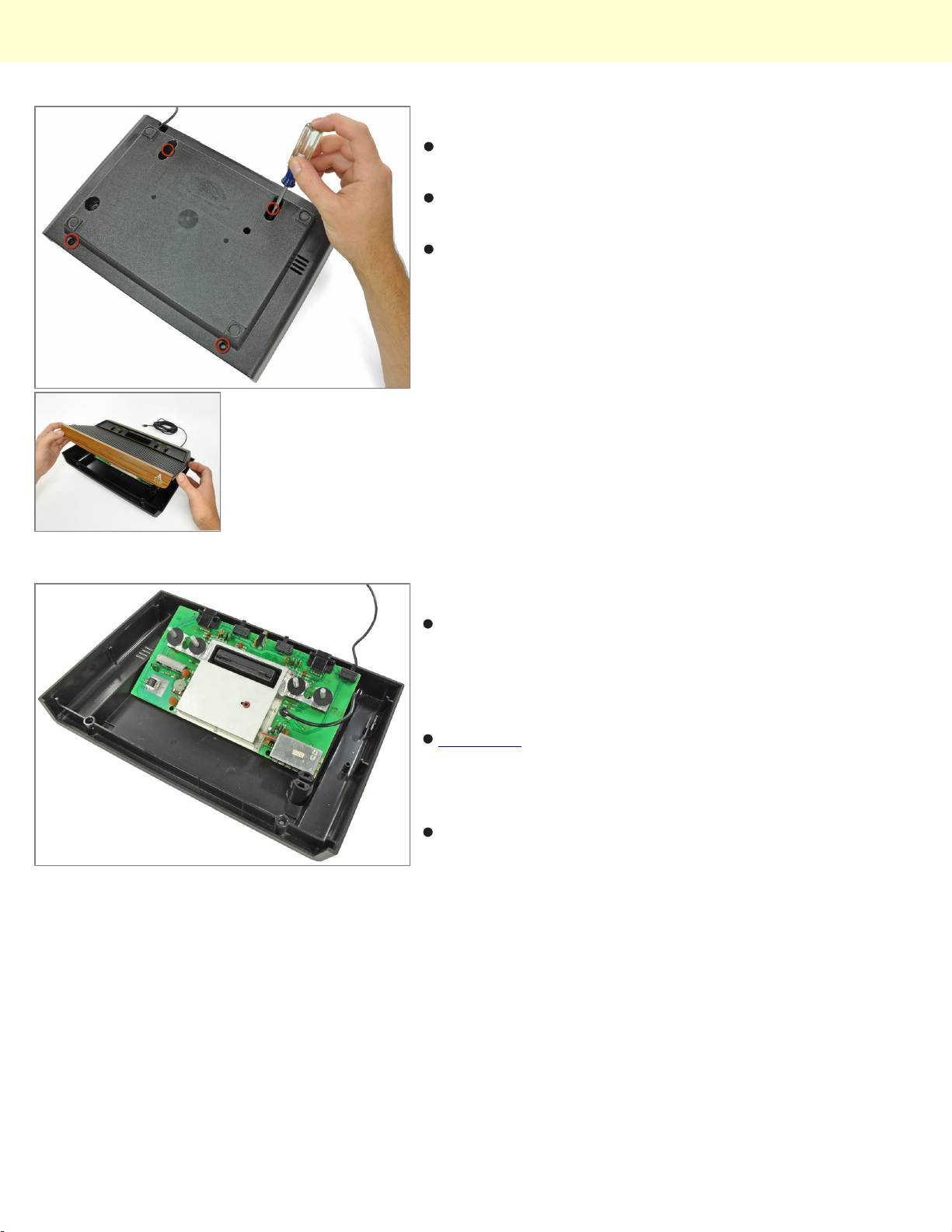
Atari 2600, with AC adapter and iconic joystick
controller.
Does the 2600 have a hardwood finish? You are
correct sir!
At its release, the 2600 sold for $199. In today's coin,
that's $696. In comparison, the launch model of
PlayStation 3 cost only $599. Prices are coming down!
As soon as users figured out that the Atari 2600 could
play more games than just Pong, the 2600 became
massively successful. It went from selling 250,000
consoles in 1977 to 1 million units in 1979.
Step 2
Video game consoles these days may not have a
sense of home decor, but some computer
companies still believe in the aesthetics of wood
paneling.
From its release in 1977 until 1983, the Atari 2600 was
officially called the Video Computer System, in
response to Fairchild Semiconductor's Video
Entertainment System. The console was later renamed
after its model number, CX2600.
Instead of following the trend of building a limited
number of games into the system like the Magnavox
Odyssey 100, the Atari 2600 used removable cartridges
to store games like Space invaders, Pac-Man and
Pitfall!
Each player could select the difficulty of the game they
were playing by simply flipping a switch from "A" to "B".
Which one was harder is anyone's guess.
© 2010 iFixit — CC BY-NC-SA www.iFixit.com Page 1 of 7
Page 2
Atari 2600 Teardown
Step 3
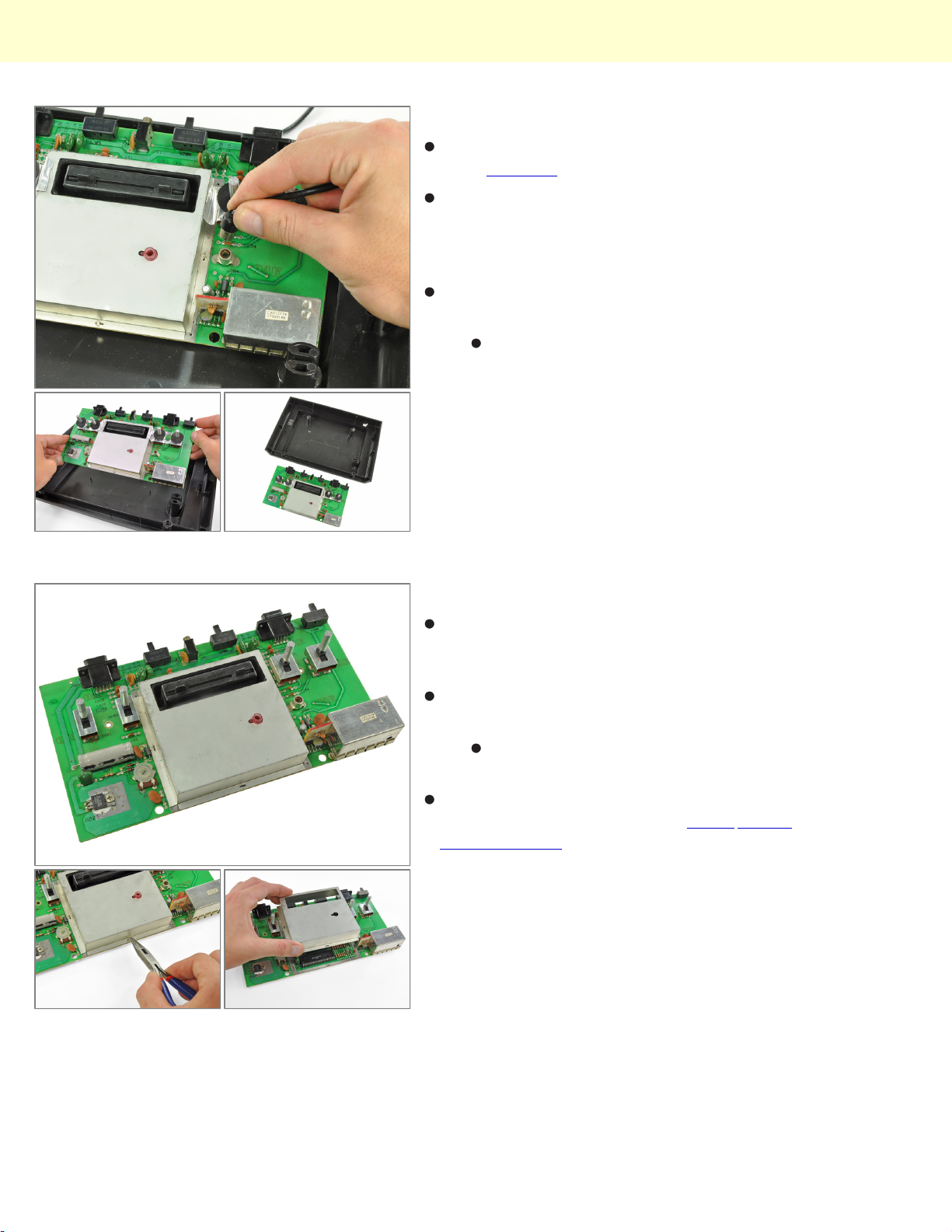
There are four screws holding the upper and lower
case together.
Hmm, these screws in the back are at an odd angle:
almost 30 degrees off of vertical! Strange.
With such a large console, there must be a ton of
awesome components inside...
Step 4
...Or not. Seriously? That's it? The case design team
must have wanted to give lots of breathing room to the
motherboard team, just in case. (Actually this is the
third version of the internal hardware, the first took up
much more of the case.)
Jay Miner was able to integrate the display and sound
chip into a single IC, thereby reducing the footprint of
the motherboard, but the case size still seems rather
hyperbolic.
With a design that is unseen in just about any other
electronic device, the motherboard is propped up and
sits at an angle of 30 degrees inside the Atari. Now
those case screws make sense!
© 2010 iFixit — CC BY-NC-SA www.iFixit.com Page 2 of 7
Page 3
Atari 2600 Teardown
Step 5
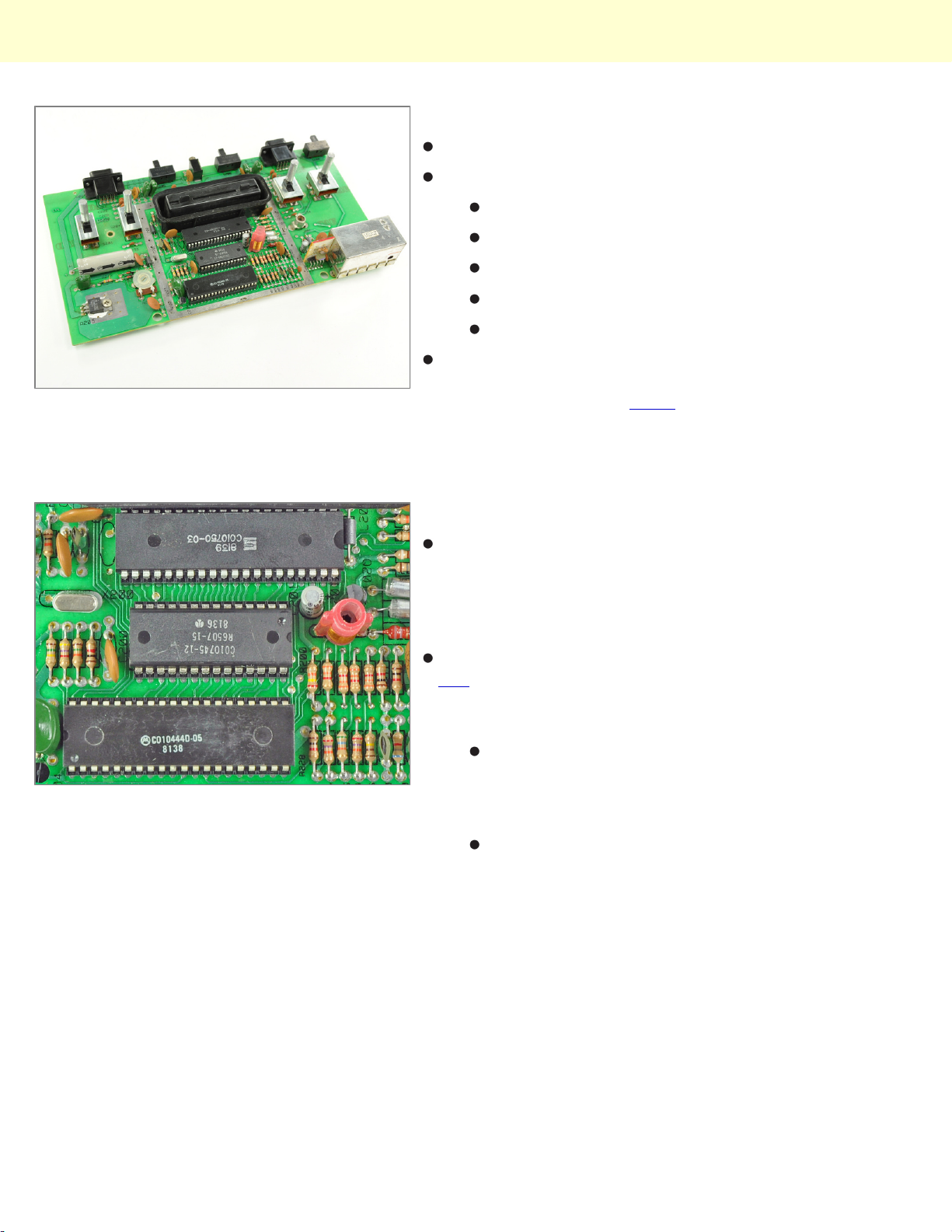
Finally, cables that are not soldered to the board! (Take
note, Studio II.) The RCA cable is easily removed.
The motherboard easily lifts out, as there are no
additional screws or clips holding it in place. The only
thing securing it down were the angled screws we
removed from the outer case.
The motherboard measures 9.75" x 5.25" and the lower
case measures 13.75" x 9.75".
The case of the 2600 is 2.6 times larger than the
motherboard!
Step 6
The motherboard of the 2600 is dominated by an
ominous metal box, likely the EMI shield covering the
ICs.
Our efforts to access the brain of the Atari are
temporarily thwarted by four metal tabs.
Atari gets a +1 on repairability for not soldering the
shield to the motherboard, as some recent
manufacturers have done.
A few short twists with pliers and the EMI shield
lifts free.
© 2010 iFixit — CC BY-NC-SA www.iFixit.com Page 3 of 7
Page 4
Atari 2600 Teardown
Step 7
Brains!
The Atari 2600 boasts:
Unlike most earlier consoles -- where the games were
stored on internal chips -- the Atari 2600 stored games
in Read Only Memory (ROM) chips housed in external
cartridges. This allowed for a potentially infinite number
of playable games for the console.
Step 8
The top two chips are the 6532 Ram-I/O-Timer (RIOT)
chip and MOS Technology's 6507 CPU (a slimmer
version of the more popular 6502). By the current
revision, they were manufactured by Synertek and
Rockwell, respectively.
1.19MHz 8-bit processor
128 bytes RAM
192 x 160 pixel resolution
128 colors, with max 4 colors per line
2 channel mono sound
Atari's custom chip, the Television Interface Adapter (
TIA) is the moneymaker of the 2600, as it allowed for
multiple colors, increased graphic capabilities, and
sound.
Because memory was so expensive during the
2600's design, the video processor has no
external RAM. As a result the CPU must send
video data to the TIA one line of video at a time.
There are six components of video that the TIA
can create: The playing field, Two sprites (8 pixel
lines), a "ball" (single pixel), and two "missiles"
(two pixel lines). Combinations of these elements
allowed for the complex video games witnessed
in the 2600.
© 2010 iFixit — CC BY-NC-SA www.iFixit.com Page 4 of 7
Page 5
Atari 2600 Teardown
Step 9
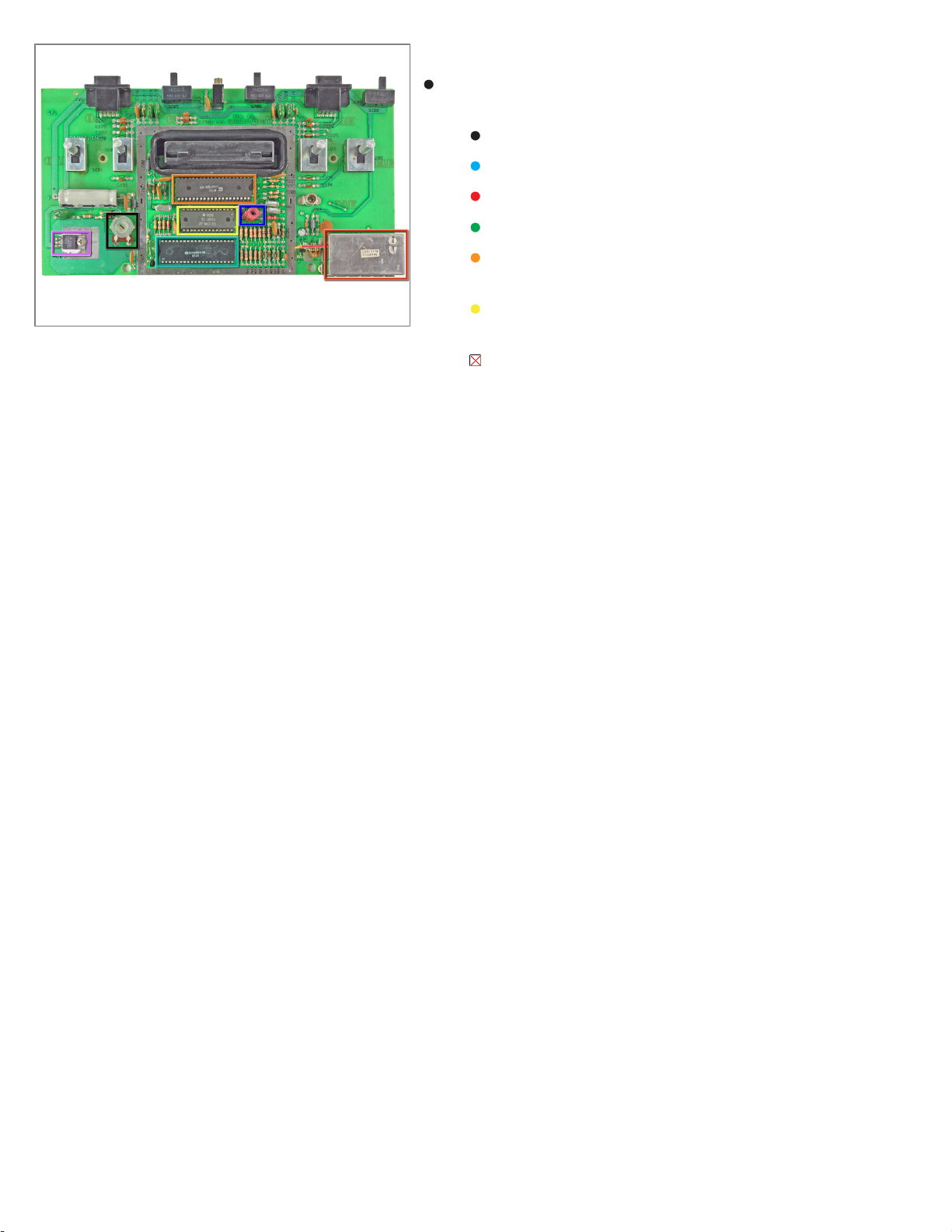
With the EMI shield removed, all the components of the
motherboard are visible.
Color tint adjustment
Sound tuner
RF modulator
Cyan Engineering TIA custom chip
MOS Technology 6532 RIOT (manufactured by
Synertek)
MOS Technology 6507 CPU (manufactured by
Rockwell)
Voltage regulator (manufactured by Texas
Instruments)
© 2010 iFixit — CC BY-NC-SA www.iFixit.com Page 5 of 7
Page 6
Atari 2600 Teardown
Step 10
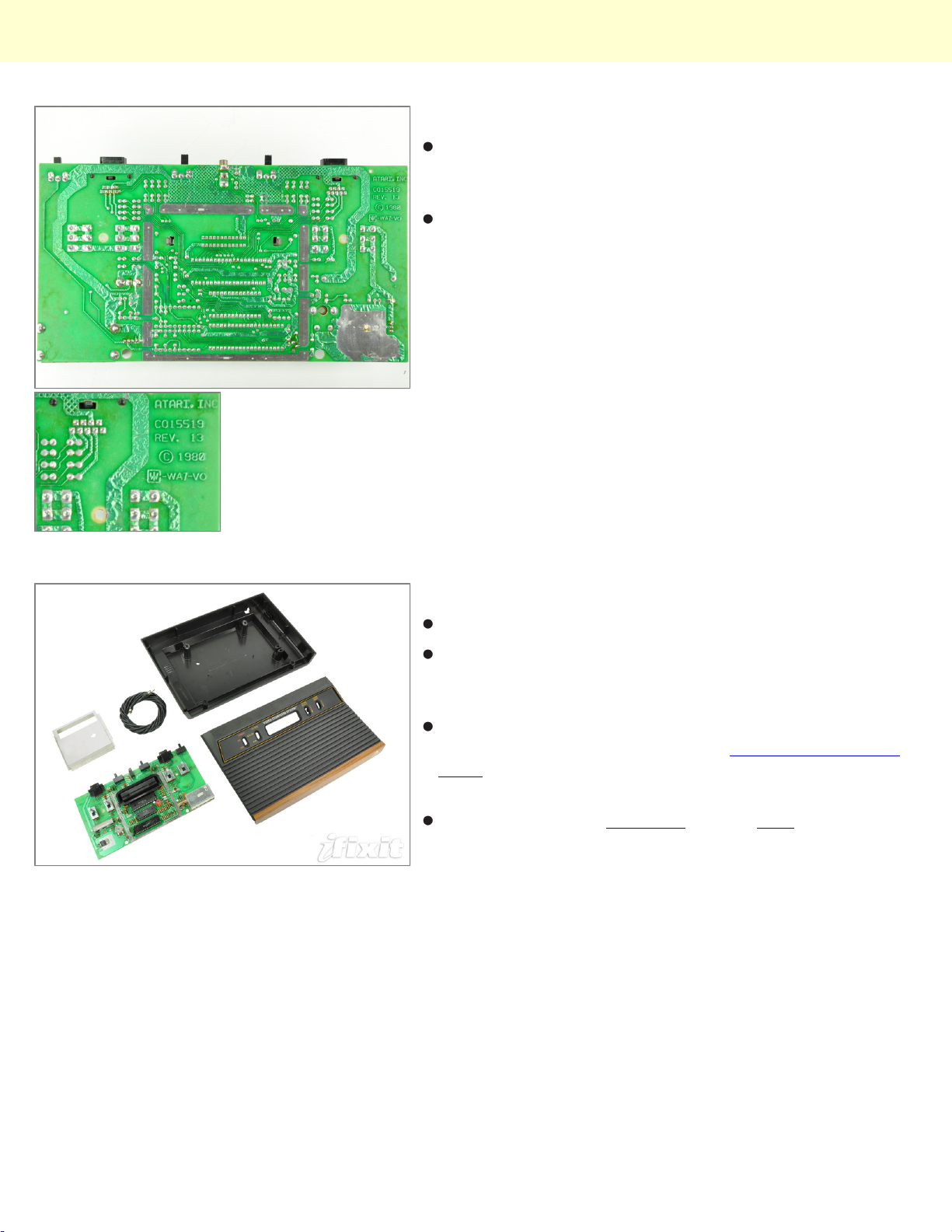
The back of the Atari 2600 Motherboard has exactly
nothing interesting on it, except a great appreciation for
through-hole soldering and hand drawn circuits.
This model was revision 13. How lucky!
Step 11
Behold the Atari in all five of its parts!
We give the Atari 2600 a big plus for repairability. Every
component is attached via through-hole solder, so
replacing a burnt out resistor or IC is quite feasible.
We're sad to say that we don't have parts for the Atari
2600, but we do have a brand new game console parts
store to help keep your (slightly more modern) consoles
running.
Keep an eye on our teardown page or blog for a
detailed look at another retro game console tomorrow!
© 2010 iFixit — CC BY-NC-SA www.iFixit.com Page 6 of 7
Page 7

Atari 2600 Teardown
To reassemble your device, follow these instructions in reverse order.
© 2010 iFixit — CC BY-NC-SA www.iFixit.com Page 7 of 7
 Loading...