

Page 1
Page 1/9
Safety Data Sheet (SDS)
OSHA
HazCom Standard 29 CFR 1910.1200(g) and GHS Rev 03.
Issue date 12/20/2021
Reviewed on 12/20/2021
41.0
Céramique 2
*
1
*
2 Hazard(s)
· Product identifier
· Trade name: Céramique 2
· Relevant identified uses of the substance or mixture and uses advised against
No further relevant information available.
· Product description Ceramic Thermal Compound
· Details of the supplier of the safety data sheet
· Manufacturer:
Arctic Silver Incorporated
9826 West Legacy Ave.
Visalia, CA 93291 USA
[email protected]
www.arcticsilver.com
Supplier: Ultron AG, August-Schmidt-Str. 7, 52477 Alsdorf
[email protected]
Emergency Number:
02404918100
· Classification of the substance or mixture
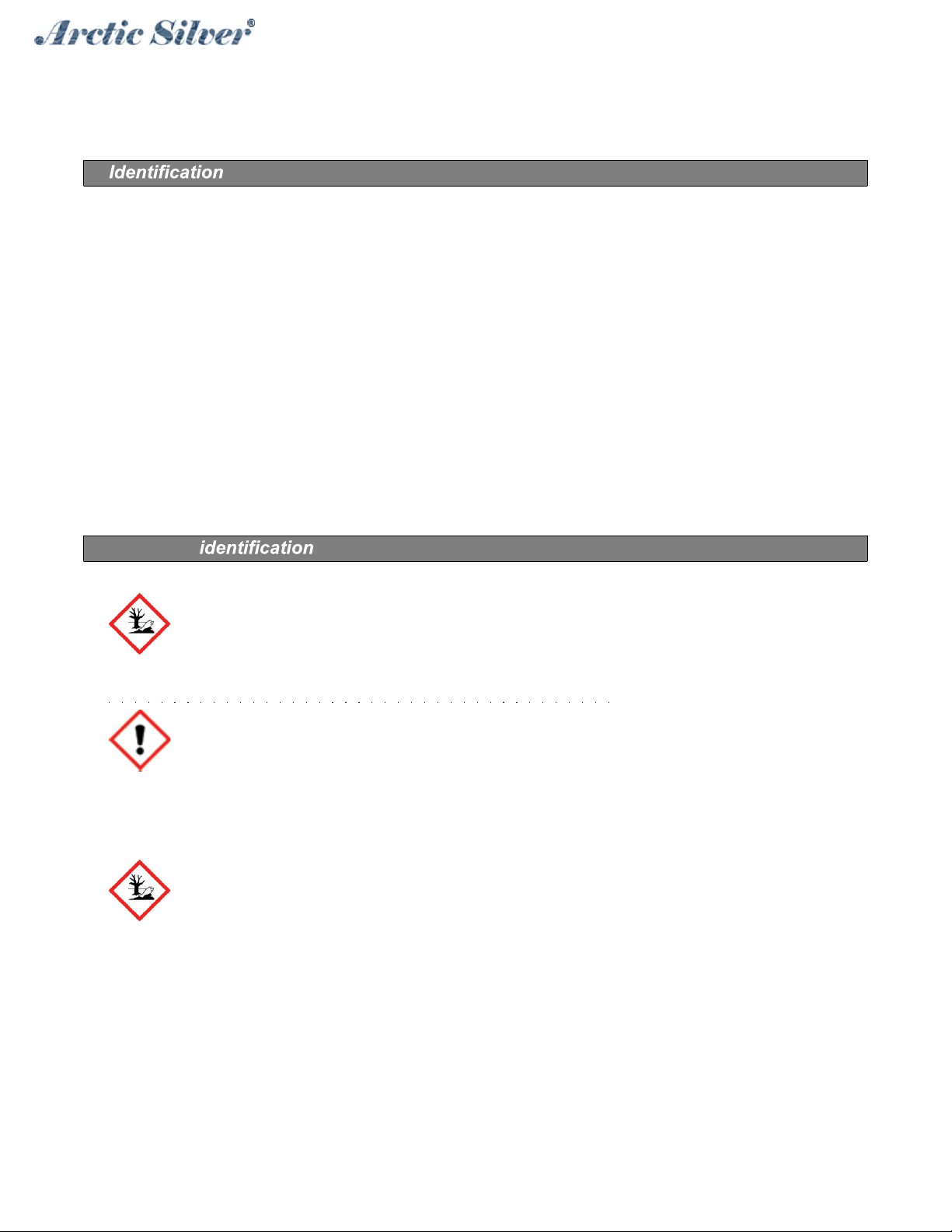
GHS09 Environment
Aquatic Acute 1 H400 Very toxic to aquatic life.
Aquatic Chronic 1 H410 Very toxic to aquatic life with long lasting effects.
Eye Irrit. 2B H320 Causes eye irritation.
· Label elements
· GHS label elements
The product is classified and labeled according to the Globally Harmonized System (GHS).
· Hazard pictograms
GHS09
· Signal word Warning
· Hazard statements
Causes eye irritation.
Very toxic to aquatic life.
Very toxic to aquatic life with long lasting effects.
· Precautionary statements
Avoid release to the environment.
Wash thoroughly after handling.
If in eyes: Rinse cautiously with water for several minutes. Remove contact lenses, if present and easy to do.
Continue rinsing.
If eye irritation persists: Get medical advice/attention.
Collect spillage.
Dispose of contents/container in accordance with local/regional/national/international regulations.
· Unknown acute toxicity:
10 percent of the mixture consists of ingredient(s) of unknown toxicity.
(Contd. on page 2)
Page 2
41.0
Page 2/9
Safety Data Sheet (SDS)
OSHA
HazCom Standard 29 CFR 1910.1200(g) and GHS Rev 03.
Issue date 12/20/2021
Reviewed on 12/20/2021
Trade name: Céramique 2
· Classification system:
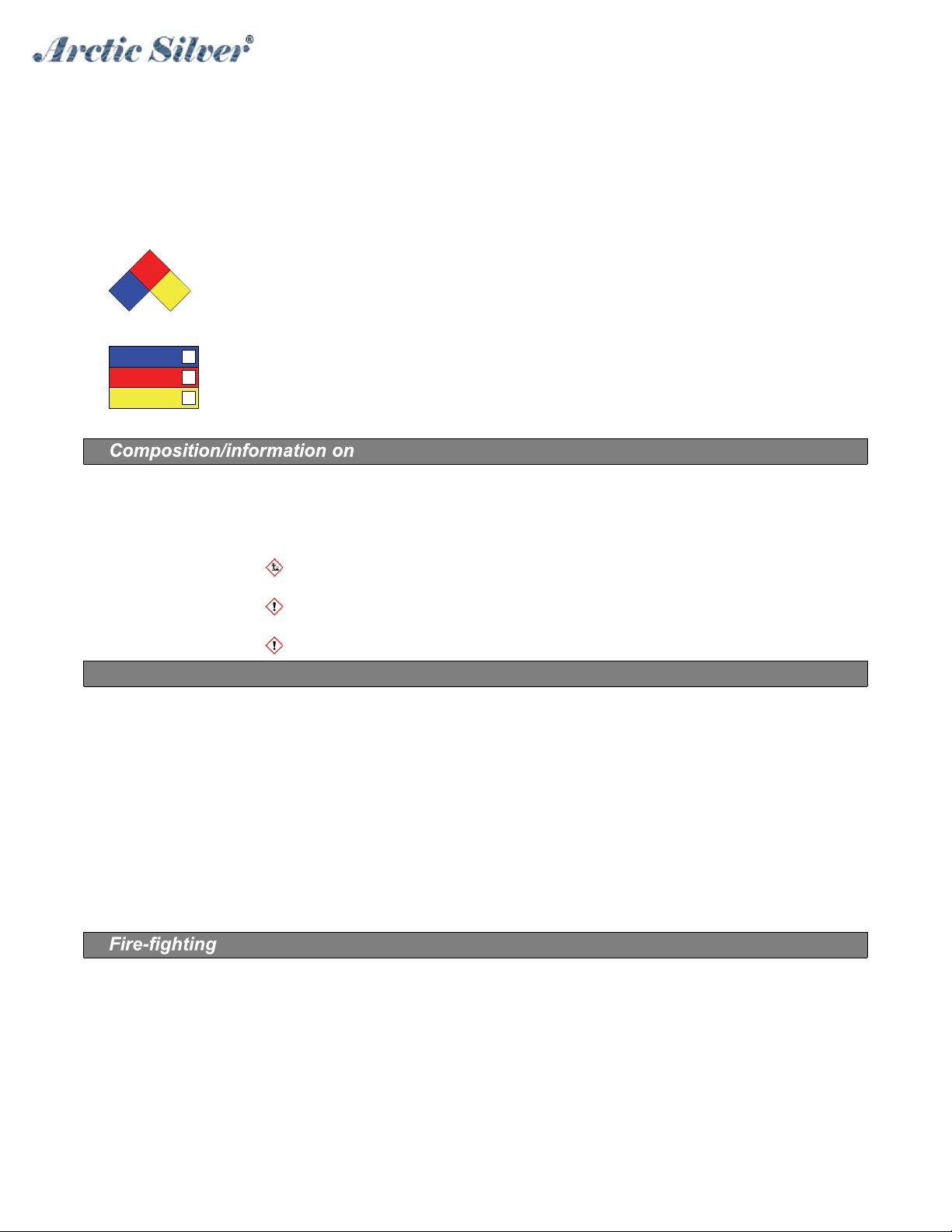
· NFPA ratings (scale 0 - 4)
Health = 1
Fire = 1
Reactivity = 0
· HMIS-ratings (scale 0 - 4)
Health = 1
Fire = 1
Reactivity = 0
· Hazard(s) not otherwise classified (HNOC): None known
· Chemical characterization: Mixtures
· Description: Mixture of substances listed below with nonhazardous additions.
· Dangerous Components:
CAS: 1314-13-2
RTECS: ZH 4810000
Zinc Oxide
70-85%
Aquatic Acute 1, H400; Aquatic Chronic 1, H410
CAS: 10043-11-5
Boron Nitride
<3-8%
Skin Irrit. 2, H315; STOT SE 3, H335; Eye Irrit. 2B, H320
CAS: 1344-28-1
RTECS: BD 1200000
Aluminum Oxide
<5%
STOT SE 3, H335
· Description of first aid measures
· After inhalation: Supply fresh air; consult doctor in case of complaints.
· After skin contact:
Generally the product does not irritate the skin.
Repeated and prolonged skin contact could cause minor skin irritation.
· After eye contact:
Rinse opened eye for several minutes under running water.
If eye irritation occurs, consult a doctor.
· After swallowing: If swallowed and symptoms occur, consult a doctor.
· Information for doctor:
· Most important symptoms and effects, both acute and delayed: No further relevant information available.
· Indication of any immediate medical attention and special treatment needed
No further relevant information available.
· Extinguishing media
· Suitable extinguishing agents:
Use firefighting measures that suit the environment.
CO₂, extinguishing powder or water spray. Fight larger fires with water spray or alcohol resistant foam.
· Special hazards arising from the substance or mixture No further relevant information available.
(Contd. on page 3)
*
3 ingredients
*
4 First-aid measures
*
5 measures
1
1 0
HEALTH 1
FIRE
1
REACTIVITY 0
Page 3
41.0
Page 3/9
Safety Data Sheet (SDS)
OSHA
HazCom Standard 29 CFR 1910.1200(g) and GHS Rev 03.
Issue date 12/20/2021
Reviewed on 12/20/2021
Trade name: Céramique 2
· Advice for firefighters
· Protective equipment:
As in any fire, wear self-contained breathing apparatus pressure-demand (NIOSH approved or equivalent),
and full protective gear to prevent contact with skin and eyes.
· Personal precautions, protective equipment and emergency procedures Not required.
· Environmental precautions:
Inform respective authorities in case of seepage into water course or sewage system.
Dilute with plenty of water.
Do not allow to enter sewers/surface or ground water.
· Methods and material for containment and cleaning up:
Absorb with liquid-binding material (i.e. sand, diatomite, acid binders, universal binders, sawdust).
Dispose of the collected material according to regulations.
· Reference to other sections
See Section 7 for information on safe handling.
See Section 8 for information on personal protection equipment.
See Section 13 for disposal information.
· Handling:
· Precautions for safe handling
KEEP OUT OF REACH OF CHILDREN! Avoid prolonged or repeated skin contact. Avoid breathing vapors.
Do not incinerate or burn containers. Always replace overcap when not in use. Avoid use around open flames
and other sources of ignition. Use only with adequate ventilation, opening doors or windows to achieve crossventilation. Ensure that all equipment is grounded to prevent static discharge. Containers of this material may
be hazardous when emptied due to solid or vapor residue. Wash hands after use.
No special precautions are necessary if used correctly.
· Information about protection against explosions and fires: No special measures required.
· Conditions for safe storage, including any incompatibilities
· Storage:
· Requirements to be met by storerooms and receptacles: Store in a cool, dry place.
· Information about storage in one common storage facility: Not required.
· Further information about storage conditions: None.
· Specific end use(s) No further relevant information available.
· Additional information about design of technical systems: No further data; see section 7.
· Control parameters
· Components with occupational exposure limits:
The product does not contain any relevant quantities of materials with critical values that have to be monitored
at the workplace.
· Additional information: The lists that were valid during the creation of this SDS were used as basis.
· Exposure controls
· Personal protective equipment:
· General protective and hygienic measures:
The usual precautionary measures for handling chemicals should be followed.
Wash hands before breaks and at the end of work.
· Breathing equipment: Not required.
· Protection of hands: Not required.
(Contd. on page 4)
6 Accidental release measures
*
7 and storage
*
8 Exposure controls/personal protection
Page 4

41.0
Page 4/9
Safety Data Sheet (SDS)
OSHA
HazCom Standard 29 CFR 1910.1200(g) and GHS Rev 03.
Issue date 12/20/2021
Reviewed on 12/20/2021
Trade name: Céramique 2
· Information on basic physical and chemical properties
· General Information
· Appearance:
Form: Grease
Color: Whitish
· Odor: Slight
· Odor threshold: Not determined.
· pH-value: Not determined.
· Change in condition
Melting point/Melting range: Not determined.
Boiling point/Boiling range: Not determined.
· Flash point: > 999 °C (> 1830 °F)
· Flammability (solid, gaseous): Not applicable.
· Ignition temperature:
Decomposition temperature: Not determined.
· Auto igniting: Product is not self-igniting.
· Danger of explosion: Product does not present an explosion hazard.
· Explosion limits:
Lower: Not determined.
Upper: Not determined.
· Vapor pressure: Not determined.
· Density @ 20 °C (68 °F): 2.6-2.7 g/cm³ (21.697-22.53 lbs/gal)
· Relative density Not determined.
· Vapor density Not determined.
· Evaporation rate Not determined.
· Solubility in / Miscibility with
Water: 2 %
· Partition coefficient (n-octanol/water): Not determined.
· Viscosity:
Dynamic: Not determined.
Kinematic: Not determined.
· Solvent content:
Organic solvents: 0.0 %
· Other information No further relevant information available.
(Contd. on page 5)
*
9 Physical and chemical properties
Page 5

41.0
Page 5/9
Safety Data Sheet (SDS)
OSHA
HazCom Standard 29 CFR 1910.1200(g) and GHS Rev 03.
Issue date 12/20/2021
Reviewed on 12/20/2021
Trade name: Céramique 2
· Reactivity No further relevant information available.
· Chemical stability Stable under normal conditions.
· Thermal decomposition / conditions to be avoided: No decomposition if used according to specifications.
· Possibility of hazardous reactions No dangerous reactions known.
· Conditions to avoid No further relevant information available.
· Incompatible materials: Strong acids, strong bases, strong oxidizing agents and strong reducing agents.
· Hazardous decomposition products:
Reacts with acids and alkalis to form combustible hydrogen gas.
Carbon monoxide
Carbon dioxide
Nitrogen oxides (NOx)
· Information on toxicological effects
· Acute toxicity:
· LD/LC50 values that are relevant for classification:
1314-13-2 Zinc Oxide
Oral
LD50
> 5000 mg/kg (rat)
· Primary irritant effect:
· on the skin: No irritating effect.
· on the eye: No irritating effect.
· Additional toxicological information:
· Carcinogenic categories
· IARC (International Agency for Research on Cancer)
None of the ingredients are listed.
· NTP (National Toxicology Program)
None of the ingredients are listed.
· OSHA-Ca (Occupational Safety & Health Administration)
None of the ingredients are listed.
· Toxicity
· Aquatic toxicity:
Avoid release into the environment. Runoff from fire control or dilution water may cause pollution.
· Persistence and degradability No further relevant information available.
· Behavior in environmental systems:
· Bioaccumulative potential No further relevant information available.
· Mobility in soil No further relevant information available.
· Ecotoxical effects:
· Remark: Very toxic for fish
· Additional ecological information:
· General notes:
Do not allow product to reach ground water, water course or sewage system.
Danger to drinking water if even small quantities leak into the ground.
Poisonous for fish and plankton in water bodies.
Very toxic for aquatic organisms
(Contd. on page 6)
*
10 Stability and reactivity
11
Toxicological
information
12
Ecological
information
Page 6
41.0
Page 6/9
Safety Data Sheet (SDS)
OSHA
HazCom Standard 29 CFR 1910.1200(g) and GHS Rev 03.
Issue date 12/20/2021
Reviewed on 12/20/2021
Trade name: Céramique 2
· Results of PBT and vPvB assessment
· PBT: Not applicable.
· vPvB: Not applicable.
· Other adverse effects No further relevant information available.
· Waste treatment methods
· Recommendation:
Must not be disposed of together with household garbage. Do not allow product to reach sewage system.
Observe all federal, state and local environmental regulations when disposing of this material.
· Uncleaned packagings:
· Recommendation: Disposal must be made according to official regulations.
· Recommended cleansing agent: Water, if necessary with cleansing agents.
· UN-Number
· DOT Non-Regulated Material
· ADR, IMDG, IATA UN3082
· UN proper shipping name
· DOT Non-Regulated Material
· ADR UN3082 Environmentally hazardous substances, liquid, n.o.s.
(Zinc Oxide)
· IMDG ENVIRONMENTALLY HAZARDOUS SUBSTANCE, LIQUID,
N.O.S. (Zinc Oxide), MARINE POLLUTANT
· IATA ENVIRONMENTALLY HAZARDOUS SUBSTANCE, LIQUID,
N.O.S. (Zinc Oxide)
· Transport hazard class(es)
· DOT
· Class Non-Regulated Material
· ADR
· Class 9 (M6) Miscellaneous dangerous substances and articles
· Label 9
· IMDG, IATA
· Class 9 Miscellaneous dangerous substances and articles
· Label 9
· Packing group
· DOT Non-Regulated Material
· ADR, IMDG, IATA III
· Environmental hazards: Product contains environmentally hazardous substances: Zinc
Oxide
(Contd. on page 7)
*
13 Disposal considerations
14 Transport information
Page 7

41.0
Page 7/9
Safety Data Sheet (SDS)
OSHA
HazCom Standard 29 CFR 1910.1200(g) and GHS Rev 03.
Issue date 12/20/2021
Reviewed on 12/20/2021
Trade name: Céramique 2
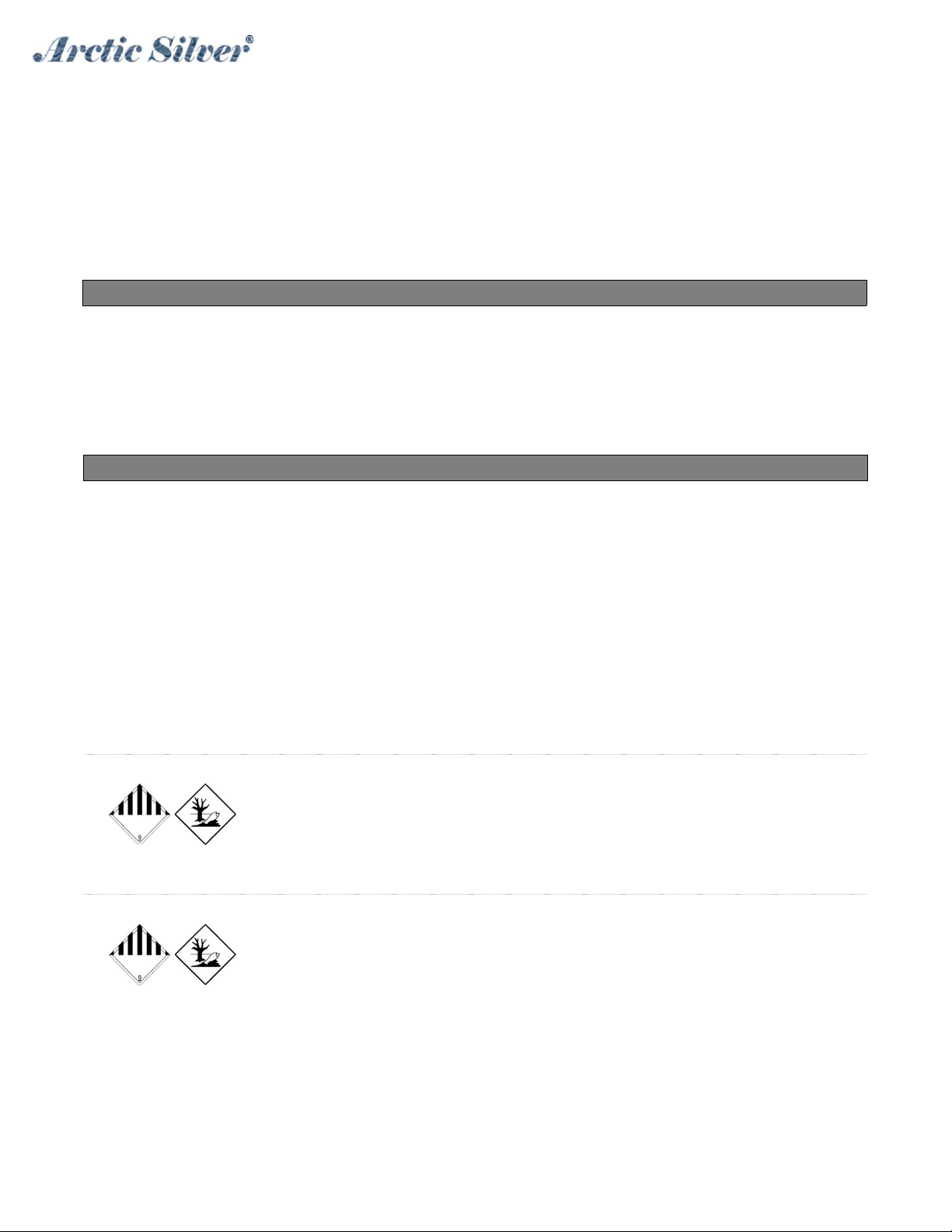
· Special marking (ADR): Symbol (fish and tree)
· Special marking (IATA): Symbol (fish and tree)
· Special precautions for user Warning: Miscellaneous dangerous substances and articles
· Danger code (Kemler): 90
· EMS Number: F-A,S-F
· Transport in bulk according to Annex II of
MARPOL73/78 and the IBC Code Not applicable.
· Transport/Additional information:
· ADR
· Excepted quantities (EQ) Code: E1
· IMDG
· Limited quantities (LQ) 5L
· Excepted quantities (EQ) Code: E1
·
· UN "Model Regulation": UN3082, Environmentally hazardous substances, liquid, n.o.s.
(Zinc Oxide), 9, III
· Safety, health and environmental regulations/legislation specific for the substance or mixture
· Sara
· Section 355 (extremely hazardous substances):
None of the ingredients are listed.
· Section 313 (Specific toxic chemical listings):
1314-13-2
Zinc Oxide
1344-28-1
Aluminum Oxide
· TSCA (Toxic Substances Control Act):
All ingredients are listed.
· California Proposition 65
· Chemicals known to cause cancer:
None of the ingredients are listed.
· Chemicals known to cause reproductive toxicity for females:
None of the ingredients are listed.
· Chemicals known to cause reproductive toxicity for males:
None of the ingredients are listed.
· Chemicals known to cause developmental toxicity:
None of the ingredients are listed.
· Carcinogenic categories
· EPA (Environmental Protection Agency)
1314-13-2
Zinc Oxide
D, I, II
10043-11-5
Boron Nitride
I (oral)
(Contd. on page 8)
*
15 Regulatory information
Page 8

41.0
Page 8/9
Safety Data Sheet (SDS)
OSHA
HazCom Standard 29 CFR 1910.1200(g) and GHS Rev 03.
Issue date 12/20/2021
Reviewed on 12/20/2021
Trade name: Céramique 2
· TLV (Threshold Limit Value established by ACGIH)
1344-28-1
Aluminum Oxide
A4
· NIOSH-Ca (National Institute for Occupational Safety and Health)
None of the ingredients are listed.
· GHS label elements
The product is classified and labeled according to the Globally Harmonized System (GHS).
· Hazard pictograms
GHS09
· Signal word Warning
· Hazard statements
Causes eye irritation.
Very toxic to aquatic life.
Very toxic to aquatic life with long lasting effects.
· Precautionary statements
Avoid release to the environment.
Wash thoroughly after handling.
If in eyes: Rinse cautiously with water for several minutes. Remove contact lenses, if present and easy to do.
Continue rinsing.
If eye irritation persists: Get medical advice/attention.
Collect spillage.
Dispose of contents/container in accordance with local/regional/national/international regulations.
· National regulations:
The product is subject to be classified according with the latest version of the regulations on hazardous
substances.
· State Right to Know
All ingredients are listed.
· Chemical safety assessment: A Chemical Safety Assessment has not been carried out.
The information and recommendations in this safety data sheet are, to the best of our knowledge, accurate as
of the date of issue. Nothing herein shall be deemed to create warranty, expressed or implied, and shall not
establish a legally valid contractual relationship. It is the responsibility of the user to determine applicability of
this information and the suitability of the material or product for any particular purpose.
· Date of preparation / last revision 12/20/2021 / 3
· Abbreviations and acronyms:
ADR: The European Agreement concerning the International Carriage of Dangerous Goods by Road
ADN: The European Agreement concerning the International Carriage of Dangerous Goods by Inland Waterways
IMDG: International Maritime Code for Dangerous Goods
DOT: US Department of Transportation
IATA: International Air Transport Association
ACGIH: American Conference of Governmental Industrial Hygienists
EINECS: European Inventory of Existing Commercial Chemical Substances
ELINCS: European List of Notified Chemical Substances
CAS: Chemical Abstracts Service (division of the American Chemical Society)
NFPA: National Fire Protection Association (USA)
HMIS: Hazardous Materials Identification System (USA)
LC50: Lethal concentration, 50 percent
(Contd. on page 9)
16 Other information
Page 9

41.0
Page 9/9
Safety Data Sheet (SDS)
OSHA
HazCom Standard 29 CFR 1910.1200(g) and GHS Rev 03.
Issue date 12/20/2021
Reviewed on 12/20/2021
Trade name: Céramique 2
LD50: Lethal dose, 50 percent
Skin Irrit. 2: Skin corrosion/irritation, Hazard Category 2
Eye Irrit. 2B: Serious eye damage/eye irritation, Hazard Category 2B
STOT SE 3: Specific target organ toxicity - Single exposure, Hazard Category 3
Aquatic Acute 1: Hazardous to the aquatic environment – Acute Hazard, Category 1
Aquatic Chronic 1: Hazardous to the aquatic environment - Chronic Hazard, Category 1
· * Data compared to the previous version altered.
 Loading...