

Page 1
TECHNICAL DATA SHEET
PJ/D181/Issue 05/Oct 2017/Contractors Silicone Page 1 of 4
Next Revision: Oct 2022
ALCOLIN
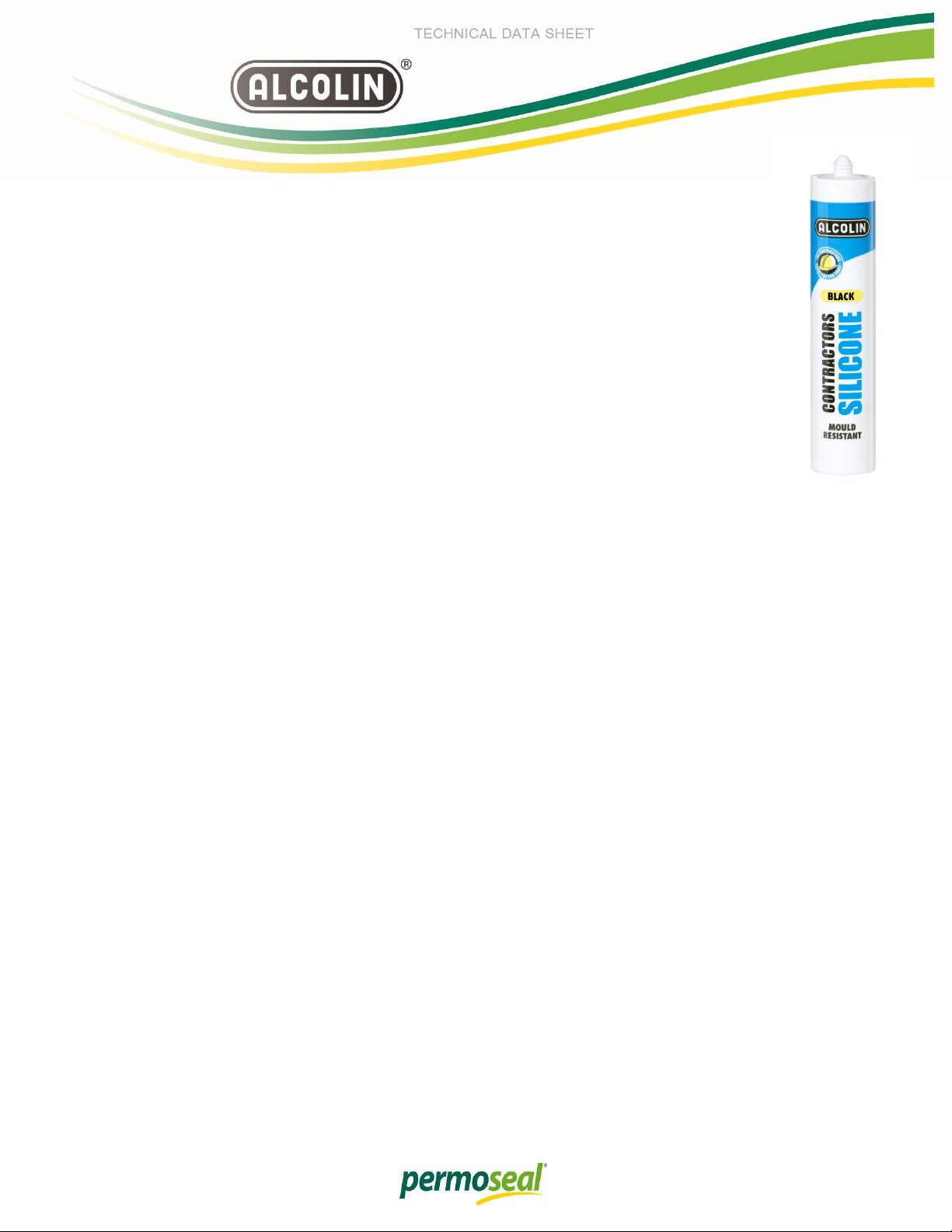
CONTRACTORS SILICONE
Description
ALCOLIN CONTRACTORS SILICONE is a contractor’s grade one-part acetoxy-curing silicone
sealant that provides a permanent flexible watertight seal for general purpose sealing in and
around the house.
Features & Benefits
Non-sag – can apply on vertical surfaces
Mould resistant – suitable for use in damp areas e.g. showers, bathrooms
Flexible at temperatures as low as -50°C
Heat resistance up to +150°C
Versatile – adheres to a wide variety of substrates
Waterproof – suitable for external applications
Excellent UV resistance and abrasion resistance – long lasting durable bond
Unaffected by alcohols, dilute acids and alkalis, soap and household detergents
Excellent colour fastness; clear grades are non-yellowing
Moisture curing system; cure rate is unaffected by low ambient temperatures
Applications
ALCOLIN CONTRACTORS SILICONE is ideal for sealing, bonding, and mending in cars, boats, caravans, and
houses e.g. sealing around bathroom and kitchen fittings, baths, showers, sinks, toilets, oven door windows,
window frames, boards, signs, insulating appliances, fixing leaking plumbing, etc.
Adhesion
ALCOLIN CONTRACTORS SILICONE exhibits excellent primerless adhesion to many non-porous materials e.g.
ceramics, glass, enamel, porcelain, coated wood, painted surfaces, canvas, stainless steel, aluminium, some
rubbers and some plastics (epoxide, polyester, polyacrylate, polystyrene, formica, fiberglass, acrylics,
polycarbonates and rigid PVC).
Page 2

TECHNICAL DATA SHEET
PJ/D181/Issue 05/Oct 2017/Contractors Silicone Page 2 of 4
Next Revision: Oct 2022
Limitations
Not suitable for alkaline surfaces such as concrete, fibrous cement, asbestos, plaster and marble, as the
product releases acetic acid during curing.
Not suitable for some metals such as mild steel, lead, copper, tin, galvanized iron, brass or zinc as it may
cause corrosion.
May become discoloured in contact with some organic elastomers, which tend to bleed oil or solvents into
the silicone, e.g. EPDM, APTK, Neoprene and Bituminous surfaces. It should not be used on the back of
mirrors, as it will de-silver the mirror backing, affecting the front appearance of the mirror. Not suitable for
contact with marble, granite, quartzite, and similar natural stone as it may discolour the surfaces.
Will not adhere to some plastics such as polyethylene, polypropylene and Teflon.
CANNOT be over-painted.
NOT SUITABLE FOR FISH TANKS (contains a fungicide).
Do not apply sealant when relative humidity is below 10% - cure rate will be affected.
Safety instructions
When working with uncured ALCOLIN CONTRACTORS SILICONE, it is advisable to wear gloves in order to avoid
direct contact with the skin. During curing, acetic acid is released; these vapours should not be inhaled for long
periods or in high concentrations. Consequently, work in a ventilated area.
If ALCOLIN CONTRACTORS SILICONE comes into contact with skin or eyes, flush thoroughly and immediately
with water. If irritation continues, seek medical attention.
Cured silicone rubber can be handled without any risk to health.
Keep ALCOLIN CONTRACTORS SILICONE out of reach of children!
Refer to our Material Safety Data Sheet for further toxicological information and comprehensive handling
instructions.
Surface preparation
Surfaces coming into direct contact with ALCOLIN CONTRACTORS SILICONE must be clean, dry, free from all
loose materials, dust, dirt, oil, rust and any other contaminants.
Non-porous substrates such as metals, glass and plastics should be degreased with a solvent. Plastics can be
lightly abraded with emery paper. On no account should any type of alcohol be used for surface cleaning –
alcohols inhibit the cure of silicones.
Soaps or detergents used to clean the surface must be rinsed away thoroughly with clean water to ensure
that all traces of the soaps are removed before sealing.
Poor surface preparation may result in the delamination of the silicone.
Page 3

TECHNICAL DATA SHEET
PJ/D181/Issue 05/Oct 2017/Contractors Silicone Page 3 of 4
Next Revision: Oct 2022
Directions for use
Ensure surfaces are prepared as above.
Cut tip off cartridge and screw nozzle onto cartridge. Cut the tip of nozzle at an angle to achieve the desired
bead size. Apply silicone with a caulking gun in a continuous bead to the prepared joint.
Use masking tape to get a clean, even sealant line and to eliminate cleaning difficulties on porous surfaces.
Be sure to remove the tape before sealant begins to skin.
Smooth down after application (within 3-5 minutes) before skin formation occurs, by using a flat or rounded
tool or even a finger, dipped in soapy water.
Sealant will be touch dry within 1 hour and reaches full cure after approximately 24 hours.
A pungent vinegar-like odour will be noted during application but will disappear as the sealant cures.
If the area being sealed, needs to be painted, ensure the paint has dried COMPLETELY before sealing.
The following formula is an approximate guideline in order to calculate yield for a standard 280ml cartridge:
L = 280 .
W x D
Where: L = Length of sealant in meters per cartridge
W = Width of joint in mm
D = Depth of joint in mm
Cleaning
Uncured silicone can easily be removed from hands or tools using a clean cloth soaked in solvent such as
turpentine or paraffin. If removing uncured silicone from clothing, check fabric colour fastness before using
the above mentioned solvents.
Sealant will be touch dry within 1 hour and reaches full cure after approximately 24 hours.
When fully cured, sealant can be removed by mechanical means, i.e. using a sharp knife or chemically, using
a Silicone Stripper.
Storage stability
ALCOLIN CONTRACTORS SILICONE has a shelf life of at least 12 months if stored in a cool, dry place below 25°C
in its original sealed moisture-tight container.
If the material is kept beyond the recommended shelf life, it is not necessarily un-usable; a check should be
performed to observe whether the product is still workable, apply-able and uncured.
To maximize the shelf life of the opened tube, it is advisable to create an airtight environment. This can be
achieved by removing the nozzle and wiping down the opening, placing a piece of plastic over it, screwing on the
nozzle, and storing in a cool environment.
Product packaging
260ml Cartridge
Page 4
TECHNICAL DATA SHEET
PJ/D181/Issue 05/Oct 2017/Contractors Silicone Page 4 of 4
Next Revision: Oct 2022
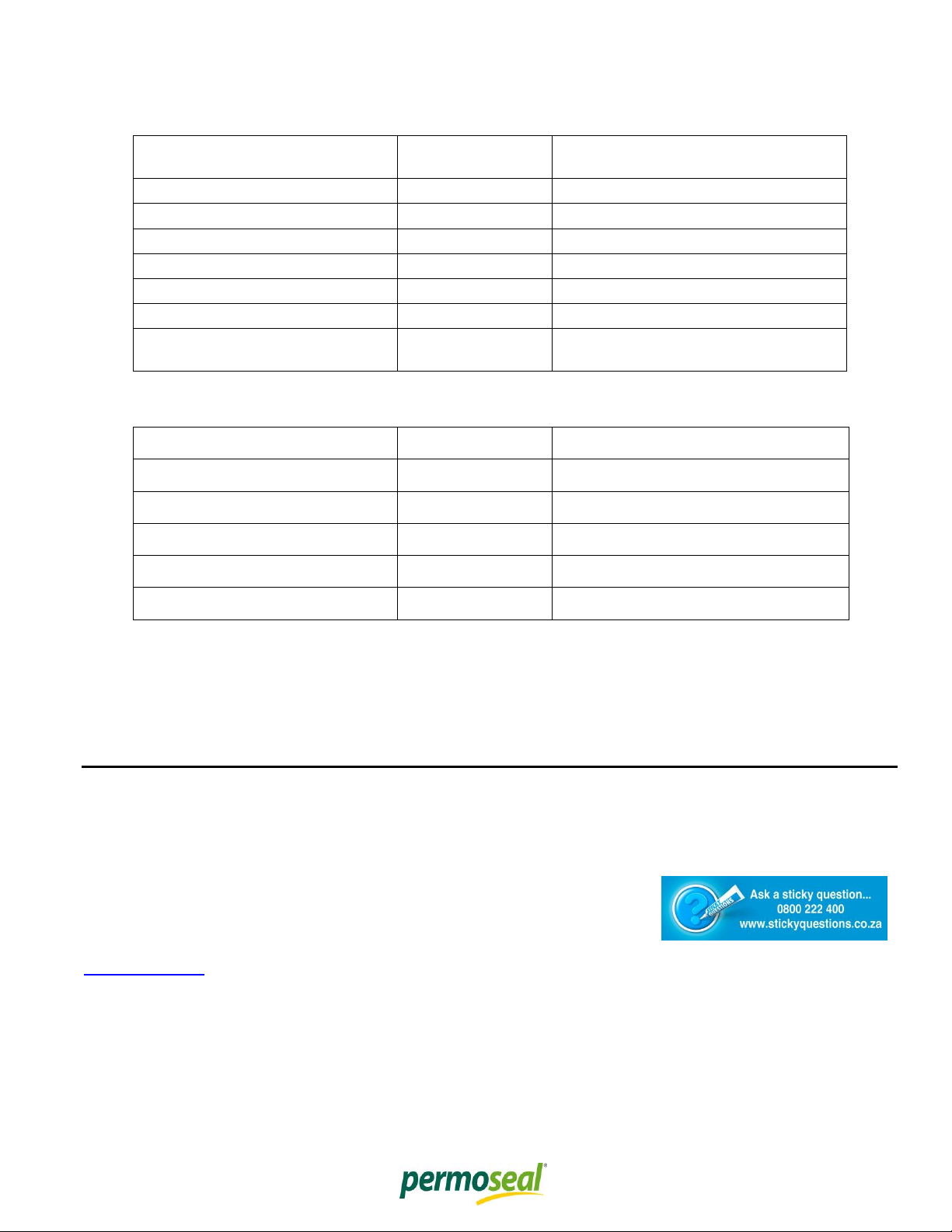
Product data
i. Physical data – Uncured Silicone
Appearance
Homogenous non sagging paste in
Clear, White, Black, Grey and Bronze
Tack free time
ASTM C-679-91
Approx. 15 – 20 minutes
Skin over time
BS 5889 Ap.A
Approx. 25 – 35 minutes
Curing time
At 23°C & 55% RA
Approx. 24 hours per 2/3mm
Slump
ISO 7390
0.00mm
Coverage - 260ml cartridge
10 metres (5mm x 5mm joint)
Packaging sizes
260ml cartridges
Shelf life
12 months when sealed and stored
below 25°C
ii. Performance data
Service temperature range
Min. –50°C to Max. +150°C
Tensile strength
ISO 37
1.2 MPa
Modulus at 100% elongation
ISO 37
0.35 Mpa
Elastic recovery
ISO 7389
90%
Ultimate elongation
ISO 37
400%
Shore A hardness
ISO 868
13%
The above information is only offered, as a guide to the use of this product. Furthermore, users should satisfy
themselves that it is suitable for their needs. Since we have no control over the conditions under which it is used, we
cannot accept responsibility for problems caused by the use and/or application of this product.
Head Office: +27(0)21 555 7400
Toll free no: 0800 222 400
1 Beverley Close, Montague Gardens
PO Box 37008, Chempet, 7442
www.alcolin.com
 Loading...