

Page 1
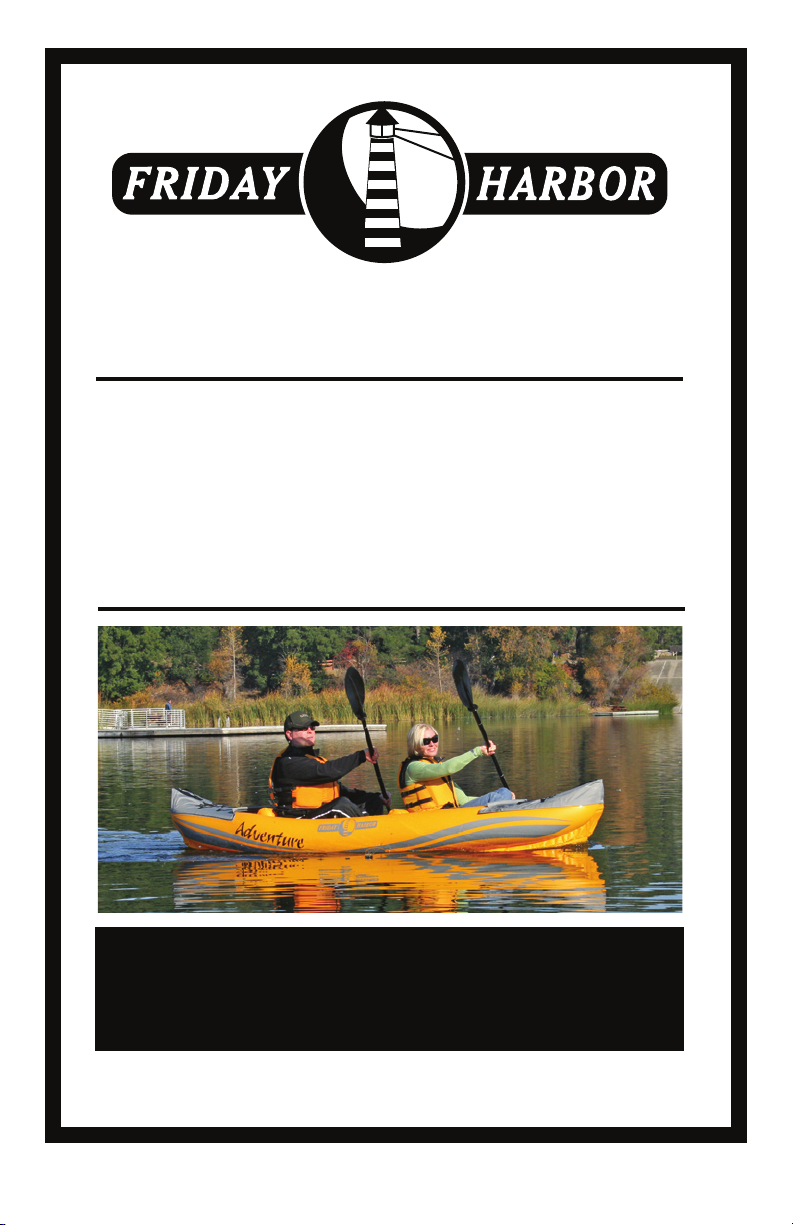
Adventure
INFLATABLE KAYAK
OWNER'S INFORMATION PACKET
MODEL FH202
READ THIS MANUAL CAREFULLY
Save these instructions for future reference
SIERRA STERLING 2010
IMPORTANT!
BEFORE PROCEEDING
Page 2

INFLATABLE KAYAK INSTRUCTION MANUAL
MODEL FH202
CONTENTS
1. CAUTION - SAFETY WARNING
2. INFLATING INSTRUCTIONS
3. GUIDELINES FOR USAGE
4. PROPER CARE
5. REPAIRS
FOR ADDITIONAL INFORMATION PLEASE CALL US AT:
888-545-1424
Page 3

1. CAUTION - SAFETY WARNING
Users of this product agree by their use to accept the inherent risks
involved in this paddlesports activity and agree to follow all
instructions, cautions, and warnings carefully before using this
Kayak.
(PLEASE READ CAUTION STATEMENT CAREFULLY)
C A U T I O N
SAFETY WARNING
PADDLESPORTS CAN B E VERY DANGER OUS AND PHYSI CALLY DEMANDING. THE U SER OF T HIS
PRODUCT SHOULD UNDERSTAND THAT PARTICIPATION IN PADDLESPORTS MAY INVOLVE SERIOUS
INJURY OR DEATH. OBSERVE THE FOLLOWING SAFETY STANDARDS WHENEVER USING THIS
PRODUCT.
· GET PADDLESPOR TS INSTRUCTI ONS SPECIFI C TO THIS TYPE OF CRAFT.
· OBTAIN CERTIFIED FIRST AID TRAINING AND CARRY FIRST AID AND RESCUE/SAFETY EQUIPMENT.
· ALWAYS WEAR A NATIONALLY APPROVED PERSO NAL FLOTATION DEVICE.
· ALWAYS WEAR A HELM ET WHERE APPR OPRIATE.
· DRESS APPR OPRIATELY FOR WEATHER CONDITIONS; COLD WATER AND/OR COLD WEATHER
CAN R ESULT IN HYPOT HERMIA.
· CHECK YOUR EQUIPME NT PRIOR TO EACH US E FOR S IGNS OF WEAR OR FAILURE.
· NEVER PADDLE ALO NE.
· DO NO T PADDLE IN FL OOD CONDITI ONS.
· BE AWARE OF APPROPRIATE RIVER WATER LEVELS, TIDAL CH ANGES, DANGEROUS CURRENTS,
WEATHER CHA NGES, AND STR ONG OFF S HORE WINDS .
· SCOUT U NFAMILIAR WATER; PORTAGE WHERE APPRO PRIATE.
· DO NO T EXCEED YOUR PADDLING ABILITY; BE HONEST WITH Y OURSELF.
· CONSULT YOUR P HYSICIAN PR IOR TO BE GINNING YOUR PADDLE SPORTS TRAIN ING.
· YOU MUST NOT USE ALCOHOL OR M IND ALTERING DRUGS P RIOR TO USING THIS PRODUCT.
· FOLLOW THE MANUFACTURER 'S RECOMMEND ATIONS FOR THE U SE OF THIS PRODU CT.
· IF ADDITIO NAL OUTFITTING IS REQU IRED, USE MANUFACTURER'S APPRO VED MATERIALS
ONLY; DO NOT IM PAIR ENTRY OR EXIT ACC ESS.
· READ O WNER'S INF ORMATION PACKET PRIOR TO U SING TH IS PRODUCT.
THE USER OF THIS PRODUCT A CKNOWLEDGES BOTH AN UNDERSTANDING AND AN ASSUMPTION
OF THE R ISK INVOLVED IN PADDLESPORTS.
Please read this entire manual for additional safety information.
Please pay close attention to items marked Important, Caution,
Warning, Never, and Always.
Page 4
2. INFLATING INSTRUCTIONS
Use either a bellows style foot pump or two-way hand pump to inflate your
kayak. Be sure that the fitting on the pump hose fits snug in the valve on the
kayak. NEVER USE COMPRESSORS, CO2, OR COMPRESSED AIR AS
THEY MAY DAMAGE YOUR KAYAK.
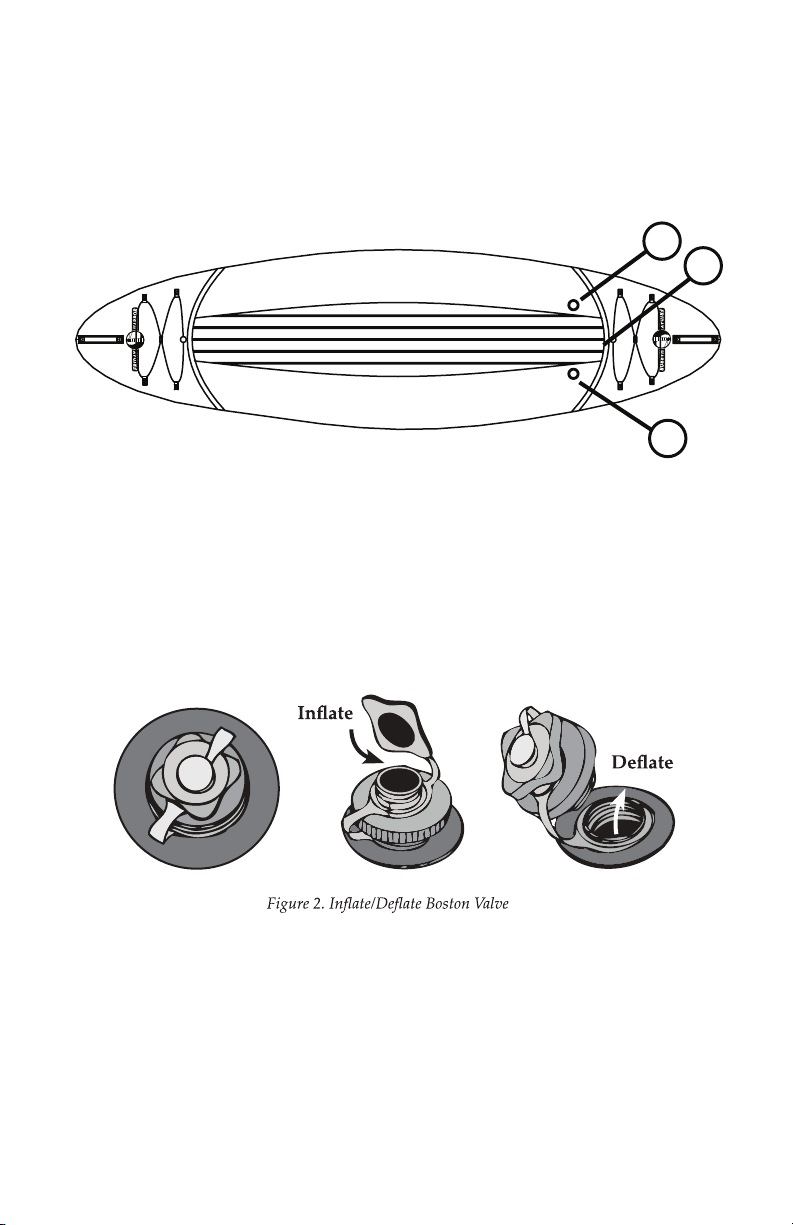
1
2
1. Outer Main Chambers
2. Floor Chamber
Figure 1. (3 CHAMBERS)
2.1 Understanding Your Valves
1. The Adventure kayak uses standard Boston valves for inflation of the side
Main Air Chambers. The following figures give details on how to operate
these valves.
1
2.2 Inflation
Inflate your kayak in the following order: FAILURE TO FOLLOW THESE
INSTRUCTIONS MAY CAUSE DAMAGE TO YOUR KAYAK. DO NOT
OVER INFLATE.
1. Inflate Chamber 1 until it feels firm to the touch.
2. Inflate Chamber 2 until it feels firm to the touch.
3. Inflate chamber 3, “floor”, (using appropriate fitting). Fill with air until firm.
CAUTION: Do Not Over Inflate. The floor should still be a little soft, not
rock hard.
Page 5

A good way to gauge if the kayak is fully inflated is to check the width in
between the tubes at the center of the kayak. There should be 15” of
distance between the main tubes.
4. Inflate the seats until firm and place inside kayak to spread it out. The wider
seat should be in the middle position.
IMPORTANT:
DO NOT OVER-INFLATE THE KAYAK. OVER-INFLATION IS THE
PRIMARY CAUSE OF DAMAGE. INFLATE THE KAYAK UNTIL MOST
OF THE WRINKLES ARE GONE OR UNTIL IT FEELS FIRM TO THE
TOUCH.
CAUTION: Water temperature and weather will affect the air pressure of the
kayak. In cold weather your boat will lose some pressure as the air inside
contracts. If this occurs, you may want to add a bit more air to improve your
kayak's performance. However in hot weather, or prolonged direct sunlight, the
air inside will expand. You must let some air out of the appropriate chambers to
prevent the kayak from failing due to overpressure. You should avoid exposing
your kayak to extreme temperatures (hot or cold).
3. GUIDELINES FOR USAGE
PADDLESPORTS CAN BE VERY DANGEROUS AND PHYSICALLY DEMANDING. THE
USER OF THIS PRODUCT SHOULD UNDERSTAND THAT PARTICIPATION IN
PADDLESPORTS MAY INVOLVE SERIOUS INJURY OR DEATH. OBSERVE THE
FOLLOWING S AFETY STANDARDS WHENEVER USING THIS P RODUCT. THE USER OF
THIS PRODUCT ACKNOWLEDGES BOTH AN UNDERSTANDING AND AN
ASSUMPTION O F THE RISK INVOLVED IN PADDLESPORTS.
After you have inflated your kayak, and before you put it in the water, inspect
your equipment for obvious signs of wear or failure, review local rules and
regulations, and read again the “CAUTION” statement.
Most areas have local laws and regulations about the use and equipment of
small boats. Usually a phone call to the local authorities will provide you with
the needed information. Some areas may require that you register, and display a
registration number on the front of the kayak. Once you have been issued a
number, it is best to affix it to the kayak by printing it on the material with a
permanent ink marker. If you are required to display a sticker or vinyl letters, an
inflatable boat ID kit can be purchased at most marine stores.
Your kayak is designed to be paddled with a double bladed kayak paddle.
Paddle with short, and even strokes. Keeping the blade close to the kayak and
the paddle almost vertical. Pull with your lower hand and push with your upper
hand. To reduce the amount of swaying at the front of the kayak, ease off on the
force of your stroke. Paddling with a backward stroke can sometimes offer
quick maneuverability.
Page 6

CAUTIONS:
· GET PADDLESPORTS INSTRUCTIONS SPECIFIC TO THIS TYPE OF CRAFT.
· OBTAIN CERTIFIED FIRST AID TRAINING AND CARRY FIRST AID AND RESCUE/SAFETY EQUIPMENT.
· ALWAYS WEAR A NATIONALLY APPROVED PERSONAL FLOTATION DEVICE.
· ALWAYS WEAR A HELMET WHERE APPROPRIATE.
· DRESS APPROPRIATELY FOR WEATHER CONDITIONS; COLD WATER AND/OR COLD WEATHER CAN
RESULT IN HYPOTHERMIA.
· CHECK YOUR EQUIPMENT PRIOR TO EACH USE FOR SIGNS O F WEAR O R FAILURE.
· NEVER PADDLE ALONE.
· DO NOT PADDLE IN FLOOD CONDITIONS.
· BE AWARE OF APPROPRIATE RIVER WATER LEVELS, TIDAL CHANGES, DANGEROUS CURRENTS,
WEATHER CHANGES, AND STRONG OFF SHORE WINDS.
· SCOUT UNFAMILIAR WATER; PORTAGE WHERE APPROPRIATE.
· DO NOT EXCEED YOUR PADDLING ABILITY; BE HONEST WITH YOURSELF.
· CONSULT YOUR PHYSICIAN PRIOR TO BEGINNING YOUR PADDLESPORTS TRAINING.
· YOU MUST NOT USE ALCOHOL OR MIND ALTERING DRUGS PRIOR TO USING THIS PRODUCT.
· FOLLOW THE MANUFACTURER'S RECOMMENDATIONS FOR THE USE OF THIS PRODUCT.
· IF ADDITIONAL OUTFITTING I S REQUIRED, USE MANUFACTURER'S APPROVED M ATERIALS
ONLY; DO NOT IMPAIR ENTRY OR EXIT ACCESS.
· READ OWNER'S INFORMATION PACKET PRIOR TO USING THIS PRODUCT.
Always practice safety, and take the time to learn about the area where you are
paddling. Get official information about the local tides and currents before
paddling there. Be careful that you do not over-estimate your strength, your
endurance, or your skill. Be careful never to under-estimate weather
conditions..
Be aware of the dangers before you begin. Be aware of your skill level. Be sure
you understand and accept the risk of these dangers. There are many paddling
clubs all over the world. These can be a great source of information on places to
paddle, people to paddle with, and most importantly continued safety practices.
4. PROPER CARE
Your inflatable kayak is made of very durable materials. However, like
anything else, proper use and care will increase the life of your kayak. Before
storing your kayak make sure it is both CLEAN and DRY. You may clean your
boat with a mild liquid soap and water. Never use strong solvents to clean your
boat as they will destroy the material. If your kayak has been used in salt-water,
rinse it off with fresh water and allow it to dry before storing. Use a dry towel to
wipe up all moisture. It should be deflated and kept out of direct sunlight when
stored. Avoid exposure to extreme temperatures (hot or cold). If your boat is
exposed to freezing temperatures while storing, allow it to warm before
unfolding.
Page 7

5. REPAIRS
All Kayaks come with a repair kit that includes glue and several patches. This
should remain with the kayak in the event that you may need it.
TO REPAIR SMALL PUNCTURES AND CUTS:
1. Cut a rounded patch at least ¼” or ½” larger than the hole or cut.
2. Clean the area where the patch will be placed with water and/or mild soap.
3. Make sure all surfaces are dry.
4. Spread a thin layer of glue on both the patch and on the damaged area and let
it sit for three to five minutes or until tacky.
5. Press the patch onto the desired area, making sure that no air bubbles form.
6. Apply pressure evenly to the patch by placing weight on it. Do not peel back.
7. Do not inflate the boat for at least twelve (12) hours.
Paddling Notes
It is always a good idea to keep notes of your paddling experiences. Your
notes can serve as a reminder of what to look out for, as well as what gear to
bring along, and what conditions are like.
Date Time Location Notes
Page 8

SIERRA STERLING
toll free 888-545-1424
 Loading...