

Page 1
SGP15N60
SGW15N60
Fast IGBT in NPT-technology
• 75% lower E
compared to previous generation
off
combined with low conduction losses
• Short circuit withstand time – 10 µs
• Designed for:
- Motor controls
- Inverter
• NPT-Technology for 600V applications offers:
- very tight parameter distribution
- high ruggedness, temperature stable behaviour
- parallel switching capability
• Qualified according to JEDEC
1
for target applications
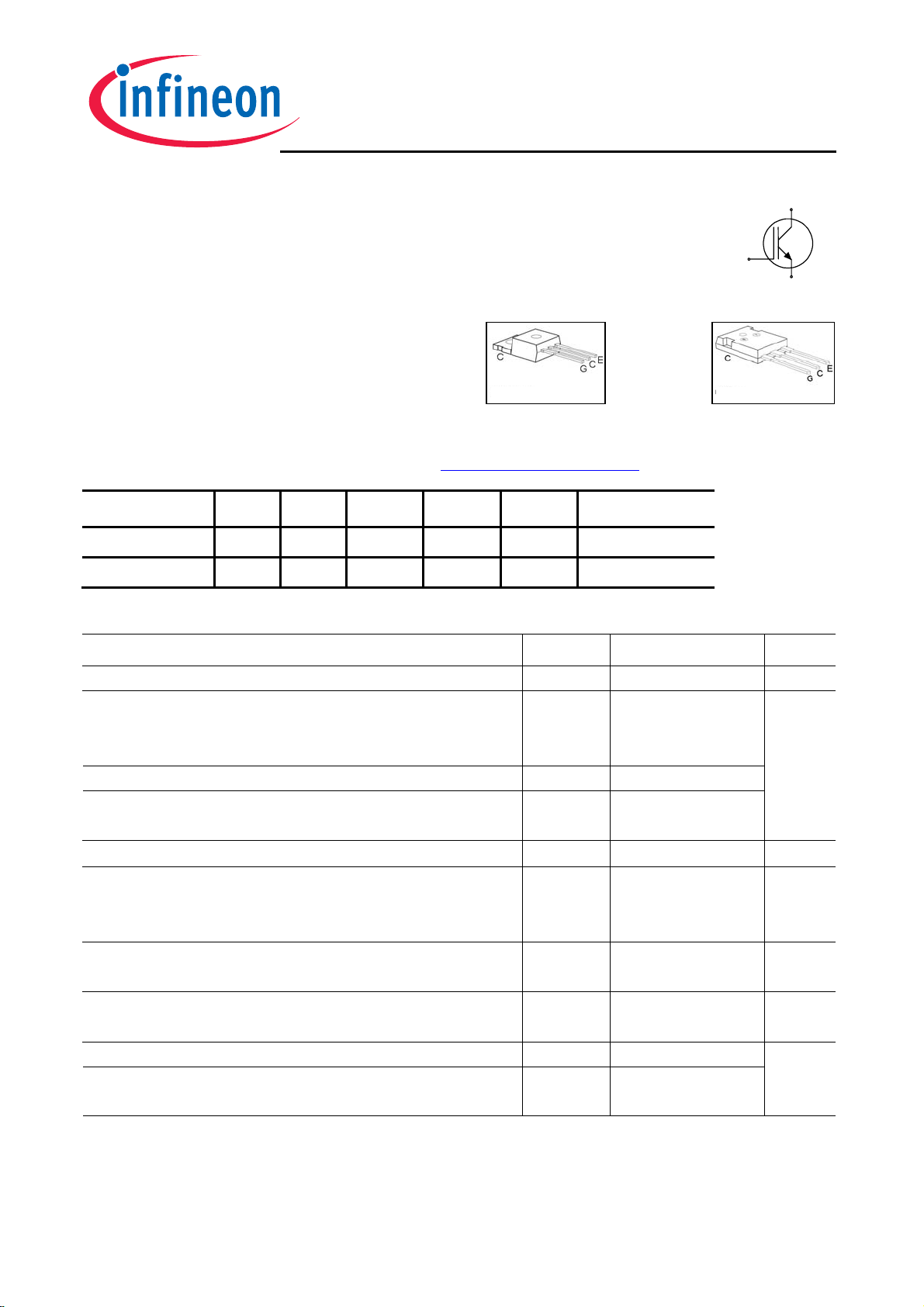
PG-TO-220-3-1
• Pb-free lead plating; RoHS compliant
• Complete product spectrum and PSpice Models : http://www.infineon.com/igbt/
V
Type
I
CE
V
C
Tj Marking Package
CE(sat)
G
PG-TO-247-3
C
E
SGP15N60 600V 15A 2.3V
SGW15N60 600V 15A 2.3V
150°C
150°C
G15N60 PG-TO-220-3-1
G15N60 PG-TO-247-3
Maximum Ratings
Parameter Symbol Value Unit
Collector-emitter voltage VCE 600 V
DC collector current
= 25°C
T
C
= 100°C
T
C
Pulsed collector current, tp limited by T
Turn off safe operating area
≤ 600V, Tj ≤ 150°C
V
CE
I
jmax
I
C
Cpuls
-
Gate-emitter voltage VGE
Avalanche energy, single pulse
= 15 A, VCC = 50 V, R
I
C
start at T
= 25°C
j
= 25 Ω,
GE
Short circuit withstand time2
= 15V, V
V
GE
≤ 600V, Tj ≤ 150°C
CC
Power dissipation
= 25°C
T
C
85 mJ
E
AS
t
10
SC
P
139 W
tot
Operating junction and storage temperature Tj , T
Soldering temperature,
Ts 260
31
15
62
62
±20
-55...+150
stg
A
V
µs
°C
wavesoldering, 1.6mm (0.063 in.) from case for 10s
1
J-STD-020 and JESD-022
2
Allowed number of short circuits: <1000; time between short circuits: >1s.
1 Rev. 2.3 Sep 08
Page 2

SGP15N60
SGW15N60
Thermal Resistance
Parameter Symbol Conditions Max. Value Unit
Characteristic
IGBT thermal resistance,
junction – case
Thermal resistance,
junction – ambient
Electrical Characteristic, at T
= 25 °C, unless otherwise specified
j
Parameter Symbol Conditions
Static Characteristic
Collector-emitter breakdown voltage V
Collector-emitter saturation voltage V
Gate-emitter threshold voltage V
Zero gate voltage collector current I
Gate-emitter leakage current I
Transconductance gfs VCE=20V, IC=15A 3 10.9 - S
Dynamic Characteristic
Input capacitance C
Output capacitance C
Reverse transfer capacitance C
Gate charge Q
Internal emitter inductance
measured 5mm (0.197 in.) from case
Short circuit collector current2) I
R
0.9
thJC
K/W
R
PG-TO-220-3-1
thJA
PG-TO-247-3-21
62
40
Value
Unit
min. Typ. max.
(BR)CES
CE(sat)
GE(th)
CES
GES
- 800 960
iss
oss
rss
Gate
VGE=0V, I
VGE = 15V, IC=15A
=25°C
T
j
=150°C
T
j
=400µA,V
I
C
VCE=600V,VGE=0V
=25°C
T
j
=150°C
T
j
VCE=0V,VGE=20V - - 100 nA
=25V,
V
CE
=0V,
V
- 84 101
GE
f=1MHz
VCC=480V, IC=15A
=15V
V
GE
=500µA
C
CE=VGE
LE PG-TO-220-3-1
PG-TO-247-3-21
C(SC)
=15V,t
V
GE
V
≤ 600V,
CC
≤ 150°C
T
j
≤10µs
SC
600 - -
1.7
-
2
2.3
2.4
2.8
3 4 5
-
-
-
-
40
2000
- 52 62
- 76 99 nC
-
-
7
13
- 150 - A
V
µA
pF
-
nH
-
2)
Allowed number of short circuits: <1000; time between short circuits: >1s.
2 Rev. 2.3 Sep 08
Page 3

SGP15N60
SGW15N60
Switching Characteristic, Inductive Load, at T
Parameter Symbol Conditions
IGBT Characteristic
Turn-on delay time t
d(on)
Rise time tr - 23 28
Turn-off delay time t
d(off)
Fall time tf - 46 55
Turn-on energy Eon - 0.30 0.36
Turn-off energy E
off
Total switching energy Ets
Switching Characteristic, Inductive Load, at T
Parameter Symbol Conditions
IGBT Characteristic
Turn-on delay time t
Rise time tr - 23 28
Turn-off delay time t
Fall time tf - 54 65
Turn-on energy Eon - 0.45 0.54
Turn-off energy E
Total switching energy Ets
d(on)
d(off)
off
=25 °C
j
Value
Unit
min. typ. max.
T
- 32 38
- 234 281
- 0.27 0.35
=25°C,
j
V
=400V,IC=15A,
CC
V
=0/15V,
GE
R
=21Ω,
G
1)
=180nH,
L
σ
1)
=250pF
C
σ
Energy losses include
“tail” and diode
reverse recovery.
=150 °C
j
ns
mJ
- 0.57 0.71
Value
Unit
min. typ. max.
T
- 31 38
- 261 313
- 0.41 0.53
=150°C
j
V
=400V,IC=15A,
CC
1)
=180nH,
L
σ
1)
C
=250pF
σ
V
=0/15V,
GE
=21Ω
R
G
Energy losses include
“tail” and diode
reverse recovery.
ns
mJ
- 0.86 1.07
1)
Leakage inductance L
and Stray capacity Cσ due to dynamic test circuit in Figure E.
σ
3 Rev. 2.3 Sep 08
Page 4

A
SGP15N60
SGW15N60
80A
70A
I
c
100
t
=5µs
p
60A
50A
40A
30A
, COLLECTOR CURRENT
20A
C
I
10A
0A
10Hz 100Hz 1kHz 10kHz 100kHz
TC=80°C
TC=110°C
I
c
f, SWITCHING FREQUENCY
10A
, COLLECTOR CURRENT
C
I
0.1A
Figure 1. Collector current as a function of
switching frequency
≤ 150°C, D = 0.5, V
(T
j
= 0/+15V, R
V
GE
= 21Ω)
G
= 400V,
CE
35A
140W
30A
120W
1A
1V 10V 100V 1000V
VCE, COLLECTOR-EMITTER VOLTAGE
Figure 2. Safe operating area
(D = 0, T
= 25°C, Tj ≤ 150°C)
C
15µs
50µs
200µs
1ms
DC
25A
20A
15A
10A
, COLLECTOR CURRENT
C
I
5A
0A
25°C 50°C 75°C 100°C 125°C
, POWER DISSIPATION
tot
P
100W
80W
60W
40W
20W
0W
25°C 50°C 75°C 100°C 125°C
TC, CASE TEMPERATURE TC, CASE TEMPERATURE
Figure 3. Power dissipation as a function
of case temperature
≤ 150°C)
(T
j
Figure 4. Collector current as a function of
case temperature
(V
≤ 15V, Tj ≤ 150°C)
GE
4 Rev. 2.3 Sep 08
Page 5
SGP15N60
SGW15N60
50A
50A
45A
40A
35A
30A
25A
20A
15A
, COLLECTOR CURRENT
C
I
10A
5A
0A
VGE=20V
15V
13V
11V
9V
7V
5V
0V 1V 2V 3V 4V 5V
45A
40A
35A
30A
25A
20A
15A
, COLLECTOR CURRENT
C
I
10A
5A
0A
VGE=20V
15V
13V
11V
9V
7V
5V
0V 1V 2V 3V 4V 5V
VCE, COLLECTOR-EMITTER VOLTAGE VCE, COLLECTOR-EMITTER VOLTAGE
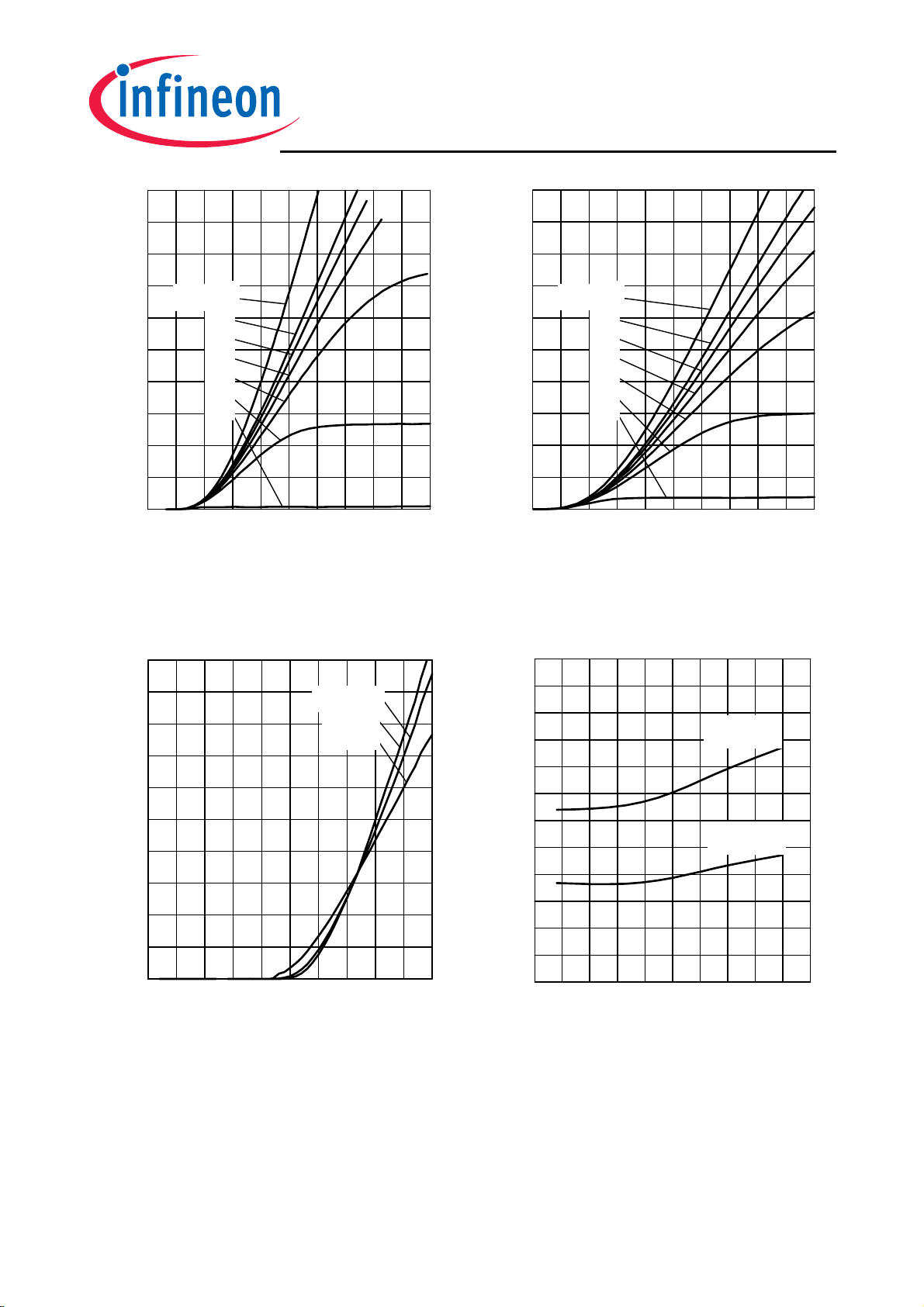
Figure 5. Typical output characteristics
= 25°C)
(T
j
Figure 6. Typical output characteristics
(T
= 150°C)
j
50A
4.0V
45A
40A
35A
Tj=+25°C
-55°C
+150°C
3.5V
IC = 30A
3.0V
30A
25A
2.5V
IC = 15A
20A
15A
, COLLECTOR CURRENT
C
I
10A
2.0V
1.5V
5A
0A
0V 2V 4V 6V 8V 10V
, COLLECTOR-EMITTER SATURATION VOLTAGE
CE(sat)
V
1.0V
-50°C 0°C 50°C 100°C 150°C
VGE, GATE-EMITTER VOLTAGE Tj, JUNCTION TEMPERATURE
Figure 7. Typical transfer characteristics
(V
= 10V)
CE
Figure 8. Typical collector-emitter
saturation voltage as a function of junction
temperature
(V
= 15V)
GE
5 Rev. 2.3 Sep 08
Page 6

SGP15N60
SGW15N60
t
d(off)
t
d(off)
100ns
t, SWITCHING TIMES
10ns
5A 10A 15A 20A 25A 30A
t
d(on)
t
f
t
r
t, SWITCHING TIMES
100ns
t
d(on)
t
r
10ns
0Ω 20Ω 40Ω 60Ω
IC, COLLECTOR CURRENT RG, GATE RESISTOR
Figure 9. Typical switching times as a
function of collector current
(inductive load, T
= 0/+15V, R
V
GE
= 150°C, V
j
= 21Ω,
G
= 400V,
CE
Dynamic test circuit in Figure E)
Figure 10. Typical switching times as a
function of gate resistor
(inductive load, T
V
= 0/+15V, IC = 15A,
GE
= 150°C, V
j
= 400V,
CE
Dynamic test circuit in Figure E)
5.5V
t
f
t
d(off)
5.0V
4.5V
100ns
4.0V
, GATE-EMITTER THRESHOLD VOLTAGE
GE(th)
V
3.5V
3.0V
2.5V
2.0V
-50°C 0°C 50°C 100°C 150°C
t
f
t
t
r
d(on)
t, SWITCHING TIMES
10ns
0°C 50°C 100°C 150°C
Tj, JUNCTION TEMPERATURE Tj, JUNCTION TEMPERATURE
Figure 11. Typical switching times as a
function of junction temperature
(inductive load, V
= 15A, R
I
C
= 21Ω,
G
= 400V, VGE = 0/+15V,
CE
Figure 12. Gate-emitter threshold voltage
as a function of junction temperature
(I
= 0.4mA)
C
Dynamic test circuit in Figure E)
max.
typ.
min.
6 Rev. 2.3 Sep 08
Page 7

SGP15N60
SGW15N60
1.8mJ
1.6mJ
*) Eon and Ets include losses
due to diode recovery.
Ets*
1.4mJ
1.2mJ
*) Eon and Ets include losses
due to diode recovery.
1.4mJ
1.0mJ
1.2mJ
1.0mJ
0.8mJ
Eon*
E
off
0.8mJ
0.6mJ
0.6mJ
0.4mJ
0.4mJ
E, SWITCHING ENERGY LOSSES
0.2mJ
0.0mJ
0A 5A 10A 15A 20A 25A 30A 35A
E, SWITCHING ENERGY LOSSES
0.2mJ
0.0mJ
0Ω 20Ω 40Ω 60Ω 80Ω
IC, COLLECTOR CURRENT RG, GATE RESISTOR
Figure 13. Typical switching energy losses
as a function of collector current
(inductive load, T
= 0/+15V, R
V
GE
= 150°C, V
j
= 21Ω,
G
= 400V,
CE
Dynamic test circuit in Figure E)
Figure 14. Typical switching energy losses
as a function of gate resistor
(inductive load, T
V
= 0/+15V, IC = 15A,
GE
= 150°C, V
j
= 400V,
CE
Dynamic test circuit in Figure E)
Ets*
E
off
Eon*
1.0mJ
*) Eon and Ets include losses
due to diode recovery.
0.8mJ
0.6mJ
0.4mJ
0.2mJ
E, SWITCHING ENERGY LOSSES
0.0mJ
0°C 50°C 100°C 150°C
, JUNCTION TEMPERATURE
T
j
Figure 15. Typical switching energy losses
as a function of junction temperature
(inductive load, V
= 15A, R
I
C
= 21Ω,
G
= 400V, VGE = 0/+15V,
CE
Dynamic test circuit in Figure E)
Ets*
Eon*
E
off
0
10
K/W
-1
10
K/W
-2
10
K/W
-3
10
K/W
, TRANSIENT THERMAL IMPEDANCE
thJC
Z
-4
10
K/W
1µs 10µs 100µs 1ms 10ms 100ms 1s
t
Figure 16. IGBT transient thermal
impedance as a function of pulse width
(D = t
/ T)
p
D=0.5
0.2
0.1
0.05
0.02
0.01
single pulse
R ,(1/W)
0.5321 0.04968
0.2047 2.58*10
0.1304 2.54*10-4
0.0027 3.06*10-4
R
1
C1=
τ
, PULSE WIDTH
p
τ
, (s)
-3
R
2
/ R
C2=
/ R
1
τ
1
2
2
7 Rev. 2.3 Sep 08
Page 8

µ
A
SGP15N60
SGW15N60
25V
1nF
C
20V
iss
15V
120V
480V
100pF
C
oss
10V
C, CAPACITANCE
, GATE-EMITTER VOLTAGE
GE
5V
V
0V
0nC 25nC 50nC 75nC 100nC
10pF
0V 10V 20V 30V
C
QGE, GATE CHARGE VCE, COLLECTOR-EMITTER VOLTAGE
Figure 17. Typical gate charge
(I
= 15A)
C
Figure 18. Typical capacitance as a
function of collector-emitter voltage
(V
= 0V, f = 1MHz)
GE
25
20
s
µs
250
200A
rss
µs
15
10
µs
µs
5
, SHORT CIRCUIT WITHSTAND TIME
sc
t
0
µs
10V 11V 12V 13V 14V 15V
, SHORT CIRCUIT COLLECTOR CURRENT
C(sc)
I
150A
100A
50A
0A
10V 12V 14V 16V 18V 20V
VGE, GATE-EMITTER VOLTAGE VGE, GATE-EMITTER VOLTAGE
Figure 19. Short circuit withstand time as a
function of gate-emitter voltage
= 600V, start at T
(V
CE
= 25°C)
j
Figure 20. Typical short circuit collector
current as a function of gate-emitter voltage
(V
≤ 600V, Tj = 150°C)
CE
8 Rev. 2.3 Sep 08
Page 9

SGP15N60
SGW15N60
PG-TO-220-3-1
9 Rev. 2.3 Sep 08
Page 10

SGP15N60
SGW15N60
PG-TO247-3
M
MIN
4.90
2.27
1.85
1.07
1.90
1.90
2.87
2.87
0.55
20.82
16.25
1.05
15.70
13.10
3.68
1.68
19.80
4.17
3.50
5.49
6.04
5.44
3
MAX
5.16
2.53
2.11
1.33
2.41
2.16
3.38
3.13
0.68
21.10
17.65
1.35
16.03
14.15
5.10
2.60
20.31
4.47
3.70
6.00
6.30
M
MIN MAX
0.193
0.089
0.073
0.042
0.075
0.075
0.113
0.113
0.022
0.820
0.640
0.041
0.618
0.516
0.145
0.066
0.780
0.164
0.138
0.216
0.238
0.203
0.099
0.083
0.052
0.095
0.085
0.133
0.123
0.027
0.831
0.695
0.053
0.631
0.557
0.201
0.102
0.214
3
0.799
0.176
0.146
0.236
0.248
Z8B00003327
0
17-12-2007
0
5
5
7.5mm
03
10 Rev. 2.3 Sep 08
Page 11

j
τ
τ
τ
C
SGP15N60
SGW15N60
1
rrrr
1
T(t)
2
2
n
n
Figure A. Definition of switching times
p(t)
12 n
rr
T
Figure D. Thermal equivalent
circuit
Figure B. Definition of switching losses
Figure E. Dynamic test circuit
Leakage inductance L
=180nH
σ
and Stray capacity Cσ =250pF.
11 Rev. 2.3 Sep 08
Page 12

SGP15N60
SGW15N60
Published by
Infineon Technologies AG
81726 Munich, Germany
© 2008 Infineon Technologies AG
All Rights Reserved.
Legal Disclaimer
The information given in this document shall in no event be regarded as a guarantee of conditions or
characteristics. With respect to any examples or hints given herein, any typical values stated herein and/or
any information regarding the application of the device, Infineon Technologies hereby disclaims any and all
warranties and liabilities of any kind, including without limitation, warranties of non-infringement of intellectual
property rights of any third party.
Information
For further information on technology, delivery terms and conditions and prices, please contact the nearest
Infineon Technologies Office (www.infineon.com).
Warnings
Due to technical requirements, components may contain dangerous substances. For information on the
types in question, please contact the nearest Infineon Technologies Office. Infineon Technologies
components may be used in life-support devices or systems only with the express written approval of
Infineon Technologies, if a failure of such components can reasonably be expected to cause the failure of
that life-support device or system or to affect the safety or effectiveness of that device or system. Life support
devices or systems are intended to be implanted in the human body or to support and/or maintain and
sustain and/or protect human life. If they fail, it is reasonable to assume that the health of the user or other
persons may be endangered.
12 Rev. 2.3 Sep 08
 Loading...